

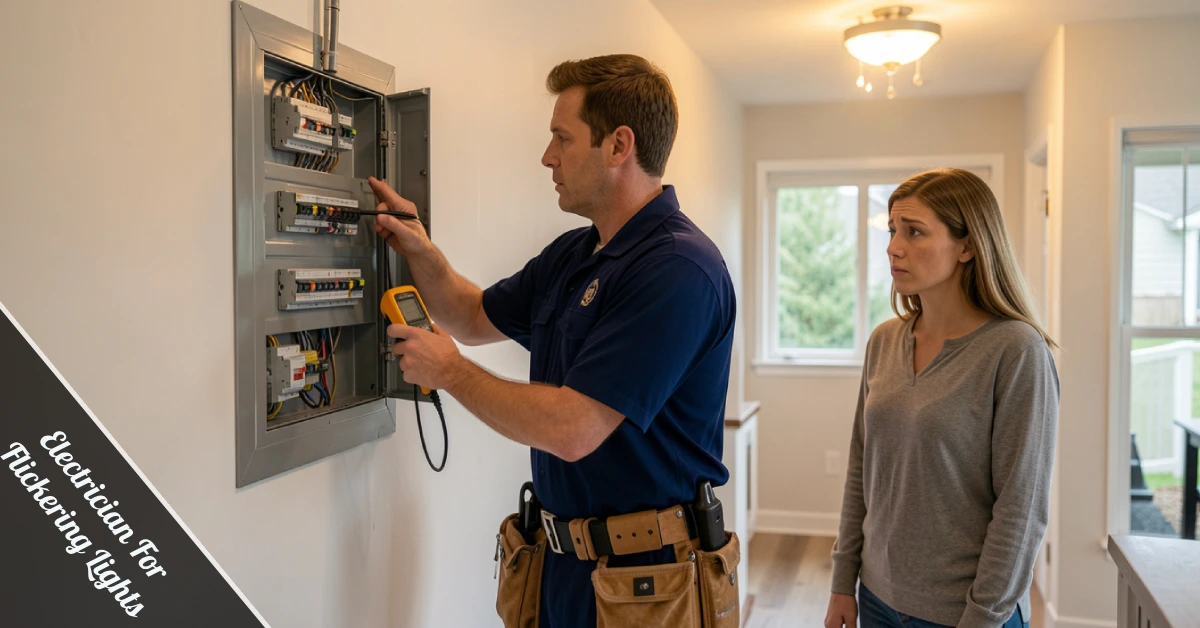
Your lights are doing that thing again — the slow, annoying flicker that makes your living room feel like a horror movie set. Sometimes it’s nothing. Sometimes it’s your home quietly waving a red flag. Calling an Electrician For Flickering Lights early is the smartest move you can make. Knowing the difference? That’s where things get important.
Quick Reference: Is Your Flickering an Emergency?
| Problem | Possible Cause | Risk Level | Call an Electrician? |
|---|---|---|---|
| One bulb flickering | Loose bulb or bad socket | Low | Sometimes |
| Lights dim with appliances | Overloaded circuit | Medium | Yes |
| Multiple lights flickering | Wiring or panel issue | High | Yes |
| Buzzing switches or outlets | Loose electrical connection | High | Immediately |
| Burning smell near the panel | Overheating wires | Very High | Emergency |
| Frequent breaker trips | Circuit overload or fault | High | Yes |
Why Lights Flicker in a House
Not every flicker means disaster. Lights can blink for simple reasons — a loose bulb not sitting right in its socket, or a basic dimmer switch that’s incompatible with your LED bulbs. Those cases? Easy fixes.
But here’s where it gets interesting. Lights often dim briefly when a big appliance kicks on — your AC, refrigerator, or washing machine pulls a surge of power. That’s pretty normal behavior in most homes.
The problem starts when the flickering keeps coming back. Recurring flickers usually mean something deeper is off inside your electrical system. Aging wiring, worn-out panels, and loose connections all get worse over time — not better.
When multiple lights flicker across different rooms at the same time, you’re likely dealing with a panel or service line issue. That’s not a “wait and see” situation. That’s a call-someone-today situation.
Warning Signs You Need a Professional Right Now
Some warning signs are easy to brush off. Others are your house, straight-up telling you it needs help. Here’s what not to ignore.
A burning smell near outlets, switches, or your breaker panel is a serious red flag. Electrical components shouldn’t smell like melting plastic or smoke — that points to overheating wires or failing insulation.
Buzzing or crackling sounds from walls, switches, or panels mean electricity isn’t flowing cleanly. Loose wiring or damaged connections are usually the culprits. Your system should run silently.
Outlets or switch plates that feel warm to the touch are another warning. Heat buildup means your system is working way harder than it should. That’s not sustainable — or safe.
If your lights dim every time the microwave or AC turns on, your circuits may not be handling the load correctly. Add frequent breaker trips to that picture, and you’ve got a system that needs professional eyes on it fast.
What a Residential Electrician For Flickering Lights Actually Does
A lot of homeowners aren’t sure what they’re paying for during an electrical inspection. Here’s the breakdown — it’s more thorough than you’d expect.
A residential electrician for flickering lights starts by asking the right questions. How often does it flicker? Is it one room or the whole house? Those answers help narrow the search before any tools come out.
From there, they test circuits, outlets, switches, and the breaker panel to find voltage irregularities. Specialized equipment measures electrical flow and spots hidden faults that you’d never catch just by looking around.
The main panel gets checked first in most cases because it controls power distribution for everything. Loose breakers, damaged bus bars, and overloaded circuits all show up here — and all of them cause flickering.
Hidden wiring faults inside walls and ceilings are also on the checklist. These are invisible to homeowners but show up clearly with the right equipment. Sometimes the symptom appears far from the actual source of the problem.
Safety compliance is part of the job, too. Licensed electricians make sure every repair meets local building codes, which protects you legally and keeps your home insurable.
Multiple Lights Flickering in House: What It Means
When one light flickers, you’ve probably got a bulb or fixture issue. When multiple lights in the house start flickering all at once — in different rooms, with different fixtures — the problem is in your main power system.
Whole-house flickering usually points to loose main connections in your breaker panel or service entry cable. These connections can loosen over the years of temperature changes and vibration. Left alone, they create a real fire risk.
Voltage fluctuations are another cause of widespread flickering. When damaged components or overloaded circuits disrupt the stable voltage, lights dim and blink unpredictably. It’s your home’s way of showing electrical stress.
Older homes feel this most. Air conditioners, EV chargers, space heaters, and modern kitchen appliances all demand more power than older wiring was built to carry. Without upgrades, something’s going to give.
Loose electrical connections also generate heat, and overheated wires can ignite surrounding materials. That’s the real danger of ignoring widespread flickering for too long.
Electrician For Flickering Lights Cost in 2026
Let’s talk money. In 2026, most homeowners in the U.S. pay between $162 and $538 for standard electrical repairs, with the average project landing around $350. Simple fixes — replacing a dimmer switch, tightening a connection — can run under $100.
More complex repairs involving damaged wiring or breaker panel problems climb into the hundreds or thousands, depending on what’s involved. Emergency service during nights or weekends adds to the bill, too.
Panel replacements are the big-ticket item. Replacing an outdated breaker panel typically runs $1,200 to $4,000 or more based on home size and electrical needs. Full rewiring costs even more, especially in older homes with hard-to-access areas.
That said, putting off repairs almost always costs more long-term. Electrical fires, appliance damage, and emergency callouts don’t come cheap. Early inspection is the smarter financial move every time.
How to Choose the Right Electrician For Flickering Lights
Price isn’t the only thing to compare when you’re hiring an electrician for flickering lights. In fact, chasing the lowest quote is often how people end up paying twice.
Always start with licensing and insurance. A proper license proves the electrician has completed the required training and meets local safety standards. Insurance covers you and the contractor if anything goes sideways during the job.
Experience with residential electrical troubleshooting matters more than a fancy website. Flickering lights can have a dozen different causes — an experienced pro finds the real one faster, which saves time and money.
Online reviews are your cheat code here. Look for electricians who communicate clearly, show up on time, and explain their findings without pressure tactics. Vague estimates and zero licensing info are your cue to keep scrolling.
Ask about warranties, inspection procedures, and expected timelines before anyone touches your panel. Reliable contractors answer these questions without hesitation.
Electrical Licensing: Why It Actually Matters
Licensing isn’t just a box to check — it’s the difference between work that holds up and work that creates liability. Licensed electricians follow national and local electrical codes, which reduces the chance of dangerous mistakes.
Some regions have additional requirements. A D.C. electrician license, for example, involves specific training and testing designed to meet Washington D.C.’s local safety standards. That’s a higher bar — and that’s a good thing.
Licensed pros also handle inspection requirements and permits for larger jobs. That protects you legally and keeps your electrical system compliant with building regulations. Unpermitted work can create real problems if you ever sell your home.
Hiring unqualified contractors feels like a deal until something fails. Improper repairs can lead to fires, shocks, or denied insurance claims. The accountability that comes with licensing is worth every dollar.
How to Prevent Flickering Lights Going Forward
The best electrical repair is the one you never need. Regular maintenance and early action on warning signs keep small issues from becoming expensive emergencies.
Don’t overload your circuits. Spread high-power appliances across multiple circuits, and avoid plugging too many devices into one outlet or power strip. That’s an easy way to add electrical stress to your system, which doesn’t need.
Older homes benefit most from panel and wiring upgrades. Modern electrical systems handle today’s power demands safely — aging ones often can’t keep up without help from a qualified pro.
Use compatible dimmers with your LED bulbs, install properly rated circuits for new appliances, and respond quickly when anything new shows up. Small warning signs are easiest to fix when you catch them early.
FAQs
Can flickering lights be dangerous?
Yes. They can signal loose wiring, overloaded circuits, or a failing panel — all of which raise the risk of electrical fires if left unchecked.
How much does an electrician for flickering lights cost?
In 2026, most homeowners pay $162–$538 for standard repairs. Panel replacements run $1,200–$4,000 or more.
Why are multiple lights flickering in my house?
Multiple lights flickering in house scenarios usually point to panel issues, voltage fluctuations, or aging wiring that can’t handle modern power demands.
Should I call an electrician for occasional flickering?
If it happens repeatedly, spreads to multiple rooms, or comes with buzzing sounds or tripped breakers — yes, call a professional right away.
Can old wiring cause lights to flicker?
Absolutely. Aging wiring loosens over time and struggles with modern power loads, creating both flickering and real safety hazards.