

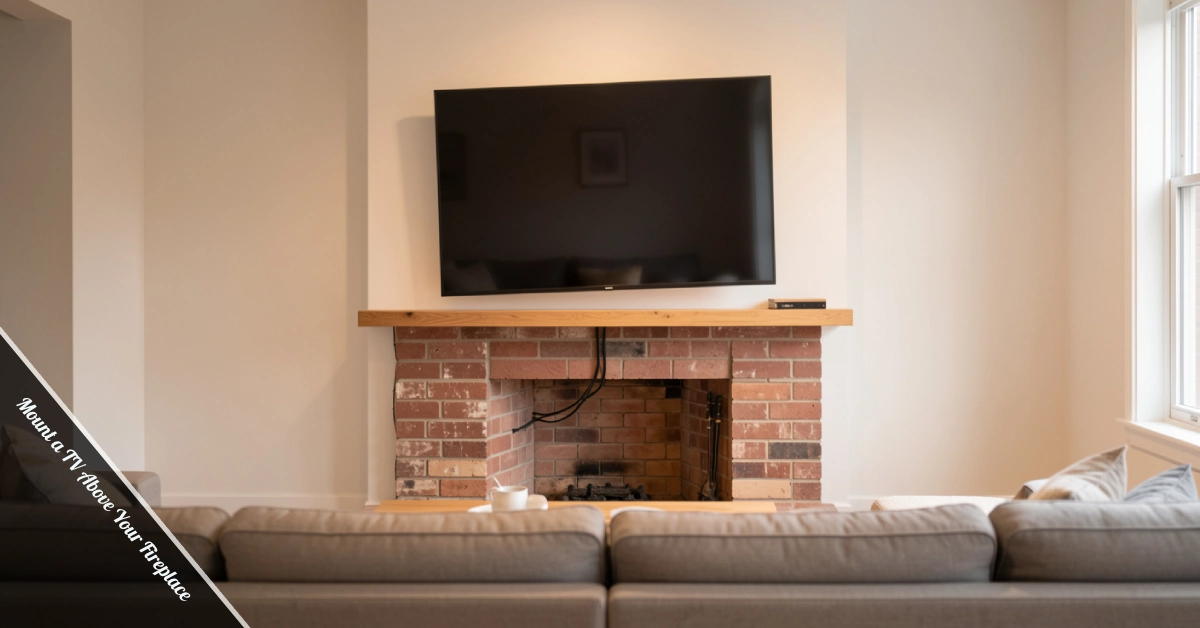
Mounting a TV above a fireplace can work well if you plan. The two main concerns are the heat rising from the fire and the viewing angle from your couch. Before drilling anything, test the wall temperature where the TV will sit and choose a tilting or full-motion mount so you can angle the screen down toward your seating area. With the right setup, you can get a clean, space-saving look without damaging your TV or straining your neck.
That said, it is not the right call for every room. Wood-burning fireplaces push serious heat upward, which can shorten a TV’s lifespan over a few years. If your fireplace runs often and gets genuinely hot, you may want to reconsider the spot or explore alternatives. This guide walks you through the real pros and cons, how to handle the installation, and what to do when the setup is not working.
Is a TV Above a Fireplace Actually a Good Idea?
The appeal is easy to understand. Your fireplace is already the focal point of the room, so placing the TV there pulls everything together. You free up floor space, clear the walls, and end up with a tidy, intentional look. In smaller rooms especially, it can make a real difference.
But plenty of people regret it after a few months. The screen ends up higher than ideal for most seating arrangements, and the heat from regular use adds up over time. Whether it is worth it depends on how often you use your fireplace and how your room is laid out.
In my experience, it works best with electric or low-heat gas fireplaces that you do not run for hours every day. Wood-burning setups are the trickiest. They push the most heat upward and produce soot that can settle into your TV’s vents over time.
The Heat Risk Depends on Your Fireplace Type
Heat is the number-one concern when mounting a TV above a fireplace. Wood-burning fireplaces are the most problematic. They push intense heat straight up and can introduce soot and smoke into the space where your TV sits. Gas fireplaces vary; some run hot, others are well-vented and manageable. Electric fireplaces produce the least heat and are the safest option for this kind of setup.
Before you do anything, run your fireplace for about an hour under normal conditions. Then hold your hand flat against the wall where the TV would hang. If it feels uncomfortably warm, it is too warm for your TV. For a more precise reading, pick up an infrared thermometer and check the wall temperature directly. Most TV manufacturers recommend keeping operating temperatures under 95 to 100°F. If you are consistently over that while the fire runs, you have a problem worth solving before mounting anything.
Signs that heat is already affecting a TV include color shifts, random shutoffs, or a screen that runs unusually hot to the touch. These may not show up in year one, but over three to five years, consistent heat exposure can shorten the panel’s life noticeably. A mantel that projects several inches from the wall can help deflect rising heat. Some mounts also include built-in spacers that create airflow behind the TV, which helps too.
How High to Mount a TV Above a Fireplace
Standard viewing advice puts the center of the screen at eye level when seated, roughly 40 to 42 inches from the floor for most people. Above a typical mantel, you are usually looking at 60 to 70 inches or more, which means looking up.
For short viewing sessions, the angle usually does not bother people. For longer ones, the neck tilt becomes noticeable fast. A practical rule: try to keep the TV centered at or below 65 to 70 inches from the floor. Mount it as low as your mantel and clearance requirements allow. Five to eight inches above the top of the mantel is a common starting point that looks proportional without pushing the screen too high.
The best way to test height before drilling is to have someone hold a cardboard box the size of your TV at different points on the wall while you sit in your usual spot. Adjust until it feels comfortable. Trust what your neck tells you over any specific number.
Choosing the Right TV Mount for a Fireplace
Not all mounts suit this job. A fixed mount locks the TV flat against the wall, which only works if the height is already close to ideal. For most fireplace setups, that is rarely the case.
A tilting mount is the minimum you should use. It lets you angle the screen downward so you are not staring straight up. A full-motion (articulating) mount goes further. It lets you pull the TV out from the wall and angle it in multiple directions, which can make a real difference during long sessions. When you are done watching, it folds back flat against the wall.
When choosing a tv mount for fireplace use, look for:
- A weight rating clearly above your TV’s actual weight
- Full tilt or full-motion capability
- A VESA pattern that matches your TV’s mounting holes
- Hardware rated for your wall type, whether masonry or drywall
Mounting on Brick vs. Drywall
Mounting a TV on a brick fireplace takes more effort than drywall, but it is very doable with the right tools. You will need a hammer drill and masonry bits. Standard drill bits will not get through brick cleanly. Use sleeve anchors or masonry screws rated for the load, and drill into the brick itself rather than the mortar, which is softer and less reliable over time.
For drywall above the fireplace, locate the studs with a stud finder before marking anything. Mount into studs only; drywall alone will not hold a TV safely over time. If your mount’s bracket spacing does not line up with two studs, use a mounting plate that spans across multiple studs.
Tools you will want on hand:
- Stud finder (for drywall) or hammer drill with masonry bits (for brick)
- Level
- Drill with the right bits
- Infrared thermometer for the heat check
- Cable management kit or in-wall power box
If you are not confident with masonry work or if you are unsure where the flue runs inside the wall, hiring a pro is worth the cost. One misplaced anchor in the wrong spot can cause real damage.
How to Handle Wires and Cables
Visible cables running down a fireplace wall undo the whole point of a clean setup. The good news is you have a few reliable options depending on your wall type.
For drywall, an in-wall power kit lets you run both the power cable and HDMI cables inside the wall. These kits include everything you need and are fairly beginner-friendly. Any cables run inside a wall must be CL2 or CL3 rated. Standard HDMI cables are not rated for in-wall use and are a safety issue if you skip this step.
For brick or stone, cutting channels into the wall is not practical for most people. Surface-mount cable raceways painted to match your wall are the cleanest alternative. Done right, they are barely noticeable.
A few tips that save headaches later:
- Run extra HDMI cables now while things are open, even if you do not need them yet
- Consider a wireless HDMI transmitter if running cables through the wall is not an option
- Keep your media components in a nearby cabinet and use a smart remote so you do not need a direct line of sight to operate them
Alternatives If the Setup Is Not Working for You
If heat or viewing height makes mounting a TV above a fireplace impractical for your room, you are not out of options. Rearranging the furniture so the TV sits on an adjacent wall is worth considering seriously. In many rooms, a simple layout change frees up a better wall without requiring any drilling or special hardware.
A TV floor stand is another option, especially if you rent or want flexibility. Modern floor stands are slim and look intentional rather than temporary. Some models are designed to sit beside or in front of a hearth and position the screen at a comfortable angle.
If you love the fireplace look but still want the TV close to it, switching to an electric fireplace insert can solve the heat problem entirely. Many electric inserts produce very little heat output in the upper portion of the frame, making them far safer for a TV mounted above.
FAQs
Is it safe to mount a TV above a fireplace, and how can I protect it from heat?
It can be safe depending on your fireplace type. Test the wall temperature with an infrared thermometer while the fireplace runs. If it stays consistently under 95 to 100°F, you are likely fine. A projecting mantel and good airflow behind the TV both help reduce heat exposure.
How high should I mount my TV above the mantel for comfortable viewing?
Five to eight inches above the top of the mantel is a common starting point. Try to keep the screen centered at or below 65 to 70 inches from the floor. Test the height with a cardboard stand-in before you drill.
What type of TV mount works best above a fireplace?
A full-motion or tilting mount gives you the most viewing flexibility. Fixed mounts only work well if the mounting height is already close to eye level when seated, which is rarely the case above a fireplace.
How do I handle wires and cables when mounting a TV over a fireplace?
For drywall, use an in-wall power kit with CL2 or CL3-rated cables. For brick or stone, surface-mount cable raceways are your best option. Plan the full cable route before drilling anything.