

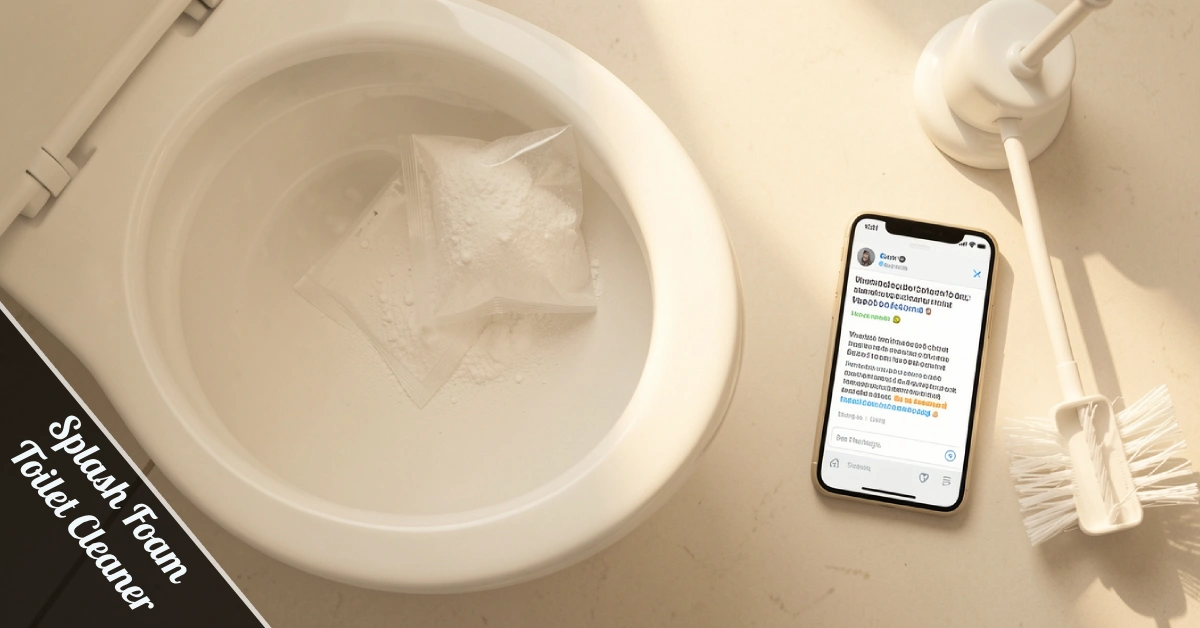
You know that feeling when you spot a cleaning ad so slick it feels like magic?
Yeah, we’ve all been there. A product pops up on your feed promising to erase years of toilet stains without you lifting a finger. Sounds like the dream, right?
But here’s the thing: when something sounds too good to be true, your bull meter should start buzzing.
Today, we’re diving into Splash Foam Toilet Cleaner—the viral powder that claims to make scrubbing obsolete.
We’ll unpack the hype, look at what real users say, and give you the honest scoop so you can decide if it’s worth your cash or just another marketing flex.
What Exactly Is Splash Foam Toilet Cleaner?
Splash foam toilet cleaner comes as a powder you scoop into the bowl.
The brand claims it expands into a thick foam that clings to stains, mineral deposits, and rust.
You’re supposed to let it sit for about 30 minutes, then flush—no brush, no elbow grease.
On paper, it sounds like a cheat code for bathroom cleaning.
But once you look past the glossy ads, the picture gets a little murky.
The product is marketed heavily on social media with flashy before-and-after shots.
Some of those images? Let’s say they’ve raised eyebrows for being a bit too perfect.
Does It Deliver on the “No Scrub” Promise?
According to customer reviews and watchdog sites, the answer is mostly no.
Many buyers reported that the foam barely expanded, and stubborn stains stayed put.
One user noted the product smelled great—but that’s about it.
The Better Business Bureau gives the company behind it an F rating.
That’s not a typo. Complaints piled up around billing issues and products that didn’t perform as promised.
When a brand racks up that kind of track record, you’ve got to wonder if the ads are just a pretty distraction.
Red Flags to Watch For Before You Buy
If you’re still curious about splash foam toilet cleaner, keep your eyes open.
Several warning signs suggest the hype outweighs the actual results.
| Red Flag | What It Means |
|---|---|
| Fake celebrity endorsements | Ads imply famous people use it—without proof |
| Altered before-and-after photos | Images look too perfect, often edited |
| No manufacturer transparency | You can’t find who actually makes it |
| High price for a small quantity | Nearly $30 for a tiny bag of powder |
| BBB complaints | Billing issues and performance failures |
These aren’t just minor gripes.
They point to a pattern that savvy shoppers should take seriously.
If a product has to rely on smoke and mirrors, it’s probably not the game-changer it claims to be.
How Foam Cleaners Are Supposed to Work
In theory, foam-based toilet cleaners are designed to cling to vertical surfaces.
That helps them break down grime under the rim and around the waterline.
A good foam cleaner should lift stains and make scrubbing faster—not replace it entirely.
With splash foam toilet cleaner, the idea is the same.
The powder reacts with water to create foam that coats the bowl.
But if the formula is weak or inconsistent, you’re left with foam that fizzles out fast.
And when that happens, you’re back to square one with a brush in hand.
The Right Way to Use a Foam Toilet Cleaner
If you’re still willing to give foam cleaners a shot, here’s how to get the best results.
These steps apply whether you’re using this specific brand or a more reliable alternative.
- Start with a clean slate – Flush first to remove loose debris.
- Apply the foam – Follow the instructions for how much to use.
- Let it sit – Give it time to work on stains and buildup.
- Scrub lightly – Yes, even with foam cleaners, a quick scrub helps.
- Flush and inspect – Repeat if needed for stubborn spots.
Skipping the scrub step is where most people get disappointed.
Foam can loosen grime, but it rarely eliminates it without a little manual help.
Think of it as a teammate, not a replacement.
Common Mistakes That Kill Your Results
Even the best cleaner won’t perform well if you use it incorrectly.
Here are a few slip-ups that can turn a quick job into a headache.
- Not letting it sit long enough – Rushing the process means stains stay put.
- Using too much or too little – Balance matters for proper foaming.
- Ignoring under the rim – That’s where bacteria and buildup hide.
- Flushing too early – Give the formula time to actually work.
Avoid these, and you’ll get more out of any cleaner you choose.
But if the product itself is flawed, no amount of technique will save it.
What to Do If You Already Ordered It
So you bought Splash Foam toilet cleaner, and it fell flat.
Don’t stress—you’ve got options.
First, contact the company within its refund window.
Be ready to explain why it didn’t work and ask for your money back.
If they push back, file complaints with the BBB, FTC, or your state attorney general.
You can also dispute the charge with your credit card company if the product wasn’t as described.
And here’s a pro move: leave an honest review wherever you bought it.
That helps other shoppers avoid the same frustration.
A little transparency goes a long way in keeping brands accountable.
Better Ways to Keep Your Toilet Fresh
If you’re over the hype and want something that actually works, keep it simple.
A good toilet brush, a reliable gel cleaner, and a weekly routine will outperform most “miracle” powders.
For tough mineral stains, a pumice stone made for porcelain works wonders.
You can also try DIY options if you prefer natural solutions.
Baking soda and vinegar still hold their own against buildup.
And if you’re dealing with serious issues, calling a pro can save you time and headaches.
The goal is a clean bowl without the runaround.
Final Thoughts
Splash foam toilet cleaner looks great in ads, but real-world results tell a different story.
Between the fake endorsements, shady billing, and lackluster performance, it’s hard to recommend.
That doesn’t mean all foam cleaners are bad—just that this one leans heavily on hype and light on results.
If you’re after a cleaner that actually delivers, stick with trusted brands and a solid routine.
Your bathroom deserves better than a marketing gimmick in a shiny bag.
And hey, if something sounds too easy, it usually is.