

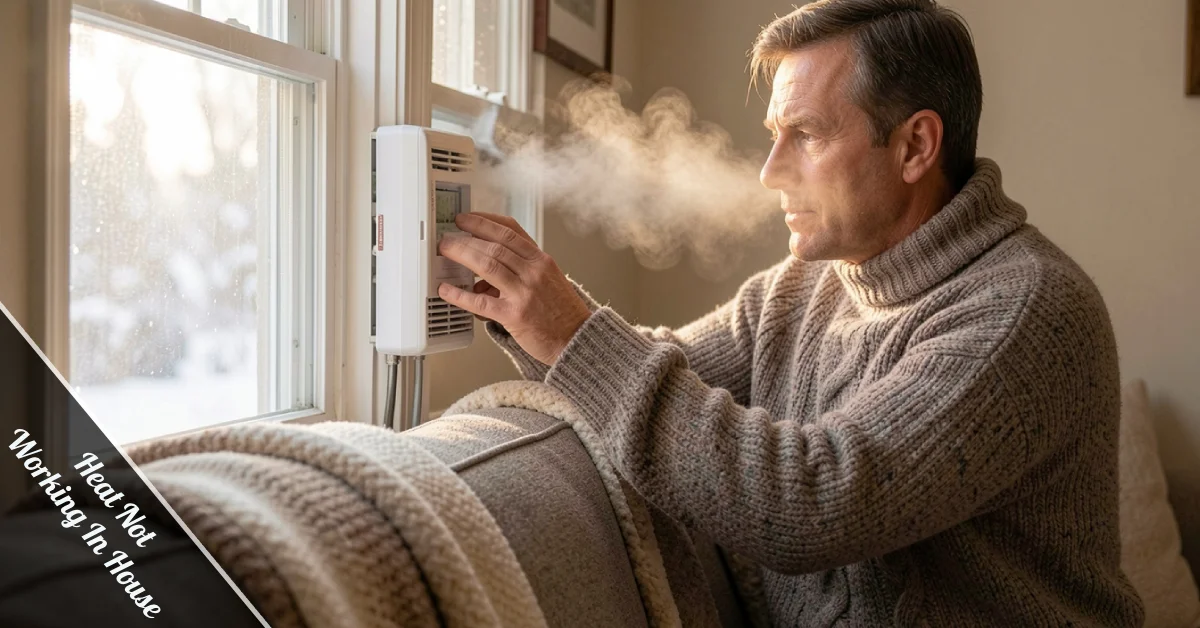
Cold air pouring through your vents while the thermostat reads 72°F? That’s a special kind of frustration. Your house is freezing, and you don’t know why.
The good news? Most heating problems are fixable without calling anyone. You just need to know where to look. This guide walks you through the most common causes of heat not working in house situations, plus clear steps to get warm again fast.
Why Your Heat Stops Working: The Quick Picture
Heating systems fail for a surprisingly short list of reasons. Most problems come down to a dirty filter, a tripped breaker, a thermostat glitch, or an ignition issue. Knowing which one you’re dealing with saves you hours of guessing and stress.
Before you panic, run through the basics. A quick check of your thermostat and breaker box often solves the problem. Seriously, it happens all the time.
Start With Your Thermostat — Always
Your thermostat is step one, every time. It sounds obvious, but incorrect settings cause a large number of no-heat calls every winter.
Make sure it’s set to HEAT, not COOL or OFF. Then bump the target temperature at least five degrees above whatever the room currently reads. Give the system a clear reason to kick on.
If your thermostat runs on batteries, swap them out now. Weak batteries cause communication gaps between the thermostat and the furnace. The fan setting matters too — keep it on AUTO, not ON. When the fan runs constantly without heat, it just pushes cold air around the house, which feels terrible.
Smart thermostat acting weird? Check the schedule settings. A programmed setback might be keeping the heat off longer than you expect. A quick reset usually clears things up.
Heat Not Working In House But AC Still Runs Fine
This one confuses a lot of people. Your AC kicks on no problem, but flip to heat, and nothing happens. What’s going on?
Cooling and heating use different parts of the same system. The blower motor might be fine — that’s why air moves — but the furnace itself isn’t generating warmth. On a heat pump, a bad reversing valve stops the system from switching into heating mode entirely.
Thermostat wiring can also be the culprit here. Separate wires handle cooling versus heating cycles. If one heating wire comes loose, your AC still works while the heat stays dead. It’s a frustrating but very fixable problem once you know what to look for.
Hot Water Works, But the Heat Doesn’t? Here’s Why
Your shower is hot, so gas must be fine, right? Not necessarily. Your water heater and your furnace often run on independent lines, even when they share the same gas supply.
When the heat is not working in the house, issues show up alongside perfectly working hot water; the furnace likely has its own problem. Think ignition failure, a dirty flame sensor, or a stuck gas valve on the furnace side. The water heater just doesn’t know or care.
Boiler systems add another layer here. A boiler heats water for radiators, while a forced-air furnace pushes warm air through ducts. They break differently, too. Knowing which system you have helps you troubleshoot faster and smarter.
Check Your Breaker and Power Switch
Furnaces run on electricity even when they burn gas. A tripped breaker cuts power to the whole unit and shuts everything down immediately.
Head to your electrical panel and look for a breaker labeled Furnace, Heater, or Air Handler. If it’s tripped, flip it fully off first, then back on. Pushing a halfway-tripped breaker to the ON position without resetting it won’t work.
Also, check for a dedicated power switch near the furnace itself. It looks exactly like a light switch and gets bumped off accidentally during cleaning or storage more often than you’d expect. If the breaker trips again immediately after you reset it, stop right there and call a pro. Repeated tripping means an electrical problem that needs professional attention.
Your Air Filter Might Be Killing Your Heat
This is the most overlooked fix in home heating. A clogged filter blocks airflow, and modern furnaces respond by shutting themselves down to avoid overheating. You get no heat, and the furnace looks like it died.
Pull your filter out and hold it up to the light. If you can’t see through it, replace it now. Dust, pet hair, and debris build up fast, especially in homes with pets or during heavy-use months. A new filter costs a few dollars and takes two minutes to swap.
Blocked vents cause the same problem. Furniture sitting over floor vents, rugs covering return grilles, or boxes stacked in front of registers all choke airflow through the system. Walk through your house and make sure every vent is open and clear.
Gas Furnace Problems You Can Spot Yourself
Gas furnaces have a few specific failure points worth checking before you call anyone. First, confirm the gas valve near the furnace is fully open. It happens — someone turns it partially closed and forgets.
Older furnaces use a pilot light. If it’s out, the furnace can’t ignite. Check your owner’s manual for the exact relighting steps for your model. Follow them carefully. If you smell gas during any part of this process, stop immediately, leave the house, and call your gas company.
Modern furnaces use electronic ignition instead of a pilot light. When the igniter fails, you’ll often hear the furnace try to start, click a few times, then shut off. That clicking with no heat is a classic igniter or flame sensor issue. Both are repairable but usually need a technician.
Electric Heater Stopped Working? Check These First
Electric heating systems skip the gas and ignition side of things entirely, but they have their own failure points. Tripped breakers and blown fuses are the most common causes of a sudden electric heater outage.
Check your panel first. Electric furnaces often use two separate breakers, and one can trip while the other stays on. If both breakers look fine, the issue might be a failed heating element, a bad relay, or a thermostat communication problem inside the unit itself.
Unlike gas furnaces, electric systems don’t need pilot lights or gas valves. But they still need clean filters and clear airflow to run safely and efficiently. A dirty filter causes the same overheating shutdown on electric systems as it does on gas ones.
How to Reset Your Heating System
Sometimes a simple reset is all it takes to bring a furnace back to life. Turn your thermostat all the way off, wait a few minutes, then turn it back on and set it to heat.
Locate the reset button on your furnace — it’s usually a small red or yellow button near the motor housing. Press it once. Don’t press it multiple times in a row. Repeatedly hitting reset can make underlying problems worse or cause a fuel buildup situation you don’t want.
Modern furnaces also include built-in delay timers after a shutdown. The system may take five to ten minutes before it attempts to restart. Wait it out before assuming nothing worked.
Furnace Error Codes Tell You What’s Wrong
Most modern furnaces have a small LED light panel inside the access door. When something goes wrong, it blinks in a specific pattern. That pattern is your furnace telling you exactly what the issue is.
Open the furnace access panel and look for the blinking light. There’s usually a code chart printed right inside the door. Match the blink pattern to the chart and you’ll know whether you’re dealing with an ignition failure, a pressure switch issue, or an overheating problem.
These codes don’t replace a professional diagnosis for complex repairs. But they give you solid information before making that call, which saves time and helps you describe the problem clearly.
Warning Signs That Mean Call a Pro Now
Some situations go beyond basic troubleshooting. A furnace that shuts off repeatedly after resetting, smells like burning, or makes loud banging or squealing noises needs professional attention right away.
A gas smell is an emergency. Leave the house, don’t flip any switches, and call your gas company or emergency services immediately. Don’t try to troubleshoot a gas leak yourself.
If your breaker keeps tripping, the heat is not working in the house, checks out fine, but if nothing restores heat, it’s time to bring in an HVAC technician. Persistent electrical issues and internal component failures aren’t safe DIY territory.
Prevent This Before Next Winter Hits
The easiest way to avoid a cold house in January is a quick HVAC check in September. Replace your filter, clear your vents, and test your heating system before temperatures actually drop.
Schedule a seasonal inspection with a qualified HVAC technician every year. They’ll catch worn parts, dirty components, and small electrical issues before they turn into full breakdowns during a cold snap.
Monitoring your thermostat and keeping the area around your furnace clean and clear takes maybe ten minutes a season. Those ten minutes might be the reason your heat works perfectly all winter long.
The Bottom Line
Heat not working in house situations is stressful, especially when it’s freezing outside. But most causes are simple: thermostat settings, dirty filters, tripped breakers, or ignition issues you can check yourself in under twenty minutes.
Work through the basics first before spending money on a service call. Start with the thermostat, check the filter, inspect the breaker, and look for error codes on your furnace panel. You’ll solve most problems right there.
For anything involving gas smells, repeated tripping breakers, or mechanical noises, call a professional. Don’t guess with safety. Stay warm, stay smart, and give your heating system the quick check it deserves before winter shows up uninvited.
FAQs
Why is the heat not working in the house, but the AC runs fine?
Heating and cooling use different components. Your blower works, but the furnace or heat pump heating function has failed.
Can a dirty air filter stop my heat from working?
Yes. A clogged filter blocks airflow, triggers an overheating safety shutdown, and cuts off heat completely until the filter is replaced.
Why does my hot water work, but my house heat doesn’t?
Your water heater and furnace run on independent systems. A furnace failure doesn’t affect your water heater at all.
What does it mean when my furnace clicks but doesn’t heat?
Clicking usually points to an ignition or flame sensor problem. The system tries to light, fails, and shuts off for safety.
When should I call an HVAC professional?
Call immediately for gas smells, repeated breaker trips, burning odors, or if basic troubleshooting doesn’t restore heat.