

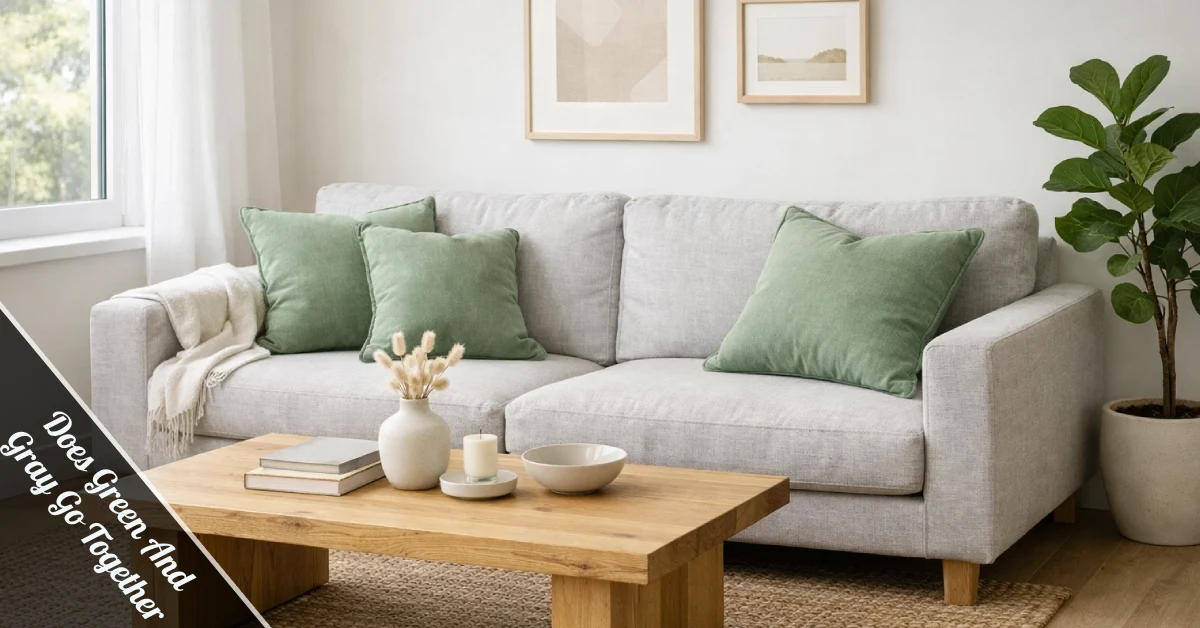
So you’re staring at a paint swatch and wondering — does green and gray go together? Short answer: yes, absolutely. Long answer: Let’s walk through it.
Green brings that earthy, fresh energy that no other color can fake. Gray is the cool-headed friend who makes everyone in the room look better. Put them together, and you’ve got something really special.
This guide breaks it all down — room by room, shade by shade — so you can make a confident call.
Why This Color Combo Actually Works
Green and gray work well together because they balance each other. Green is lively and nature-forward. Gray is neutral and grounding. Together, they cancel out each other’s extremes beautifully.
Think of it like a playlist — green is the upbeat track, gray is the smooth baseline holding it together.
There’s also a psychological layer here. Green triggers calm and a connection to nature — studies on biophilic design back this up. Gray, meanwhile, creates a sense of stability and quiet sophistication. That’s a pretty powerful combo for any living space.
Designers love this pairing because it doesn’t box you in. You can go soft and minimal with light shades or bold and dramatic with darker tones — total flexibility depending on your vibe.
Quick-Reference: Green + Gray Shade Pairings
| Green Shade | Gray Shade | Best Used In | The Vibe |
| Sage green | Light gray | Bedroom, bathroom | Calm, airy, spa-like |
| Olive green | Mid-gray | Living room, kitchen | Warm, earthy, grounded |
| Emerald green | Charcoal gray | Feature wall, dining room | Bold, luxurious, dramatic |
| Mint/seafoam | Soft gray | Small rooms, apartments | Fresh, open, bright |
| Dark forest green | Warm gray | Home office, library | Rich, cozy, sophisticated |
Green and Gray in the Living Room
The living room is where this pairing shines brightest — and it’s easier than you think.
Start with gray as your base. Gray walls or a gray sofa give you a neutral anchor. Then layer in green through cushions, rugs, plants, and artwork. Balance unlocked.
For a modern look, try light gray walls paired with a deep green sofa. The contrast is clean without feeling aggressive. Add some brass or gold accents, and you’ve just leveled up the whole room effortlessly.
Prefer something cozier? Go warmer grays and softer greens with layered textures — think chunky throws, linen curtains, and a jute rug underneath.
In smaller living rooms, stick to lighter shades of both colors. They bounce light around and keep the space feeling open and breathable. In larger rooms, you’ve got room to experiment with deeper tones, creating real depth and character throughout.
Do Dark Green and Gray Go Together?
Yes — but it’s a power move that needs a little planning. Don’t just wing it with dark shades.
Dark green and charcoal gray can look incredibly sophisticated when done right. Think moody, editorial, almost like a boutique hotel. It works best in larger, well-lit spaces where the darkness doesn’t swallow the room whole.
The cheat code here: add lighter elements to break it up. White trim, beige accessories, or metallic accents like brass or brushed gold will prevent the pairing from feeling too heavy.
Materials matter too. Wood, glass, and textured fabrics make the whole look feel dynamic rather than flat.
Bedrooms and Bathrooms: Where This Combo Really Delivers
If you want a bedroom that feels like a proper retreat, green and gray is your answer. It’s practically designed for rest.
Soft sage green paired with light gray bedding and walls creates an atmosphere that’s genuinely calming. It’s not just aesthetics — the combination taps into real biophilic design principles that help your brain wind down faster. Simple bedding and natural materials complete the effect.
In bathrooms, pale green tiles with cool gray walls or fixtures hit a spa-like note that’s hard to get wrong. It feels fresh and clean without being clinical or boring.
Lighting plays a huge role in both spaces. Brighter lighting makes the colors pop with a crisp, energetic feel. Softer, warmer lighting pulls them into a cozy, intimate mood. Adjust your bulbs before you commit to a shade decision.
Picking the Right Wall Paint Combination
Choosing paint is where most people get stuck. The trick is to look at undertones, not just the color itself. Not all grays are created equal — some lean warm, some lean cool.
Warm gray tones, which carry hints of beige or pink, make green feel softer, more inviting, and less sharp.
Cool grays with blue or green undertones create a more modern and crisp environment. Pair these with a bolder green for a clean, contemporary edge that feels intentional.
Benjamin Moore and Farrow & Ball both offer excellent options across this entire spectrum worth exploring.
Accent walls are a smart way to ease into the pairing. Paint one wall a rich green and keep the rest in gray — you get the drama without the commitment. Full-room schemes also work beautifully once you nail the right balance between both shades.
Paint Finish Guide: Which Works Best?
| Finish Type | Best For | Effect |
| Matte | Walls, large surfaces | Soft, modern, absorbs light |
| Eggshell | Living rooms, bedrooms | Subtle sheen, easy to clean |
| Satin | Bathrooms, kitchens | Slight glow, moisture-resistant |
| Gloss | Trims, accents | Bright, reflective, bold |
Green and Gray in Clothing — Yes, It Works Here Too
The question “Does green and gray go together in clothes?” comes up more than you’d expect. The answer is the same as with interiors — confidently yes, with a few guidelines to follow.
For casual wear, an olive green jacket with gray joggers or a gray tee is an effortlessly clean combination that works every time.
Want to dress it up? A dark green suit paired with a charcoal gray shirt is a sharp alternative to the standard navy or black option. It reads polished and fresh without trying too hard at all.
Lighter greens and grays are your spring and summer move. Swap to darker, richer tones when fall and winter hit.
Common Mistakes to Avoid
Even a great combo can go sideways. Here’s what trips most people up when pairing these colors.
Ignoring undertones is the number one mistake. Picking a cool-toned gray to pair with a warm olive green creates an unintentional clash that’s hard to identify but easy to feel. Always hold your swatches side by side under the room’s actual lighting before making a final decision.
Going too dark on both ends makes the space feel heavy and closed in. If you’re using deep shades, balance them out with white trim, pale accessories, or plenty of natural light throughout the room.
Not enough contrast is the other extreme. If both shades are too similar in tone, the design looks flat and forgettable. Variation in shade or texture is your fix here.
Final Thoughts
Do green and gray go together? Without a doubt. It’s one of the most flexible and timeless color pairings available in design right now.
Whether you’re redecorating a living room, updating a bedroom, refreshing a bathroom, or rethinking your wardrobe — this combo delivers. It works across every room, every season, and every style from minimal to maximalist.
Pay attention to undertones, respect the role of lighting, and don’t be afraid to mix textures. Do those three things, and you genuinely cannot go wrong with this pairing.
Now go grab those swatches. Your room — or your wardrobe — is about to get a serious upgrade today.
FAQs
Do green and gray go together in a living room?
Yes. Use gray as the base and layer green through soft furnishings and plants. Light shades keep it airy; deeper tones create a moodier, more editorial feel.
What is the best green and gray combination for walls?
Sage green with light gray is the most universally loved combo. It’s calming, works in most rooms, and pairs well with natural materials like wood and linen.
Do dark green and gray go together?
Absolutely — it looks bold and sophisticated. Balance it with lighter accents and good lighting. Emerald with charcoal is a particularly striking combination in the right space.
Can I use green and gray in small spaces?
Yes, but stick to lighter shades. Mint or soft sage with pale gray makes small rooms feel more open and bright. Avoid heavy dark tones in tight spaces.
Does green and gray work for clothing?
It does. Olive green and gray is a reliable everyday combo. Dark green and charcoal work well for smarter outfits. The pairing is clean, effortless, and easy to pull off.