

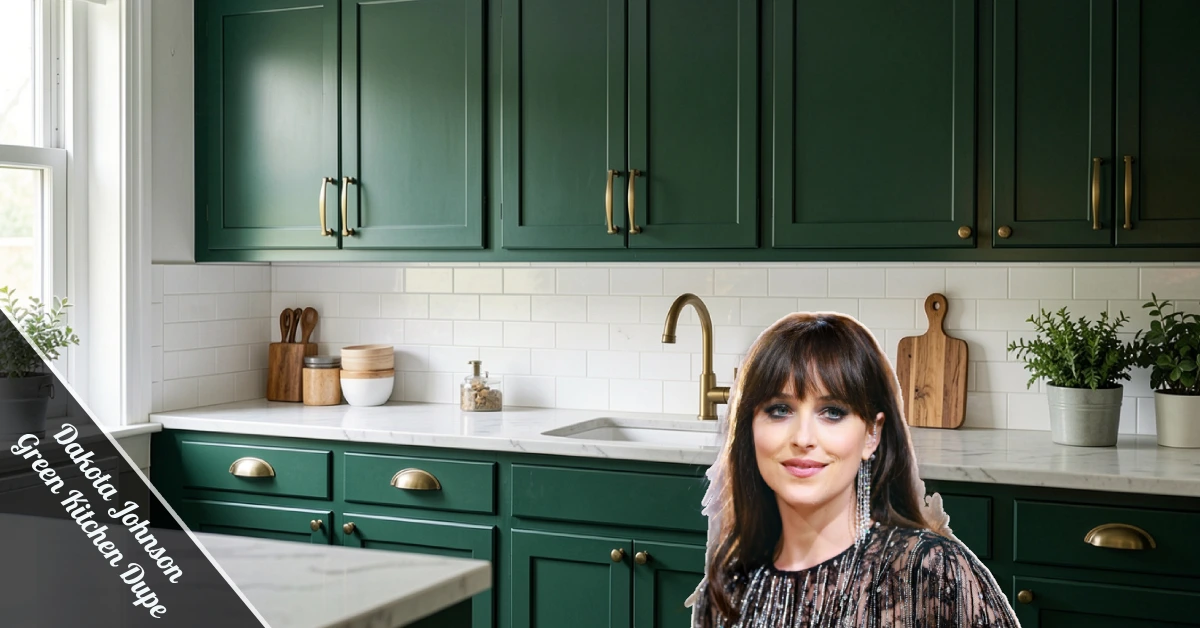
When Dakota Johnson opened her home to Architectural Digest, the internet collectively lost its mind. Those deep, moody green cabinets? Instant obsession. Everyone wanted that exact vibe — rich, warm, effortlessly cool — without spending celebrity money. Good news: you don’t have to.
This guide breaks down exactly how to pull off the Dakota Johnson Green Kitchen Dupe in your own home. No contractor required. No trust fund necessary. Just smart choices, the right paint, and a little patience.
Why This Green Kitchen Trend Still Hits Different
Some trends fade fast. This one? It stuck around because it solves a real problem — people are tired of sterile, all-white kitchens that feel more like hospitals than homes.
The appeal of this look is bigger than just one celebrity. It taps into something people genuinely want: a kitchen that feels personal, lived-in, and a little luxurious. Bold color does all of that heavy lifting.
What makes the Dakota Johnson Green Kitchen Dupe so popular is how accessible it actually is. You’re not copying a $500K renovation — you’re copying a feeling. That’s totally achievable on a normal budget.
Deep, muted greens also age beautifully. Unlike trendy pastels or loud accent walls, this palette feels timeless. You won’t be repainting in three years, wishing you’d gone neutral.
Picking Your Perfect Shade of Green
This is where most people get tripped up — and honestly, it’s the most important decision you’ll make. Not all greens are created equal, and the wrong one can make your kitchen feel cold or chaotic.
You’re looking for something in the deep, earthy green family. Think forest, hunter, or sage with a grey undertone. Avoid anything too yellow-green or too blue — both can look off under kitchen lighting.
| Shade Type | Best For | Vibe |
|---|---|---|
| Sage Green | Small kitchens, soft natural light | Calm, earthy, minimal |
| Forest Green | Larger kitchens, bold statement | Rich, moody, dramatic |
| Olive Green | Warm-toned spaces, vintage style | Cozy, retro, grounded |
| Hunter Green | Modern or traditional kitchens | Classic, sharp, timeless |
Test at least three samples on your actual cabinets before committing. Natural light in the morning looks completely different from your kitchen lights at night. That green you loved in the store? It might look army grey once it dries on wood.
Benjamin Moore and Farrow & Ball both have killer greens in this family. You don’t need the most expensive option — make sure you’re buying paint specifically formulated for cabinetry. It cures harder and holds up to daily use far better than wall paint.
The Cabinet Transformation: Your Cheat Code to a New Kitchen
Here’s the truth nobody tells you — painting your cabinets is genuinely the highest-ROI upgrade in home décor. You’re changing the entire personality of the room for the price of paint and supplies.
You don’t need to rip out old cabinets to pull off the Dakota Johnson Green Kitchen Dupe. What you need is proper prep, quality materials, and realistic expectations about the timeline.
Step 1: Clean everything obsessively. Grease, even invisible grease, will ruin your paint job. Use a degreaser on every surface you plan to paint before doing anything else.
Step 2: Sand lightly. You’re not stripping the cabinet — just scuffing the surface so the new paint has something to grip. A fine-grit sanding block works perfectly here.
Step 3: Prime it. Skipping primer is the most common DIY mistake. A bonding primer on wood gives your paint the foundation it needs to actually last.
Step 4: Apply thin coats. Two or three thin coats beat one thick coat every single time. Thick coats drip, bubble, and show brush marks. Thin coats dry smooth and layer beautifully.
Use a foam roller for flat cabinet faces — it gives you that factory-smooth finish that makes the whole thing look professional. Keep a small brush for edges and corners only.
Hardware: The Detail That Makes or Breaks the Look
Think of cabinet hardware as the jewelry on your kitchen. You can have perfect green cabinets and still make it look mid if your hardware is wrong. This is where people either nail it or miss completely.
Brass is the move. Warm, slightly aged brass pulls and knobs create that perfect contrast against deep green — the same contrast that made Dakota’s kitchen feel so considered and intentional.
| Hardware Finish | Pairs Well With | Overall Feel |
|---|---|---|
| Brushed Brass | Deep/dark greens | Warm, vintage, elegant |
| Matte Black | Sage or olive greens | Modern, sharp, editorial |
| Antique Bronze | Forest or hunter green | Rustic, layered, rich |
| Polished Nickel | Muted grey-greens | Clean, transitional, fresh |
You don’t need to replace every piece at once. Start with the cabinet pulls — they’re the most visible hardware and make the biggest visual difference for the least money.
Match your faucet and light fixtures to the same metal family as your pulls. It’s a small thing, but a mismatched faucet in a well-styled kitchen is like wearing two different shoes. The eye notices, even if the brain doesn’t register why.
Styling the Space: Open Shelves, Texture, and the Good Stuff
Once your cabinets are done, the styling is where you get to have fun. This is the part that actually makes your kitchen feel like your kitchen and not just a renovation project.
Open shelving is a cornerstone of this aesthetic. A few floating shelves in wood or metal give you space to display things that actually mean something — vintage pottery, a good cookbook stack, some plants. Keep it curated, not cluttered.
Texture is your best friend here. A linen dish towel, a wooden cutting board propped against the backsplash, a ceramic canister — these small things add warmth that no paint color can replicate on its own. Mix materials intentionally, and the space starts to breathe.
Lighting matters more than people think. Under-cabinet lighting is a game-changer — it adds that warm glow that makes your green cabinets look rich instead of dark. A small pendant over the sink doesn’t cost much but completely changes the room’s mood.
Backsplash and Countertops: Keeping It Balanced
Your cabinets are the star. The backsplash and countertops are the supporting cast — they need to play their role without stealing the show.
Classic white subway tile is the most reliable choice for this look. It’s clean, affordable, bright, and lets those green cabinets do their thing without visual competition. It’s also the easiest tile to find on a budget.
For countertops, light marble or a marble-look quartz hits that designer sweet spot. The soft veining adds visual interest while keeping the overall palette grounded and balanced. Dark countertops work too — especially if your green is on the lighter, softer side.
The goal is contrast and balance. Dark green cabinets with light countertops and a bright backsplash feel open. Lighter green cabinets can handle a slightly darker countertop without the room feeling heavy.
The Full Dakota Johnson Green Kitchen Dupe: What to Prioritize First
If you’re working with a tight budget, sequence matters. You can’t do everything at once, so here’s the order that gives you the most visual impact for every dollar you spend.
Start with paint — always. It’s the single biggest transformation for the lowest cost. After that, swap the hardware. Those two moves alone will make your kitchen nearly unrecognizable.
Add open shelves next if your layout allows. Then work on lighting. Backsplash and countertops are last — they’re the most expensive elements and the ones where patience pays off most.
The Dakota Johnson Green Kitchen Dupe isn’t about doing everything overnight. It’s about making intentional moves that build toward a kitchen that genuinely looks and feels like a designer space. Pace yourself, do each step well, and the result will hold up for years.
Final Thoughts
Honestly? The best part about recreating this look is realizing you didn’t need Dakota Johnson’s budget to get Dakota Johnson’s aesthetic. The secret was never the price tag — it was the color, the confidence, and the intention behind every choice.
Bold green cabinets paired with warm brass hardware, soft natural light, and a few carefully chosen pieces on an open shelf — that’s the formula. It works in a tiny apartment kitchen just as well as a sprawling suburban space.
Start with one coat of paint and see where it takes you. That’s all the Dakota Johnson Green Kitchen Dupe really asks of you.