

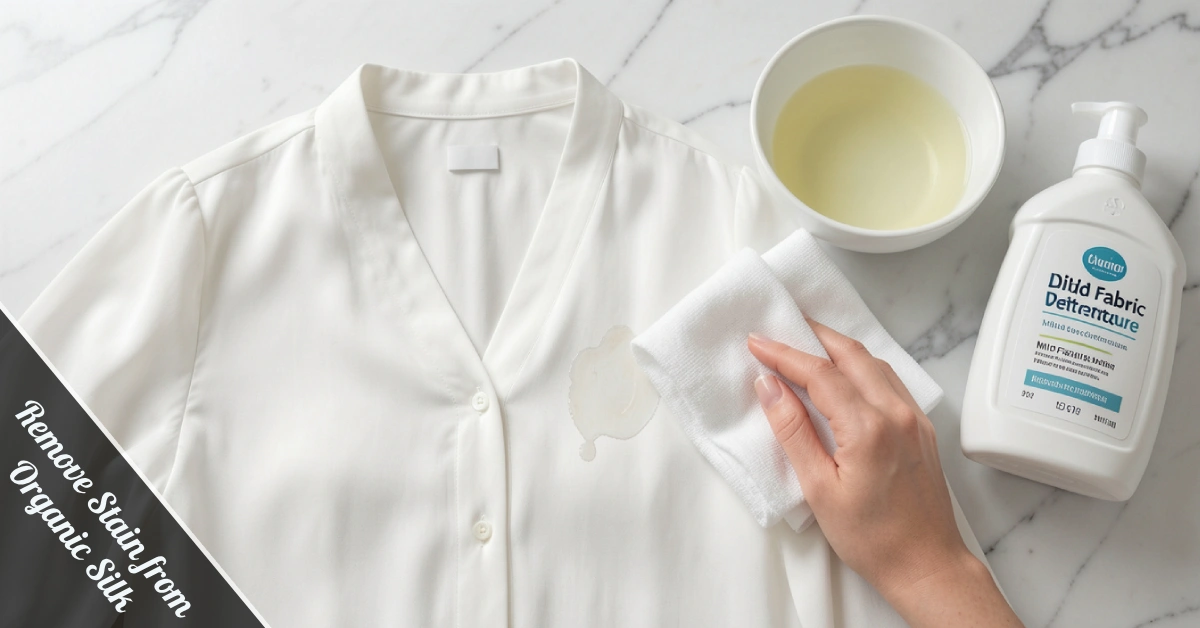
Organic silk is one of those fabrics that looks incredible and feels even better. It’s luxurious, breathable, and delicate — which means one wrong move during cleaning can cause permanent damage. Knowing how to remove stains from organic silk correctly is the difference between a quick fix and a ruined garment. Whether it’s a wine splash on a silk blouse or a grease mark on silk cushion covers, the method matters more than the effort. This guide covers exactly what to do, what to skip, and how to keep your silk looking pristine long-term.
Why Organic Silk Needs Special Attention
Not all fabrics behave the same way, and organic silk is in a category of its own. Its protein-based fibers are sensitive to heat, harsh chemicals, and friction. Even clean water, if used incorrectly, can leave a watermark.
Always read the care label before doing anything. The dye used in high-quality silk can react badly to common household cleaners. Skipping this step often turns a small stain into a permanent one.
The weave of silk is tight and smooth, which makes it easy not to snag or distort. Rubbing a stain — even gently — can break the surface and dull the natural sheen permanently. Blotting is always the right call.
Quick Reference: What’s Safe, What’s Not
| Safe | Avoid |
|---|---|
| Cool water | Hot or warm water |
| Mild detergent for delicates | Bleach |
| White vinegar (diluted, patch tested) | Lemon juice |
| Blotting with a white cloth | Rubbing or scrubbing |
| Hand washing | Machine washing |
| Flat air drying | Tumble dryer |
| Professional dry cleaner | DIY harsh chemical treatments |
Treating organic silk well doesn’t require expensive products or complicated steps. The main rules are consistent: act fast, stay gentle, test before applying anything new, and know when to hand it off to a professional. Follow these, and your silk pieces will stay in excellent condition for years.
Act Fast: What to Do the Moment Silk Gets Stained
Speed is your biggest advantage with fresh stains. The longer a stain sits, the deeper it bonds with the fibers. Getting to it within the first few minutes gives you the best shot.
Grab a clean white cloth immediately. Colored cloths risk transferring dye onto the silk, which creates a second problem on top of the first. Press gently and lift — never drag.
For water-based spills like juice or wine, a lightly damp white cloth works well right away. For oil or grease, skip the water and reach for talcum powder or cornstarch instead. Let it sit for a few minutes to absorb the oil before brushing it away.
Deodorant stains respond better to a dry approach first. Rubbing any liquid into a deodorant mark tends to spread the white residue further into the weave. Pat the area, don’t press hard.
Safe Methods to Remove Stains from Organic Silk at Home
The safest way to remove stains from organic silk is with cool water and a mild detergent designed for delicate fabrics. Run cool — never warm — water over the stained area from the back of the fabric to push the stain out rather than deeper in.
Add a small drop of mild detergent to the stained area and work it in with your fingertip using circular pressure. Rinse immediately with cool water. Repeat once if needed, but don’t overwork the fabric.
White vinegar is a reliable option for light stains and general freshening. Dilute it with equal parts water before applying. Always do a patch test on a hidden seam or hem first to make sure the color holds.
| Stain Type | First Step | Safe Agent | What to Avoid |
|---|---|---|---|
| Oil / Grease | Talcum powder or cornstarch | Mild detergent | Water (initially) |
| Wine / Juice | Blot with a white cloth | Diluted white vinegar | Rubbing |
| Sweat | Cool water rinse | Mild detergent | Hot water |
| Deodorant | Dry blot | Mild detergent | Aggressive scrubbing |
| General spot | Patch test first | Cool water + detergent | Bleach, lemon juice |
Never use bleach. It causes silk to yellow, weaken, and break down at the fiber level. Lemon juice has the same effect. Commercial stain removers are risky unless they explicitly state they are safe for silk — always patch test before full application.
Hand Washing Organic Silk the Right Way
Hand washing is the safest at-home method for most silk garments. Fill a clean basin with lukewarm water — not hot, not cold. Add a small amount of detergent formulated for delicates and swirl gently to distribute.
Submerge the garment and move it gently through the water. Do not scrub, twist, or wring. The goal is to let the water and detergent do the work, not mechanical force.
Rinse thoroughly with cool water until the water runs completely clear. Any soap residue left in the fibers can stiffen the fabric or cause dullness over time. Two or three rinse cycles usually get it fully clean.
To remove excess water, press the garment gently between two clean towels. Never twist. Lay it flat on a dry towel to air dry away from direct sunlight or heat sources. High heat distorts silk fibers permanently.
Machine washing, even on a gentle cycle, carries real risk. The agitation inside a drum — even at low speed — can snag, stretch, or permanently wrinkle silk. Skip the machine.
When Professional Dry Cleaning Is the Right Call
Some situations are beyond safe home treatment. If you’re dealing with a large stain, an unknown substance, or a particularly valuable piece, professional dry cleaning is the smarter choice. A trained dry cleaner has the solvents and equipment to remove stains from organic silk without compromising the fabric.
Before dropping it off, point out the stain and tell the cleaner what caused it if you know. This detail helps them select the right treatment. Guessing the wrong solvent can set a stain instead of removing it.
For heirloom pieces, antique silk, or heavily embroidered garments, professional care isn’t optional — it’s the only sensible route. The cost of dry cleaning is always less than the cost of replacing an irreplaceable item.
Long-Term Care and Storage Tips
Good maintenance between wearings extends the life of silk significantly. Air out silk garments after each use before storing — folding or hanging them while still holding body heat traps moisture in the fibers.
Store silk in a cool, dry place away from direct sunlight. UV exposure fades color and weakens fiber over time. Use breathable fabric garment bags rather than plastic, which traps humidity and encourages mildew.
Keep silk away from rough surfaces and sharp edges during storage. Even minor abrasion repeated over time dulls the sheen. Padded hangers work better than wire ones, which can distort the shoulder shape of silk blouses.