

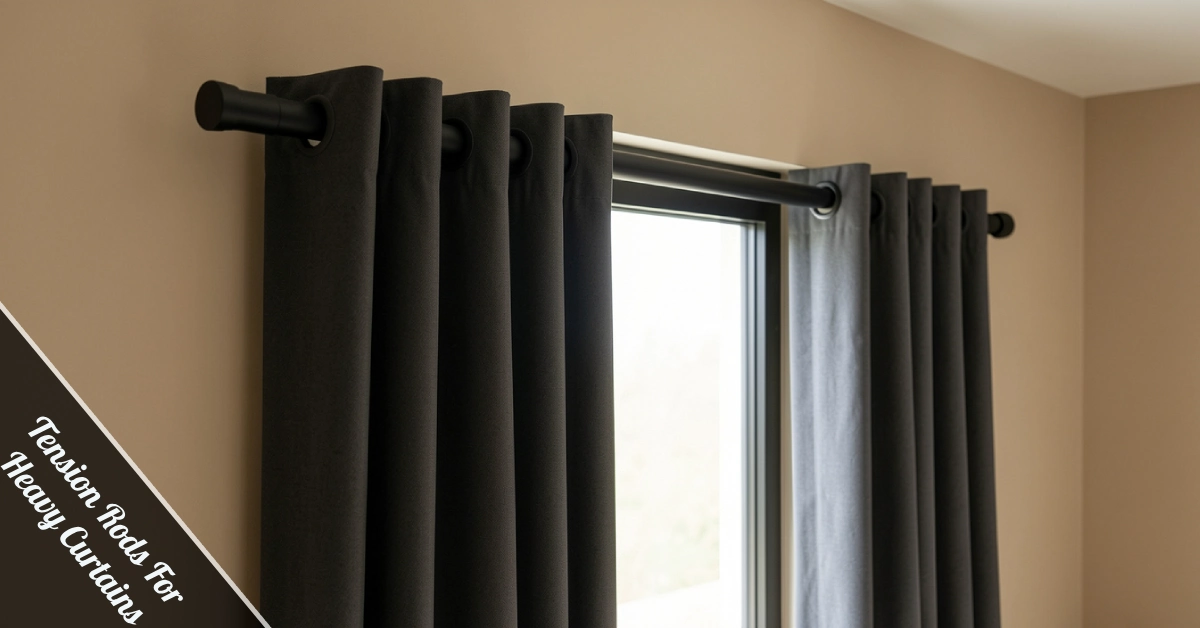
You finally found the curtains you wanted. Thick blackout panels, a deep velvet colour, real weight in your hands. Then you look at your walls and remember you cannot drill into them, whether that is a rental agreement, a freshly painted ceiling, or a tile surround in the bathroom.
A tension rod solves that problem, but only if you pick the right one. Most of the rods sold for light curtains are not built to hold blackout fabric or velvet drapes for more than a week before they sag, slip, or fall. This guide covers how rod diameter and weight rating actually work, how to install a heavy-duty rod so it stays in place, and what to do if yours is already slipping.
Why Standard Tension Rods Fail Under Heavy Curtains
Most tension rods sold in big box stores are built for shears and lightweight cafe curtains, not blackout or velvet fabric. The spring inside is thin, and the rod itself is often no wider than three-quarters of an inch. That works fine for a kitchen panel weighing a pound or two. It does not work for a heavy drape.
Consider a pair of 84-inch blackout curtains in a cotton-poly blend. A single panel typically weighs in the range of 3 to 4.5 pounds, so a pair adds up to 6 to 9 pounds of pull on the rod before you even add a liner. Velvet runs heavier still, often 5 to 8 pounds per panel. A standard rod rated for 5 pounds total is already overloaded with one velvet panel, let alone two.
The actual point of failure is almost always the same: a narrow rod diameter flexes under load, which reduces the outward pressure holding it against the wall. Once that pressure drops, the rubber end caps lose their grip, and the whole rod slides down.
How to Choose a Tension Rod That Can Actually Hold Heavy Fabric
Diameter Is the First Thing to Check
A rod with a 1.25 inch diameter resists bowing across a standard window width in a way a 0.75 inch rod cannot. Thicker tubing keeps the spring under enough tension to maintain grip even across 60-plus inches of unsupported span. If a listing does not state the diameter, treat that as a sign the rod is not built for heavy fabric.
Match the Weight Rating to Your Fabric
Every rod lists a maximum weight capacity, and it is worth checking against the actual weight of your curtains rather than guessing. As a general guide, sheer and cafe panels usually weigh under 2 pounds and work fine on a standard rod. Cotton-poly blackout panels run 3 to 4.5 pounds each. Velvet and thermal-lined drapes run 5 to 8 pounds each. For anything in the blackout or velvet range, look for a rod rated at 10 to 15 pounds minimum, which gives you a margin above the combined weight of both panels.
Material and Finish
Rustproof steel or reinforced aluminium holds up better over time than the plastic-capped rods sold for light-duty use, particularly in bathrooms or anywhere humidity is a factor. Plastic components tend to crack within a year or two under regular tension. On finish, matte black pairs well with most wall colours and dark drapery, while brushed nickel or bronze blends in better with warmer, traditional rooms.
Adjustable Range and Lock Mechanism
Telescopic rods that extend between roughly 66 and 120 inches cover most standard window widths, so measure your window first and check that range before buying. A rod that locks with an internal twist mechanism, rather than relying on spring pressure alone, holds its position more reliably once installed.
| Feature | Standard Rod | Heavy-Duty Rod |
| Diameter | 0.75 inch | 1.25 inch |
| Weight Capacity | 3 to 5 lbs | 10 to 15 lbs |
| Spring Type | Basic coil | Reinforced spring |
| End Caps | Plastic | Rubber-grip |
| Best For | Sheer panels | Blackout and velvet drapes |
| Wall Damage | None | None |
Tension Rod vs Traditional Curtain Rod: Which Fits Your Situation
Tension rods are not always the right tool. Here is how the two options compare side by side.
| Category | Tension Rod | Traditional Rod |
| Installation | No drill needed | Requires drilling |
| Wall Damage | Zero | Permanent holes |
| Best For | Renters, dorms, light renovations | Permanent setups |
| Adjustability | Fully adjustable | Fixed once installed |
| Load Limit | Up to 15 lbs (heavy-duty) | Virtually unlimited |
| Cost | $10 to $35 | $15 to $60 plus hardware |
If you are still in the early stages of laying out a home, window placement is one of the easiest things to get right before walls go up rather than after. Reviewing a set of small 3-bedroom house plans can help you see how window position interacts with closet space and furniture placement, which makes choosing between a tension rod and a traditional one far simpler once curtains are on your list.
For renters, dorm residents, or anyone planning to move within a year or two, a tension rod is generally the better choice. For a permanent setup, such as floor-to-ceiling drapery in a primary bedroom you plan to stay in long-term, a traditional rod with proper wall anchors will hold more weight over more years.
Step-by-Step Installation
Prep the Surface
Wipe down the area where the rubber end caps will sit, removing dust, oil, or any moisture. A clean, dry surface is what creates the friction holding the rod in place, so this step matters more than people expect.
If you are mounting against tile, common in bathrooms, make sure it is fully dry. Even a thin film of moisture causes the rubber caps to slip once weight is added.
Measure Before You Extend
Extend the rod to about one inch longer than the actual window or frame width. That extra inch creates the outward pressure that keeps the rod locked in place. Too short and it will not grip. Too long and the spring will not compress enough to hold.
Worked Example: Installing a Rod in a 36 Inch Window
Say you are hanging a pair of blackout curtains in a 36-inch-wide bedroom window. Extend the rod to 37 inches, compress it slightly, and position it inside the window frame at the height you want. Release it slowly, and you should feel the spring engage. Give it a firm downward tug to confirm it holds. Hang one curtain panel first, wait about 30 seconds, then add the second panel. Adding both panels at once creates a sudden load spike that can shift a rod before the tension has fully settled.
Troubleshooting: Why Does My Tension Rod Keep Slipping?
This is one of the most common issues with heavy curtains, and it is almost always fixable without buying a new rod. Start by cleaning the rubber end caps with a slightly damp cloth, since oils from handling reduce friction over time. Let the caps dry completely before reinstalling.
If it still slips after cleaning, twist the inner tube further until you feel the internal teeth lock into place. That click is the sound of the rod properly engaging, and it is usually the missing step when a rod was installed too quickly the first time.
If the rod still will not hold after both of those steps, the issue is likely weight, not technique. At that point, switch to a heavy-duty rod rated for at least 10 pounds, or split the load across two rods rather than continuing to stress one.
Styling the Room Around Your New Curtains
Heavy curtains change the feel of a room on their own, but they read best when the rest of the furniture is in scale with them. A bulky velvet drape next to a thin, low-profile sofa can look unbalanced, while a substantial piece of furniture grounds the room.
If you are furnishing at the same time as hanging new curtains, our review of the West Elm Harmony Sofa covers how a solid, structured sofa can anchor a room against heavier drapery without feeling crowded.
For more direction on pairing colours, textures, and finishes once the curtains are up, the home decor ideas collection from The Home Trotters is a useful starting point for tying the rest of the room together.
Other Practical Uses for Tension Rods
Once you have a heavy-duty rod installed, you will likely find other uses for the same hardware. Inside a deep kitchen cabinet, a rod mounted a few inches below the shelf keeps spray bottles upright instead of toppling over every time the door opens.
Inside a closet, a second rod gives you a spot to hang scarves, belts, or folded items without adding a single screw, which is especially useful in a rental.
In a bathroom, a rustproof rod works well as a backup towel bar or to hang a privacy curtain over a window, since the rubber caps tolerate humidity better than the wall would tolerate a drilled anchor.
Common Mistakes That Undermine a Good Setup
- Buying based on price or colour alone without checking the diameter
- Skipping the surface cleaning step before installation
- Loading both curtain panels onto the rod at the same time
- Using a single rod across a span heavier than its rated capacity, rather than splitting the load across two rods
Final Thoughts
Choosing the right tension rod for heavy curtains comes down to a short list of details that are easy to check before you buy: diameter, weight rating, end cap material, and a clean surface at installation. Get those four right and the rod will hold for years without a single hole in the wall.
Whether you are setting up a rental bedroom, finishing a bathroom, or organising a closet, the same hardware does more work than its size suggests. Measure your window, match the rod to your fabric weight, and install it the way outlined above, and the curtains will stay exactly where you put them.
FAQs
Can a tension rod really hold blackout curtains without sagging?
Yes, as long as the rod’s diameter and weight rating match the fabric. A 1.25-inch heavy-duty rod rated for 10 to 15 pounds comfortably holds a pair of blackout panels, which typically weigh 6 to 9 pounds combined. A standard 0.75-inch rod rated for 3 to 5 pounds will sag under that same load.
What is the maximum weight a tension rod can hold?
Heavy-duty tension rods are commonly rated between 10 and 15 pounds. A handful of reinforced models go higher, but for most blackout or velvet curtain setups, a rod in that 10 to 15 pound range provides enough margin above the actual fabric weight.
Do tension rods damage walls or paint?
No. When installed correctly, a tension rod relies on outward pressure and rubber end caps rather than anchors or screws, so it leaves no holes. The one exception is if a rod is left compressed against a freshly painted wall for an extended period, which can occasionally leave a faint mark from the end cap. Wiping the contact points periodically prevents that.
Can I use a tension rod on tile or in a bathroom?
Yes, as long as the tile is dry at the contact points and the rod itself is rustproof steel or aluminium rather than a plastic-capped model. Moisture is the main risk in a bathroom, since even a thin layer of condensation reduces the grip of the rubber end caps.
How long do tension rods last under heavy curtains?
A well-matched heavy-duty rod, properly installed and occasionally cleaned at the end caps, typically holds for several years under blackout or velvet curtains. Rods that fail early are almost always undersized for the fabric weight rather than worn out.
Tension rod or curtain wire, which is better for heavy fabric?
For heavy blackout or velvet curtains, a tension rod is the better choice. Curtain wire is designed for lightweight fabric and sags noticeably under anything heavier than a sheer panel, while a properly rated tension rod is built specifically to carry that load.