

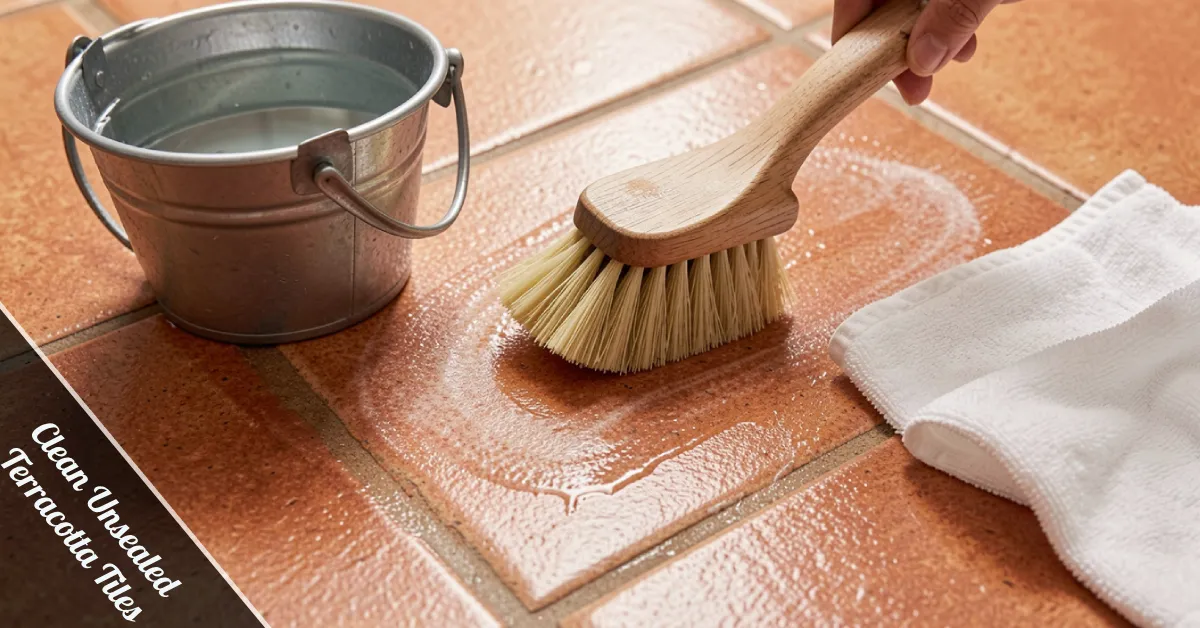
Terracotta floors have a warmth that no other tile can replicate. But if yours look dull, grimy, or stained, you’re probably cleaning them wrong. Here’s how to fix that.
Unsealed terracotta is not forgiving. Clean Unsealed Terracotta Tiles. It’s porous, thirsty, and picks up everything — spills, dirt, oils, and cleaning product residue. One wrong move with a harsh cleaner and you’ve made the problem worse than it was before.
This guide covers exactly how to clean unsealed terracotta tiles the right way. You’ll get step-by-step methods, the right products to use, stain removal tactics, and maintenance habits that keep your floors looking their best long-term.
Why Unsealed Terracotta Tiles Need Special Care
The first thing to understand is that terracotta is fired clay. It’s naturally porous, which means it absorbs liquids fast. Without a sealer acting as a barrier, everything that touches the surface goes straight into the material.
Most floor cleaning products are made for sealed or glazed surfaces. Using them on unsealed terracotta can strip the natural texture, leave white residue, or cause discolouration. That’s why standard mopping with a multi-surface cleaner is one of the most common mistakes homeowners make.
Moisture is the other big risk. If you flood the surface with water during cleaning and don’t dry it properly, moisture seeps deep into the clay. Over time, this causes efflorescence — those chalky white mineral deposits that appear on the surface — and can lead to cracking.
Knowing this upfront changes how you approach the whole cleaning process. Gentler is always better. Less water is always smarter.
What You Need Before You Start
Getting your supplies together before you begin saves you time and prevents mid-clean mistakes. Here’s what to have on hand.
Cleaning tools:
- Soft-bristle brush or scrubbing brush
- Dry mop or vacuum (with a hard floor setting)
- Mop with a wring-out mechanism
- Wet vacuum (essential for removing excess moisture)
- Clean cloths or microfiber towels
Cleaning products:
- pH-neutral tile cleaner (brands like Lithofin KF or Bona Stone, Tile & Laminate Floor Cleaner work well on unglazed surfaces)
- Warm water
- For tough stains: an alkaline stripper designed for porous tiles
- For oil-based stains: acetone or a specialist degreaser
Avoid anything acidic (vinegar, lemon-based cleaners) and avoid high-alkaline products for routine cleaning. Both can damage the surface or alter the tile’s natural colour over time.
How to Clean Unsealed Terracotta Tiles Step by Step
This is the core process. Follow it in order and don’t rush any step.
Step 1: Dry-clean the surface first. Vacuum or sweep thoroughly to remove all loose dirt, dust, and grit. If you skip this, you’ll push debris into the pores when you add water. A hard-floor setting in a vacuum works best here.
Step 2: Mix your cleaning solution. Add your pH-neutral cleaner to warm water in a bucket, following the product’s ratio instructions. Don’t go heavy on the cleaner — more product doesn’t mean better results with unsealed terracotta.
Step 3: Work in small sections. Apply the solution to a small area (about 1 square meter at a time). Let it sit for two to three minutes so it can loosen surface grime without soaking into the tile. This is where most people go wrong — they either rush the dwell time or leave the solution on too long.
Step 4: Scrub gently but deliberately. Use your soft-bristle brush to scrub the tile surface and grout lines. Get into the grout lines properly — they hold more dirt than the tile face. Don’t apply excessive pressure; you’re lifting grime, not grinding it out.
Step 5: Remove the dirty solution immediately. Use a wet vacuum to pull up the cleaning solution before it dries on the surface. This step is non-negotiable. If you let the dirty water sit, the tile absorbs it, and you’re left with a new stain.
Step 6: Rinse with clean water. Go over the cleaned section with a clean mop and plain warm water to remove any cleaner residue. Residue left behind dulls the surface and attracts more dirt.
Step 7: Dry the floor properly. Use dry cloths or a wet vacuum to remove excess moisture. Open windows or run a fan to speed up drying. Don’t walk on the tiles until they’re fully dry.
This method keeps moisture exposure minimal and protects the porous surface throughout the process. It’s the right way to clean unsealed terracotta tiles without causing damage.
Removing Stubborn Stains and Old Sealer Buildup
Regular cleaning won’t touch deep-set oil stains or the grimy layer that builds up when old sealer starts to break down. These need a stronger approach.
For old sealer buildup or heavy soil: Use an alkaline stripper made for porous, unglazed surfaces. Apply it to the affected area and let it sit for the recommended dwell time on the product label. Once it’s worked into the buildup, scrub with a stiff brush. If the residue is particularly stubborn, you may need a second application before the surface loosens.
For oil-based stains: Apply a small amount of acetone directly to the stain using a clean cloth. Acetone dissolves oil and grease without soaking into the clay the way water-based products do. Work from the outside edge of the stain inward to avoid spreading it.
For grout lines specifically: Grout holds years of accumulated soil, especially in high-traffic areas. A stiff-bristle grout brush and an alkaline cleaner applied with some dwell time are the most effective combination. Don’t use a metal brush — it scratches the tile edges.
After any heavy-duty stripping or stain treatment, always rinse the area thoroughly with clean water. Use a wet vacuum to remove everything. Any chemical residue left behind will continue reacting with the tile surface.
Restoring the Natural Look After Deep Cleaning
Once your tiles are clean, you have a choice. You can leave them as-is for a completely natural, matte look — or you can apply a finish that protects without changing the tile’s character.
An impregnating sealer is the best option for most people who want to clean unsealed terracotta tiles and then protect them going forward. Unlike topical sealers, impregnating formulas penetrate below the surface. They protect from within without creating a shiny coating on top.
The result is a soft, satin appearance that still looks natural. The tile can still breathe, moisture vapour can still pass through, and the earthy texture stays visible. Products like Lithofin MN Pore-Free or a quality penetrating terracotta sealer work well for this purpose.
Apply the sealer to a completely clean and fully dry surface. Follow the manufacturer’s instructions carefully. Most impregnating sealers require the floor to be dry for at least 24 to 48 hours after cleaning before application.
Cleaning Mistakes That Damage Terracotta Floors
Knowing what not to do matters as much as knowing the right method. These are the most common errors that cause long-term damage.
| Mistake | Why It’s Harmful |
|---|---|
| Using vinegar or acidic cleaners | Acids etch the clay surface and cause permanent discolouration |
| Flooding the floor with water | Excess moisture penetrates deep and causes staining or cracking |
| Using abrasive scrubbing pads | Scratches the surface texture, which becomes more visible over time |
| Leaving a cleaner residue behind | Residue attracts dirt faster and dulls the tile’s natural appearance |
| Using a steam mop | High heat and forced moisture damage the unsealed terracotta badly |
| Skipping the dry-clean step | Pushes loose grit into pores, making cleaning harder and less effective |
If you’ve been making any of these mistakes, don’t worry — most surface damage can be corrected with a proper deep clean and correct technique going forward.
Simple Habits That Keep Terracotta Floors in Good Shape
Good maintenance comes down to consistency, not effort. A few small habits protect your floors between deep cleans.
Place quality mats at every entry point to your home. They catch outdoor dirt, grit, and moisture before it reaches your terracotta. Clean the mats regularly — a dirty mat does nothing.
Clean up spills immediately. Unsealed terracotta absorbs liquids quickly, so a wine spill or cooking oil drop left for even a few minutes can set into the surface. Blot spills, don’t rub them.
For regular upkeep, a lightly dampened mop is enough. Dry mop first, then use a mop just barely moistened with water or a diluted pH-neutral solution. No soaking, no flooding. This routine keeps surface grime from building up between deeper cleans.
Controlling moisture levels in your home also matters. High humidity can cause efflorescence to appear on terracotta, especially in kitchens and bathrooms. Good ventilation keeps this in check.
The Bottom Line
Unsealed terracotta is a beautiful, durable floor material — but only if you treat it correctly. Harsh products and excess water are its two biggest enemies.
Stick to pH-neutral cleaners, work in small sections, use a wet vacuum to remove moisture, and dry the floor thoroughly every time. When you need to tackle tough stains, use the right product for the specific stain type rather than defaulting to stronger versions of the wrong product.
If you want lasting protection, an impregnating sealer after a deep clean is the smartest move you can make. It keeps the floor looking natural and makes future cleaning much easier.
Done right, clean unsealed terracotta tiles aren’t just possible — they’re a floor you’ll actually enjoy having in your home for years.