

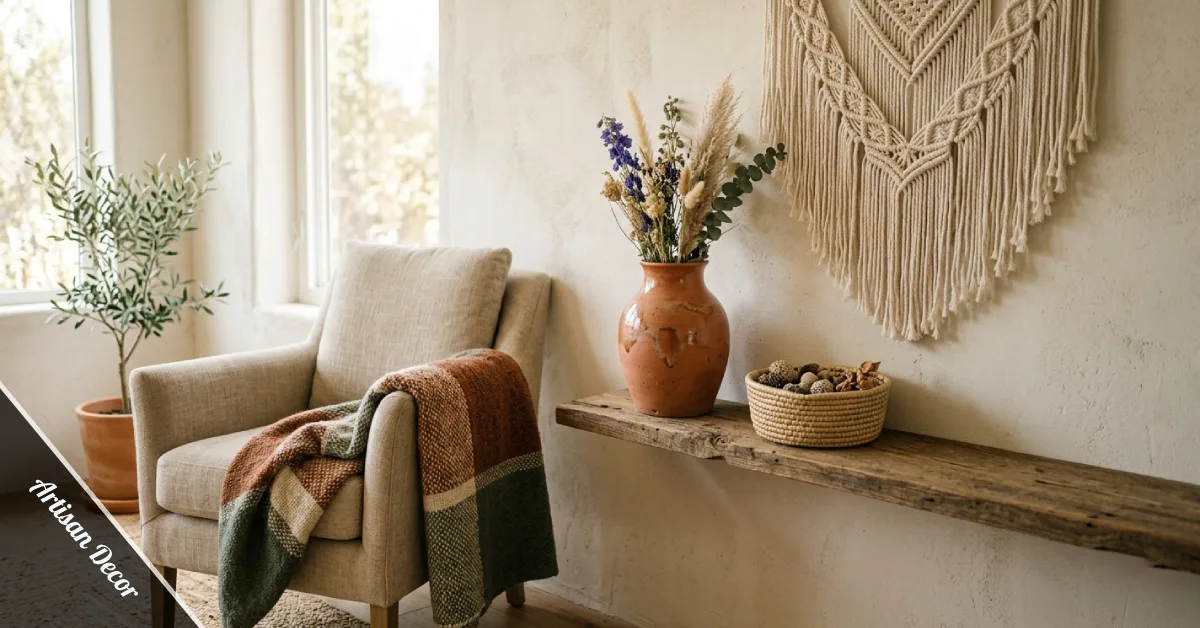
Artisan decor refers to handcrafted home accessories made by skilled makers using traditional techniques. It covers everything from hand-thrown ceramics and woven textiles to carved wood and hand-drawn wall art. Artisan pieces add texture, warmth, and personal meaning to any room. This guide covers what artisan decor is, why it matters, how to choose it, and how to style it well.
Why Artisan Decor Is Winning Over Mass-Produced Goods
Walk into any home that feels genuinely warm and welcoming, and you will almost always find at least one handmade piece. A hand-thrown vase. A woven basket. A piece of wall art drawn by an actual human hand. That quality is hard to fake.
The numbers back this up. UNESCO’s 2023 Cultural Heritage Index found that 72% of premium decor purchases involved products with documented craftsmanship origins, such as hand-carved wood or handwoven textiles. Buyers are not just shopping for objects; they want to know where something came from and who made it.
The global handicrafts market is projected to grow from $906.8 billion in 2024 to $1.94 trillion by 2033, with a compound annual growth rate of 8.83%. One key driver of that growth is a straightforward shift in values. Around 62% of consumers now prioritise eco-friendly brands when making purchasing decisions.
Mass-produced decor fills a shelf. Artisan decor fills a room with character.
What Artisan Decor Actually Means
Artisan decor is any decorative item made by a skilled craftsperson using hands-on techniques, often passed down through generations. It is the opposite of factory output. Each piece carries the small imperfections that make it one of a kind.
The category is broad. It includes:
- Hand-thrown and painted ceramics
- Woven rugs, baskets, and wall hangings
- Hand-carved wood objects and furniture details
- Hand-drawn and printed wall art
- Handmade candles, vessels, and containers
- Embroidered and block-printed textiles
- Blown glass and hand-forged metal pieces
The word “artisan” does matter here. Not every item sold as “artisan-inspired” or “rustic” qualifies. True artisan decor comes from a maker with a traceable process, a cultural or personal story, and a technique that goes beyond machine assembly.
The Case for Handcrafted Pieces in Your Home
Interior designers in 2025 are saying it clearly. Today’s interiors are driven by lifestyle, sustainability, personalisation, and emotional comfort. Rugs, art, and decor are no longer finishing touches; they are foundational elements that define how a space feels and functions.
That shift changes how you should approach shopping for your home. Buying three handcrafted pieces with meaning will do more for a room than filling it with ten matching items from a big-box store.
Katie McPherson, associate principal at interior design firm Meyer Davis, put it simply when discussing what younger buyers now expect: “There needs to be a story, and it needs to be handmade.”
Artisan pieces also hold their visual weight over time. Trends come and go. A hand-thrown ceramic bowl from Morocco or a hand-woven throw from Guatemala does not go out of style the way a seasonal collection does.
How to Choose Artisan Decor That Actually Works
Buying artisan decor requires slightly more thought than pulling a product off a shelf. Here is a practical approach that works for most rooms and budgets.
Start with one anchor piece per room. Pick the item that does the most visual work, whether that is a large woven wall hanging, a hand-painted vase, or a hand-carved console piece. Build around it from there. Combining handcrafted items with mass-produced ones is a smart way to highlight the uniqueness of the artisanal pieces.
Pay attention to material and origin. Knowing where something was made and what it is made from tells you a lot about its quality and longevity. Clay, natural fibres, reclaimed wood, and hand-forged metals age well and gain character over time.
Think about texture as much as colour. Artisan pieces tend to have physical depth. A hand-thrown pot has ridges. A hand-woven basket has variation in its weave. These textures catch light and create visual interest that flat, printed surfaces cannot replicate.
Check for signs of handwork. Slight irregularities, unique glazing patterns, visible brushwork, and small size variations are signs of genuine craft. They are features, not flaws.
Set a realistic budget per piece. Handmade objects cost more because they take more time. A well-made artisan piece will outlast three cheap alternatives and look better doing it.
Artisan Decor by Room: What Works Where
Not all artisan pieces suit every space. Here is how to think about placement room by room.
Living Room: This is where artisan decor does its best work. A hand-woven rug grounds the space. Handmade ceramic bowls and vases work on shelves and coffee tables. Hand-drawn or hand-printed wall art creates a focal point. If you are working with a smaller living area and want to add bold, joyful touches without overwhelming the space, dopamine decor principles for small spaces offer practical guidance on using colour and handcrafted pieces without overcrowding a room.
Bedroom: Artisan textiles shine here. Hand-embroidered pillow covers, block-printed throws, and woven blankets add warmth without adding clutter. A single piece of handmade wall art above the bed is often enough.
Kitchen and Dining: Hand-thrown plates, ceramic mugs, wooden serving boards, and hand-woven table runners all bring artisan character into everyday use. These pieces are practical as well as decorative, which makes them easier to justify buying.
Hallways and Entryways: A single strong artisan piece works best here. A hand-carved mirror frame, a woven wall hanging, or a hand-thrown planter near the door sets the tone for the rest of the home without requiring much space.
Home Office: Desk accessories made from natural materials like hand-turned wood, hand-thrown pen holders, and small woven trays keep the space grounded. A piece of hand-drawn art on the wall adds personality without distraction.
Styling Artisan Decor: Rules That Actually Help
Styling artisan pieces is not about following a formula. It is about making deliberate choices and avoiding a few common mistakes.
Avoid grouping too many pieces. Artisan objects need breathing room to stand out. Three well-placed pieces outperform twelve crowded ones.
Mix origins thoughtfully. A Moroccan basket, a Japanese ceramic, and a Colombian woven throw can all work in the same room. The thread that ties them is materiality and craft, not geography.
Use natural materials to connect pieces. Wood, linen, clay, stone, and natural fibre share a visual language. They work together without effort.
Layer textures at different heights. Place a woven basket on the floor, a ceramic piece on a mid-height shelf, and a textile wall piece higher up. That vertical distribution creates interest across the whole room.
If you are also working with heavier window treatments alongside artisan textile pieces, knowing how to hang heavy curtains properly will help you avoid the mistake of letting the hardware undercut the overall look.
Do not overmatch. Artisan decor loses its appeal when every piece is from the same collection or style. Variety is part of the point.
Artisan Decor and Sustainable Shopping
One of the strongest arguments for artisan decor is the sustainability angle. Handmade objects are typically produced in small quantities, use natural or locally sourced materials, and involve human skill rather than energy-heavy manufacturing.
Consumers in the United States are becoming more conscious about the environmental impact of their purchases, leading to a growing interest in sustainable and eco-friendly home decor options. Artisan decor sits at the centre of that interest.
Buying from individual makers, small studios, or fair-trade cooperatives means your money goes closer to the source. Platforms dedicated to handmade goods and shops that specialise in world-market artisan pieces make it easier than ever to find verified, ethically sourced items.
When you see certifications like Fair Trade, WFTO membership, or UNESCO craft designations attached to a product, those are meaningful signals. They confirm that the maker was compensated fairly and that the process was genuinely handcrafted.
Artisan Decor and the Modern Home Style
The modern artisan look is having a clear moment in interior design. The elements of this look are influenced by the world of craft and come together in a contemporary way. It is not a throwback aesthetic. It is craft meeting current sensibility.
Interior designers are focusing on curated materials, artisanal pieces, and layouts that feel both luxurious and livable. That combination, handmade warmth with clean, intentional design, is what makes artisan decor work in spaces that are otherwise quite modern.
You do not need a country kitchen or a bohemian bedroom to use artisan pieces well. A hand-thrown ceramic lamp base works in a minimalist room. A single piece of hand-drawn wall art works in a contemporary space. The key is restraint and intention.
If your home leans toward mid-century modern, artisan decor can blend especially well. Understanding the joinery and construction details of mid-century furniture helps you choose handcrafted pieces that genuinely complement that era’s design language rather than clashing with it.
Where to Buy Quality Artisan Decor
The best artisan decor comes from sources with direct ties to makers. Here is where to focus your search.
- Specialist artisan shops that source directly from cooperatives and independent craftspeople, with transparent origin information
- Fair-trade retailers that verify maker compensation and production conditions
- Online handmade marketplaces where individual makers list and sell their own work
- Cultural and heritage shops tied to specific craft traditions, such as Moroccan ceramics, Indian block print, or Latin American weaving
- Local craft markets and studios, where you can meet the maker directly
When buying online, look for detailed origin stories, process photographs, and honest descriptions of material and sizing. Avoid listings that use the word “artisan” without any supporting detail about who made the piece or how.
FAQs
What is the difference between artisan decor and handmade decor?
The terms overlap, but artisan decor typically implies a higher level of craft skill and cultural or traditional technique. All artisan decor is handmade, but not all handmade decor qualifies as artisan. A machine-assisted item sold as handmade would not be artisan decor.
Is artisan decor expensive?
It costs more than mass-produced equivalents, but the price gap is narrowing as more direct-to-consumer and fair-trade platforms connect buyers with makers. Spending more on fewer, better pieces is a more effective strategy than buying many cheap alternatives.
How do I keep artisan decor looking good over time?
Most artisan pieces benefit from minimal intervention. Handmade ceramics generally need gentle hand washing. Natural fibre pieces should be kept away from direct sunlight to prevent fading. Wood pieces occasionally benefit from natural oil treatment. Avoid harsh chemical cleaners on any hand-finished surface.
Can artisan decor work in a modern or minimalist home?
Yes, and it often works very well. A single handmade ceramic or a carefully chosen woven piece can be the most interesting element in an otherwise spare room. The contrast between minimal surroundings and one tactile, handmade piece is visually effective.
How do I avoid buying fake or misleadingly labelled artisan decor?
Look for origin transparency, maker information, and verifiable production details. Fair-trade certifications and direct-from-maker sourcing are the strongest indicators of genuine artisan work. If a listing uses the word “artisan” but provides no supporting context, treat that as a warning sign.