

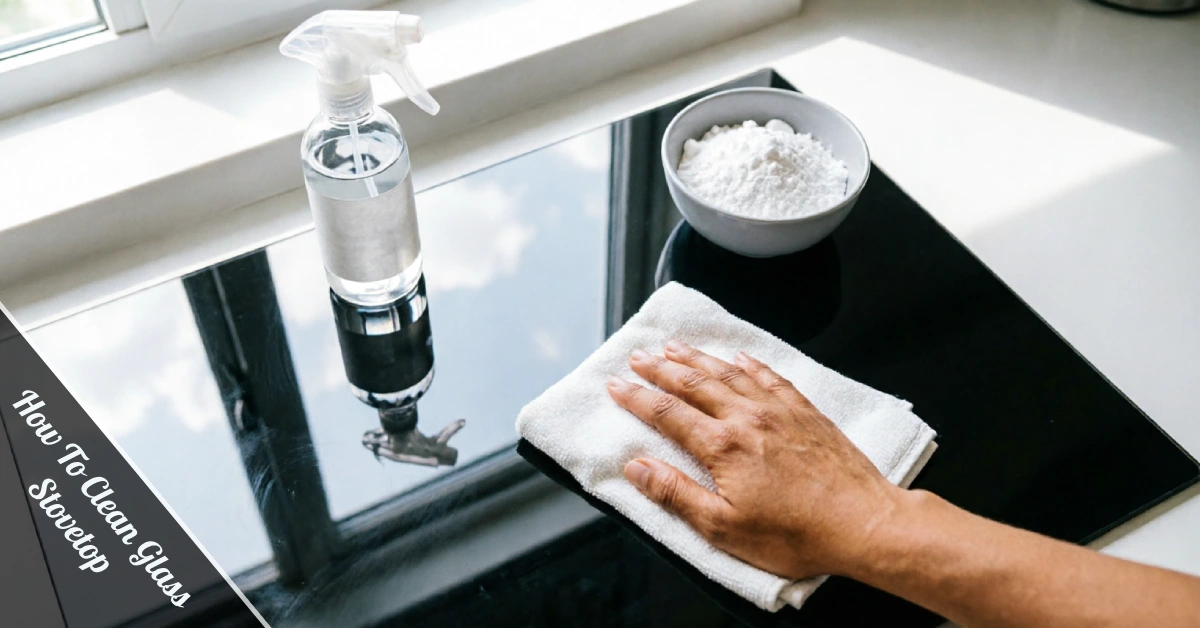
Burnt cheese. Ghost fingerprints. A cloudy film that just won’t budge. If your kitchen’s glass stovetop looks more like a crime scene than a centerpiece, you’re not alone. This guide breaks down how to clean glass stovetop surfaces the right way, no scratches, no drama, just a shine you’ll actually want to show off.
Glass cooktops look sleek until grease and food splatters turn them into a sticky mess. That shine fades fast without a little daily attention.
Skip a few days of upkeep, and burnt sugar or cheese can bond to the surface. At that point, you’re not wiping; you’re scraping, and that means risk.
The good news is you don’t need a professional or a specialty kit. A handful of pantry staples and the right technique get you most of the way there.
Quick Guide: Match the Mess to the Method
Different messes call for different moves. Here’s a cheat sheet so you’re not guessing every time something spills on the cooktop.
| Mess Type | Best Method |
|---|---|
| Daily grease and fingerprints | Warm soapy water, microfiber cloth |
| Burnt-on food | Baking soda paste, hot towel, scraper |
| Cloudy film or water spots | White vinegar and water spray |
| Sugary spills or melted plastic | Cool first, then scrape gently |
What You’ll Need Before You Start
You don’t need a cabinet full of products. A few basics handle almost every mess a glass cooktop throws at you.
Grab baking soda, white vinegar, a soft microfiber cloth, and a razor scraper made for ceramic glass. Dish soap and warm water round out the kit.
Skip steel wool and anything labeled abrasive. Those tools might work fast, but they leave permanent scratches behind, and scratches don’t buff out.
A commercial ceramic cooktop cleaner is a nice extra, but honestly, most days you won’t even need it if you keep up with the basics.
How To Clean a Glass Stovetop Every Day
The daily routine is simple. Wait for the surface to cool completely, then wipe it down with a damp microfiber cloth and a drop of dish soap.
Circular motions lift grease without pushing it around the surface. Dry it right after so you don’t end up with water spots.
This thirty-second habit is the real secret behind how to clean glass stovetop surfaces without ever facing a deep, stubborn mess later on.
Do it after every cook, and you’ll rarely need the heavy-duty methods below. Consistency beats a big scrub session every single time.
Busy weeknight? Even a quick pass with a dry cloth to catch loose crumbs makes tomorrow’s real cleaning that much easier.
Tackling Burnt-On Food and Grease
Burnt spots need a little more muscle, but nothing complicated. Sprinkle baking soda over the stain, then lay a hot, damp towel on top of it.
Let it sit for about fifteen minutes. The steam and baking soda work together to loosen whatever’s stuck, so scraping takes way less effort.
Once the towel’s off, use your scraper at a low angle. Hold it almost flat against the glass and let the blade do the work.
For grease that won’t quit, a splash of white vinegar on your cloth cuts through the film fast. This is often the fastest way to handle cleaning glass stovetop grime without much elbow work at all.
Wipe, rinse, and dry to finish the job. Check your appliance manual first if you’re unsure which methods your specific cooktop model can handle.
Black, crusty rings usually mean sugar has caramelized onto the glass. Repeat the baking soda step twice if the first round doesn’t fully lift it.
Removing Cloudy Streaks and Water Spots
That hazy film isn’t dirt; it’s usually mineral deposits from water or leftover soap sitting on the surface. Vinegar handles this one really well.
Spray equal parts water and vinegar directly onto the cooled glass. Let it sit for a minute before wiping with a dry microfiber cloth.
For a deeper shine, a dedicated glass cooktop polish adds a protective layer that helps repel future grease and fingerprints, and a few drops go a long way.
Buff in small circles until the cloudiness lifts. You’ll notice the glass looks almost brand new again within a minute or two.
Induction vs Radiant Glass Cooktops
Both surfaces are glass, but they don’t heat the same way, so your cleaning habits should adjust slightly depending on which one sits in your kitchen.
Induction tops cool faster since only the pan gets hot, not the glass itself. That means less baked-on residue and quicker daily wipe-downs overall.
Radiant cooktops stay hot longer, so spills bake on more easily. Waiting for a full cool-down before cleaning matters even more here.
Either way, the cleaning steps above work fine. Just adjust how long you wait before wiping, based on which type sits in your kitchen.
Cleaning Mistakes That Scratch the Glass
Sliding heavy pots across the surface is the number one scratch culprit. Always lift cookware instead of dragging it, even for small adjustments.
Rough sponges and powdered cleansers seem harmless, but they’re gritty enough to dull the glass over time. Stick with non-abrasive pads only, always.
Cleaning while the stovetop is still warm can also warp your cloth or cause streaking that’s genuinely tough to fix afterward. Patience pays off here.
Using the wrong scraper angle is another common slip. Too steep, and you risk gouging the glass instead of gliding smoothly across it.
Skipping the manual is a mistake, too. Some ceramic surfaces have their own quirks, and knowing them upfront saves you a scratched cooktop later.
Preventing Buildup Before It Starts
Prevention beats scrubbing every time. Use flat-bottom cookware that sits evenly on the surface instead of pots with warped or uneven bases underneath.
Wipe spills immediately, even mid-cook, before sugar or cheese has a chance to bake onto the glass and turn into a stubborn ring.
A clean kitchen routine tends to spill into other habits too, like finally checking why a hardwired smoke alarm keeps beeping near your cooking space.
Set a weekly reminder for a deeper wipe-down, even if nothing looks obviously dirty. Small habits add up to a stovetop that stays glossy.
Frequently Asked Questions
Can vinegar damage a glass stovetop?
No, diluted vinegar is safe and actually one of the best tools for cutting grease and mineral spots.
Can I use oven cleaner on it?
Skip it. Oven cleaner is too harsh and can permanently dull or discolor the glass surface over time.
Why does my stovetop look cloudy after cleaning?
You’re likely leaving soap residue behind. Rinse with plain water and buff dry for a streak-free finish.
How often should I deep clean?
Once a week is plenty if you’re already wiping daily. Twice a week if you cook heavy, greasy meals often.
Is baking soda safe for every glass cooktop?
Yes, as long as you rinse it off fully afterward. Leftover residue can leave its own faint film.
Conclusion
Once you’ve nailed how to clean glass stovetop surfaces on a regular schedule, and worked through the same checks you’d run on a hardwired smoke alarm beeping issue elsewhere in the kitchen, the deep-clean sessions become rare instead of routine.
Knowing how to clean glass stovetop surfaces properly really comes down to using the right tools, working gently, and staying consistent with quick daily wipe-downs. Got a stubborn stain that won’t budge? Drop your question in the comments, and we’ll help you sort it out.