

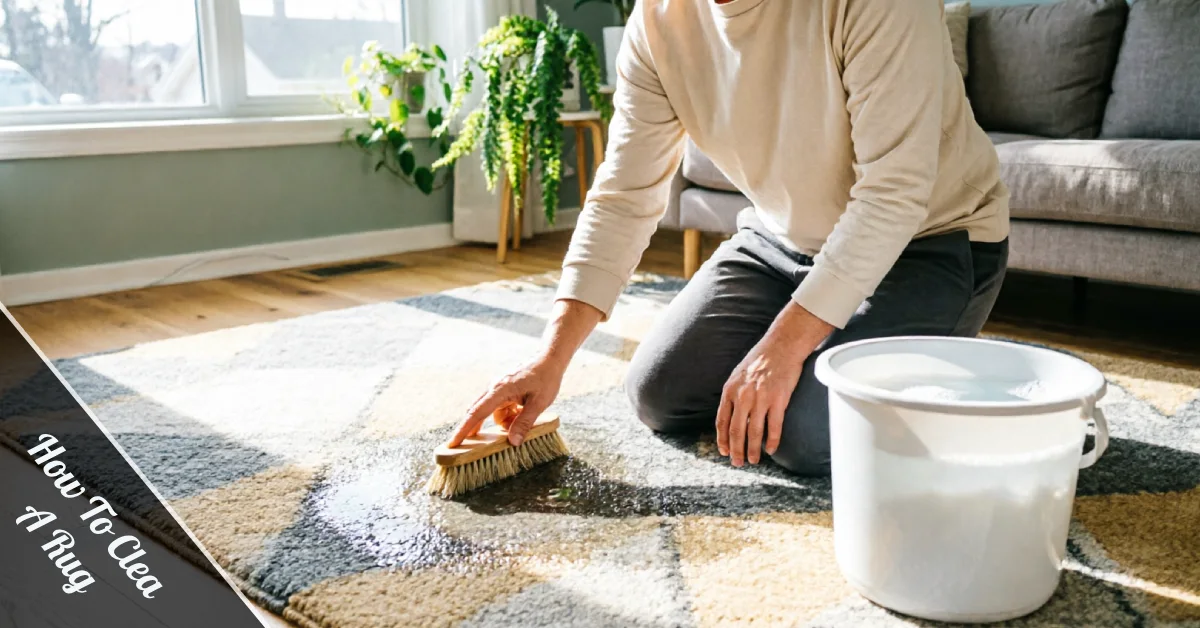
You spilled coffee, the dog tracked in mud, and now you’re stuck figuring out how to clean a rug the right way without wrecking it. Coffee stains, especially can set fast into fibers, so speed and the right method both matter.
Good news: it’s simpler than it looks once you know what you’re working with. Most rug damage happens because people grab whatever cleaner sits under the sink first.
Wrong solution, wrong material, and you’re left with a faded, shrunken, or stiff rug instead of a fresh, clean one. This guide walks through how to clean a rug step by step, with no guesswork involved.
How To Clean A Rug
Check the care label, vacuum both sides, test your cleaner on a hidden spot, then clean using the gentlest method your rug material allows.
Rinse thoroughly, press out excess water with towels, and let the rug dry completely before you put it back down anywhere.
Know Your Rug Material First
Every solid answer to how to clean a rug starts here, because material decides everything else that follows.
Synthetic rugs made from nylon or polypropylene handle water and mild soap fine. Wool, silk, and jute are far pickier.
Wool can shrink or felt when it meets hot water, silk bleeds dye easily, and jute weakens fast when left wet too long.
| Material | Water Tolerance | Best Method |
|---|---|---|
| Synthetic (nylon, polypropylene) | High | Soap and water |
| Wool | Low | Cool water, minimal soaking |
| Silk | Very low | Dry or low-moisture only |
| Jute, sisal | Low | Vacuum, spot clean only |
Check the label first, since the manufacturer’s instructions always take priority over any general cleaning advice, including everything covered here.
Supplies You’ll Need
Knowing how to clean a rug properly starts with having the right tools ready before you begin, not halfway through the job.
Grab a vacuum, a soft-bristle brush, a bucket, mild dish soap, white towels, and a wet-dry vacuum if you happen to own one.
For tougher spots, keep baking soda and an enzyme-based cleaner on hand too, since these lift odors and embedded soil gently without harsh chemicals.
A squeegee helps push water out of thicker rugs, and floor fans speed up drying once the actual cleaning part is finished.
How To Clean A Rug Step By Step
Vacuum Both Sides First
Flip the rug over and vacuum the back first, then the front, using slow overlapping passes across the entire surface.
This loosens dirt trapped deep in the backing and fibers, so skipping this step is the most common mistake people make.
Dirt left behind just turns into mud once the rug gets damp, so give this step the time it really deserves.
Test For Colorfastness
Dab a hidden corner with your cleaning solution, then blot it gently with a white towel and check for color transfer.
If color shows up on the towel, switch to a gentler cleaner before you continue working on the rest of the rug.
This single step protects the whole rug, so don’t skip it even when you’re in a rush to finish.
Clean With A Gentle Solution
Mix mild soap with cool water, then work it into the fibers using a soft brush and small circular motions.
Avoid soaking the rug, since too much moisture invites mildew and can weaken the backing underneath over time.
For a low-moisture option, sprinkle baking soda across the surface, let it sit fifteen minutes, then vacuum up the residue.
Rinse And Remove Excess Water
Rinse thoroughly with cool water to pull out any leftover soap, since residue attracts dirt fast and stiffens fibers.
Press towels into the rug or run a wet-dry vacuum over it to pull out as much moisture as possible.
Dry It Completely
Lay the rug flat somewhere with good airflow, or hang it over a rail, and point a fan directly at it.
Damp rugs invite mildew fast, and full drying can take a whole day for thicker rugs, so plan ahead.
Check the underside before putting the rug back down, since trapped moisture there is genuinely easy to miss.
Removing Common Rug Stains
Blot spills immediately instead of rubbing, since rubbing pushes stains deeper into the fibers and makes them far harder to lift.
Coffee, wine, and pet stains all respond well to mild soap and cool water blotted in gently, though this full carpet stain removal walkthrough helps with stubborn spots that won’t budge easily.
Sticky residue usually needs a little extra dish soap worked in with a soft brush, followed by a thorough rinse.
Mistakes That Damage Rugs
Even people who know how to clean a rug in theory still trip up on a few habits that quietly cause lasting damage.
Hot water is a common culprit behind shrinking and color loss on wool and other natural fibers, so always test temperature first.
Scrubbing hard feels productive, but it frays fibers and pushes stains deeper instead of lifting them out, so use gentle pressure.
Skipping the drying step and rolling up a damp rug trap moisture, which leads to mildew and musty smells sticking around.
Using bleach or harsh chemicals on natural fibers can permanently damage color and texture, so stick to mild, rug-safe cleaners.
Maintaining Your Rug Between Cleanings
Vacuum high-traffic rugs weekly and rotate them every few months so wear spreads evenly instead of concentrating in one spot.
Deal with spills the moment they happen, since fresh stains lift out far easier than ones that have set in.
A deeper clean every three to six months keeps most rugs looking fresh without wearing down fibers from overcleaning them constantly.
Knowing how to clean a rug well isn’t a one-time skill either, since good habits between cleanings save you real effort later.
Frequently Asked Questions
Can I clean a rug without a machine?
Yes, hand cleaning with mild soap, a soft brush, and thorough rinsing works fine for most rugs and gives you more control.
Can I wash a rug in a washing machine?
Only small, machine-washable rugs on a gentle cold cycle. Check the care label first, since many rugs cannot handle a machine safely.
How do I clean an area rug without moving it?
Vacuum, spot-test, then clean in small sections with minimal moisture, drying each section with a fan before moving to the next.
How often should I deep clean a rug?
Every three to six months for high-traffic rugs, and once or twice a year for rugs in lower-traffic rooms works well.
Wrapping Up
Learning how to clean a rug really comes down to knowing your material, testing before you commit, and drying it fully.
Skip the shortcuts. Follow these steps and your rug stays fresh, bright, and free of the musty smells trapped moisture causes.
Now you know exactly how to clean a rug the right way, no matter what it’s made from or how bad the spill.