

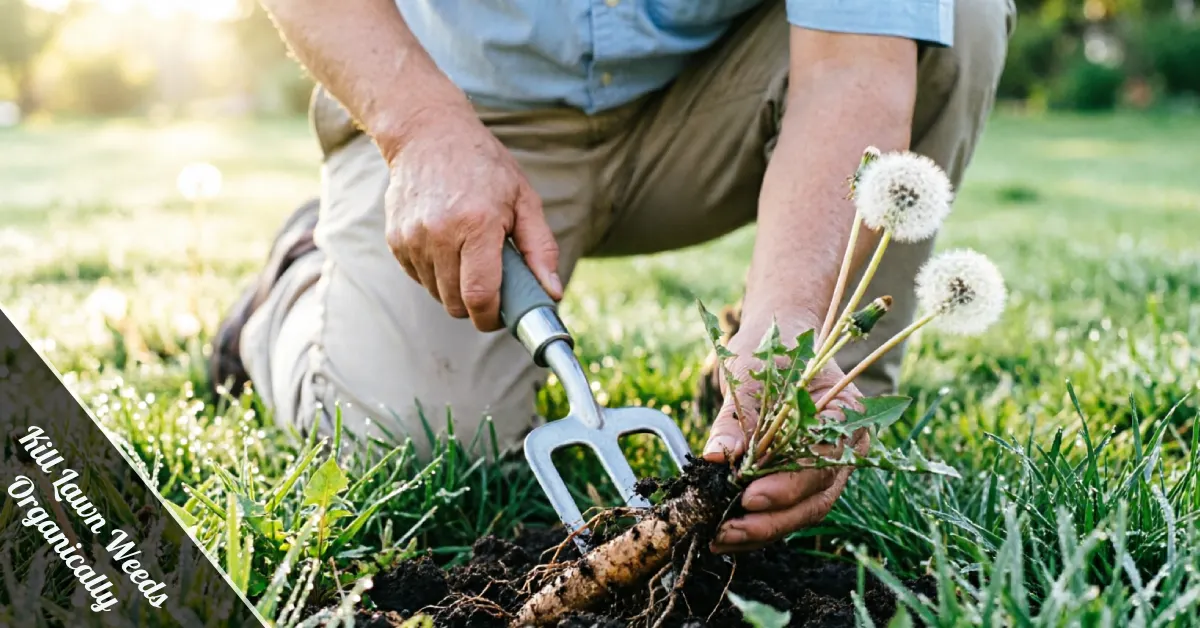
Weeds show up fast and leave slowly. If you want to kill lawn weeds organically, the good news is you don’t need harsh chemicals sitting in your shed. A dandelion fork, some vinegar, and a bit of patience get the job done. Once the weeds are gone, clearing away the debris is quick work and keeps clippings from smothering the grass underneath.
This guide covers every method worth trying, from hand pulling to seasonal prevention, so you’re not stuck guessing what actually works on your lawn.
Pull small patches by hand. Spot-treat bigger ones with horticultural vinegar. Pour boiling water on weeds growing in cracks or gravel. Add corn gluten meal each spring to stop new seeds from taking hold. Together, these steps form a full plan to kill lawn weeds organically from spring through fall.
Hand Pulling Still Works Best
A stand-up weeder or dandelion fork removes the whole taproot in one motion. Miss the root, and the weed grows back within weeks. Pull after rain, when soil is soft, and roots slide out clean instead of snapping off halfway down.
Morning is the best time for this job. Soil holds moisture from overnight dew, and the ground hasn’t dried out under afternoon sun yet. A five-minute walk around the yard each week keeps small weeds from turning into a bigger project later.
Horticultural Vinegar for Spot Treatment
Horticultural vinegar has a much higher acetic acid concentration than the kitchen kind. Spray it directly on weed leaves on a sunny day, and the foliage burns within hours. It’s a contact killer, so it damages the top growth but often leaves the root alive underneath. That means one of the easiest ways to kill lawn weeds organically is repeated spot treatment rather than a single spray.
Reapply every few days on tougher weeds like plantain or crabgrass. The leaves brown out fast, but new growth can return from the root, so don’t expect one application to finish the job.
Boiling Water for Cracks and Gravel
Boiling water works well on weeds poking through driveway cracks, patio joints, or gravel beds. Pour it straight onto the base of the plant. Skip this method on lawn grass, since it kills everything it touches, roots and all.
It works within minutes and needs nothing but a kettle. No mixing, no gloves, no waiting on a sunny forecast. Just be careful pouring near your feet.
How to Remove Weeds Without Killing Your Grass
This is where most homemade fixes go wrong. Vinegar and boiling water are non-selective, meaning they’ll scorch grass just as fast as weeds. Keep them for hardscapes and isolated weeds standing clear of turf. For weeds growing inside the lawn itself, hand pulling or targeted iron-based products protect the grass around them.
Iron-based weed killers work through a different mechanism than vinegar. They target broadleaf plants specifically, leaving grass blades mostly unharmed. It’s a slower method, but it’s one of the safer ways to kill lawn weeds organically without leaving bare, scorched patches behind.
Corn Gluten Meal as a Natural Pre-Emergent
Corn gluten meal stops weed seeds from developing roots after they sprout. Apply it in early spring before seeds germinate, and it won’t touch weeds that are already established. It works as a preventative layer rather than a cure for weeds already growing.
Timing matters more than the product itself. Put it down too late in the season, and germination has already happened, so the whole application goes to waste.
Safety Notes Worth Knowing
Horticultural vinegar is strong enough to cause skin burns and eye damage on contact. Gloves and eye protection aren’t optional here. Keep pets and nearby plants clear of the spray zone, and always check the product label before mixing anything at home.
Runoff is another thing to watch. Spraying near storm drains or garden beds can affect plants you didn’t mean to touch, so treat only the spots you’re targeting.
Long-Term Prevention Through Dense Turf
A thick lawn crowds out weed seeds before they get a foothold. Regular deep watering builds stronger roots than frequent shallow sprinkles, so a good retractable hose reel makes the routine easier to stick with. Mowing height matters too. Cutting grass too short lets sunlight reach bare soil, which is exactly what weed seeds need to germinate.
Set the mower a notch higher than usual and leave grass a little longer through summer. Taller blades shade the soil and cut off the light seeds need to sprout in the first place.
Core Aeration and Overseeding
Compacted soil blocks water and nutrients from reaching grass roots, leaving bare patches where weeds move in. Core aeration loosens that compaction, and overseeding right after fills gaps with new grass before weeds claim the space. Fall is the strongest window for both steps in most climates.
A soil test beforehand tells you exactly what your lawn is missing. Fixing nutrient gaps alongside aeration gives new seed a much better shot at filling in thick.
Common Lawn Weeds to Know
Dandelions and plantain grow from a single taproot, so hand pulling removes them cleanly. Crabgrass spreads through runners across the surface. White clover spreads underground through rhizomes, making full removal tougher. Nutsedge grows from tiny underground tubers that survive most surface treatments, often requiring several rounds of attention.
Knowing which weed you’re dealing with saves time. A taproot weed calls for a fork and a firm pull, while rhizome and tuber weeds need repeated treatment over several weeks to fully clear out.
A Seasonal Plan That Actually Sticks
Spring calls for corn gluten meal before seeds sprout, plus hand-pulling anything already up. Summer is spot-treatment season for stray weeds in hot, sunny conditions. Fall is built for aeration and overseeding, since cooler weather helps new grass establish before winter. Sticking to this order works better than tackling everything at once.
Winter is the quiet stretch. Grass growth slows down, and weeds mostly sit dormant too, so this is the season for planning next year’s approach rather than active treatment. Use the downtime to check your tools and stock up on corn gluten meal ahead of spring.
FAQs
Does vinegar kill weed roots?
Rarely on the first try. It burns leaves fast but often leaves roots alive, so repeat applications are usually needed for full control.
Is it safe to kill lawn weeds organically around pets?
Yes, once the spray dries. Keep pets off treated areas until the surface is no longer wet.
How long before organic methods show results?
Contact treatments show damage within a day. Prevention methods like corn gluten meal and dense turf take a full season to show their full effect.
Can I combine hand pulling with other organic methods?
Yes, and most lawns need both. Hand pulling handles what’s already growing, while corn gluten meal and dense turf stop the next round before it starts. This combination is the fastest way to kill lawn weeds organically without a single trip to the chemical aisle.
Bringing It All Together
Between hand pulling, vinegar, boiling water, and a thicker lawn overall, you’ve got a full organic toolkit that skips synthetic chemicals entirely. If you’re looking to fill bare spots with something besides grass, a flowering trellis planting along a fence line is worth a look, too. Stick with the seasonal rhythm, stay consistent with the small stuff, and your lawn stays ahead of the weeds instead of catching up to them.