

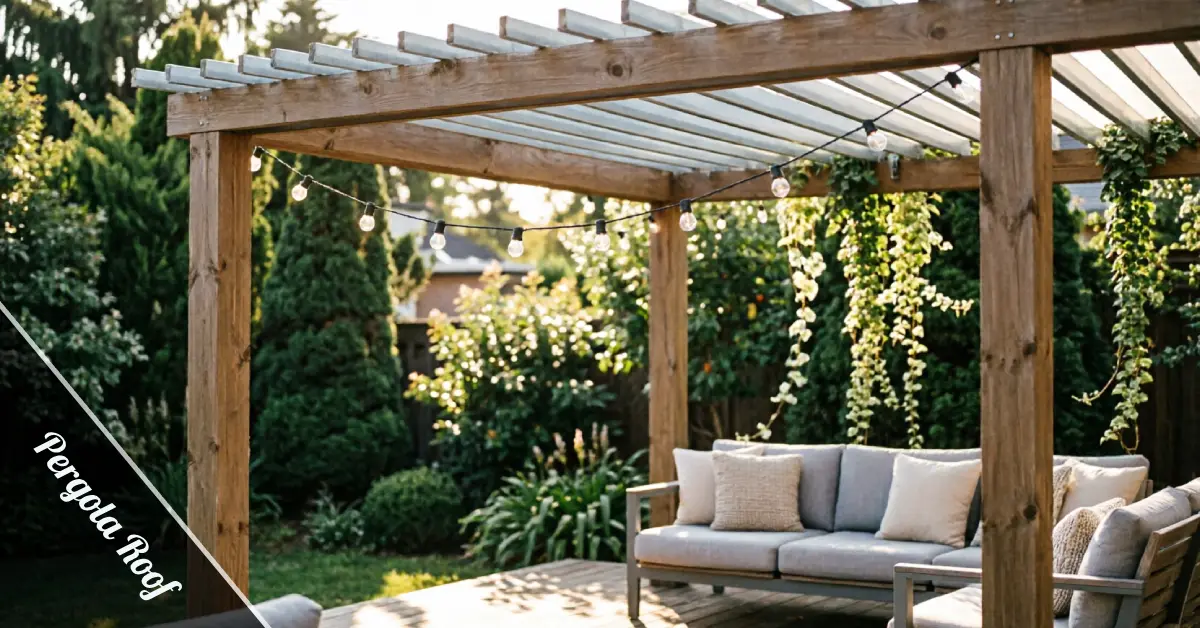
Your backyard has main character energy. It just needs a roof that matches.
A pergola roof is basically the difference between “nice patio” and “outdoor room people fight to sit in.” It blocks the sun, dodges the rain, and turns your yard into a space you actually use — not just mow around.
Here’s the thing nobody tells you upfront: not every roof style does the same job. Some are built for shade. Some are built for full weather protection. Picking the wrong one is like buying a raincoat with no sleeves.
This guide breaks down every real cover option — louvers, panels, fabric, wood, metal — so you can pick your flex without the guesswork.
We’ll also walk through material choice, drainage, cost, and the small details that separate a solid build from a sad one.
By the end, you’ll know exactly which setup fits your climate, your budget, and your backyard’s whole personality.
Quick Roof Comparison Guide
Before the deep dive, here’s the cheat sheet. Scan it, find your vibe, then jump to the section that fits.
| Roof Type | Best For | Weather Protection | Maintenance |
|---|---|---|---|
| Louvered | Adjustable shade + airflow | High | Low |
| Polycarbonate panels | Budget-friendly light coverage | Medium | Low |
| Retractable fabric | Flexible, casual style | Low-Medium | Medium |
| Solid wood | Classic, natural look | Medium | High |
| Metal | Max durability | High | Low |
A louvered roof is the flex pick if you want control. Tilt the slats open for sun, close them when clouds roll in.
Polycarbonate panels are the budget MVP — solid rain protection without draining your savings account.
Retractable fabric wins on style points. It’s laid-back, easy to swap out, and gives that resort-lounge energy on demand.
Solid wood brings that warm, cabin-style charm — gorgeous, but it asks for real upkeep in return.
Metal is the no-drama option. It’s heavier on the wallet upfront but practically maintenance-free after that.
Whatever you pick, match it to how you actually use your space, not just how it looks in photos on a sunny afternoon.
Pergola Roof Types You Need to Know
Not every cover behaves the same in the wild. Here’s the real breakdown, no fluff attached.
Louvered roofs use adjustable aluminum slats. You get sun when you want it, shade when you don’t — total control, zero guesswork.
Polycarbonate roofs are lightweight, tough, and let filtered light through. Think greenhouse energy, but way more stylish for a backyard.
Retractable fabric canopies roll back like a convertible top. Great for parties, easy to store, but they’re not built for heavy storms.
Solid wood roofs bring old-school charm. They look incredible but need regular sealing to survive sun and rain in the long term.
Metal roofing — usually steel or aluminum — is the tank of the group. It shrugs off wind, rain, and snow without blinking.
Some homeowners even mix styles, pairing louvers over a dining area with fixed panels over a grill station nearby. Each pergola roof type solves a different problem, so match the cover to your actual weather, not just the photos you saved on Pinterest, since a beautiful setup that leaks in month two isn’t much of a win.
Choosing the Best Roof Material
Material decides how long your setup lasts and how much work it demands from you later.
Aluminum is rust-proof, lightweight, and barely needs upkeep. It’s the “set it and forget it” choice for busy homeowners.
Steel brings serious strength for bigger structures, though it needs a protective coating to dodge rust over time.
Wood feels warm and natural, but it’s a commitment — expect annual staining or sealing to keep it from cracking.
Polycarbonate balances price and performance. It resists impact, blocks UV rays, and installs faster than most alternatives.
If your area gets heavy snow or wind, lean toward metal or reinforced polycarbonate. Wood and fabric struggle under real weight.
Coastal homes should prioritize rust resistance, since salt air chews through cheap hardware and untreated metal fast. Climate should drive this decision more than looks, honestly, because a gorgeous pergola roof that warps or rusts in year one isn’t actually a win for anyone.
Pergola with a Roof Attached to the House
Attaching a cover to your home turns it into a legit extension of your living space, not just a yard accessory.
This setup usually means tying the structure into your existing roofline, which means matching your home’s roofing style matters for both looks and function.
Drainage becomes non-negotiable here. Water needs a clear path away from your foundation, not a slow leak toward your siding.
Flashing seals the connection point between the pergola and your house. Skip it, and you’re inviting water damage indoors.
Check your local codes before building. Attached structures often need permits, especially if they affect your home’s original roofline.
Most homeowners hire a contractor for this step. The structural tie-in isn’t a great spot to freehand it.
Get this connection wrong, and even the best pergola roof material won’t save you from leaks.
Roof Pitch, Drainage, and Structural Safety
A flat cover might look sleek, but water needs somewhere to go — pitch makes that happen.
Even a slight slope, around one inch per foot, keeps rain moving toward gutters instead of pooling on top.
Gutters and downspouts direct runoff away from your posts and foundation, protecting the structure for years to come.
Support spacing matters more than people expect. Wider gaps mean weaker panels that sag or crack under real weather.
Wind and snow loads vary by region, so check local building requirements before locking in your final design.
Sealed joints stop leaks before they start. It’s a small detail with a massive payoff over time.
Skipping structural planning is how a good-looking pergola roof turns into an expensive repair bill.
Cost and Maintenance Realities
Budget shifts a lot depending on material, size, and whether you’re going DIY or hiring it out.
Polycarbonate panels sit on the affordable end, while solid wood and custom louvered systems climb higher fast.
Installation labor often costs as much as materials, especially for anything tied into your home’s structure or roofline.
DIY kits save money upfront but demand real time, tools, and patience if you want a clean result.
Maintenance separates the winners in the long term. Aluminum and steel need almost nothing beyond an occasional rinse, while wood demands yearly attention and fabric canopies wear out faster under constant sun exposure.
Before buying, compare a roof style breakdown to see how structural choices affect long-term cost, since the roofline you pick now shapes repair bills years down the line.
Factor maintenance into your budget now, not after year two when the real bills show up. A little planning upfront always beats an emergency repair call in the middle of storm season, and it keeps your weekends free for actually enjoying the space instead of fixing it.
Final Thoughts
A great pergola roof isn’t about picking the fanciest option — it’s about matching material to climate and lifestyle.
Louvers give control, panels give value, fabric gives flexibility, wood gives charm, and metal gives raw durability.
Think about your weather, your budget, and how much upkeep you’re realistically willing to do.
Most homeowners regret going too cheap on their roof cover, not very durable — so lean toward quality when the budget allows it.
Walk your yard at different times of day before deciding. Morning shade needs differ a lot from what you’ll want during a 6 p.m. dinner.
Talk to a local pro if you’re unsure about permits, snow loads, or how your roofline style handles your specific climate long term.
Get that right, and your backyard stops being an afterthought — it becomes the spot everyone wants to be.