

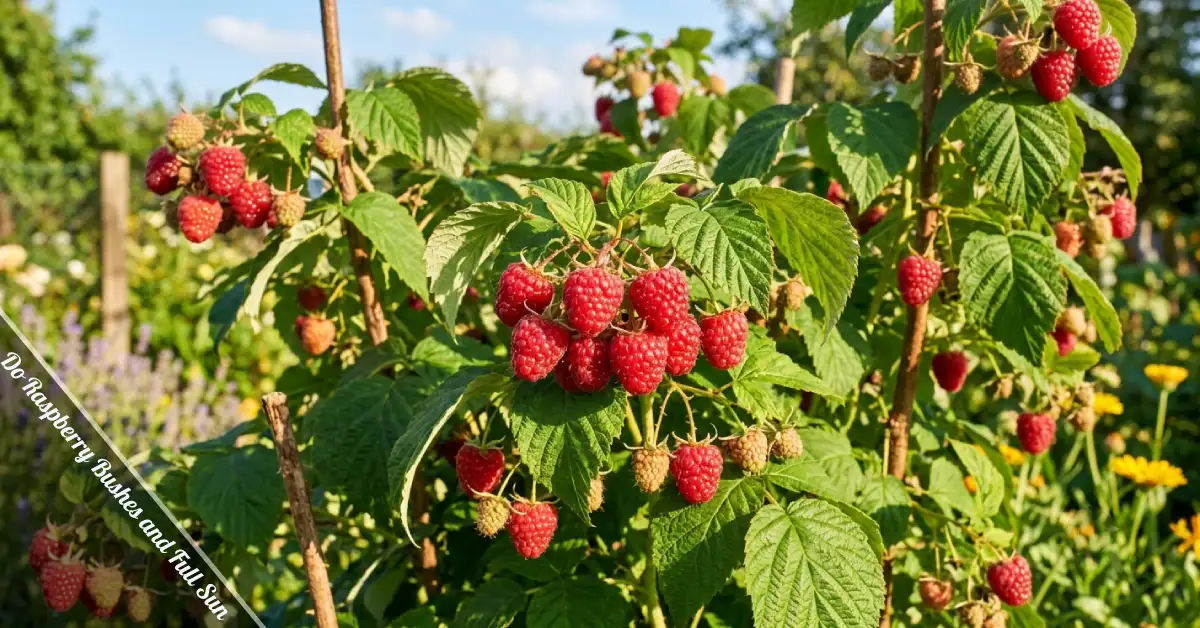
Yes. Raspberry bushes need a minimum of 6 to 8 hours of direct sunlight each day to grow well and produce a good harvest. They can survive in partial shade, but fruit yield and quality will drop noticeably. For best results, choose a spot with full sun, well-drained soil, and good air circulation.
Do Raspberry Bushes Need Full Sun?
You planted your raspberry canes in a partly shaded corner of the yard. By summer, you have plenty of green growth but barely any berries. Sound familiar?
Sun is one of the biggest factors in how well raspberries fruit. Get it right, and your plants will reward you with a strong harvest year after year. Get it wrong, and you spend a full season waiting for a crop that never really comes.
This guide covers exactly how much sun raspberry bushes need, what happens when they do not get enough, and how to choose the best spot in your garden.
Do Raspberry Bushes Need Full Sun to Grow?
Yes. Raspberry plants grow best in a location that receives full sun and has well-drained, fertile soil. Full sun means at least 6 to 8 hours of direct sunlight during the growing season.
The plants will grow in partial shade, but will not produce as much fruit. That is the key trade-off. You will still get canes, and they will still look healthy. But the berry yield will be lower, and the fruit tends to be smaller and less sweet.
Light is vital to fruit production and fruit quality, and also helps reduce the risk of fungal issues. Shade holds moisture around the leaves and canes, which creates conditions where disease takes hold more easily.
Why Sunlight Matters So Much for Raspberries
It is not just about warmth. Sunlight does specific work inside the plant.
Sufficient sun exposure triggers the formation of new flower buds for the following growing season. Without it, there will be no fruit. Fruit ripening and flavour development are also supported by the carbohydrate production that sunlight drives.
Think of it this way: your raspberry canes are building next year’s harvest while they are growing this year. That process runs on light. Cut the light short, and the plant simply does not have the energy to do that job fully.
Raspberries are more tolerant of shade than many other fruits, but their fruit will taste sweeter in a sunny location. So even if your plants survive in less-than-ideal light, the quality of what you pick will be noticeably better in a sunnier spot.
If you enjoy growing stone fruit alongside your berry patch, it is worth knowing that sun-loving trees like the Flavortop Nectarine share a similar preference for full sun and good drainage, making them a natural companion for a productive backyard garden.
How Many Hours of Sun Do Raspberry Bushes Need?
Raspberry bushes thrive best in full sun, requiring at least 6 to 8 hours of direct sunlight each day. This sunlight significantly improves both the yield and quality of the fruit.
Raspberry bushes need to be planted where they receive at least 6 hours of direct sunlight, measured in early summer, from late June through early August. That window matters because it is when flower buds set for the following year’s fruit.
If you are measuring sun in your yard, do it in late June or July, not in spring when deciduous trees have not fully leafed out yet. The reading in early summer gives you a truer picture.
What Happens If Raspberries Do Not Get Enough Sun?
Here is what you will typically see when raspberry bushes grow in too much shade:
- Fewer berries per cane, sometimes dramatically fewer
- Smaller fruit with less sweetness
- Taller, leggier canes reaching for light rather than setting fruit
- Higher risk of grey mould and other fungal problems
- Weaker overall plant health over time
Grey mould causes raspberry fruit to rot and become mouldy while still on the plants. Choosing planting sites with full sun, good soil drainage, and air circulation helps manage this disease.
Shade is not just a yield problem. It is a disease problem too. When canes stay wet longer because sunlight is not drying them out, you create the exact conditions that grey mould and other fungal diseases need.
Can Raspberry Bushes Grow in Partial Shade?
They can survive, but with clear limitations. If your yard has no truly full-sun spot, partial shade (3 to 5 hours of direct sun) is workable. Your plants will grow, but expect a noticeably smaller harvest.
There is one regional exception worth knowing. In northern regions with cold winters, raspberries should get full sun. But in areas with intensely hot summers, such as USDA Zone 7 and higher, those same plants can benefit from some afternoon shade. Morning sun with afternoon shade helps protect them from heat stress in warmer climates.
Despite the sun-loving nature of raspberries, they do not tolerate intense summer heat well. In hot summer regions, planting them to receive morning sun with afternoon shade is a good approach.
So the answer is not a straight yes or no for every garden. A gardener in Minnesota needs a different approach than one in Alabama. Know your climate before picking your spot.
If you grow other orchard fruits nearby, the same climate logic applies. The Italian Prune, for example, is a freestone plum that shares similar sunlight needs and performs best when planted thoughtfully based on your region’s summer heat levels.
Choosing the Right Location for Raspberry Bushes
Sun is the starting point, but it is not the only factor. Your planting site needs to check a few boxes.
What to look for:
- At least 6 to 8 hours of direct sun (morning sun is especially valuable)
- Well-drained soil, not heavy clay that holds water after rain
- Good air circulation around the plants
- Away from large trees that will compete for root space and block light as they grow
Growing raspberries in a part of the garden that has good air circulation, good drainage, and full sunlight is important. Good air movement helps leaves dry faster, which reduces disease problems. Standing water increases the likelihood of disease and can kill plants by cutting off oxygen to the roots.
If your only sunny spot has sandy or poor soil, that is fixable. Raspberry plants are quite adaptable and respond well to soil additives like compost or fertilisers, so they can do well even where soil is nutritionally poor. The two things to avoid are extremely heavy soils with poor drainage and insufficient sun.
For more on what else raspberry plants need to thrive, see our guide on how to grow berry plants from scratch.
Sun Requirements by Raspberry Type
All three main raspberry types share similar sun needs, but there are a few things worth knowing by variety.
The three main types grown in home gardens are red, black, and purple. Yellow raspberries are red raspberries that do not produce red pigment. Raspberry plants have perennial roots and crowns, but their canes live for only two summers. Most raspberry plants bear fruit in summer.
- Red raspberries are the most common and the most forgiving of slightly less-than-ideal conditions, though they still perform best in full sun.
- Black raspberries are a bit more sensitive to both shade and heat. They do best with consistent full sun and good airflow.
- Purple raspberries are hybrids of red and black types and share similar sun requirements.
Red, black, and purple raspberries have similar sunlight needs overall, though slight variations in tolerance exist among varieties. If you are growing in a warmer climate, look for varieties bred specifically for low chill hours and heat tolerance. They are better suited to locations where some afternoon shade is unavoidable.
Quick Setup Tips Before You Plant
Once you have found a good sunny spot, a few setup steps make a real difference:
- Test your soil pH. Raspberries prefer a range of 6.0 to 6.8.
- Work 2 to 3 inches of compost into the soil before planting to improve both drainage and fertility.
- Plan your trellis or support system before planting, not after the canes are tall.
- Space canes 18 to 24 inches apart in rows, with at least 6 feet between rows if you are planting more than one.
- Mulch after planting to keep weeds down and soil moisture steady.
Raspberry canes are commonly sold as bare-root plants, especially when ordered online or from specialist nurseries. If this is your first time working with bare-root stock, reading up on proper handling and planting technique makes a real difference in establishment. Our guide on bare-root trees covers the key steps, from soaking the roots before planting to correct planting depth, and the same principles apply to bare-root raspberry canes.
For help with spacing and planting depth, take a look at our guide on preparing garden beds for berry plants.
Frequently Asked Questions
Can I grow raspberry bushes in a container in the sun?
You can, but most standard raspberry varieties spread through their roots and do not perform well in pots long-term. Compact or dwarf varieties are a better fit. Make sure any container setup is placed in a spot with at least 6 hours of direct sun.
Will raspberry bushes produce fruit in their first year?
Raspberries will typically start producing fruit a year after planting. In the first growing season, the plant focuses on establishing roots and building canes. Expect your first real harvest in year two.
Do raspberry bushes need more sun in hot climates?
More sun hours are not the goal in hot climates. In USDA Zone 7 and above, protection from intense afternoon heat matters more than maximum sun exposure. Morning sun with afternoon shade is a better setup than all-day direct sun in southern regions.
How do I know if my raspberry bush is getting too much shade?
Watch for tall, weak canes that flop over easily, very few flower buds by midsummer, and a noticeably smaller fruit set. If your plants are growing vigorously but not fruiting, lack of sun is usually the first thing to check.
Can I move my raspberry bushes to a sunnier spot?
Yes. The best time to transplant raspberries is autumn or early spring, when the plants are dormant. Cut them back to around 30 centimetres from the ground, dig them out with as much of the root ball as possible, and replant in the new spot, watering well.