

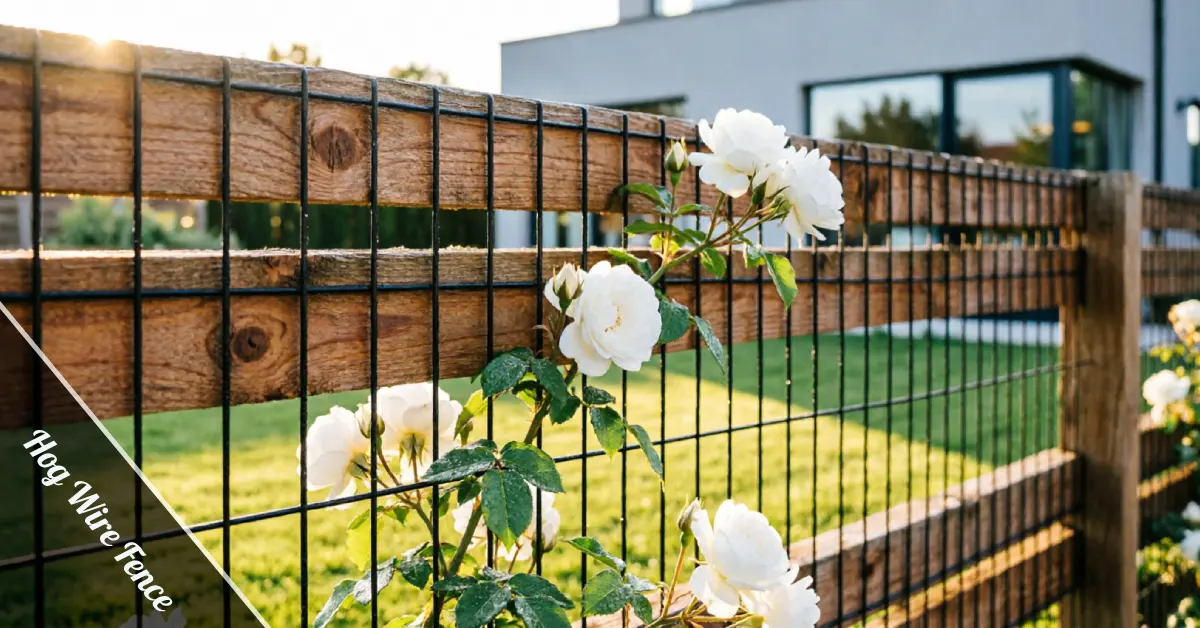
Ever seen a fence that frames the yard like a gallery wall? That’s the magic of a hog wire fence. It’s the design cheat code you didn’t know you needed. Clean lines, modern farmhouse vibes, and zero pretentiousness.
It doesn’t block your view like a wood wall. Instead, it borrows the landscape. Suddenly, your backyard feels twice as big. It’s the architectural equivalent of a crisp white tee. Simple, tailored, and it works with absolutely everything.
I’ve seen welders, weekend DIYers, and landscape architects all fall for it. The appeal isn’t niche—it’s universal. You get that defined boundary without feeling caged in. And honestly, your hydrangeas have never looked better than through a grid of steel.
Quick Reference Guide: Options at a Glance
Let’s cut through the noise. Here’s the data you actually care about. No marketing fluff, just the raw specs so you can sound like the smartest person at the lumber yard. This table breaks down the core options for a standard setup.
| Feature | The Options | The Vibe Check |
|---|---|---|
| Frame Material | Cedar, Redwood, Pressure-Treated Pine, Steel | Wood for warmth, metal for edge. |
| Wire Gauge | 4-gauge (heavy) to 6-gauge (light) | Go thick if you have dogs or livestock. |
| Grid Size | 2″x4″, 4″x4″, or custom | Tighter grids feel more modern and secure. |
| Height Sweet Spot | 4 ft (decorative) to 6 ft (privacy blend) | Anything over 6 feet needs a serious post. |
What Exactly Is a Hog Wire Fence?
A hog wire fence is a framed panel system. Think of a sturdy picture frame holding a sheet of welded wire mesh inside. Originally built to contain actual hogs, it’s now a design star. You see it on contemporary homes and rustic ranches alike.
The genius lies in its honesty. It doesn’t pretend to be a fortress. It’s a semi-transparent barrier that says, “this is my space,” while keeping the conversation going. You get security without the total visual shutdown of vinyl or solid wood.
Gardeners love it as a trellis for climbing roses. Modernists love it for the sleek, industrial transparency. It’s a rare product that bridges rugged utility and high-end curb appeal. It’s the mullet of fencing, but in a good way—business on the bottom, party up top with your landscape.
Choosing Your Materials: Wood vs. Steel Frames
Material choice changes the whole personality of the fence. You have two layers to consider: the rigid frame and the infill mesh. Get this combo right, and you’ve built something that outlasts your current paint color. Let’s break down the mains.
Wood Frames: The Warm Classicist
Cedar and redwood are the heavy hitters here. They contain natural oils that fight off rot and bugs. You don’t even have to paint them if you like that silvery-gray aging. I recommend a cedar frame if you want that warm, organic texture against the cold steel grid.
It’s a living material, so it moves. Expect seasonal swelling and shrinking. You need to use galvanized or stainless steel fasteners to avoid those ugly black streaks on the wood. It takes more upkeep, but the patina after two years is unmatched.
Steel Frames: The Sleek Industrialist
Powder-coated steel is bulletproof. It gives you razor-sharp corners that wood simply can’t hold. If you’re going for a modern farmhouse look, a black steel frame with a 2×4 mesh grid is non-negotiable. It frames your buffalo grass like a piece of art.
The downside is cost and fabrication. You can’t just tweak a steel frame with a handsaw on-site. You have to measure perfectly. But once it’s up, you’re done thinking about it. It laughs at wind storms.
Installation Face-Off: Premade Panels vs. Rolls
This is where the budget gets real. You can buy pre-made panels or build your own from a roll of wire. The choice dictates the final look. Pre-made panels offer surgical precision, while rolls give you raw flexibility for weird terrain.
The Case for Premade Panels
These come welded and ready to drop into a wooden or metal channel. The look is incredibly finished. If you’re doing a straight run on flat ground, this is the only way to keep your sanity. The welds are consistent, and the lines stay true over time. It’s the “turn-key” solution for a clean patio border.
The Case for Utility Rolls
Buying a big roll of agricultural wire is cheaper per linear foot. You cut it, stretch it, and staple it. Be warned: stretching wire mesh without getting a wavy “oil can” effect is a dark art. If your land has elevation changes, a roll conforms to the slopes better than a rigid panel. Just factor in the sweat equity.
Best Applications: Where It Truly Belongs
Don’t put this fence everywhere. It’s a specialist. It thrives where you want to keep deer out but let light in. A hog wire fence is perfect for containing large landscapes without ruining the panoramic view. It’s the transparent security guard of the fence world.
It flops hard as a noise barrier. If you live on a busy road, this fence won’t stop the sound waves. It’s also a disaster for privacy unless you’ve got dense shrubs hugging it. Think of it as a visual filter, not a solid wall.
Use it to protect a pool area safely. It meets code in many places for a non-climbable barrier. Just check the mesh size requirements. Use it for a dog run, but watch the height—athletic dogs see it as a ladder. You’re building a frame for a living wall of star jasmine, basically.
Picking the Right Height for Your Space
The height changes the psychology of the space. Four feet is a polite conversation. It says “stay off the peonies,” but you can still chat with your neighbor over it. This is the standard for front-yard curb appeal.
Six feet is a statement. Once you add the top and bottom rails, you’re creating a real boundary. If dogs are your concern, six feet is the minimum safe zone. Always bury the bottom of the mesh or run a tension wire at grade to stop diggers.
For a true decorative knee-wall, two to three feet is plenty. It defines the property edge without any looming mass. You see this a lot in mid-century neighborhoods. It’s basically an architectural pencil line separating the public sidewalk from your private Eden.
Is a Hog Wire Fence Good for Dogs?
Yes, but with a strategy. Thin, flexible wire mesh can actually cut a dog’s paw if they’re a frantic jumper. You need a heavy gauge, like 4-gauge wire, to withstand the impact. The mesh openings should be small enough that they can’t wedge a snout or paw through.
Supervision is key during the introduction phase. Some dogs never realize they can’t just phase through it like a ghost. Once they understand the physical barrier, they usually chill out. A tension wire along the bottom rail eliminates the “nose bump” escape method entirely.
Breaking Down the Real Cost
You’re paying for the frame, not just the wire. The mesh itself is dirt cheap. The money disappears into the cedar posts, the stainless staples, and the labor to make it look straight. A DIY hog wire fence often runs half the cost of a pro job.
If you hire it out, you’re buying precision. Contractors charge for the fussy work of stretching mesh perfectly. Expect to pay significantly more for a powder-coated steel frame system. It’s a permanent investment, though, and adds serious resale value to the landscape. If you’re already investing in the yard’s hardscaping, it makes sense to get the boundary right the first time. Similarly, when planning other outdoor upgrades, understanding the synthetic grass installation price helps you budget the whole landscape makeover together.
Low-Effort Maintenance for Long Life
The wire itself is a slacker. Galvanized or powder-coated mesh needs a hose-down once a year. That’s it. If you see a scratch on the coating, hit it with cold galvanizing spray before rust gets cozy. This tiny touch-up saves the whole panel.
Wood frames demand a bit more love. Check the end grain. That’s where water sneaks in and starts the rot party. A yearly coat of penetrating oil on cedar frames keeps them looking rich, not dusty. Tighten lag bolts every spring as the wood naturally adjusts.
Design Idea: Using Plants as Living Walls
A bare hog wire fence is a skeleton. It needs muscle. The real magic happens when you plant switchgrass or ‘Zéphirine Drouhin’ roses against it. Choose climbers without aerial rootlets that damage wood. Twining plants are cleaner.
Consider the solar exposure. A steel frame in full Texas sun becomes a griddle. You need tough, heat-loving vines like crossvine. Don’t let foliage sit wet against the wire overnight. Airflow is your best defense against mildew and premature rust on the welds.
Gate Planning: Don’t Skimp on the Entry
Don’t cheap out on the gate. A sagging gate makes an expensive fence look broken. Use an adjustable anti-sag gate kit for the diagonal turnbuckle support. This lets you tune the tension as the wood seasons. You want that crisp, one-finger latch close every time.
Corner posts take all the tension. They are the literal anchors of the system. A corner post should be set in concrete at least 24 inches deep. Don’t let the contractor skip this step to save time. If the corners fail, the whole run goes slack like a loose guitar string. Before you dig those deep post holes, remember that a clean workspace makes the job smoother. I always keep a reliable retractable hose reel nearby to wash down tools and keep the site from turning into a mud pit.
Final Verdict: Is This Fence Right for You?
A hog wire fence is a thinking person’s boundary. It blends transparency with structure effortlessly. You get to define your space without blocking the view or the breeze. It feels expansive, not restrictive, which is rare in fencing.
If you value modern form and functional separation, this is it. It requires honesty in construction—cheap wood or bad fasteners show immediately. Build it well, and it’s a permanent landscape asset. It frames your garden like a living diorama for the street to admire.
For those who enjoy cultivating not just the landscape but also its edible touches, bringing in a sweet harvest feels like the natural next step. A well-placed fence protects spaces for beautiful, productive trees like the Flavortop Nectarine to thrive. It’s about building a complete sensory ecosystem right outside your door.