

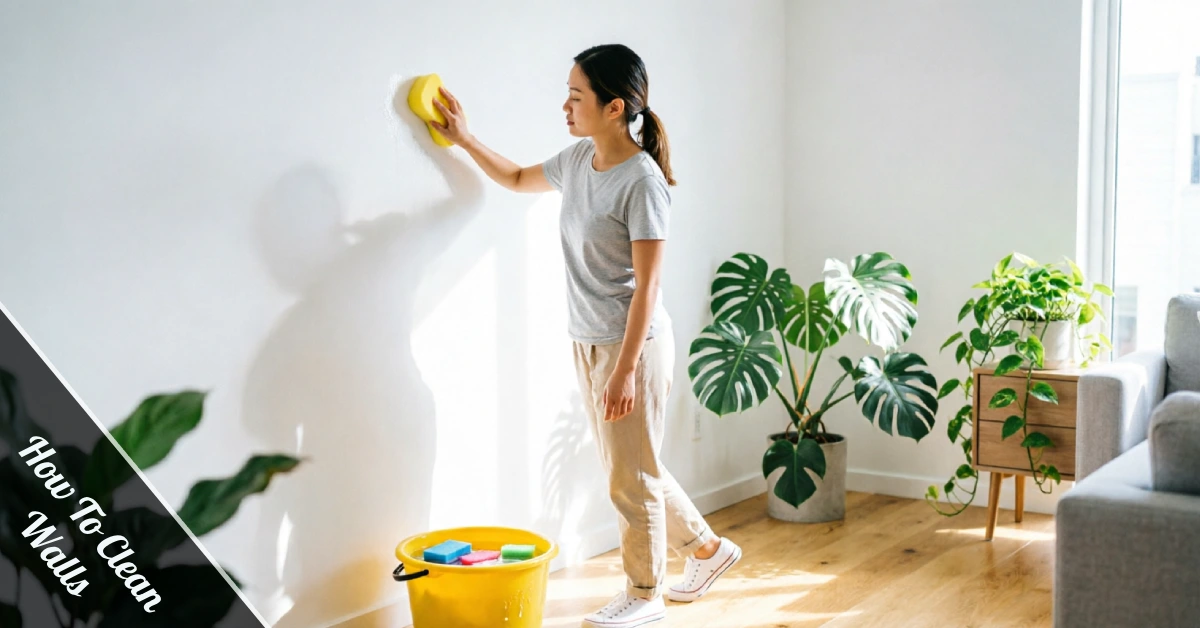
Dirty walls creep up on you. One day they’re fine, the next there’s a scuff by the light switch and a grease mark near the stove. Learning how to clean walls the right way saves your paint and your patience. This guide walks you through every step, from picking the right tools to tackling stubborn stains and grease marks.
Quick Guide
| Wall Type | Best Method | Avoid |
|---|---|---|
| Painted (satin/gloss) | Damp microfiber cloth, mild soap | Abrasive scrubbers |
| Flat/matte paint | Dry the sponge first, then use light soap | Scrubbing too hard |
| Wallpaper | Dry dusting, spot testing | Soaking water |
| Textured walls | Soft brush attachment | Sharp tools |
This table covers the basics. Read on for the full method, stain fixes, and room-specific advice.
Identify Your Paint Type Before You Start
Run your hand across the wall. Glossy or satin finishes feel smooth and slightly slick to the touch. Flat or matte paint feels dry and slightly rougher, and it marks more easily, so test any cleaner on a hidden spot first. If you’re unsure which finish you have, check the original paint can if you still have it, or ask whoever last painted the room. Builders often note the finish on the tin itself, and that detail changes how gentle you need to be with any product you reach for.
Tools You Need
Grab a soft microfiber cloth, a soft-bristle brush, warm water, and a mild dish soap. A dry sponge helps lift dust before wet cleaning. Skip bleach and ammonia unless a wall is sealed and washable, since they strip color fast. A spray bottle makes it easier to control how much liquid touches the wall at once. Keep two buckets on hand, one for soapy water and one for rinsing, so you’re not spreading dirty water back onto a clean patch.
Prepare the Room
Move furniture away from the wall and lay down a towel to catch drips. Open a window for airflow. This small step keeps floors dry and stops soap residue from streaking down onto trim or carpet.
Start With Dust Removal
Before any wet cleaning, dust the wall with a dry microfiber cloth or a vacuum brush attachment. This removes loose dirt so you’re not just smearing grime around once water hits the surface. It’s the step most people skip, and skipping it causes streaks later. Work from the ceiling down toward the baseboards, since dust naturally falls and you don’t want to redo a section you already finished. Corners and the tops of door frames collect the most buildup, so give those areas an extra pass before moving on.
Step-By-Step Cleaning
Mix a few drops of dish soap into warm water. Dip your cloth, wring it out well, and wipe the walls in small circular motions from top to bottom. Rinse the cloth often. This basic routine is the core of cleaning walls without leaving marks.
How To Clean Walls With A Mop
A flat sponge mop works well for tall walls or ceilings. Wet it lightly, wring thoroughly, and glide it in overlapping strokes. Keep a dry towel nearby to catch drips before they reach the baseboards.
Cleaning Without Damaging The Paint
Always test the cleaner on a small, hidden patch first, like behind a door. Use soft cloths, never scouring pads. Press gently rather than scrubbing hard, since pressure lifts paint faster than any cleaning product does.
How To Prevent Streaks
Streaks usually come from too much water or leftover soap. Wring your cloth until it feels barely damp. Wipe in one direction, then follow with a dry cloth to buff the surface right after.
Removing Common Stains
Fingerprints and grease respond well to a baking soda paste left on for a minute. Crayon marks lift with a dab of toothpaste on a soft cloth. Scuff marks often rub away with a dry pencil eraser. For stubborn shower stains elsewhere in the home, the same gentle, patient approach applies. Smoke residue needs a vinegar-water mix and several light passes rather than one heavy scrub. Blot rather than wipe when a stain is fresh, since wiping right away tends to spread it wider instead of lifting it off the surface. Give any paste or solution a minute or two to sit before you touch it again, since patience does most of the actual work here.
Cleaning Guide By Paint Finish
Glossy and semi-gloss walls handle soap and water well since they’re built for wiping. Satin holds up almost as well with a lighter touch. Flat and matte finishes need the gentlest hand, since they show wipe marks more easily than any other finish.
Kitchen And Bathroom Walls
Kitchens collect grease near the stove, and bathrooms build up soap scum and mildew near showers. Clean these spots weekly with a vinegar-water solution and good ventilation, since damp rooms attract grime fastest and dry unevenly. When learning how to clean walls in these spaces, tackling shower tile buildup alongside the wall keeps the whole room consistent. Run the extractor fan or crack a window during and after cleaning, since trapped moisture is what actually feeds mildew growth over time. A dedicated wall spot near the stove often needs its own quick wipe after every meal, rather than waiting for the weekly clean, since fresh grease comes off far easier than grease that’s had days to set.
Before You Paint
Always clean walls thoroughly before repainting. Dust, grease, and old soap residue stop new paint from bonding properly. A quick wipe-down now saves you from patchy, peeling paint later. Let the wall dry completely before the first coat goes on, since trapped moisture underneath fresh paint causes bubbling and uneven color once it dries. A light sanding after cleaning, on any rough patches, gives the new coat something to grip.
Common Mistakes To Avoid
Skipping the dry-dust step, soaking wallpaper, and using bleach on colored paint top the list. Scrubbing too hard in one spot is another common slip that leaves a visible dull patch behind. People also tend to rush the rinse step, leaving soap film that attracts dust faster than before. Learning how to clean walls properly means slowing down enough to rinse and dry each section before moving to the next one.
Wrapping Up
Knowing how to clean walls comes down to a few habits: dust first, use a barely damp cloth, and test before you scrub. Stick to this routine, and your walls stay fresh between full repaints.
FAQs
How often should I clean my walls?
Most rooms need a light dusting monthly and a full wipe-down every few months, more often in kitchens.
Can I use vinegar on all walls?
Diluted vinegar works on sealed, washable paint but can dull flat or matte finishes over time.
Will cleaning remove wall stains completely?
Most fresh stains lift fully. Older, set-in stains may lighten but need a touch-up coat of paint.