

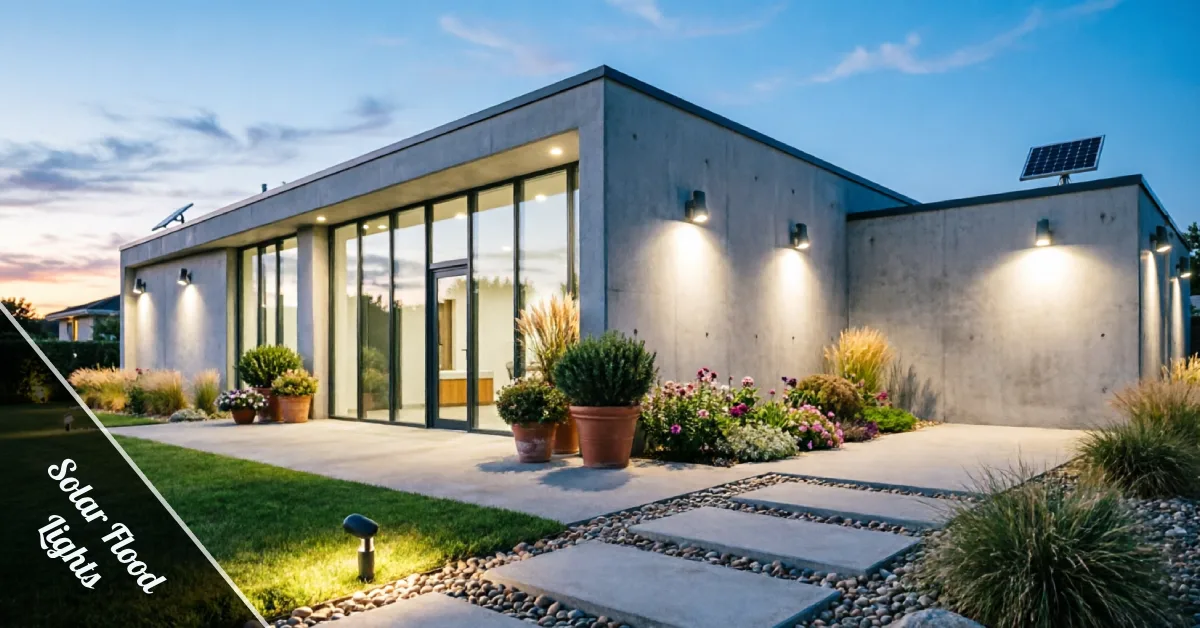
Your porch light does its job, sure. But the second you step past the patio, you’re in the dark — literally. That’s where solar flood lights come in. They throw serious brightness across driveways, gardens, and side yards without an electrician anywhere near your bill. Pair one with a set of warm-white light bulbs near your entryway, and the whole front of the house looks intentional instead of patched together.
Quick Guide to Solar Flood Lights
Here’s the short version before we get into specifics. Solar flood lights are outdoor fixtures that charge during the day and switch on automatically once it gets dark.
| Feature | What to Look For |
|---|---|
| Brightness | 2,000–6,000 lumens for most homes |
| Battery | Replaceable lithium-ion, not sealed |
| IP Rating | IP65 or higher for rain and dust |
| Motion Sensor | Adjustable range and sensitivity |
| Coverage | 20–40 feet radius depending on mount height |
Use this as your shopping cheat sheet. Everything below explains why each row matters.
How Solar Flood Lights Work
A small solar panel sits on top, soaking up sunlight and storing it in a battery pack. Once the sun drops, a built-in sensor flips the light on automatically. No wiring, no timers to reset, no flipping a switch every evening. The panel angle matters more than people expect — a flat mount in a shady spot barely charges at all.
Main Benefits of Outdoor Solar Flood Lights
The obvious win is security. A bright light kicking on when something moves near your fence line makes most people think twice. Beyond that, you’re not adding a cent to your electric bill, since the whole thing runs on stored sunlight. Installation skips the trenching and conduit that hardwired fixtures usually need, so most homeowners have one mounted within twenty minutes. And because there’s no cable run to protect, moving the light to a new spot next season is just four screws and a new location.
Types of Solar Flood Lights
Not every model fits every wall. Standard flood lights are the all-purpose option — one panel, one light head, mounted together. Split-panel designs separate the solar panel from the light itself, which helps when your best sun exposure isn’t where you actually want the light pointed. Dual-head versions cover wider areas, useful for long driveways or corner lots where one beam won’t reach both sides.
Choosing the Right Brightness and Coverage
Lumens tell you how bright the light gets, and coverage tells you how far that brightness reaches. A 3,000-lumen solar flood light usually handles a standard driveway or backyard without issue. Larger properties, or anywhere with multiple entry points, do better with two lights working together rather than one oversized unit trying to cover everything.
Solar Flood Lights with Motion Sensor
Motion sensors are what separate a security light from a decorative one. Look for adjustable sensitivity so you’re not getting triggered by every passing cat. Range adjustment matters too — a sensor picking up movement from the street isn’t useful if you only care about your own driveway. Most models let you dial both settings in within the first week of use.
Solar Flood Lights That Stay On All Night
Some homeowners want constant low-level light instead of motion-triggered bursts. Dusk-to-dawn modes handle that by running at a dimmer setting all night, then boosting to full brightness only when motion is detected. It’s a smart middle ground — enough light to see by, without draining the battery by 2 a.m.
Weather Resistance and Outdoor Durability
An IP65 rating or higher means the light can handle rain, snow, and dust without failing. Cheaper models sometimes skip this, and the first heavy storm tells you exactly where corners were cut. Check the housing material too — aluminum tends to outlast plastic in direct sun over multiple summers.
Solar Panel and Battery Performance
Battery life comes down to two things: panel exposure and battery quality. A panel angled toward direct south-facing sun charges faster than one tucked under an eave. Replaceable batteries are worth the small extra cost, since a fixed battery means buying a whole new unit once it degrades, usually within two to three years.
Best Places to Install Solar Flood Lights
Driveways, garage exteriors, and side yards are the usual suspects, but don’t overlook fence lines and shed corners where intruders are more likely to linger. If your exterior walls have seen better days, it’s worth sorting that out before mounting anything permanent — a quick fix for uneven paint now saves you from drilling into a wall you’ll want to redo later.
Installation and Placement Tips
Mount height affects both coverage and glare. Eight to ten feet up usually gives the widest spread without shining directly into anyone’s eyes. Aim the panel toward the sun’s strongest path, not just wherever looks convenient. Test the motion sensor angle before locking the bracket down permanently, since adjusting it afterward usually means redrilling.
How to Compare the Best Solar Flood Lights
Line up lumens, battery capacity, and IP rating side by side before deciding. A higher lumen count with a weak battery won’t hold up as well as a moderate light that charges reliably every day. Read a handful of real reviews rather than relying on the product description alone — actual users tend to flag charging issues long before manufacturers do.
Buying Solar Flood Lights on Amazon and Other Marketplaces
Marketplace listings vary a lot in quality, even under similar price tags. Check the return window before buying, since solar performance is hard to judge until the unit’s been outside for a few sunny days. Verified purchase reviews mentioning winter performance are especially useful, since that’s when battery weaknesses show up first.
Common Problems and Maintenance
Dust buildup on the panel is the most common issue, and it’s an easy fix — wipe it down every few weeks with a damp cloth. If the light isn’t triggering reliably, check the sensor lens for grime or spiderwebs first before assuming the unit’s broken. Battery degradation is normal after a couple of years; that’s exactly why a replaceable battery pack matters so much when you’re first choosing a model.
Frequently Asked Questions
Do solar flood lights work in winter?
Yes, though shorter daylight hours mean less charging time. Placement in a spot with maximum winter sun exposure helps offset that.
How long do solar flood lights last at night?
Most run six to eight hours on a full charge, longer if set to motion-only mode instead of dusk-to-dawn.
Can I install one myself?
Most models need nothing more than a drill and a few screws. No electrician or wiring required.
Do they work on cloudy days?
Performance drops, but a good battery holds enough reserve charge to get through a few overcast days without issue.
Conclusion
Once your driveway and backyard are properly lit, the last piece is making the space worth sitting in after dark. A decent set of firepit chairs turns a well-lit backyard into somewhere people actually want to hang out come evening.
Solar floodlights aren’t complicated, and that’s the whole appeal. Charge during the day, light up automatically at night, and skip the electrician entirely. Get the brightness and coverage right for your space, keep the panel clean, and you’ve got a security upgrade that pays for itself in electricity you won’t use.