


Ever walked into a basement and felt like you’d stepped into a stylish loft instead of a storage dump? That’s the magic of a painted basement ceiling. It skips drywall, keeps your ceiling height, and gives your space instant character. If you’re planning a basement refresh, this guide breaks down colors, prep work, paint picks, and the mistakes to dodge.
This kind of ceiling treatment isn’t just a passing trend; it’s a smart move for anyone short on headroom or patience for a full renovation.
What Is a Painted Basement Ceiling
A painted basement ceiling means you paint the exposed joists, ducts, pipes, and subfloor above your head instead of covering everything with drywall. It’s an industrial-style look that’s popped up everywhere from coffee shops to loft apartments, and now basements.
Skipping drywall saves you money and keeps every inch of ceiling height you’ve got. That matters a lot in basements, where low ceilings are already a challenge.
Most homeowners paint everything one solid color to create a clean, uniform look. It hides the mismatched materials up there and makes the whole ceiling read as a single intentional design choice rather than a mess of pipes.
Why Homeowners Are Choosing This Look
The biggest draw is simple: a painted basement ceiling costs way less than drywalling and finishing a full ceiling. You skip framing, hanging, taping, and mudding, which saves both time and money.
It also keeps your basement accessible. Need to fix a pipe or rewire something? You just look up instead of cutting into drywall and patching it later.
Height matters too. Basements often have lower ceilings than the rest of the house, and drywall eats up precious inches. Paint adds zero bulk.
Plus, it just looks cool. Exposed, painted ceilings give basements a moody, industrial edge that fits home gyms, media rooms, and workshops especially well.
Some homeowners also like that painting is reversible. If you change your mind later, you can always drywall over it down the road.
Painted Basement Ceiling Black or White
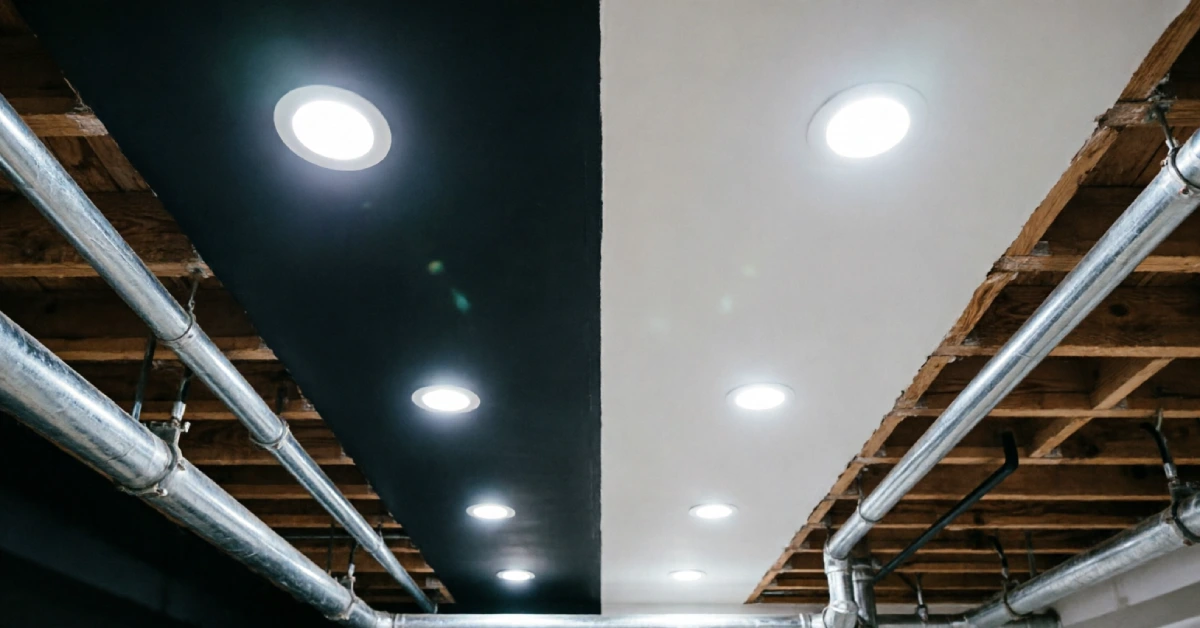
Color choice changes everything about how a painted basement ceiling feels and functions in your space. Black is the most popular pick by far, and for good reason.
A black painted basement ceiling disappears into shadow. Your eye stops noticing the ductwork and pipes, and instead focuses on your furniture, lighting, and flooring. It reads moody, dramatic, and intentional.
White does the opposite. It reflects light and makes a dim basement feel brighter and more open, which helps a lot in spaces with few windows or none at all.
Gray sits in between. Sherwin-Williams Repose Gray SW 7015 gives you softness without the starkness of white or the drama of black, a nice middle ground for undecided homeowners.
Whichever color you pick, stick with one shade throughout. Mixing colors on pipes versus joists tends to look messy rather than styled.
Choosing the Best Paint and Finish
Not every paint works well on a basement ceiling. You want acrylic latex paint in a flat or matte finish, since shine draws attention to every bump and seam up there.
Flat finishes hide imperfections better than satin or gloss. Basement ceilings are rarely perfectly smooth, so a matte look forgives a lot of the rough texture from pipes and joists.
Primer matters more here than almost anywhere else in your house. A stain-blocking primer stops water marks, rust, and old stains from bleeding through your fresh coat of paint.
Sherwin-Williams offers reliable go-to shades for this project. Tricorn Black SW 6258 and Pure White SW 7005 are two of the most requested colors for painted basement ceilings.
If you’re spraying, dryfall paint is worth the extra cost. It’s designed to dry into a powder before hitting the floor, which cuts overspray cleanup dramatically.
How to Prepare Your Ceiling for Paint
Before you touch a paintbrush, clear the space completely. Move furniture, cover the floor, and remove anything you don’t want covered in dust or stray paint.
Next, vacuum the entire ceiling area thoroughly. Cobwebs, dust, and debris sitting on joists and pipes will show through your paint and ruin an otherwise smooth finish, so don’t skip this part.
Check for moisture damage or mold before painting. Painting over an active leak or mold problem only hides it temporarily, and it will resurface fast.
Mask outlets, light fixtures, and anything electrical you’re not painting. Painter’s tape and plastic sheeting keep overspray off things that need to stay clean.
Repair any obvious damage first. A cracked joist or rusted pipe needs fixing before paint, not after, since paint won’t solve structural issues.
The Best Way to Paint an Exposed Ceiling
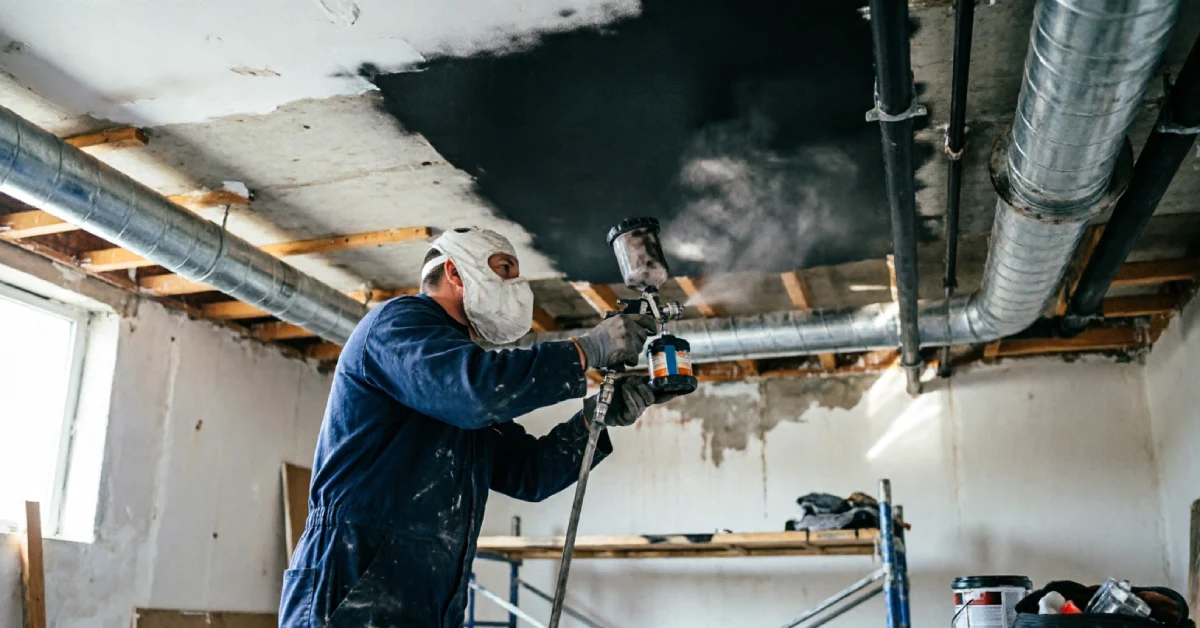
Most pros recommend an airless sprayer for this job. It coats irregular surfaces like pipes and joists far faster and more evenly than a brush ever could manage.
If you don’t own or want to rent a sprayer, a brush and roller combo still works fine. It just takes longer and demands more patience around tight corners.
Apply paint in thin, even coats rather than one thick layer. Thick coats drip, pool in corners, and take much longer to dry fully.
Give each coat proper drying time before adding another. Rushing this step leads to peeling, uneven color, and a finish that won’t hold up over time.
Plan on two coats minimum for full, even coverage. Dark colors especially need that second coat to avoid a blotchy, patchy look overhead.
Cost to Paint a Basement Ceiling
DIY painting a basement ceiling mostly costs you paint, primer, and supplies. Depending on ceiling size, expect to spend a few hundred dollars total for a full room.
Hiring a professional costs more, but it saves serious time and guarantees an even, sprayed finish. Sprayers require practice, and mistakes are hard to fix once dry.
Bigger basements or extra prep work, like mold remediation, will raise your total cost. Get a quote before assuming a professional job fits your budget.
Common Mistakes to Avoid
Skipping primer is the biggest mistake homeowners make. Stains bleed through cheap paint jobs fast, especially over rusted pipes or water-damaged wood joists.
Rushing prep work is a close second. Dust and cobwebs left behind will show up as bumps and specks once your paint dries completely.
Choosing glossy paint is another common slip. Shine highlights every flaw in an already imperfect surface, so always stick with flat or matte finishes instead.
Keeping Your Painted Basement Ceiling Looking Fresh
A painted basement ceiling holds up well with minimal upkeep. Occasional dusting keeps it looking sharp, since dust tends to settle on flat, textured surfaces over time.
Watch for new moisture stains after heavy rain or plumbing issues. Catching problems early means a quick touch-up instead of a full repaint down the line.
Keep leftover paint on hand for small touch-ups. Scuffs and marks happen, especially in basements used as gyms, workshops, or laundry rooms.
Repaint every several years if the color starts looking dull or dated. Flat finishes wear a bit faster than glossy ones, but touch-ups keep them looking new.
Painted Basement Ceiling Ideas for Different Styles
A black ceiling treatment pairs beautifully with a home gym or media room, since dark walls and low, warm lighting together create a moody, focused vibe.
White works great for laundry rooms or basement offices, where you want the space to feel bright, clean, and open despite limited natural light.
For a softer look, try warm-toned bulbs against a gray or white ceiling. Swapping your bulbs instantly makes a painted ceiling feel cozier and far less clinical.
Frequently Asked Questions
Should you paint your basement ceiling black or white?
Black hides ductwork best, while white brightens a dim room, so pick based on your ceiling height and lighting.
Can you paint a basement ceiling without a sprayer?
Yes, a brush and roller work fine, though the job takes longer and needs more careful cutting in around pipes.
Do you need special paint for a basement ceiling?
Use acrylic latex in a flat finish, plus a stain-blocking primer if you see any existing water marks or rust.
Final Thoughts
A painted basement ceiling gives you style, savings, and easy access all in one project. It’s one of the most practical upgrades you can make.
Whether you go bold black or bright white, the payoff is a basement that finally feels finished. Pair it with a comfy pull-out sofa bed and good lighting for a space you’ll actually want to use.
Grab your paint, clear your schedule, and give your basement ceiling the glow-up it deserves this weekend.


