

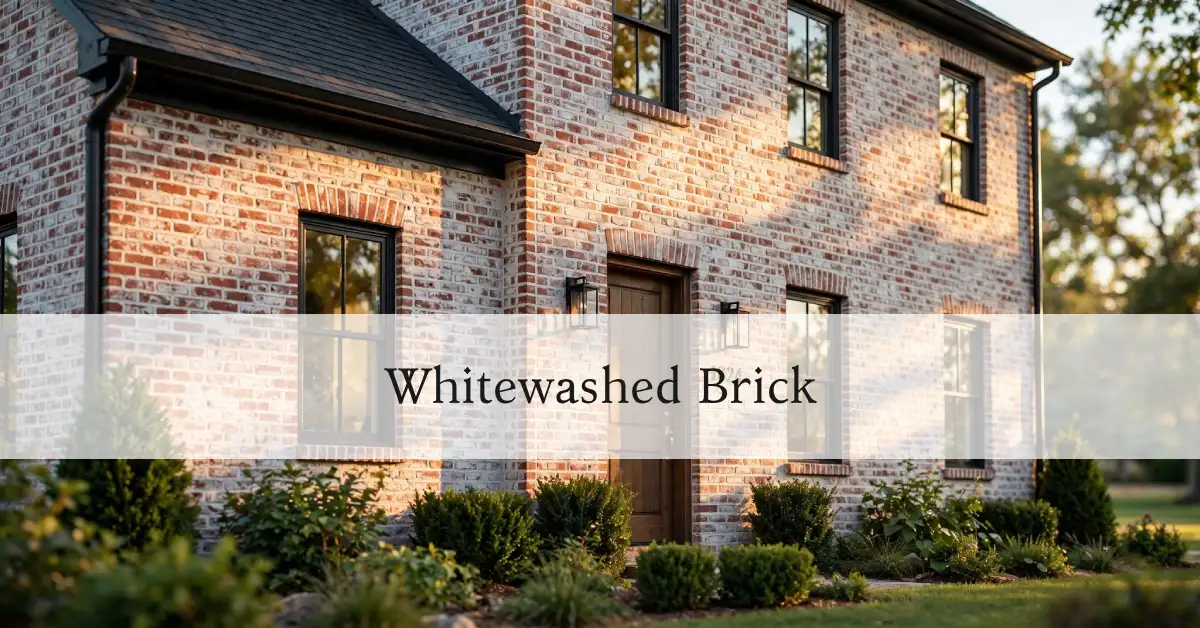
Whitewashed brick is a technique where diluted white paint is brushed onto brick, letting the original colour and texture show through. It costs between 1.40 and 4.20 dollars per square foot on average. The finish softens harsh red or orange brick tones while keeping a natural, weathered look that suits farmhouse and cottage-style homes.
A wall of orange-red brick can make a house feel dated before you even open the front door. Whitewashed brick fixes that without covering up what makes brick brick. This guide walks you through what the finish actually is, what it costs, how to apply it yourself, and where homeowners tend to go wrong.
You will learn the real difference between whitewash and limewash, the brick types that take the finish best, and a full application process you can follow this weekend.
What Is Whitewashed Brick
Whitewashed brick is brick that has been coated with a thinned mixture of paint and water, usually at a one-to-one ratio. Unlike solid paint, whitewash sits on the surface loosely enough that the brick’s grain, colour variation, and mortar lines stay visible underneath. The result reads as softened, not hidden.
This is different from painting brick a flat white. Painted brick looks uniform. Whitewashed brick still looks like brick, just lighter and calmer.
Why Homeowners Are Choosing Whitewashed Brick Right Now
Bold, high-contrast brick exteriors are losing ground to softer, monochrome palettes. Design coverage for 2026 points to whitewash and limewash treatments replacing stark white paint on classic red brick, since the finish keeps the texture while toning down the colour for a European farmhouse feel.
A few reasons this trend keeps growing:
- Homeowners want warmth without giving up the character of real brick.
- Resale listings photograph better with a softened, neutral facade than a heavy red one.
- Whitewash costs less than a full repaint and takes less time to apply.
- It works on both exterior walls and interior accent brick, like fireplaces.
Interior design coverage from late 2025 also notes that warm, creamy whites are outperforming stark white on brick, since they photograph better and age more gracefully than a flat, cold finish.
Whitewashed Brick vs Limewashed Brick
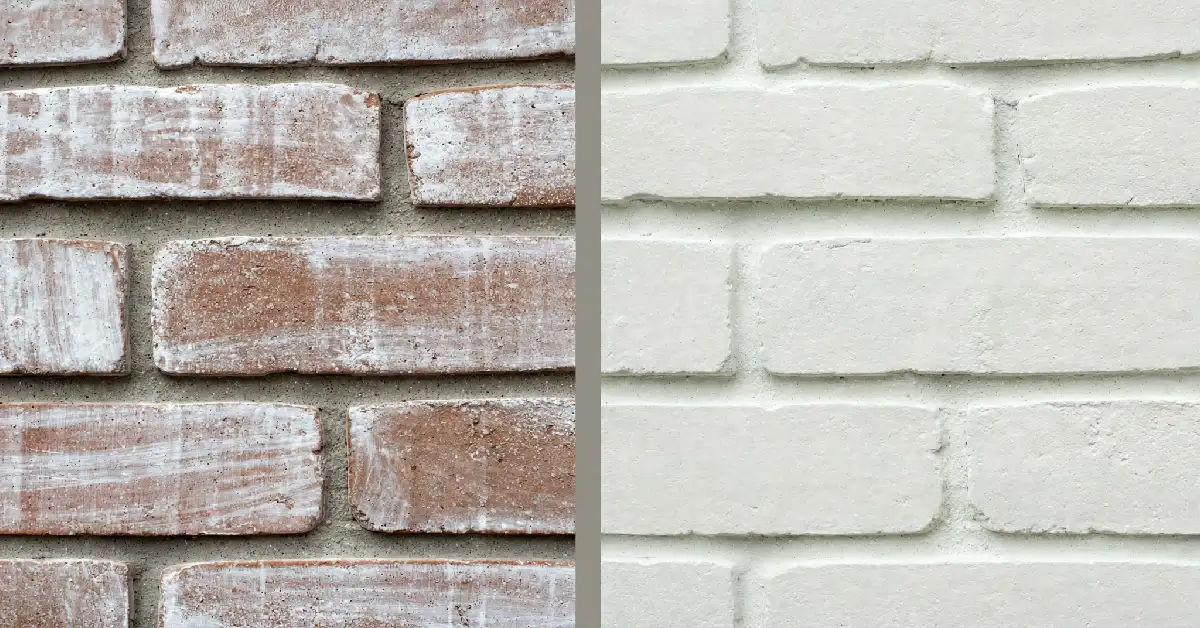
People use these terms as if they mean the same thing, and that mix-up leads to the wrong purchase. Here is the actual difference.
Whitewash is diluted latex or acrylic paint. It sits on top of the brick as a coating, which means it is more permanent and harder to remove once applied. It works on brick that has already been painted, and it holds up well with basic upkeep.
Limewash is made from crushed limestone mixed with water and pigment. It bonds chemically with the brick surface rather than sitting on top of it, so it needs unpainted, porous brick to work correctly. Limewash is breathable, which helps prevent moisture from getting trapped behind the finish, and it develops a soft, chalky patina over time.
On lifespan, the two differ quite a bit. Limewash can last 20 to 30 years on an exterior wall when applied correctly, while whitewash typically needs a touch-up every three to five years depending on sun and weather exposure.
If your brick has already been painted, whitewash is your only real option between the two. If your brick is still raw and porous, limewash usually gives a longer-lasting result.
How Much Does Whitewashed Brick Cost
Cost is where most homeowners get surprised, mostly because “brick painting,” “whitewashing,” and “limewashing” all get quoted together online. Here is what to actually expect.
Whitewashing a brick house typically runs between 1.40 and 4.20 dollars per square foot, according to recent contractor pricing data. For an average 2,500-square-foot brick home, that puts total project cost somewhere between 2,225 and 4,000 dollars.
For comparison, limewashing tends to run slightly higher, between 1.50 and 5.00 dollars per square foot, largely because the lime-based material and labour are more specialised. A full standard repaint of brick, without any whitewash or limewash effect, usually costs 1.50 to 4.50 dollars per square foot.
Smaller jobs cost less in total but more per square foot, since setup and labour get spread across a smaller area. Whitewashing a single chimney or fireplace wall commonly falls between 200 and 1,000 dollars.
Three factors move the price the most:
- Brick condition. Cracked, crumbling, or heavily stained brick needs repair and cleaning first, which adds labour cost.
- Number of coats. A heavier, more opaque whitewash needs more material and more application time than a light, one-coat wash.
- Access and height. A two-story exterior costs more to whitewash than a single-story wall or an interior fireplace, because of scaffolding and safety equipment.
Step-by-Step Guide to Whitewashing Brick
You do not need professional experience to whitewash a wall of brick, though a full two-story exterior is worth hiring out. Here is the process for a DIY interior or accent wall.
Step 1: Clean the brick. Remove dust, cobwebs, and grease with a stiff brush and a mix of water and mild dish soap. Let the brick dry fully, which usually takes 24 hours.
Step 2: Mix your whitewash. Combine white latex or acrylic paint with water at roughly a one-to-one ratio. For a lighter, more transparent effect, use more water. For heavier coverage, use less.
Step 3: Test a small section. Apply the mixture to a hidden corner or a single brick first. Let it dry fully before deciding if the ratio needs adjusting.
Step 4: Apply with a brush, not a roller. A roller flattens the brick’s texture. A brush lets you work the mixture into mortar lines and rough spots, which keeps the finish looking natural rather than sprayed on.
Step 5: Wipe as you go. Right after brushing on a section, use a damp rag to wipe some of the paint back off. This is what creates the weathered, uneven look people associate with whitewash.
Step 6: Let it cure. Give the finish 24 to 48 hours to dry fully before touching the wall or adding a second coat.
Step 7: Add a second coat only if needed. Step back and check the wall in natural light. If the brick still looks too dark or uneven, apply a light second coat only where needed.
Best Brick Types for a Whitewash Finish
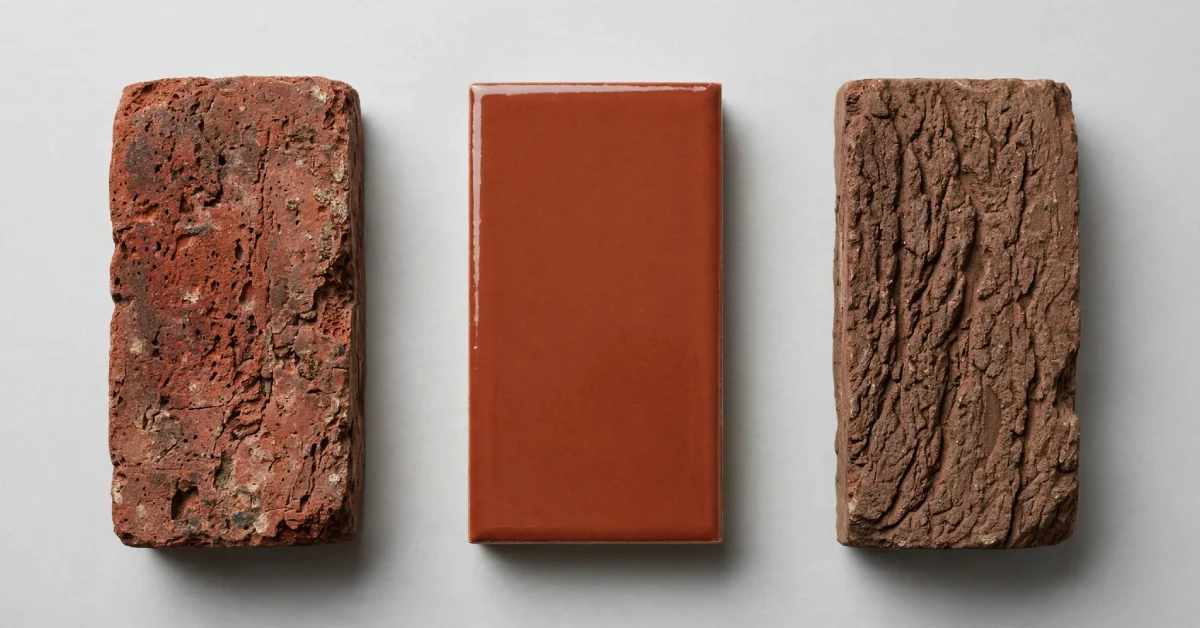
Not every brick takes whitewash the same way. Porous, older brick soaks up the wash and holds the finish well. Newer, glazed, or heavily sealed brick resists it and can end up patchy.
Brick types that work best:
- Porous clay brick, since it absorbs the wash evenly.
- Reclaimed or older brick, since aged texture reads well through a light coat.
- Textured brick, since the wash settles unevenly into grooves, which adds depth instead of flatness.
If you are not sure what type of brick you have, test a small hidden patch before committing to the full wall or exterior.
Common Whitewashed Brick Mistakes to Avoid
Most whitewashing problems come from rushing the process or skipping prep work. Watch out for these:
- Skipping the cleaning step, which leaves dust trapped under the finish and causes peeling later.
- Using a roller instead of a brush, which hides the brick’s texture instead of highlighting it.
- Mixing the wash too thick, which turns whitewash into a flat paint job.
- Applying a second coat before the first one fully cures, which can cause streaking.
- Ignoring a small test patch, then discovering the colour or ratio is wrong on the full wall.
How to Maintain Whitewashed Brick
Once applied, whitewash needs less upkeep than a full paint job, but it is not maintenance-free. Rinse the wall gently once or twice a year to remove dirt buildup, using a garden hose rather than a pressure washer, since high pressure can strip the finish unevenly.
Check the wall each spring for cracking, peeling, or fading, especially on sun-facing sides. Most exterior whitewash needs a fresh coat every three to five years, depending on climate and sun exposure. Interior whitewashed brick, like a fireplace wall, holds up much longer since it is not exposed to weather.
If you are weighing whitewash against other interior design choices for the room, our guide on current interior design trends covers how neutral brick pairs with other finishes.
Final Thoughts
Whitewashed brick gives you a softer, more current look without erasing what made you choose brick in the first place. It costs less than a full repaint, takes a weekend for smaller projects, and holds up well with basic care. Test a patch first, use a brush over a roller, and resist the urge to over-coat, and the finish will look intentional rather than accidental.
FAQs
Is whitewashed brick still in style in 2026?
Yes. Design trend reports for 2026 show whitewash and limewash finishes replacing stark white paint on classic red brick, since they soften colour while keeping texture visible.
How long does whitewashed brick last?
Exterior whitewash typically needs a touch-up every three to five years. Interior whitewashed brick, away from weather exposure, lasts considerably longer.
Can I whitewash brick that has already been painted?
Yes. Whitewash works on painted brick, which makes it a better option than limewash if your brick already has a paint coating.
Does whitewashing brick lower home value?
No verified data shows a direct value drop. Real estate listing photography tends to favour softened, neutral brick over heavy red or orange tones, though results vary by market and buyer taste.
Can I remove whitewash if I change my mind?
It is difficult. Whitewash is considered a semi-permanent finish, and stripping it can damage the brick underneath. Test carefully before committing to a full wall.


