

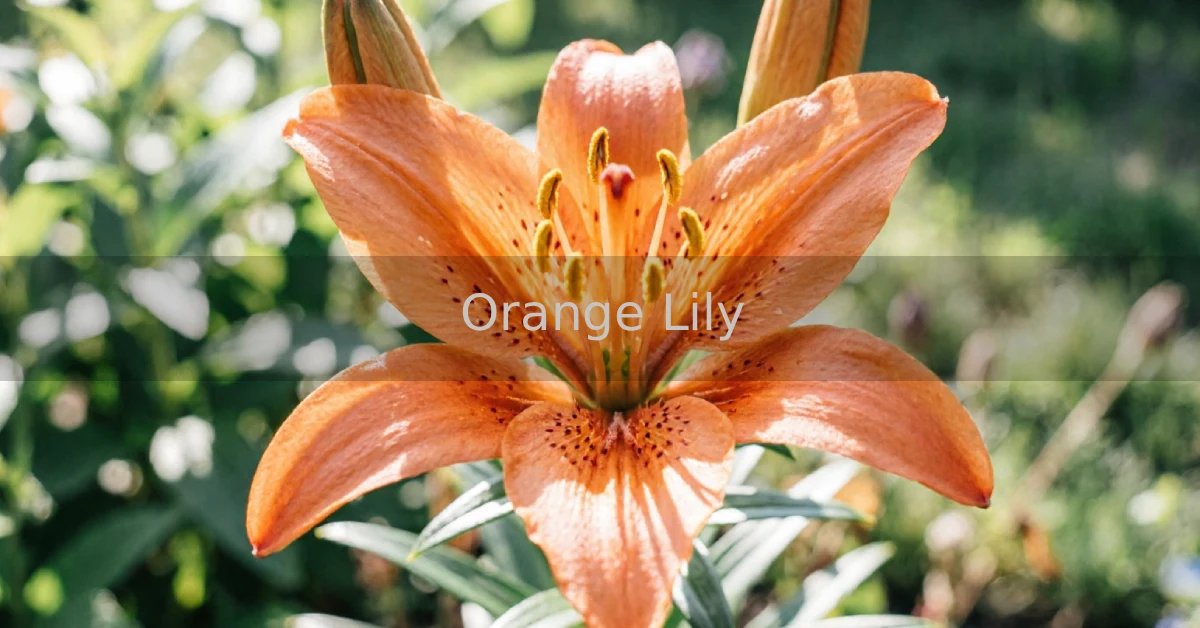
Ever spotted a bright orange bloom in a friend’s border and asked what it was, only to get three different answers? You’re not alone. The name orange lily gets used for several different plants, and that mix-up trips up even seasoned gardeners.
What Is an Orange Lily, Really?
The name usually points to Lilium bulbiferum, a true lily native to Europe with upright, cup-shaped flowers in a warm shade. But gardeners also use it loosely for tiger lily and orange daylily, two plants that look similar but come from entirely different families.
That looseness isn’t a mistake so much as an old habit. People named flowers by color and shape long before botanists sorted out the family trees, and the common name stuck around.
Knowing which plant you actually have matters for care, since true lilies and daylilies want different things from soil and water.
Meet the Family: Key Varieties
The classic true lily, Lilium bulbiferum, grows from a scaly bulb and produces upright, star-shaped flowers with a light spice scent. You’ll find its profile on Kew’s Plants of the World Online.
Tiger lily, or Lilium lancifolium, is a close cousin with nodding, spotted flowers that curve backward. Orange daylily, Hemerocallis fulva, belongs to a separate plant family entirely and spreads by thick roots rather than a single bulb.
Asiatic hybrids round out the group. They’re bred for bold color and sturdy stems, and many nurseries sell them under this same common name.
Orange Lily vs Tiger Lily vs Orange Daylily
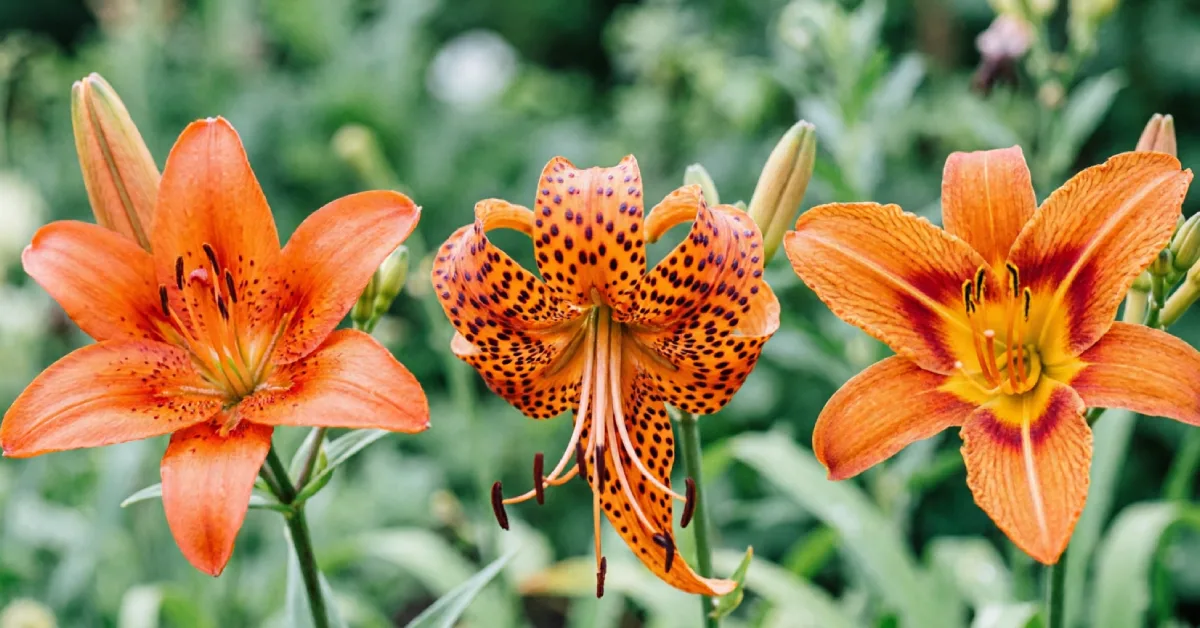
Flower direction is your fastest clue. The true lily’s flowers usually face upward or outward. Tiger lily flowers nod downward with strongly curved petals, and daylily blooms open wide and flat, more like a trumpet.
Leaves tell you more. Lilies have narrow, strap-like leaves running up a single sturdy stem. Daylilies grow long, arching, grass-like leaves straight from the base, with no leaves on the flower stalk itself.
The root system seals the deal. Dig gently near the base. A single fleshy bulb means true lily. Thick roots or tubers mean daylily, as RHS growing notes on tiger lily confirm.
How to Spot This Plant in the Garden
Look for six petal-like segments arranged in a star, often with a few dark speckles near the center. The stems stand upright and rarely branch low down, keeping the blooms clustered near the top.
Check the timing too. The true lily and tiger lily both bloom in mid to late summer, while the orange daylily often starts a bit earlier, and each flower lasts only one day before a fresh one opens.
Best Growing Conditions for Orange Lily
This flower wants full sun for the boldest color, though it tolerates a few hours of afternoon shade in hot climates. Six hours of direct light daily keeps stems strong and flowering reliable.
Soil needs to drain well. Heavy, waterlogged clay leads to bulb rot fast, so work in compost or coarse sand before planting if your soil holds water. A slightly acidic to neutral pH suits most types just fine.
Give plants room to breathe. Crowded clumps trap moisture around the leaves and invite fungal trouble, so space bulbs several inches apart from the start.
Planting the Bulbs the Right Way
Plant bulbs in early autumn or early spring, whichever suits your climate, so roots can establish before extreme heat or cold sets in. Set them about three times as deep as the bulb is tall.
Point the pointed tip upward and firm the soil gently over the top. Water thoroughly right after planting to settle the soil around the roots and remove air pockets.
Mulch lightly after planting. A thin layer of organic mulch holds moisture and moderates soil temperature while new roots get going.
Care Through the Growing Season
Spring is about steady moisture. Water when the top inch of soil feels dry, and avoid letting the ground go bone dry during active leaf and bud growth.
Once buds appear, a balanced bulb feed supports bigger blooms. Skip heavy nitrogen fertilizer, since it pushes leafy growth at the expense of flowers.
After flowering, resist the urge to cut everything back right away. Let the foliage die back naturally, since it’s feeding next year’s bulb the whole time. Trim only once it turns yellow or brown on its own.
Winter care is simple in most zones. A layer of mulch protects bulbs from hard freezes, and you can pull it back once new shoots appear in spring.
Pests and Problems to Watch For
Aphids cluster on new growth and buds, sucking sap and weakening stems. A strong water spray or insecticidal soap usually clears them without much fuss.
Scarlet lily beetles are the bigger threat for true lilies. These bright red pests chew through leaves fast, so check plants often and pick beetles off by hand early in the season.
Slugs and snails go after young shoots in spring, especially in damp weather. Bulb rot shows up as mushy growth at the base, usually from poor drainage. Botrytis causes brown spotting during humid stretches.
What Does This Bloom Symbolize?
This flower carries meanings tied to confidence, warmth, and pride. The bold color reads as energetic rather than subtle, which is exactly why florists reach for it in celebration bouquets.
Some traditions link it to bold affection, a step up from the softer sentiment tied to pale or white flowers. None of this is a fixed rule, just a pattern that’s built up over time through gift-giving and floral custom.
Garden and Home Uses
In garden beds, this bloom works well as a mid-border accent, popping against green foliage and cooler-toned neighbors like lavender or salvia. Plant it in small clusters for the most visual impact.
Cut stems also hold up nicely in a vase for about a week, making them a solid choice for casual arrangements. The bold shape has long made this flower a favorite subject for botanical painting too.
Is Orange Lily Safe Around Cats?
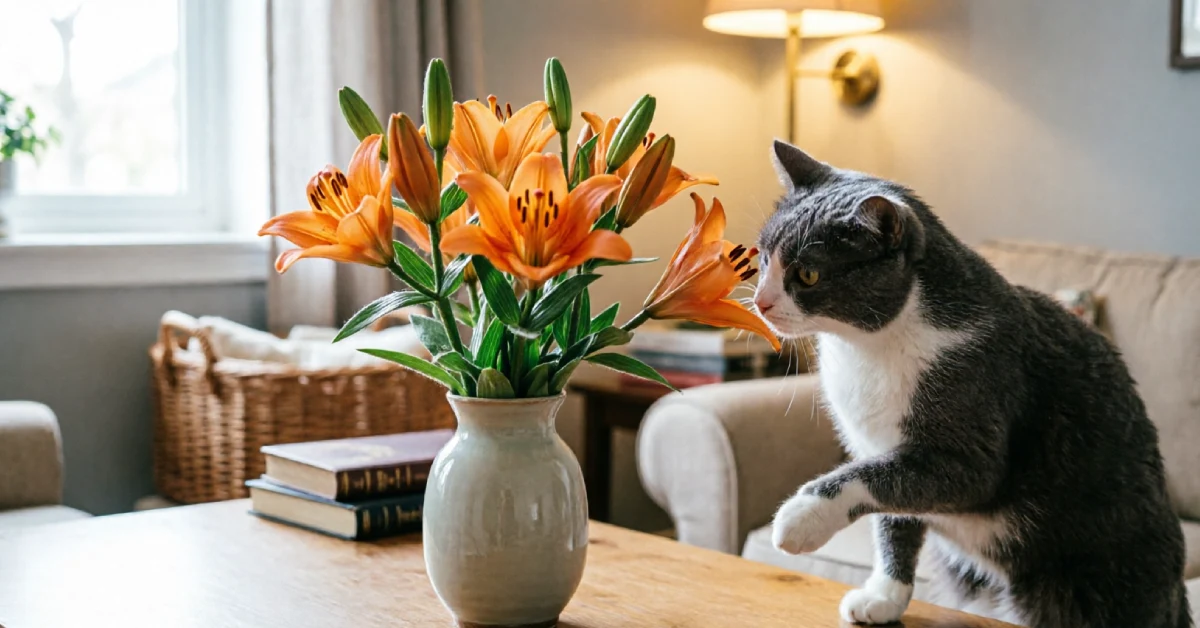
Here’s the one warning worth repeating. True lilies, including this one and tiger lily, are seriously toxic to cats, and so are daylilies. Every part of the plant carries risk.
Petals, leaves, pollen, and even vase water can trigger kidney failure in cats within days, per the ASPCA. If you share your home with a cat, keep these blooms outdoors, or skip them entirely.
If you suspect your cat has had contact with any part of the plant, call your vet right away. Fast treatment makes a real difference in the outcome.
FAQs
What is the most common orange lily?
Lilium bulbiferum is the classic true version, though Asiatic hybrids and orange daylily often get called by the same name.
Is it the same as a tiger lily?
No. They’re related but distinct species, and flower direction and leaf shape help distinguish them, as the North Carolina Extension database shows in daylily comparisons.
How do I identify the plant?
Check flower direction, leaf shape, and the root at the base. A single bulb signals a true lily, while thick, fibrous roots point to a daylily.
Is it poisonous to cats?
Yes, severely. Every part of the plant poses a risk, so keep cats away from it entirely.
Conclusion
Orange lily earns its spot in gardens for a reason. It’s bold and reliable once you get the growing conditions right. Get the identification sorted first, match the care to your type, and you’ll have this bloom coming back stronger every year.