

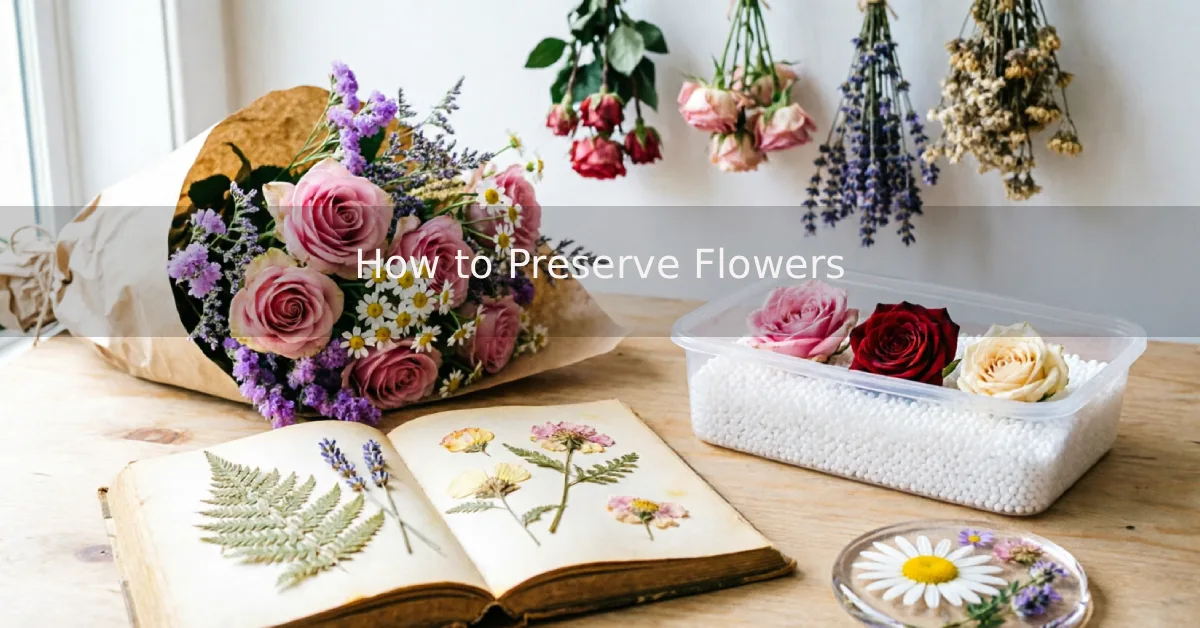
That bouquet on your counter won’t stay pretty forever. Petals wilt. Colors fade fast.
But here’s the flex: you can lock in the beauty before it disappears. Learning how to preserve flowers means your favorite blooms, wedding bouquet, or garden cuttings can last for years instead of days.
Different flowers need different treatment. A rose and a daisy don’t dry the same way, so picking the right method matters as much as the effort you put in.
This guide breaks down the real methods that work: air drying, pressing, silica gel, and resin—no filler, just what actually keeps flowers looking good.
Quick Guide: Which Preserving Method Fits Your Flowers
Short on time? Here’s the cheat code for how to preserve flowers without guessing. Match your flower type and your end goal to a method below before you commit any time or supplies to the process.
| Method | Best For | Time Needed | Result |
|---|---|---|---|
| Air drying | Sturdy stems, lavender, statice | 2 to 4 weeks | Rustic, muted color |
| Pressing | Flat flowers, pansies, daisies | 2 to 4 weeks | Flat keepsake |
| Silica gel | Roses, peonies, full blooms | 2 to 7 days | True shape and color |
| Resin | Any dried flower | 1 to 2 days curing | Permanent, glossy finish |
Air drying is the easiest entry point if you’re new to this. It costs nothing and needs almost no equipment beyond string and patience.
Pressing works best when you want flat keepsakes for cards, books, or scrapbooks rather than a three-dimensional arrangement sitting on a shelf.
How to Preserve Flowers Naturally with Air Drying
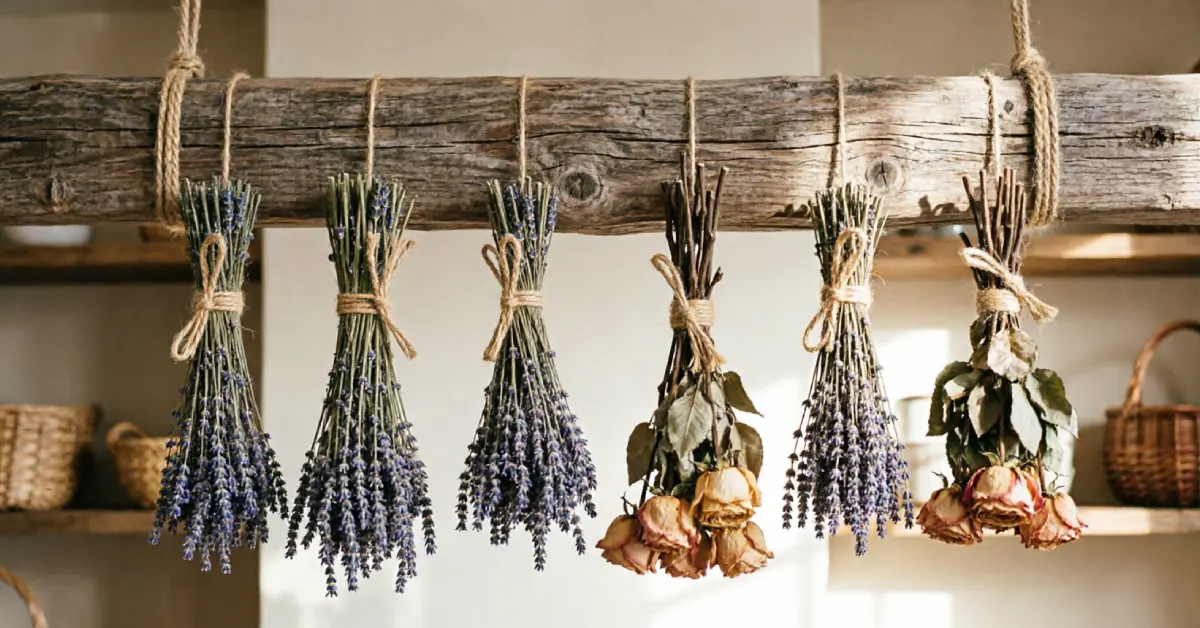
Air drying is the OG method. It’s cheap, it’s simple, and it works great on sturdy, thick-stemmed flowers like lavender and roses.
Start by stripping the leaves off each stem. Leaves hold moisture and slow the whole drying process down, so get rid of them early.
Bundle five or six stems with a rubber band, then hang them upside down in a dark, dry spot with good airflow. Direct sunlight fades color fast, so skip the windowsill.
Give it two to four weeks. You’ll know they’re done when the stems snap instead of bend, meaning every bit of moisture is gone.
This method changes the flower’s texture and color a little. That’s part of the charm, honestly, since it gives dried arrangements their signature rustic look.
How to Preserve Flowers in a Book or Press
Pressing flowers in a book is the move your grandma probably used, and it still works. All you need is a heavy book and some patience.
Choose flowers that are already fairly flat, like pansies, daisies, or violets. Thick, fleshy blooms don’t press well and tend to mold before they finish drying.
Place each flower between two sheets of absorbent paper, then stack the pages inside a heavy book. Add more books on top for extra weight.
Leave everything alone for two to four weeks. Checking too often just lets air in and slows the process, so resist the urge to peek constantly.
Once flat and dry, your pressed flowers are ready for frames, cards, or a scrapbook page that’ll outlast the actual event.
Using Silica Gel to Keep Flower Shape and Color
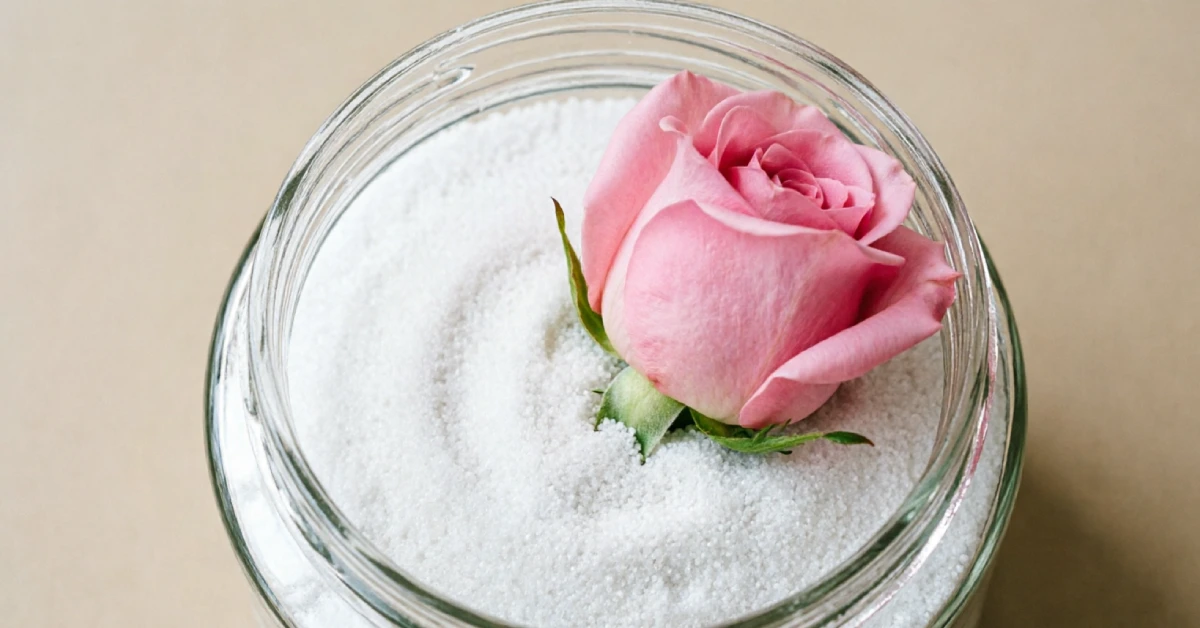
If air drying is the classic, silica gel is the upgrade. This method preserves a flower’s actual three-dimensional shape instead of flattening it.
Silica gel is a sand-like drying agent that pulls moisture out fast while supporting the petals so they don’t collapse or wrinkle during the process.
Pour a layer of silica gel into an airtight container, set your flowers on top, then gently cover them completely with more gel until they’re buried.
Seal the container and wait about two to seven days, depending on the flower’s size. Roses and peonies take longer than smaller blooms like violets.
When you brush the gel away, you’ll get a flower that still looks fresh, just lighter and a bit more delicate to handle.
This is the best method when color and shape matter more than speed or cost, since results genuinely look close to the real thing.
How to Preserve Flowers Permanently with Resin
Resin is how you make preserved flowers last basically forever. It’s a bit more work, but the payoff is a glossy, museum-style keepsake.
Start with flowers that are already fully dried through air drying, pressing, or silica gel. Any leftover moisture will cloud or ruin the resin.
Mix casting resin according to the package instructions, then pour a thin layer into your mold and let it partially set before adding flowers.
Place your dried flowers into position, then pour a second layer of resin over the top to seal everything completely inside the mold.
Wear gloves and eye protection while working, since resin fumes and splashes aren’t something you want on bare skin or in your lungs.
Let it cure fully, usually one to two days, before popping it out of the mold. You’ll get a permanent, glass-like keepsake.
Preserving Flowers in a Frame, Jar, or Display Case
Once your flowers are dry, how you display them matters almost as much as how you preserved them in the first place.
Frames work great for pressed flowers. Arrange them on a plain background, then seal them under glass to protect against dust and humidity.
Glass jars suit air-dried or silica-preserved flowers that still have their full shape. Add a lid to slow fading and keep moisture out.
Shadow boxes give you more depth for bulkier arrangements, letting you layer stems, petals, and even small keepsakes like a wedding invitation.
No matter which display you pick, keep it out of direct light. Fading happens slowly, but it happens to every preserved flower eventually, glass case or not.
Preserving Wedding and Memorial Flowers
Wedding bouquets and funeral flowers carry weight that goes beyond décor. These are the blooms people actually want to preserve.
Start the process within a day or two of the event, while petals are still fresh and firm, not wilted or bruised already.
Silica gel is usually the top pick here since it keeps the bouquet’s original shape and color close to how it looked on the day.
Resin turns these preserved blooms into something you can keep on a shelf permanently, like a jewelry piece or a paperweight.
There’s no single right way to preserve a wedding bouquet. The best method is whichever one matches how you actually want to see it again.
Common Flower Preservation Mistakes to Avoid
Even a solid method fails if you skip a few basics. These mistakes show up constantly, so watch for them.
Don’t preserve flowers that are already wilting. Damaged or overripe blooms won’t hold their shape no matter which method you pick.
Skipping the airtight seal on silica gel containers lets humidity back in, which can undo days of careful drying almost overnight.
Rushing resin before flowers are completely dry is a rookie move. Any trapped moisture clouds the resin and ruins the finished piece.
How to Store Preserved Flowers So They Last
Storage is where a lot of people drop the ball after doing everything else right. Don’t let your effort go to waste here.
Keep preserved flowers away from direct sunlight and humidity. Both fade color and weaken brittle petals faster than almost anything else.
Dried and pressed flowers do best in a dark, dry spot, while resin pieces can handle normal display since they’re fully sealed.
Handle everything gently. Dried petals are fragile, and one careless bump can crumble weeks of careful work in a second.
Final Thoughts on Preserving Your Flowers
Learning how to preserve flowers isn’t complicated once you match the right method to the right bloom and follow through.
Whether it’s a wedding bouquet, a garden favorite, or flowers from someone you loved, preservation turns something temporary into something permanent.
Pick your method, gather a few basic supplies, and give it a shot. Your future self will thank you for it.
And once you’ve tried one method, you’ll probably want to try the rest. Preserving flowers has a way of turning into a habit once you see the results sitting on your shelf.