

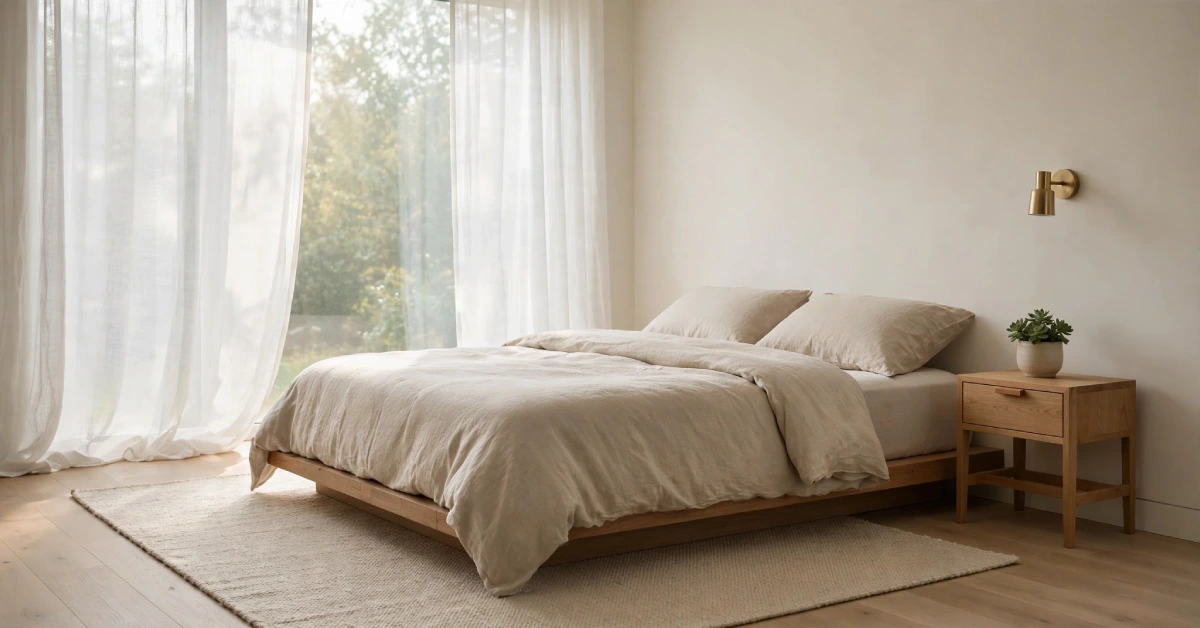
A minimalist bedroom uses a simple color palette, low-profile furniture, and hidden storage to create a calm space. The style favors quality over quantity, clean lines, and open floor space. A well-planned minimalist bedroom removes visual noise so the room feels restful and easy to maintain, without feeling cold or empty.
Do you walk into your bedroom at night and feel your shoulders drop, or does the clutter on the dresser make your mind race before you even lie down? Your bedroom sets the tone for how well you sleep and how calm you feel the next morning.
A minimalist bedroom is not about owning less for its own sake. It is about keeping only what supports rest and removing everything that pulls your attention away from it. In this guide, you will find practical steps for colour, furniture, storage, lighting, and texture, along with mistakes to avoid so the room still feels warm and lived in. For more inspiration once you have the basics down, this list of bedroom ideas covers layout options for different room sizes.
What Is a Minimalist Bedroom Style
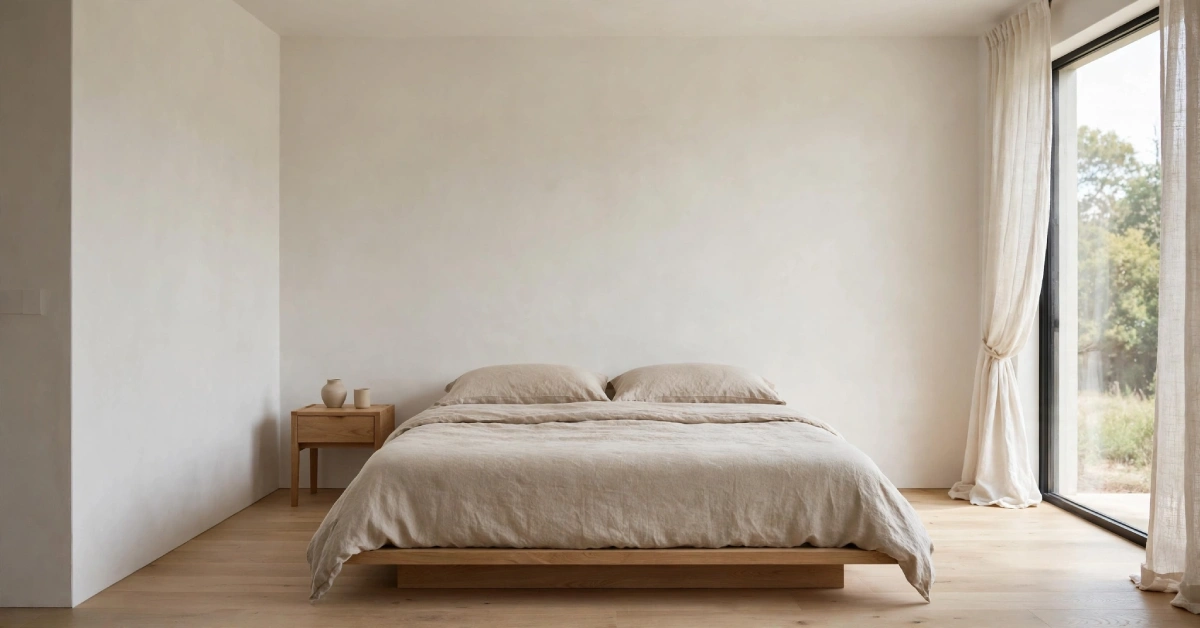
A minimalist bedroom keeps the layout simple, the colours quiet, and the furniture limited to what the room actually needs. Every piece earns its place. Nothing sits on a surface without a reason.
This does not mean a bare room with a mattress on the floor. It means editing down to the bed, one or two nightstands, storage that fits your daily routine, and lighting that supports rest. The goal is a room where your eyes have fewer things to land on, so your mind settles faster.
Interior designer Rachel Blindauer, who has spent over a decade designing interiors and furniture, says the style has shifted in recent years. She explains that minimalism is no longer only about removing clutter. It is about finding beauty in restraint and giving weight to the few things that matter in the room.
That shift matters for anyone starting this project. You are not aiming for an empty room. You are aiming for an intentional one.
A good way to test whether a bedroom qualifies as minimalist is to stand in the doorway and count what you notice first. In a well-planned room, your eye should land on the bed, then settle. In a cluttered room, your eye keeps moving from the dresser to the chair to the pile of clothes on the floor, and that constant movement is part of why the room feels tiring rather than restful.
Start With a Calm Colour Palette
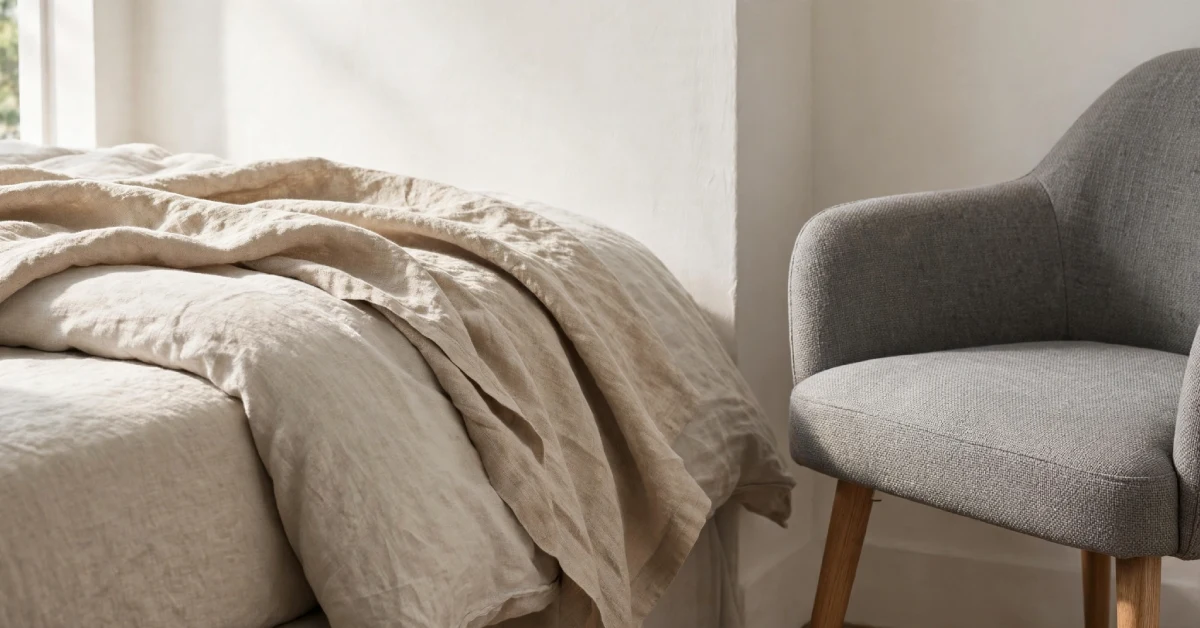
Colour sets the mood before you add a single piece of furniture. Stick to two or three tones at most, and let one of them lead.
Soft neutrals work well because they reflect light and make a small room feel larger. Common choices include:
- Warm white or off-white for walls
- Beige, oatmeal, or greige for bedding and rugs
- Soft grey or taupe for accent pieces
- A single deeper tone, such as charcoal or clay, used sparingly
Keep the palette consistent across walls, bedding, and curtains. A room with five competing colours will never feel calm, no matter how few objects are in it. If you want a bolder look later, add it through one accent, such as a headboard or a piece of art, rather than repainting the whole room.
Choose Low-Profile Furniture With Clean Lines
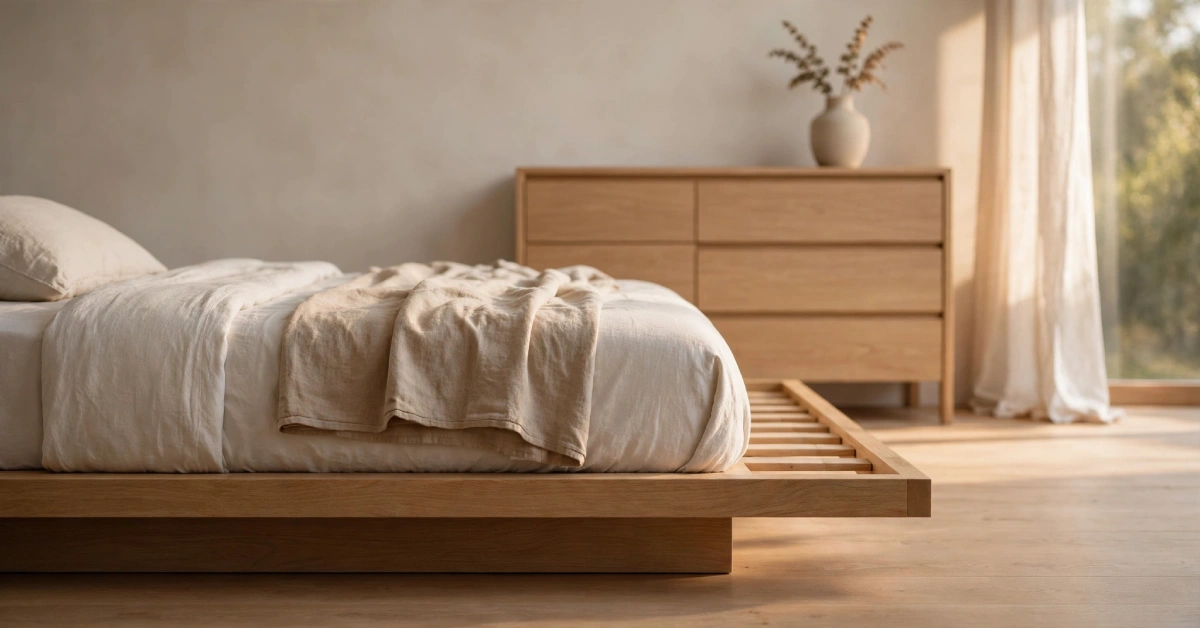
Furniture height and shape matter more than most people expect. Low, simple pieces keep sightlines open and make the ceiling feel taller.
Platform beds are a good example. Low platform beds typically sit six to eighteen inches off the floor, compared with twenty-five inches or more for a traditional bed frame with a box spring. That difference opens up visual space above the bed and gives the room a settled, grounded feel.
When shopping for furniture, look for straight edges, minimal hardware, and legs instead of bulky bases where possible. A dresser with flat-front drawers and no ornamentation will always read as calmer than one with carved detail, even if both hold the same amount of clothing.
Renowned architect Louis Sullivan summarised this idea over a century ago with the phrase, “form follows function.” In a minimalist bedroom, that principle still holds. Choose furniture based on what it does for your daily routine first, and let the look follow from that choice.
Nightstands deserve the same scrutiny as the bed. A single drawer is usually enough for a phone charger, a book, and a pair of glasses. Skip the two-tier nightstand with open shelving, since open shelves tend to collect small items over time and undo the clean look you worked to create. The same logic applies to dressers. A tall, narrow dresser with four or five drawers often works better than a wide, low one, because it holds the same amount of clothing while taking up less visual space along the wall.
Build Smart Hidden Storage
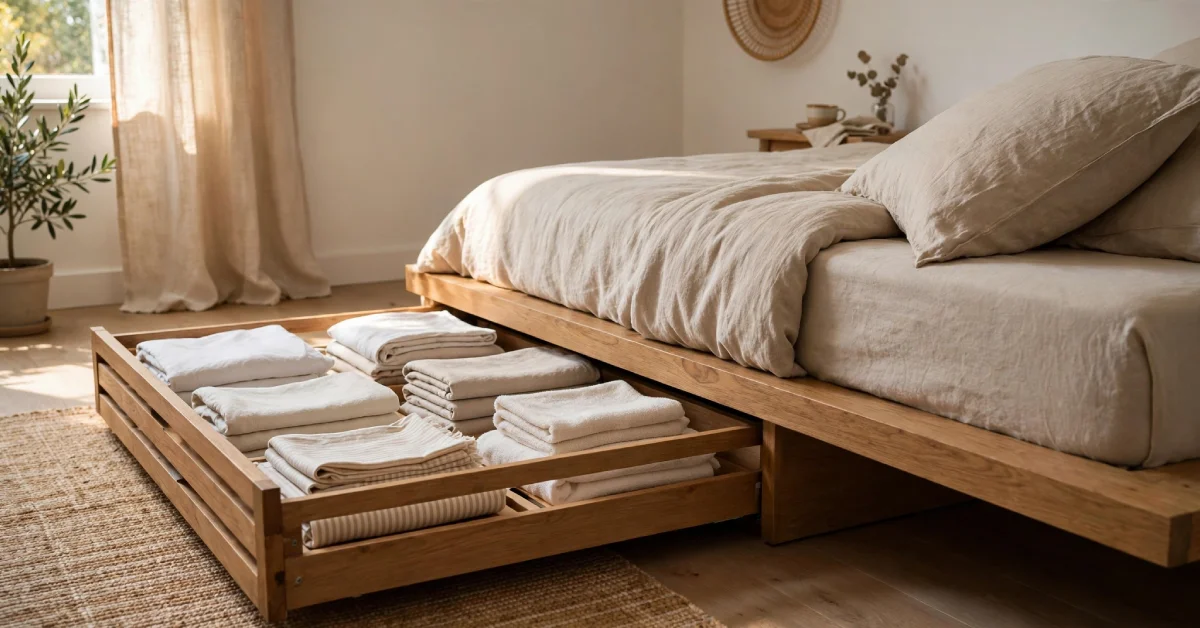
Clutter is usually not a decor problem. It is a storage problem. A minimalist bedroom needs enough storage to keep daily items out of sight without cramming the room with extra furniture.
Seymen Usta, an interior design specialist and architect, points out that hidden storage is one of the easiest ways to keep a bedroom looking clean. Platform beds with built-in drawers, ottomans that open for blankets, and nightstands with a single deep compartment all work toward the same goal, keeping surfaces clear.
Before buying new furniture, sort what you already own into three groups: items you use daily, items you use monthly, and items you rarely touch. Daily items belong within reach in a drawer or on a small tray. Everything else can move into under-bed storage, a closet system, or another room entirely.
Layer Soft, Purposeful Lighting
A minimalist bedroom still needs more than one light source. A single overhead fixture creates flat, harsh light that works against the calm feeling you are trying to build.
Layer at least two sources: one ambient light for the whole room and one task light for reading or getting dressed. Wall-mounted sconces or hanging pendants next to the bed free up nightstand space and remove another item from the surface. A dimmer switch lets you shift from bright morning light to a softer setting in the evening without buying extra fixtures.
Keep light fixtures simple in shape and finish. A sculptural pendant can act as a quiet focal point, but avoid stacking several decorative lights in one small room, since that quickly works against the minimalist goal.
Warm bulbs matter as much as fixture choice. A bulb in the 2700K to 3000K range gives off a soft, amber-toned light that reads as calm, while a cooler 5000K bulb can make even a well-designed room feel clinical. If your bedroom has a ceiling fixture you cannot remove, a smart bulb with a warm setting is a low-cost fix that takes a few minutes to install.
Add Warmth With Texture and Natural Materials
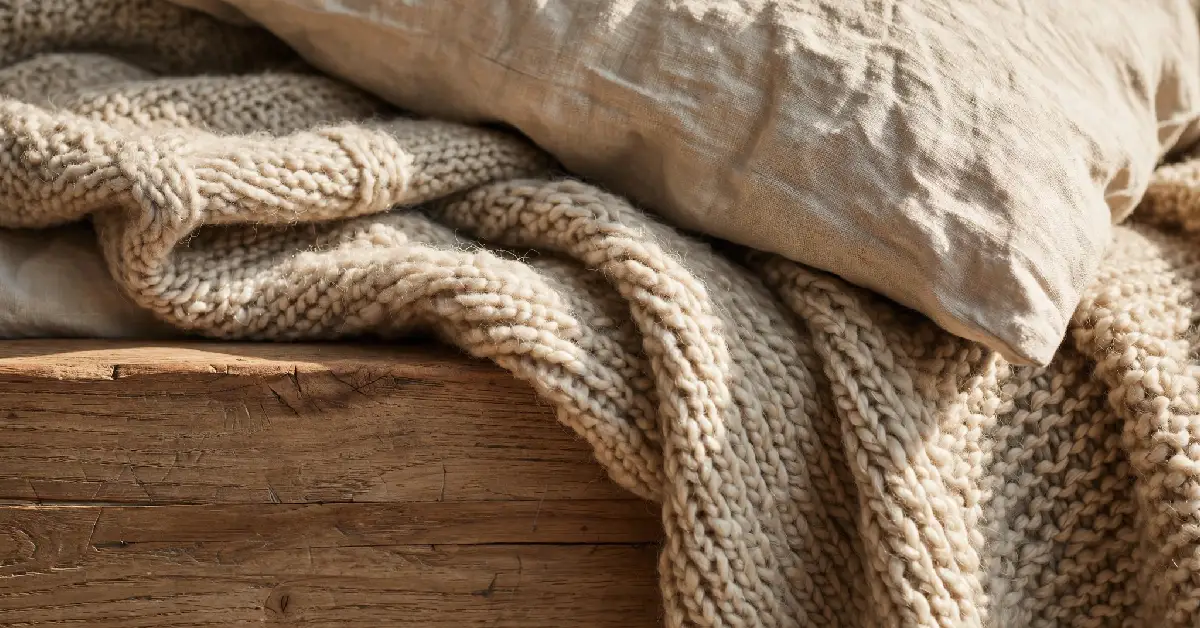
The most common mistake in a minimalist bedroom is confusing simple with cold. A room with only white walls, white bedding, and no texture can feel more like a hospital than a sanctuary.
Bring in natural materials such as wood, linen, wool, and stone. A wood headboard, a linen duvet cover, or a wool throw at the foot of the bed adds depth without adding visual clutter. These materials also age well, which matters if you want the room to feel finished for years rather than a season.
A few well-chosen textiles do more for warmth than a shelf of small decor objects. If you are still deciding on a direction for the room, this collection of bedroom decor ideas breaks down texture and material pairings by budget.
Plants can help too. A single monstera, snake plant, or small terrarium adds life to the room without adding clutter, since one plant reads as a single object rather than a collection.
Common Minimalist Bedroom Mistakes to Avoid
A few habits quietly undo an otherwise well-planned minimalist bedroom. Watch for these before you call the project finished.
- Buying matching furniture sets instead of pieces that fit your actual storage needs
- Going all white with no texture, which can feel sterile rather than calm
- Skipping a rug, which leaves a low bed feeling exposed on a hard floor
- Adding too many small decor objects, even neutral ones, which recreates clutter in a new colour
- Choosing style over comfort, such as a thin, decorative throw pillow set that never gets used
Data from the 1stDibs Designer Trends Survey shows preference for pure minimalism among interior designers dropped from thirty-fourper centt in 2024 to twenty-one percent in 2025, as more designers blend in warmer, more personal touches. That trend supports the same point: a bedroom that feels too stripped down will not hold up long term. Balance restraint with comfort, and the room will age better than a trend-driven look.
Another mistake worth naming on its own is rushing the process. A minimalist bedroom usually comes together over several weekends, not one shopping trip. Buy the bed and storage first, live with the room for a week or two, and only then decide what lighting or texture is actually missing. Furnishing everything at once often leads to duplicate purchases and a room that feels assembled rather than considered.
FAQs
What colours work best in a minimalist bedroom?
Soft neutrals such as warm white, beige, oatmeal, and soft grey work best. Pick one dominant tone and add no more than two supporting colours to keep the palette calm.
Does a minimalist bedroom need a rug?
Yes, in most cases. A rug adds warmth and softens the visual weight of a low bed or hard flooring, and it gives your feet a soft landing spot in the morning.
How much furniture should a minimalist bedroom have?
Most minimalist bedrooms work well with a bed, one or two nightstands, and one storage piece such as a dresser or wardrobe. Add only what supports your daily routine.
Can a minimalist bedroom still feel cosy?
Yes. Layer in natural materials like wood and linen, use warm lighting instead of one bright overhead fixture, and add one or two plants. Interior designer Rushda Hakim puts it simply: less is more, but too little can feel sparse, so soft bedding and a few grounding textures keep the room from feeling bare.
What is the easiest first step toward a minimalist bedroom?
Start with storage. Sort your belongings by how often you use them, move rarely used items out of the room, and only then decide what new furniture or decor you actually need.