

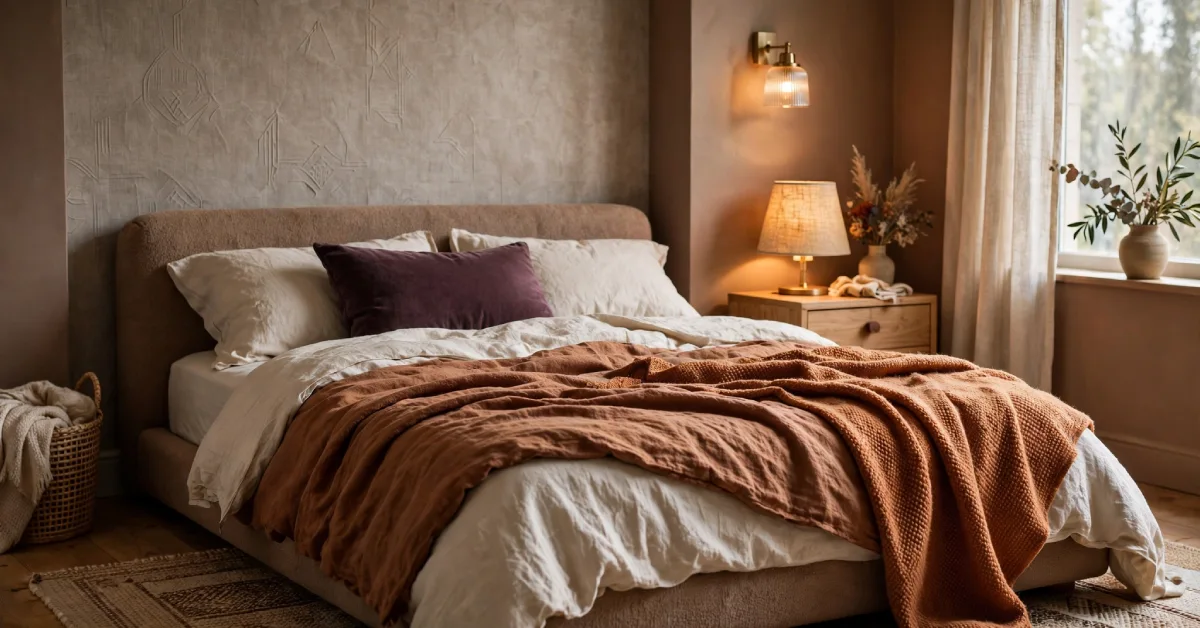
Looking for bedroom ideas that actually work? Start with a calm colour palette, furniture that fits your room’s real size, and lighting layered for both function and mood. Add textured bedding, smart storage, and one statement wall to finish the look. Small changes, such as fresh linen or a new headboard, can transform the whole room.
Your bedroom carries more pressure than almost any other room in the house. It has to help you sleep, hold your clothes, fit your style, and still look presentable enough for a video call. Getting bedroom ideas right means balancing all of that without spending a fortune or hiring a designer. This guide covers colour, layout, storage, lighting, and budget tricks that hold up in real homes rather than staged show houses.
What Makes Good Bedroom Ideas In 2026
Bedroom trends for 2026 are moving away from cold minimalism and back toward warmth. Jeanne Barber, founder of Camden Grace Interiors, says neutrals are getting a refresh this year, with warm, refined foundations paired with bold, intentional colour rather than flat white walls. Domhnall Nolan, senior designer at Soho Home, points to a similar shift he calls cocooning, where the bedroom becomes a genuine retreat from screens and daily stress rather than just a place to sleep.
This matters beyond aesthetics. A 2026 Houzz & Home Study found that 67 percent of US homeowners who renovated in 2025 worked on an interior room, with bedrooms among the more common projects because they tend to cost less than a kitchen or bathroom. The takeaway: you do not need a huge budget to make a meaningful change.
Designers also point out that bedroom ideas work best when they follow how you actually use the room, rather than how it photographs. Some people only sleep in their bedroom, while others read, watch television, or get dressed in front of a mirror each morning. Before picking colours or furniture, it helps to write down every activity the room needs to support, then plan around that list rather than a single inspiration photo. A room built around one glossy image often looks good for a week and then stops working the moment daily life gets in the way.
Choosing A Calming Colour Palette
Colour sets the tone before anything else does. Jodie Hatton, design manager at heritage carpet company Brintons, explains that earthy neutrals gained momentum in 2025 and are deepening further this year as homeowners move toward richer, more cocooning palettes.
A few reliable directions for 2026:
- Warm taupe, clay, and chalky off-white for a soft, restful base
- Cocoa brown and rust for furniture and accent walls
- Deep sage, charcoal, or muted plum for a more dramatic, layered look
- One saturated colour used across walls, ceiling, and trim for a cohesive feel rather than a single accent wall
Test any shade in the room itself before committing. Bedroom light changes throughout the day, and a colour that looks warm at noon can turn flat under evening lamp light.
Layout And Furniture For Every Room Size
Furniture placement matters as much as the pieces themselves. Leave at least 60cm of clear space around the bed and wardrobe doors so the room feels open rather than cramped. Position the bed away from the door line where possible, since a bed facing directly into a doorway can make the whole space feel exposed.
In smaller rooms, choose furniture that earns its keep. A bench with hidden storage, a slim console instead of a full desk, or a wall-mounted bedside shelf all free up floor space without sacrificing function. For more layout inspiration by room size, our bedroom interior design ideas guide breaks down floor plans for box rooms, lofts, and larger primary suites.
Room shape should guide furniture choice more than trend boards do. A long, narrow bedroom usually works better with the bed against the longest wall and storage built along the opposite side, rather than a bed centred under a window that eats into walking space. A square room gives more flexibility, so it is worth trying the bed in two or three positions, marked out with masking tape on the floor, before buying anything. Measuring twice and moving furniture once saves both money and a sore back.
Scale is another detail that gets missed. A bed frame that suits a large primary bedroom can overwhelm a box room, while furniture sized for a small flat can look lost in a bigger space. As a rough guide, aim to leave the bed and one piece of storage taking up no more than about 60 percent of the floor area, so the room still has enough clear space to move around comfortably.
Storage Solutions For Small Bedrooms
Storage is where most bedroom ideas fall apart in practice. According to a 2026 homeowner renovation survey by MFP, bedrooms remain a popular renovation target, in part because of their lower cost compared with kitchens or bathrooms, and storage upgrades are one of the most common reasons homeowners tackle the room.
A few approaches that work in tight spaces:
- Under-bed drawers or storage boxes for out-of-season clothing
- Built-in wardrobes that run floor to ceiling, using space that freestanding units waste
- Floating shelves above the headboard for books and decor without eating floor space
- A slim ottoman at the foot of the bed that doubles as seating and storage
Declutter before you buy anything new. Half-empty drawers and unused furniture often take up more room than a well-planned storage wall.
Lighting Ideas To Set The Mood
Good lighting works in layers: ambient light for general use, task light for reading or getting dressed, and accent light for atmosphere. A single ceiling fixture rarely covers all three, which is why most bedrooms benefit from at least one floor or table lamp in addition to overhead lighting.
Dimmer switches are a low-cost upgrade that changes how a room feels at different times of day. Designers are also pointing to smart lighting and automated blinds as a growing part of bedroom design, giving homeowners more control over how much natural and artificial light enters the room without extra effort. Warm bulbs, roughly 2700K to 3000K, tend to suit bedrooms better than cooler daylight tones, which can feel closer to office lighting than a place to unwind.
Placement matters as much as bulb choice. A bedside lamp should sit at roughly shoulder height when you are sitting up in bed, so light falls on a book or phone without shining directly into your eyes. Wall-mounted or plug-in sconces on either side of the bed also free up nightstand space, which is worth considering in a smaller room where every centimetre of surface counts. If the room only has one ceiling light, adding even a single secondary lamp usually makes the biggest visible difference of any lighting change.
Textiles And Bedding For A Cosy Feel
Soft materials do a lot of the work in making a bedroom feel finished. Interior designer Zoe Feldman notes that silk, mohair, and washed linen add depth and tactility to a room, softening both the look and the sound of the space.
Layer at least three textures on the bed itself: a fitted sheet, a mid-weight duvet or quilt, and a textured throw or extra pillows on top. Rugs matter just as much as bedding. A rug placed partly under the bed frames the space and adds warmth underfoot, especially in rooms with hard flooring. For more pairing ideas, our bedroom decor ideas collection has additional combinations for different budgets.
Wall Treatments And Statement Details
Walls no longer have to stop at paint. Paige Williams of Paige Williams Interior Design points out that textured ceilings add depth and character, turning an overlooked surface into part of the design rather than an afterthought.
Patterned wallpaper is also having a moment, offering a way to add personality without committing to a full colour change across every wall. If wallpaper feels like too much, a single papered or panelled wall behind the headboard gives a similar effect at a lower cost and with less commitment. For a broader look at how these details come together in real rooms, browse our bedroom inspiration gallery.
Budget-Friendly Bedroom Ideas That Still Impress
Not every bedroom refresh needs a full renovation. A 2025 sleep habits survey found that 27 percent of respondents had adjusted their sleep space specifically to create a more comfortable sleep environment, often through small, low-cost changes rather than a full remodel. In the US, Houzz reports that homeowners renovating a guest bedroom in 2025 spent a median of around 1,500 dollars, roughly 1,180 pounds, far below the typical kitchen or bathroom budget.
Practical, low-cost changes worth trying first:
- A fresh coat of paint on one wall or the ceiling
- New bedding and a textured throw
- Swapping harsh overhead bulbs for warm, dimmable ones
- Reupholstering or repainting an existing headboard instead of replacing it
- Clearing surfaces and donating anything that has not been used in a year
Small, consistent changes tend to add up to more impact than one expensive centrepiece.
Bedroom Design Mistakes To Avoid
A few habits quietly undermine an otherwise good bedroom. Buying furniture before measuring the room is one of the most common, leading to pieces that block doors or make walking around the bed awkward. Overhead-only lighting is another, since it flattens the room and leaves no option for a softer mood in the evening.
Airflow is often overlooked too. Research on bedroom environments has linked poor ventilation with disrupted sleep, while airing a room each morning and sleeping with a window cracked, where safe to do so, has been associated with better sleep quality in several studies. A bedroom can look ideal and still work against you if it stays stuffy overnight.
Finally, resist following every trend at once. Mixing a saturated accent wall, patterned wallpaper, a statement rug, and heavy textured bedding in one room usually reads as cluttered rather than curated. Pick one or two focal points and build the rest of the room around them.
Ignoring the existing structure of the room is another mistake worth naming. Radiators, sloped ceilings, and awkward alcoves are easy to treat as problems to hide, but they often work better as features to design around. A radiator cover doubles as a shelf, a sloped ceiling can frame a reading nook rather than a wasted corner, and an alcove is usually the most efficient place for built-in storage. Fighting the shape of the room tends to cost more and look less settled than working with it.
FAQs
What colours make a bedroom feel calm?
Warm neutrals such as taupe, clay, and soft off-white tend to feel the most restful, especially when paired with one deeper accent colour like sage or clay brown rather than several bright tones at once.
How do I make a small bedroom feel bigger?
Use furniture that serves more than one purpose, keep the floor as clear as possible, and choose a rug and bedding that do not compete for attention. Vertical storage also helps, since it uses wall space instead of floor space.
What is the biggest bedroom trend for 2026?
Cocooning, a shift toward warm, layered, tactile bedrooms that feel like a retreat, is the trend designers mention most often this year, alongside a move away from single accent walls toward fully saturated colour schemes.
How much does a bedroom refresh cost?
It depends on scope. Cosmetic changes like paint, bedding, and lighting can cost very little, while a full renovation with new furniture and built-in storage runs into the thousands. US data from Houzz puts the median guest bedroom project at around 1,500 dollars in 2025.
Do open windows or airflow affect bedroom sleep quality?
Research on bedroom environments has found that ventilation habits, including morning airing and sleeping with windows or doors open where practical, are linked to better sleep quality, while poor ventilation and high indoor CO2 levels have been associated with worse sleep.


