

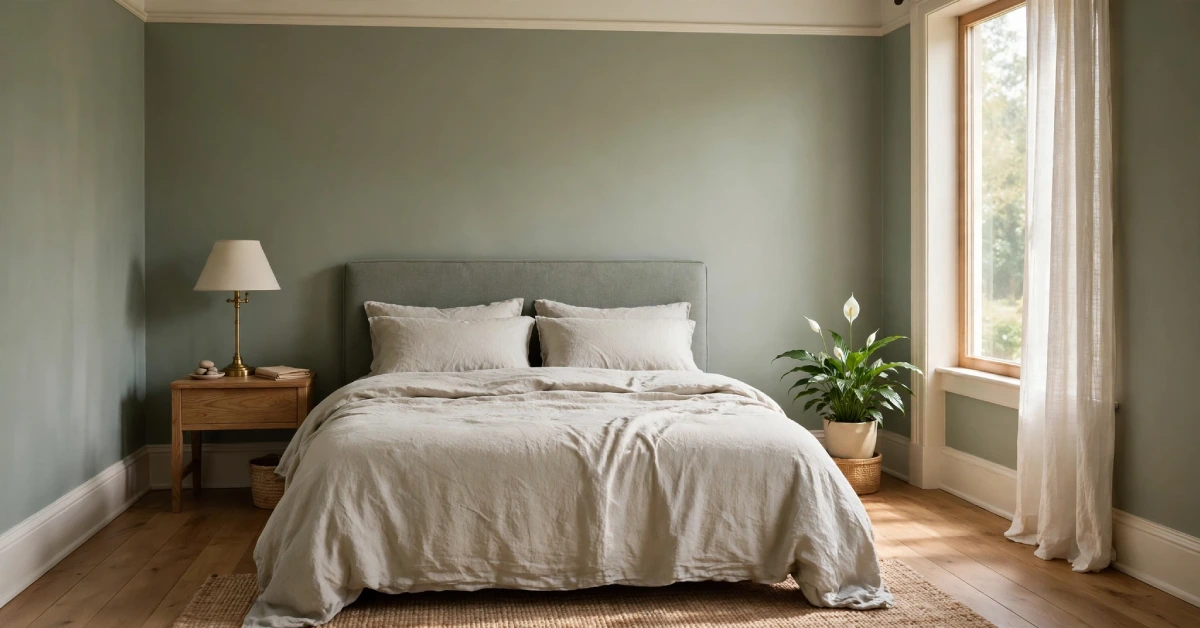
A green bedroom uses muted shades such as sage, olive or deep forest green with warm whites, natural wood and soft textiles. Light greens keep small rooms open, while dark greens work best on one wall or in bright rooms. Sample paint on your own walls first, add plants, and choose warm bulbs to finish the room.
Which colour do you want to see first when you wake up? For many people, the answer is green. Paint makers, furniture brands and interior designers all publish green bedroom ideas because the colour suits small rooms, large rooms and most decorating styles.
This guide helps you plan a green bedroom that fits your space. You will learn which shades work best, what research says about colour and sleep, and which colours, textures and plants pair well with green. You will also get a simple testing method that helps you avoid a paint mistake.
Why a Green Bedroom Works
Green is a popular bedroom colour because it looks natural and calm. Muted greens contain grey or brown, which softens the colour. That makes them easy to live with next to a bed, a wardrobe or a reading chair. Green also matches the natural materials many bedrooms already contain, such as wood floors, linen curtains and cotton bedding.
The research is more limited than many blog posts suggest. A 2025 study in Frontiers in Psychology, led by researchers at the University of Padua, asked 331 adults to rate images of bedrooms and living rooms. Rooms with potted plants scored an average of 18.14 for restorativeness, compared with 16.16 for rooms without greenery. The study tested plants, not wall colour, and participants judged images instead of sleeping in the rooms.
Claims about wall colour and sleep need the same care. In a February 2026 fact-check, the Calgary Journal spoke with sleep specialist Dr Charles Samuels, who called the research on colour and sleep “just speculation.” The article notes that an Italian study of students in residence halls found blue was the most preferred wall colour, followed by green. That study did not link room colour to better sleep quality.
So choose green because you like it and because it suits your room. Then support your sleep with steps that have stronger backing. Samuels points to a comfortable room temperature, a pillow you prefer and blackout curtains to limit light.
Best Green Shades for a Bedroom
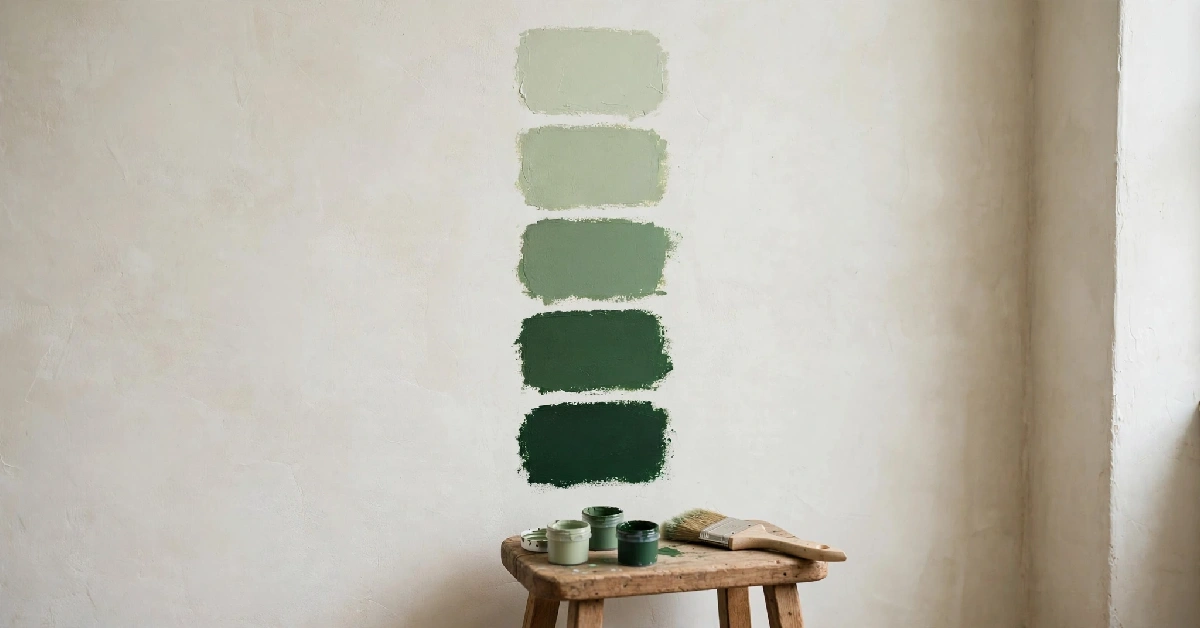
Green covers a wide range, so it helps to sort shades into groups. These examples come from paint makers and designers.
- Sage and grey-green: Soft shades with grey in them that work almost like a neutral. Benjamin Moore includes October Mist in its green bedroom range.
- Light green: Farrow & Ball lists Cooking Apple Green, Green Ground and Cromarty as light green options for bedrooms.
- Olive and earthy green: Warm shades that suit wood furniture. Jaipur Rugs suggests muted olive walls with teak furniture and brass floor lamps.
- Dark green: Farrow & Ball lists Calke Green, Green Smoke, Beverly and Studio Green in its dark green group.
- Blue-green: Cooler shades that some designers now prefer to sage.
If you are unsure, start with sage or grey-green. These shades suit most bedrooms and most bedding colours. Move to olive or dark green once you know how much daylight the room gets and how much contrast you want with your furniture.
The trend has moved on in 2026. Sage has been the safe choice for several years. Designer Cathryn Erickson told Homes & Gardens that the soft sage and eucalyptus tone has had its turn and that it is “time to give it a break.” She now looks for greens with more depth, such as dusty blue-greens and earthy brown-greens. Sage still works well in bedding and upholstery, where it supports newer wall colours.
Match Green to Your Room’s Light
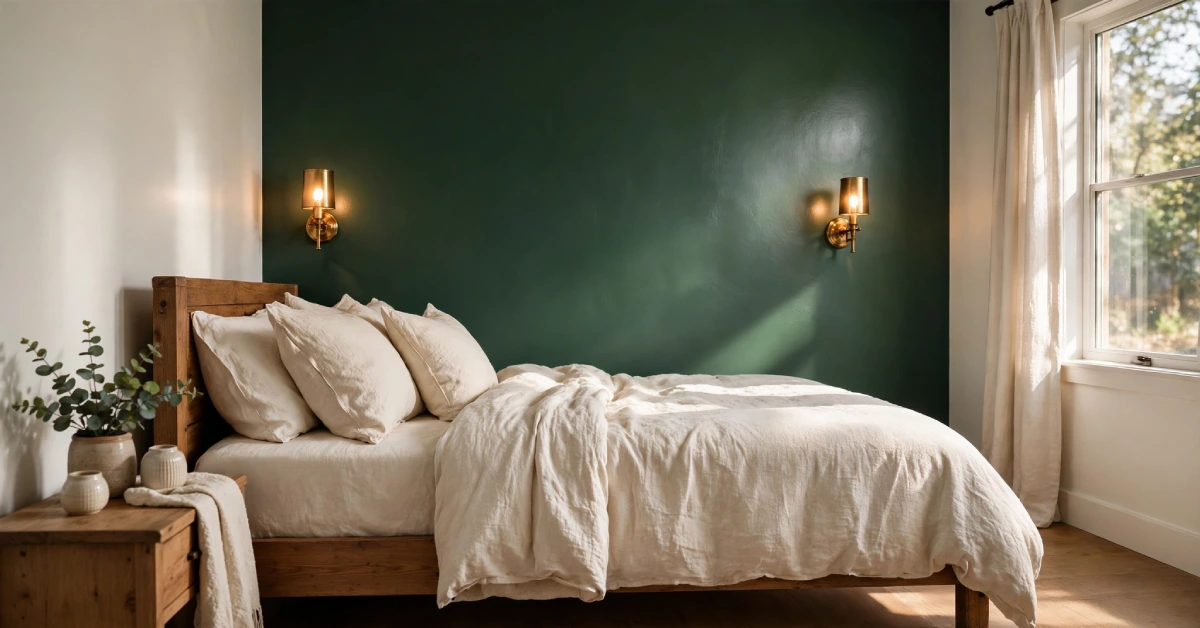
Green changes with light. Benjamin Moore advises testing colours directly on your walls and checking them at different times of day. Morning light, afternoon light and lamp light can each change how a green looks.
Benjamin Moore also says light, muted greens with subtle grey undertones can help a bedroom feel larger. For small rooms or rooms with limited daylight, it suggests soft greens. Use this quick guide:
- Small room or little daylight: Choose a light sage or grey-green with warm white trim.
- Bright room with good daylight: Try olive or a smoky grey-green.
- Large room with good light: Try a deep forest green on all four walls.
- Room where you want depth but have limited light: Paint one wall dark green, such as the wall behind the bed. Benjamin Moore says darker greens work well as accent walls or trim.
Finish matters too. Jaipur Rugs suggests satin paint for deep greens because it reflects a little light. That shows the depth of the colour without making the room feel heavy.
Colours That Pair Well With Green
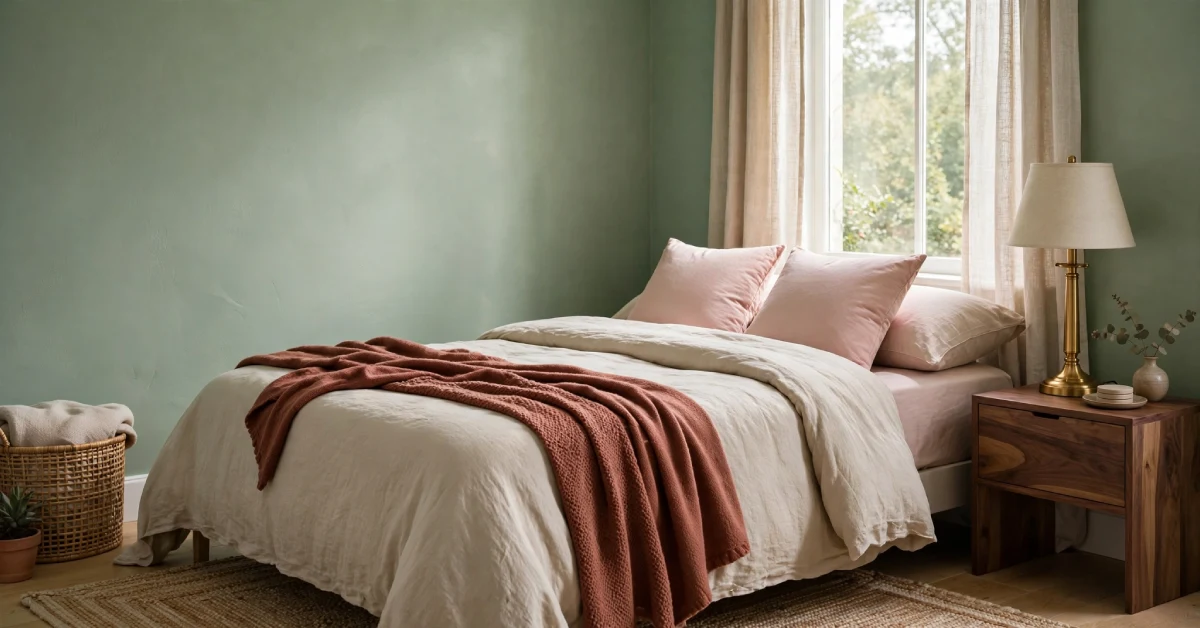
IKEA suggests pairing sage green with light beige and with accent colours such as pink and reddish brown. Jaipur Rugs recommends brass, walnut or rattan for warmth, and blush, ivory or grey for balance. Use these pairings as a starting point:
- Warm white or cream on trim, ceiling and bedding.
- Beige or oatmeal on curtains and throws.
- Blush pink or reddish brown on cushions.
- Brass or walnut on lamps and furniture.
- Black or charcoal with dark green, with brass to keep the palette from looking heavy.
Limit the palette to green, one or two neutrals and one accent colour. A short palette keeps the room calm and makes it easier to choose bedding, curtains and rugs.
Dark green also suits a larger main bedroom with velvet upholstery, brass lamps and panelled walls. You can see more of this look in our luxury master bedroom guide.
Textures and Materials to Layer
Natural materials make green look softer. IKEA builds its green bedroom with bamboo, rattan and acacia. Jaipur Rugs uses linen bedding in oat and ivory, wool rugs and knitted cushions for a warm look.
Texture is also the simplest way to use several tones of green. Jaipur Rugs describes a green-on-green room where sage walls, olive curtains and moss-toned linens sit together. It suggests velvet headboards, wool throws and layered cotton so the room has depth without extra colours. Keep these points in mind:
- Choose two or three textures, such as linen, wool and velvet.
- Keep wood tones consistent across the room.
- Use only one pattern, such as a geometric rug or a botanical print.
- Choose washable covers where you can. IKEA’s grey-green bed frame has a removable, washable headboard cover.
Add Plants Without Crowding the Room
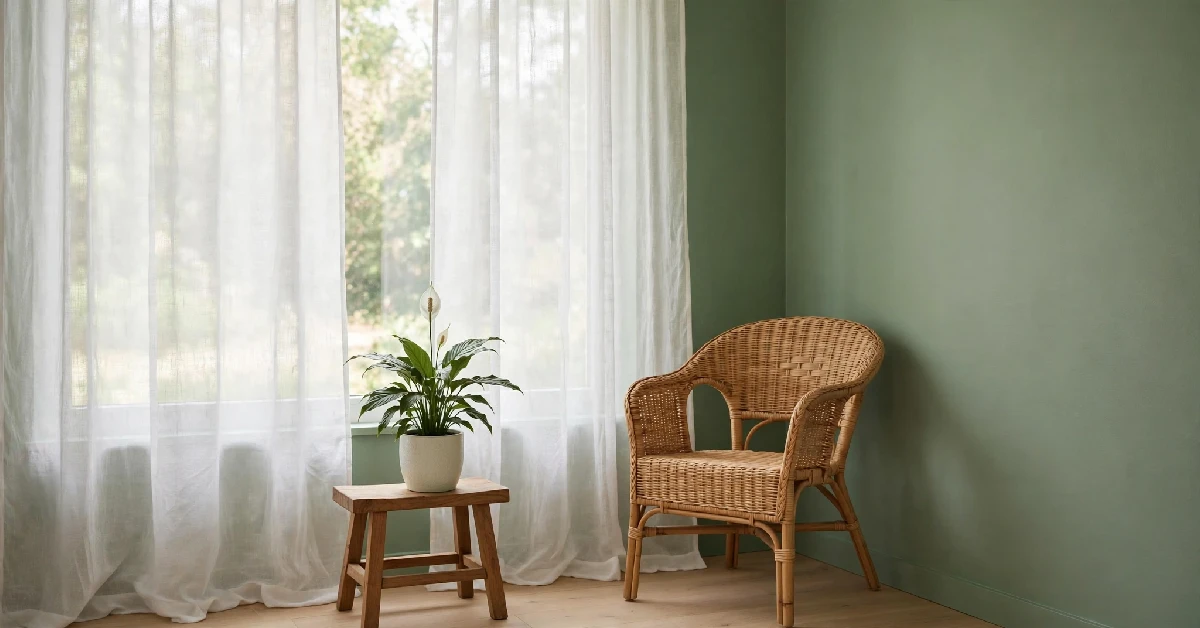
Plants suit a green bedroom, and the Padua study supports the idea. Rooms with potted greenery were rated as more restful and more inviting, and less monotonous, than rooms without it. Placement matters. Bedrooms with plants built into furniture were sometimes rated as more chaotic, while potted plants scored higher for coherence.
Start with one or two potted plants. IKEA suggests an easy-care peace lily for a bedroom, and artificial plants for dark corners where real plants struggle. Place real plants near a window and keep the path to the bed clear. If you add more, group them at different heights on a shelf or stool so the floor stays free.
Green Bedroom Ideas by Style
Green adapts to many styles. These combinations come from IKEA and Jaipur Rugs:
- Japandi: Sage or grey-green walls, bamboo furniture and plants. IKEA shows this look with an open bamboo wardrobe and wooden privacy screens.
- Mid-century: Muted olive walls, teak furniture, brass floor lamps, a geometric rug and white accents.
- Traditional: Dark green walls with panelling, gold mirrors, cream curtains and tufted upholstery.
- Industrial: Forest green walls with matte black accents, exposed wood and iron light fixtures.
- Scandinavian: Pine or olive walls, low wooden furniture and linen bedding in oat and ivory.
Choose one style and repeat two or three of its materials. A mix of five styles can look unplanned.
Green Bedrooms for Guests and Children
A guest room is a lower-risk place to try a stronger green, because you use it less often. Pair a mid-tone green with neutral bedding and a lamp on each side of the bed. Our guest bedroom ideas offer more layouts for spare rooms.
Green also works in children’s rooms. Paint the walls a mid-tone green and keep the furniture in light wood. Add colour with cushions and posters that are easy to change as tastes change. Our boys’ bedroom ideas show how to plan storage and play space in the same room.
How to Test Green Paint Before Buying
A colour chip can look very different on a full wall, so testing saves time and money. Follow these steps:
- Order sample pots. Farrow & Ball sells 100 ml sample pots, and one set includes FrenchGreyy, Green Smoke and Studio Green.
- Paint a large patch on two walls, one near the window and one on the darkest wall.
- Check each patch in the morning, in the afternoon and in the evening with your bedroom lamps on.
- Hold bedding, curtain and flooring samples next to the patch.
- Choose the finish after you choose the colour. Satin gives deep greens more depth.
- Live with the samples for a few days before you buy full tins.
Sample your trim colour beside the green too, since warm whites usually sit better with sage than cool whites do.
Set Up Lighting for a Restful Green Bedroom
Green walls look different under cool and warm bulbs. Warm white bulbs keep greens soft in the evening. Cool white bulbs can make grey-greens look flat.
Use bedside lamps instead of relying on one ceiling light, so you can lower the brightness before bed. Choose shades that direct light downward, so it falls on your book and not into your eyes. Add blackout curtains, as IKEA does in its green bedroom. Samuels lists blackout curtains among the steps that support better sleep.
FAQs
What is the best green for a bedroom?
Sage or grey-green is the easiest choice. Benjamin Moore suggests lighter greens such as Crystalline, Tea Light and Soft Fern for relaxation, and darker shades such as Avon Green as accents. Test any shade in your own light before you buy.
What colours go with a green bedroom?
Warm white, cream, beige, blush pink and reddish brown suit sage green. Brass, walnut and rattan add warmth. Black or charcoal works with dark green.
Does a green bedroom help you sleep?
No direct evidence shows that wall colour improves sleep. Dr Charles Samuels says the research is speculative. A comfortable temperature, less light at night and a pillow you like have stronger support. A green bedroom can still be a room you enjoy spending time in.
Is dark green too dark for a small bedroom?
It can be. Benjamin Moore says darker greens work well as accent walls, so paint the wall behind the bed, use a satin finish and add warm lamps.
Which plants suit a green bedroom?
IKEA suggests an easy-care peace lily. Choose plants that match the daylight in your room, and use artificial plants for corners with very little light.