

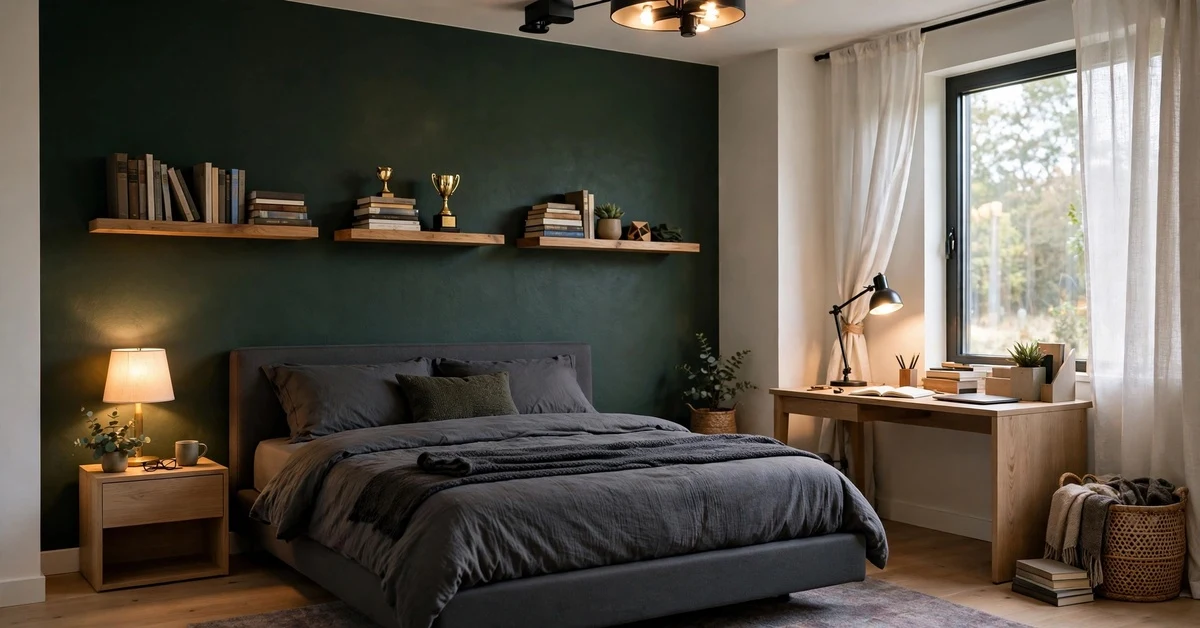
Boys’ bedroom ideas that work best in 2026 combine a neutral or moody base colour with one or two bold accents, built-in or under-bed storage, and furniture that adapts as the child grows. Layered lighting, a defined study zone, and a display spot for hobbies or sports gear round out a room that stays functional for years.
Decorating a boy’s bedroom is rarely a one-and-done job. A toddler’s room needs soft edges and open floor space. A ten-year-old wants a spot to show off Lego builds or trophies. A teenager wants something that does not look like it belongs to a child anymore.
This guide walks through boys’ bedroom ideas for every stage, plus the colour schemes, storage tricks, and small space layouts that keep a room working long after the paint dries.
What Makes Boys’ Bedrooms Work in 2026
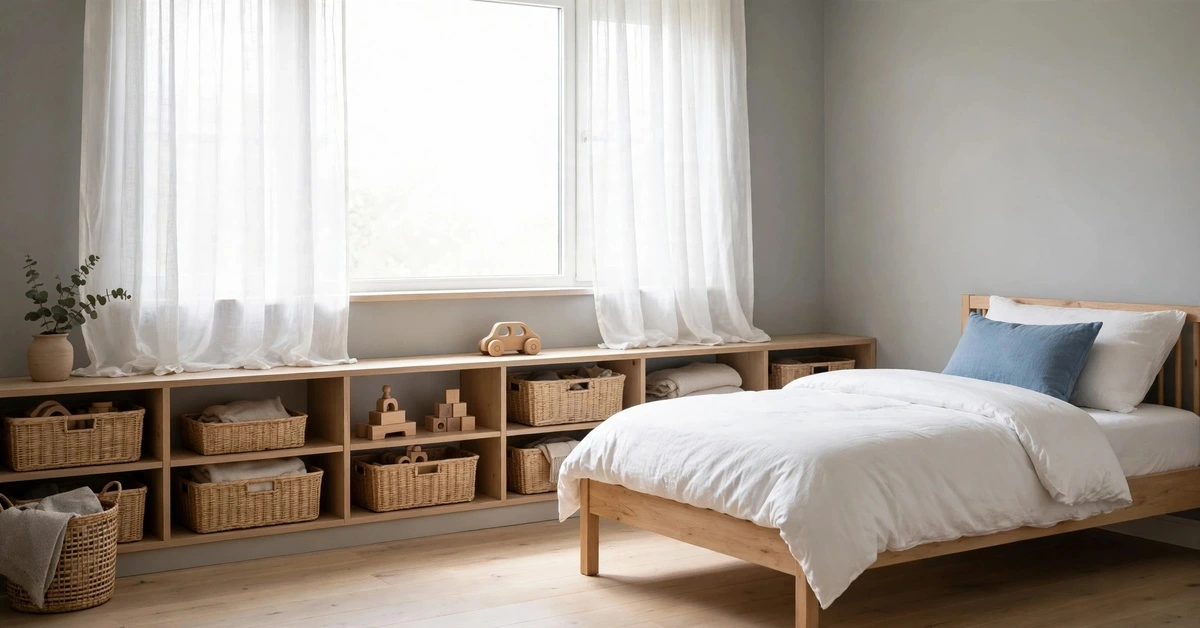
The strongestboys’s bedroom ideas this year share three traits. They use a calm base colour so the room does not feel chaotic. They build in flexible storage instead of relying on extra furniture. They leave room for the child’s own interests to show through.
Interior designers are also moving away from themed rooms that a child will outgrow in a year. Gemma Holsgrove, studio director at Sims Hilditch, notes that built-in compartments in bunk bed steps and low-level storage with removable baskets let children organise their own belongings, which cuts down on the redecorating cycle.
That shift toward longevity is good news for your budget. A room built around a neutral shell and a few swappable accents costs less to update than a full theme change every few years.
Boys Bedroom Ideas by Age Group
Toddler Bedrooms (Ages 2 to 4)
Safety and open floor space matter most here. Choose a low platform bed, rounded furniture edges, and soft rugs that cushion falls. Keep the colour palette warm and neutral, then add small pops of colour through cushions or a single mural.
Floating shelves work well at this age because they display favourite toys without cluttering the floor. Keep them low enough for a toddler to reach safely, but out of climbing range.
Kids’ Bedrooms (Ages 5 to 10)
This is the age for personality. Kids in this range often have a strong interest, whether that is dinosaurs, football, or a specific game character. Instead of committing the whole room to a theme, contain it to one wall, the bedding, or a gallery of framed art.
A study corner becomes important once school workloads pick up. A small desk with good task lighting, placed away from the bed, helps separate homework time from wind-down time.
Tween and Teen Bedrooms (Ages 11 to 17)
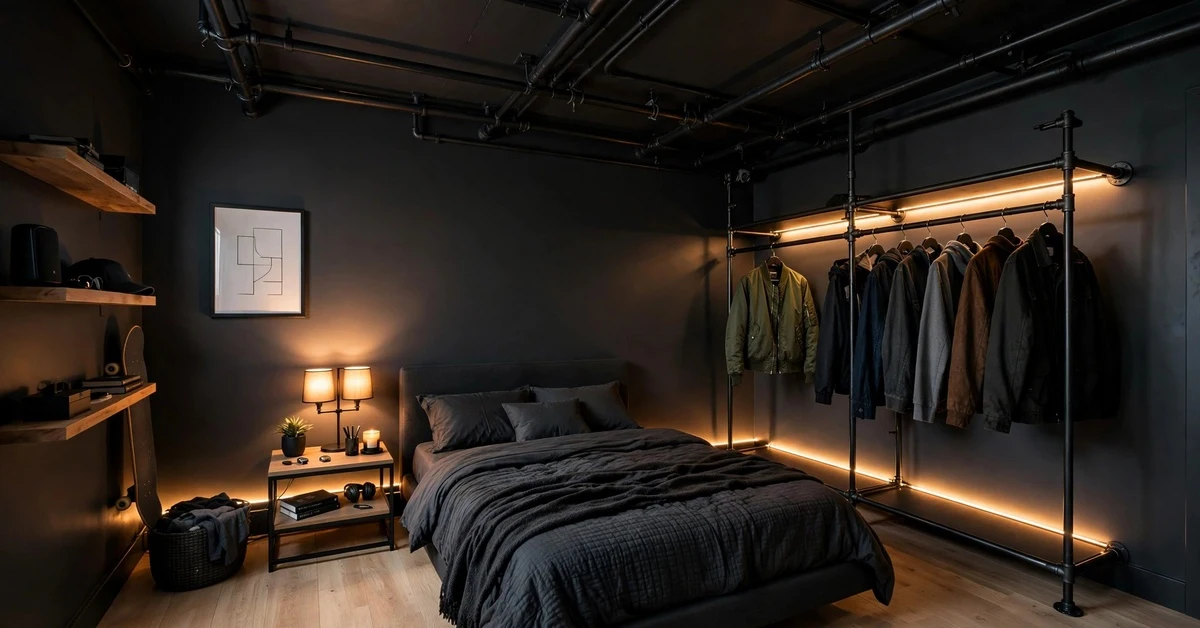
Teenagers want a room that feels closer to an adult space. Colour drenching, where you paint the walls, trim, and ceiling in one deep tone such as charcoal or forest green, is a trend gaining traction for this age group. It creates a grounded, cinematic feel that makes colourful posters, sneakers, or tech gear stand out.
A low-profile upholstered bed frame reinforces that grown-up look and can make a standard-sized room feel taller. Pair it with a pipe rack or open wardrobe rail for displaying jackets or jerseys, and keep everyday basics in closed drawers. Colour Schemes for a Boys Bedroom
Colour sets the tone for the whole room, and it is one of the easiest elements to change later. A few reliable directions for 2026:
- Nature-inspired tones. Forest green, sand, and sky blue create a calm, grounding base that suits almost any age.
- Bold primaries with grayscale accents. Red, blue, or yellow paired with charcoal furniture keeps the room energetic without looking childish.
- Colour-drenching in a single dark hue. Best for tweens and teens who want a moodier, more mature bedroom.
- Soft neutrals with one accent wall. A flexible option that works from toddler years through the teen stage with minor updates.
Paint the largest surfaces in your chosen neutral or nature-inspired tone first, then test accent colours with bedding or a single feature wall before committing to a full repaint.
Storage Solutions for a Boys Bedroom
Storage is where mostboys’s bedroom ideas succeed or fail in practice. Toys, sports gear, books, and clothes pile up fast, and a room without a storage plan gets messy within weeks.
Under-bed drawers are one of the highest-value additions you can make. A bed frame with built-in drawers, or a set of rolling storage bins, uses space that would otherwise sit empty. This works particularly well in smaller rooms where every square foot counts.
Wall-mounted shelving is the second priority. Running a floating shelf near the ceiling keeps display items such as trophies, model kits, or books off the floor and out of a younger child’s reach. Lower, open shelving with baskets gives older kids a place to sort their own belongings without adult help.
For shared rooms or tight footprints, multi-functional furniture earns its keep. A storage ottoman doubles as seating, a bunk bed staircase can include drawers, and a desk with a shelf underneath removes the need for a separate bookcase.
Small Boys Bedroom Ideas for Tight Spaces
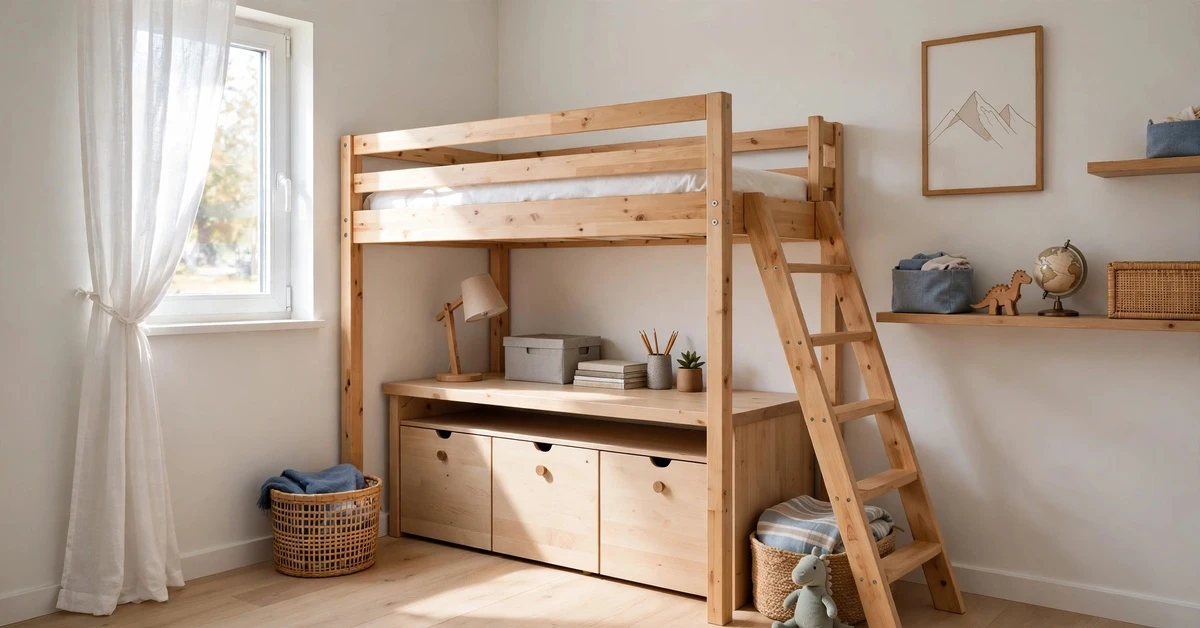
A small room does not have to feel cramped if the layout is planned carefully. Start by measuring the room and mapping out three zones: sleep, study, and storage. Once you know how much floor space each zone realistically needs, furniture choices become much easier.
A loft or bunk bed frees up the most floor space in a small room, since it stacks the sleep zone above the study or play zone. If a loft bed is not practical, a daybed with drawers underneath is a solid alternative.
Mirrors and light wall colours help a small room feel larger without any structural changes. Keep furniture close to the walls and avoid oversized pieces that block the natural walking path through the room.
Themed Boys Bedroom Ideas That Still Feel Grown-Up
You can honour a child’s interests without turning the whole room into a theme park. A sports fan’s room might use a single accent wall with a subtle graphic, a shelf for memorabilia, and bedding in the team colours, rather than wall-to-wall decals.
The same approach works for gaming, space, or nature themes. Choose one or two focal points, such as a mural on a single wall or a themed light fixture, and keep the rest of the room neutral. That way, the room adapts as interests change, without a full repaint.
Lighting and Finishing Touches
Layered lighting makes a noticeable difference in how a bedroom feels day to day. Combine an overhead fixture for general light, a desk or reading lamp for task work, and a soft accent light, such as an LED strip, for bedtime.
Warm-toned bulbs support a calmer bedtime routine, while cooler light works better over a desk for homework or reading. A dimmer switch is a small upgrade that gives one fixture the flexibility to do both jobs.
Finish the room with a rug that defines the play or seating area, and a few personal touches such as framed artwork or a corkboard for displaying schoolwork and photos.
Mistakes to Avoid When Decorating a Boys Bedroom
- Committing to a full theme that the child will likely outgrow within a year or two.
- Skipping a storage plan and relying on extra furniture instead of built-in solutions.
- Choosing furniture that only fits the child’s current size, rather than one that adapts as they grow.
- Ignoring lighting layers and relying on a single overhead fixture for every task.
- Placing the desk facing the bed, which can blur the line between study time and rest time.
Boys Bedroom Ideas: Final Thoughts and FAQs
A boys bedroom does not need to be redesigned every couple of years to stay functional and stylish. A calm base colour, smart storage, and a layout that respects how your child actually uses the room will carry it through several stages of growing up.
FAQs
What is the best colour for a boy’s bedroom in 2026?
Nature-inspired tones such as forest green, sand, and sky blue remain popular because they suit most ages and pair well with bold accents. For tweens and teens, a single deep hue used across the walls and trim, known as colour drenching, is also trending.
How do I make a boy’s bedroom feel bigger?
Use a loft or bunk bed to free up floor space, keep furniture close to the walls, and choose light wall colours or mirrors to reflect natural light. Under-bed and wall-mounted storage also reduce visual clutter.
How often should I redecorate aboy’ss bedroom?
With a neutral base and swappable accents, such as bedding, art, or a single accent wall, most rooms can go three to five years between full redecorations, with smaller updates in between as interests change.
What storage works best for a boy’s bedroom?
Under-bed drawers, wall-mounted floating shelves, and low-level baskets are the most space-efficient options. Multi-functional furniture, such as a storage ottoman or a desk with built-in shelving, also helps in smaller rooms.
Should I separate the study area from the bed?
Yes. Placing the desk away from the bed, ideally out of direct line of sight, helps a child mentally separate homework time from rest time, which supports both focus and sleep.