

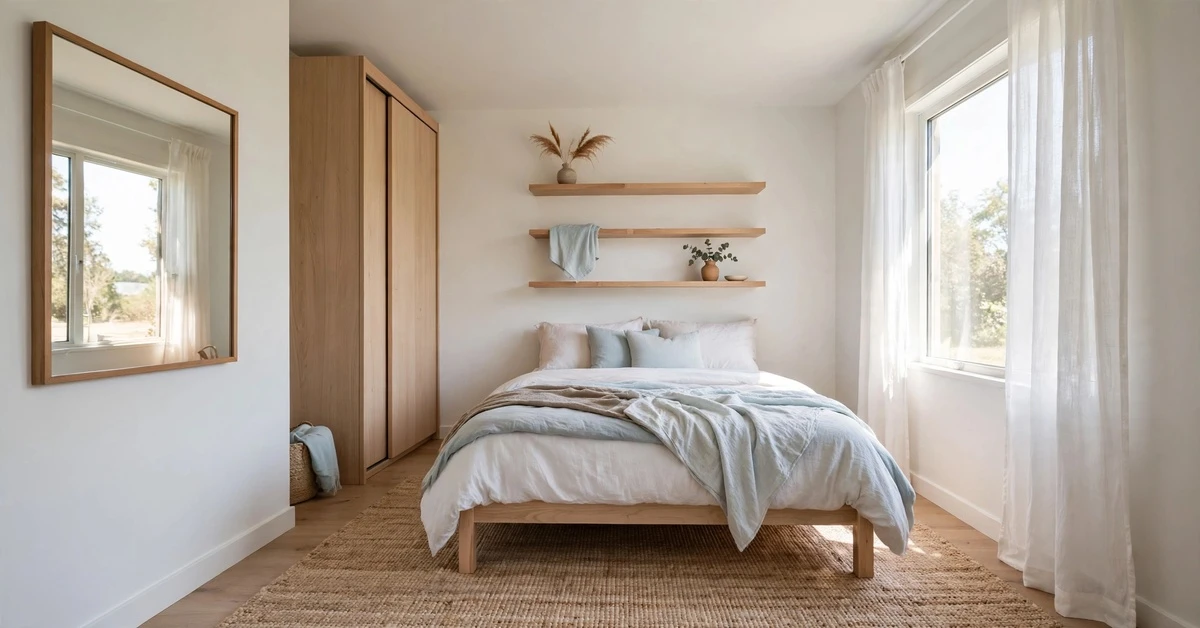
Small bedroom ideas that work start with three moves: scale the furniture down, add storage that hides in plain sight, and use light colour and mirrors to bounce natural light around the room. A space under 100 square feet can still hold a bed, real storage, and a spot to get dressed, as long as you plan the layout before you buy anything.
You close the bedroom door, and the walls feel like they are leaning in. The bed takes up most of the floor, the wardrobe door will not open all the way, and there is nowhere to put a book down. A small bedroom does not have to feel that way. With the right layout, furniture, and colour choices, even a boxroom can feel calm and organised instead of cramped.
This guide walks through small bedroom ideas that actually change how a room feels and functions, not just how it looks in a photo. You will find furniture rules, storage tricks, colour advice, and layout fixes for awkward shapes, plus answers to the questions people ask most about designing a small bedroom.
Why Small Bedroom Ideas Work So Well
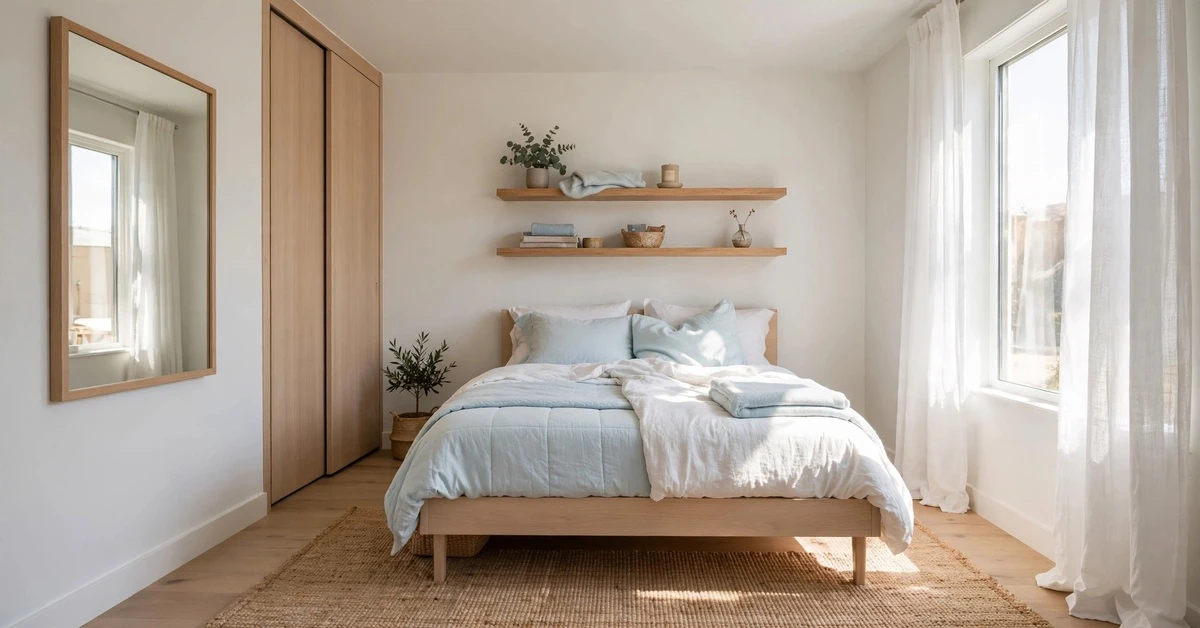
Small bedrooms are more common than most people think. English homes have grown smaller over the past few decades, and many bedrooms in flats and terraced houses fall well under the size most furniture ranges are designed for.
Recent government housing data backs this up. The English Housing Survey 2023 to 2024, published by the Ministry of Housing, Communities and Local Government, found the average English home has a floor area of around 96 square metres, and owner-occupied homes average 110 square metres. That average covers every room in the house, which means many bedrooms, especially second and third bedrooms, are far smaller than the headline figure suggests.
That is exactly why small bedroom ideas focus on function first. When floor space is limited, every piece of furniture, every shelf, and every colour choice has to work harder. The good news is that a handful of consistent choices, repeated through the room, can make a tight space feel twice as big without any building work.
Pick Furniture That Actually Fits The Room
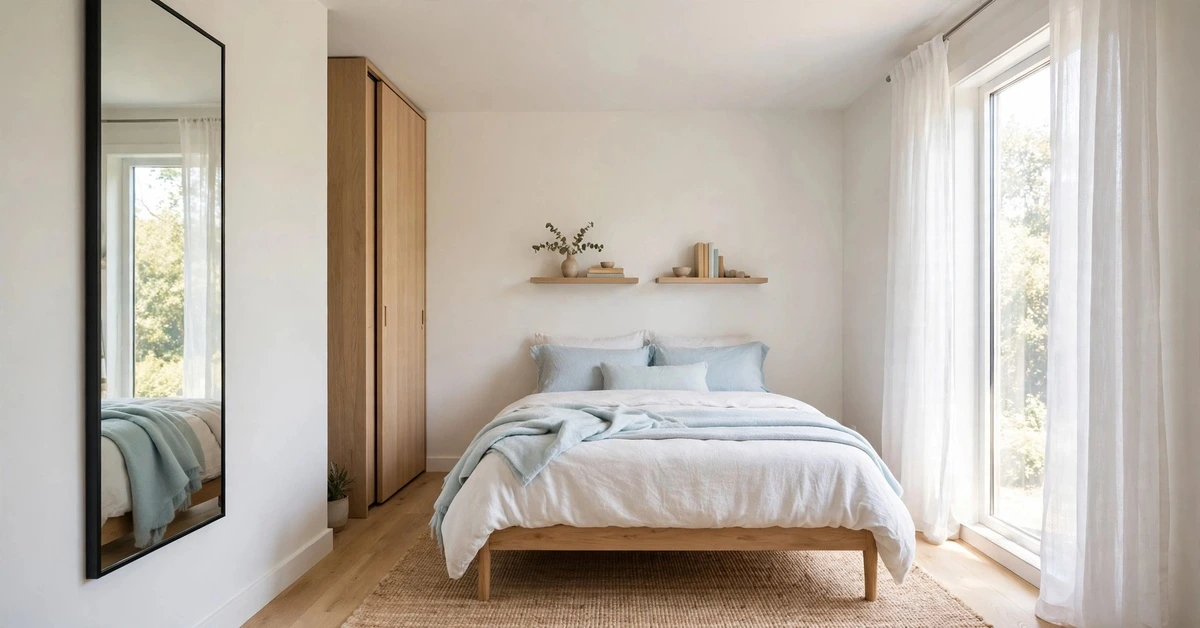
The single biggest mistake in a small bedroom is furniture bought for a bigger room. A king bed, a full-size wardrobe, and a six-drawer dresser might look fine on their own, but packed into a small space,e they block walking room and make the ceiling feel lower than it is.
Before you buy anything, measure the room and mark out the furniture footprint on the floor with tape. This sounds basic, but it stops the most common and most expensive mistake: buying a piece that technically fits through the door but leaves no room to walk.
Design guidance published in early 2026 puts it simply: every piece in a small room has to earn its place, and scale matters more than style. A queen bed instead of a king, or a slim desk instead of a full workstation, can free up a metre of floor space without sacrificing what the room needs to do. For a fuller look at scaling a room around one statement piece, our luxury master bedroom guide covers how to balance a larger bed with breathing room, and the same scaling principle applies in reverse for small rooms.
Stick to furniture with visible legs rather than pieces that sit flush on the floor. A bed frame or chair raised on legs lets light travel underneath it, which tricks the eye into reading the floor as one continuous space instead of a room broken up by solid blocks.
Storage Solutions For A Small Bedroom
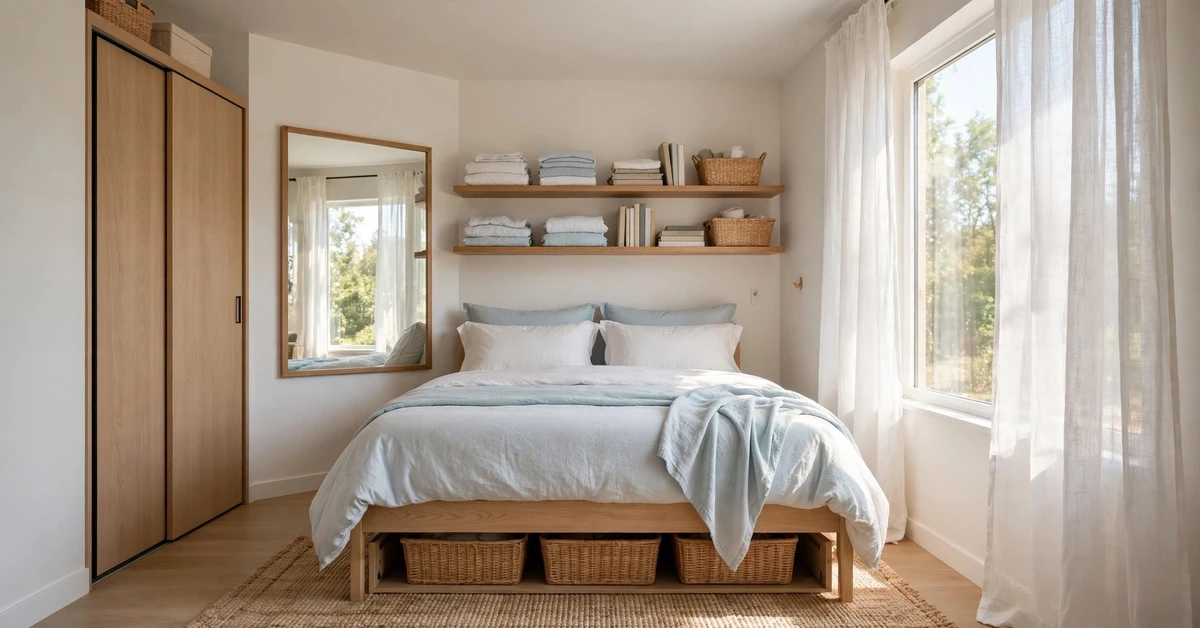
Storage is where most small bedrooms fall apart. Clothes end up on chairs, boxes stack in corners, and the floor disappears under things that have nowhere else to go. The fix is not more furniture. It is smarter use of space that is already going to waste, mainly the walls, the space under the bed, and the area above doors and windows.
A few storage moves consistently make the biggest difference in a tight bedroom:
- Choose a bed with built-in drawers, or add under-bed storage boxes to a standard frame
- Install floating shelves above the headboard instead of a bulky nightstand
- Use the space above the wardrobe or above the door for boxes and out-of-season items
- Swap a bulky dresser for a slim, floor-to-ceiling wardrobe with sliding doors
- Add hooks on the back of the door for robes, bags, and tomorrow’s outfit
- Use drawer dividers and slim hangers to double the usable space inside existing storage
Vertical storage matters more than floor storage in a small room. A tall, narrow wardrobe holds nearly as much as a wide one but takes up a fraction of the floor space, and it draws the eye upward, which makes the ceiling feel higher than it is.
Colour And Light Choices That Add Space
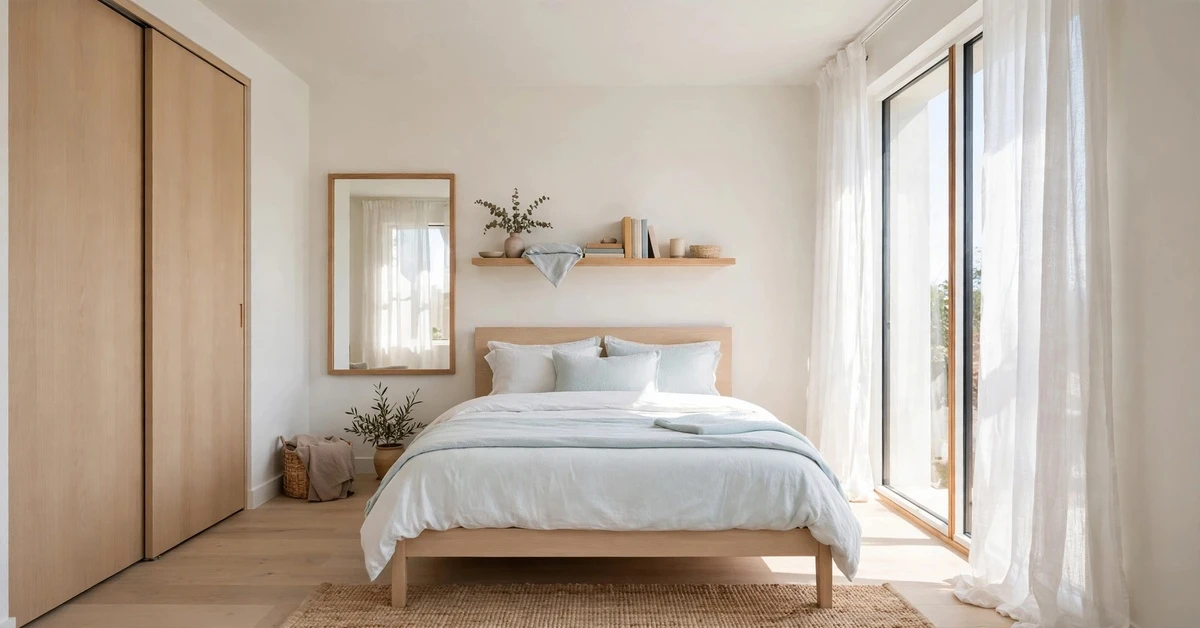
Apartment Therapy’s home design team, in a guide updated in mid-2026, points out that light-reflecting colours such as soft blues, warm whites, and pale greys help a small room feel larger by bouncing available light around instead of absorbing it. A dark accent wall can still work in a small bedroom, but it works best on one wall only, paired with lighter tones everywhere else.
Mirrors do a similar job to light colour. A single large mirror placed opposite a window reflects daylight into the room and visually doubles the sense of depth. Avoid scattering several small mirrors around the room, since that can make the space feel busy rather than open.
Ceilings are often ignored in small bedrooms, but painting the ceiling a shade lighter than the walls, or in the same pale tone, removes the visual line where the wall stops and the ceiling starts. That missing line is what makes a low ceiling feel higher than it actually is.
Natural light is worth protecting too. Keep window treatments simple, hang curtains close to the ceiling rather than at the top of the window frame, and avoid heavy fabric that blocks light even when the curtains are open.
Layout Tricks For Awkward Room Shapes
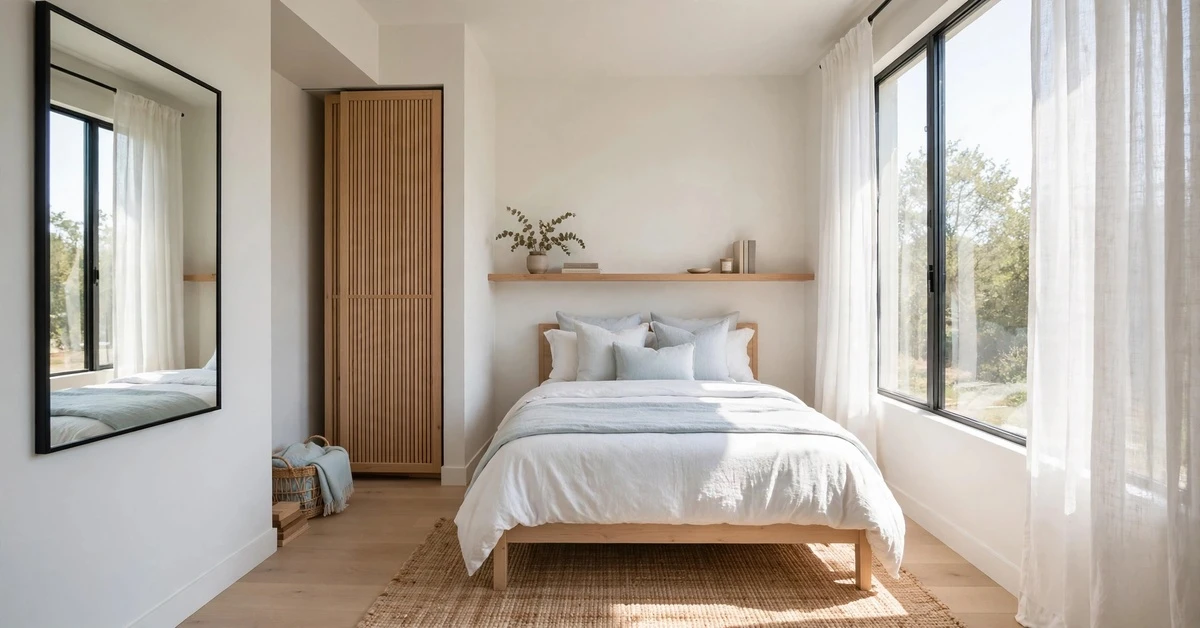
Not every small bedroom is a neat square. Sloped ceilings, box rooms, and rooms with an awkward door swing all need their own approach. The general rule is to place the bed against the longest unbroken wall first, then build the rest of the layout around that anchor point.
In a room with a sloped ceiling, push the bed under the lowest part of the slope, where standing height is not needed, and keep taller furniture along the wall where the ceiling is highest. If you are short on a full guest room but still want the space to feel finished, our guest bedroom ideas guide has layout options built specifically around box rooms and part-time bedrooms.
Corners are one of the most wasted areas in a small bedroom. A corner shelf unit, a corner desk, or even a diagonally placed bed can use a corner that would otherwise sit empty. Diagonal bed placement will not suit every room, but in a nearly square bedroom it can open up a surprising amount of walking space on two sides instead of one.
Multi-Purpose Furniture Worth The Investment
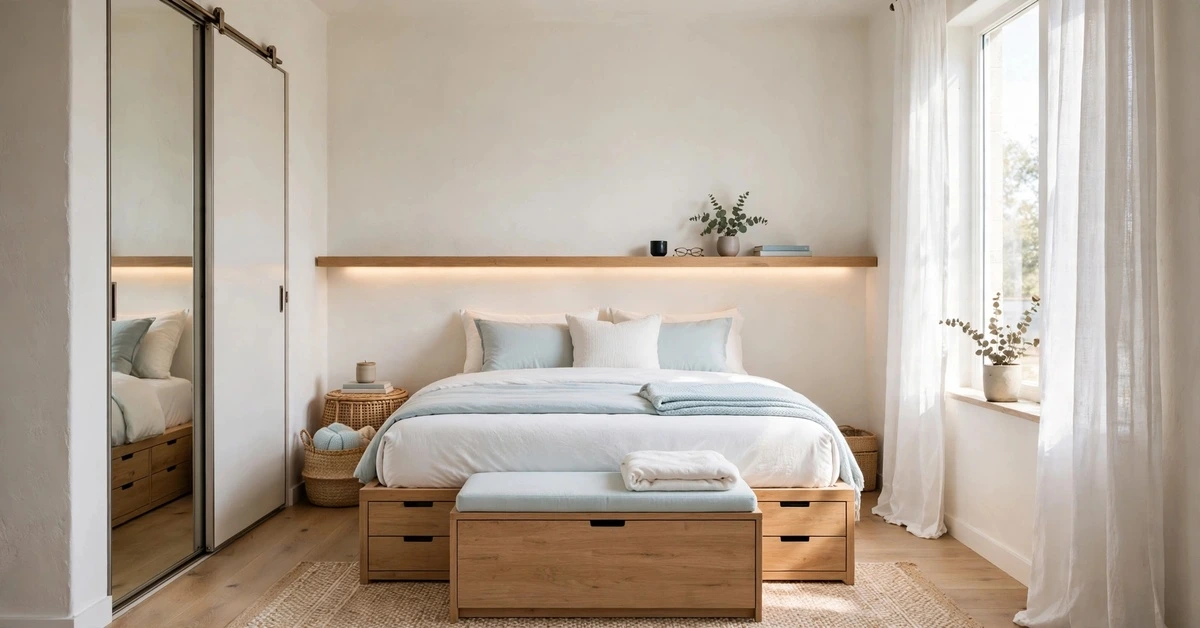
In a small bedroom, furniture that does one job is a luxury most rooms cannot afford. A storage ottoman doubles as a footrest and a blanket box. A daybed works as a sofa during the day and a bed at night. A desk with a slim profile can double as a dressing table or a nightstand.
Wall beds, sometimes called Murphy beds, fold up into a cabinet during the day and free the entire floor for other use. They cost more than a standard frame, but in a room that also needs to work as a home office or nursery, the trade-off is often worth it.
If your style leans more relaxed and layered than strictly minimal, multi-purpose furniture does not have to look clinical. Our boho bedroom ideas guide shows how storage pieces like woven trunks and layered textiles can do double duty without losing the relaxed feel of the room.
Common Mistakes That Shrink The Room
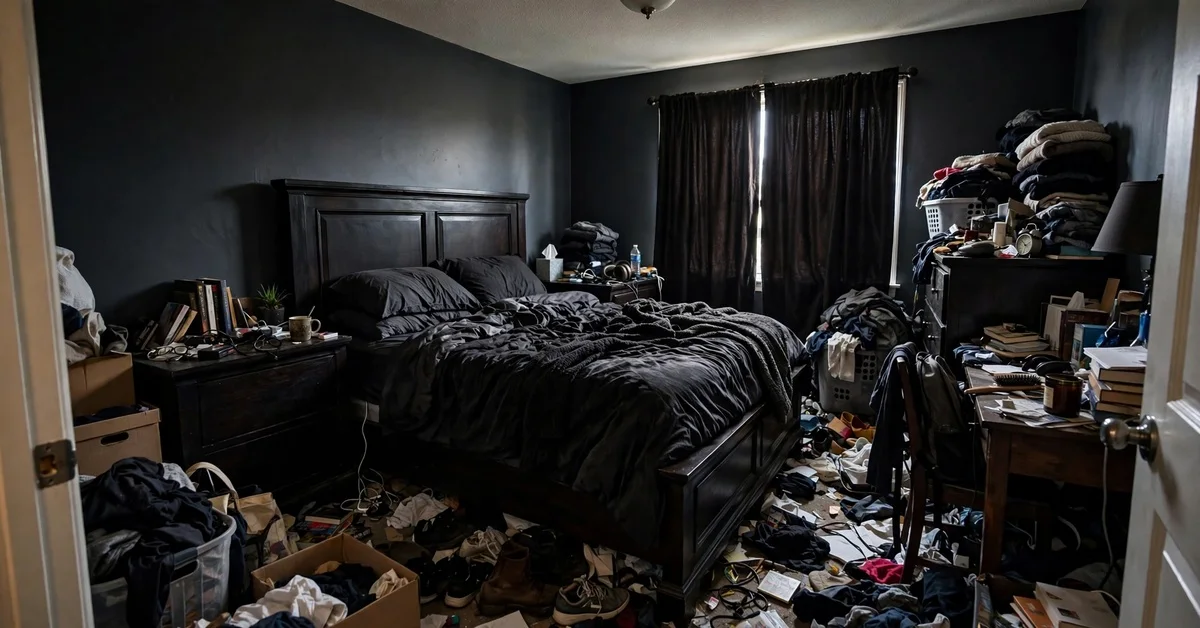
A few habits undo all of the space-saving work above, even when the furniture and colours are right. Watch for these in particular:
- Pushing too much furniture against the walls, which narrows the walking path more than it needs to
- Using heavy, dark curtains that block light even when the window itself is a good size
- Displaying too many small decorative objects, which reads as clutter no matter how tidy the room is
- Choosing a rug that is too small, which visually chops the floor into disconnected sections
- Skipping a lampshade or bulb colour check, since a harsh white bulb can make a small room feel clinical rather than cosy
Fixing these does not cost much. A different curtain, a slightly larger rug, and a warmer bulb can change how a small bedroom feels within a single afternoon, without buying a single new piece of furniture.
Final Thoughts
A small bedroom is not a design problem to apologise for. It is a set of constraints that reward planning. Measure before you buy, choose furniture with legs and built-in storage where you can, keep the colour palette light and consistent, and use vertical space instead of floor space wherever possible.
Start with one change, whether that is swapping the nightstand for floating shelves or repainting the ceiling a paler shade, and build from there. Small, consistent choices add up to a room that feels calm and organised, even when the square footage stays the same.
FAQs
What is the best bed size for a small bedroom?
A double or queen bed usually fits better than a king in a room under 100 square feet, since it leaves enough space on at least two sides to walk and to open drawers. In very tight rooms, a single or small double against the wall keeps the most floor space free.
How can I make my small bedroom look bigger without renovating?
Paint the walls and ceiling in a light, consistent colour, add one large mirror across from the window, and swap heavy furniture for pieces with visible legs. These changes cost far less than a renovation and can be done in a weekend.
Should I put a desk in a small bedroom?
A slim, wall-mounted or floating desk works well if you need a workspace and have no other room for one. Choose a narrow depth, around 40 to 45 centimetres, and pair it with a chair that slides fully under the desk when not in use.
What colours make a small bedroom feel bigger?
Soft whites, pale blues, light greys, and warm neutrals reflect the most light and tend to work best. A single darker accent wall can still work, as long as the rest of the room stays light.
Is under-bed storage worth it in a small bedroom?
Yes. Under-bed storage is one of the highest-value additions in a small bedroom because it uses space that would otherwise sit empty. Bed risers can create room for boxes under a low frame, or you can choose a bed with built-in drawers from the start.