

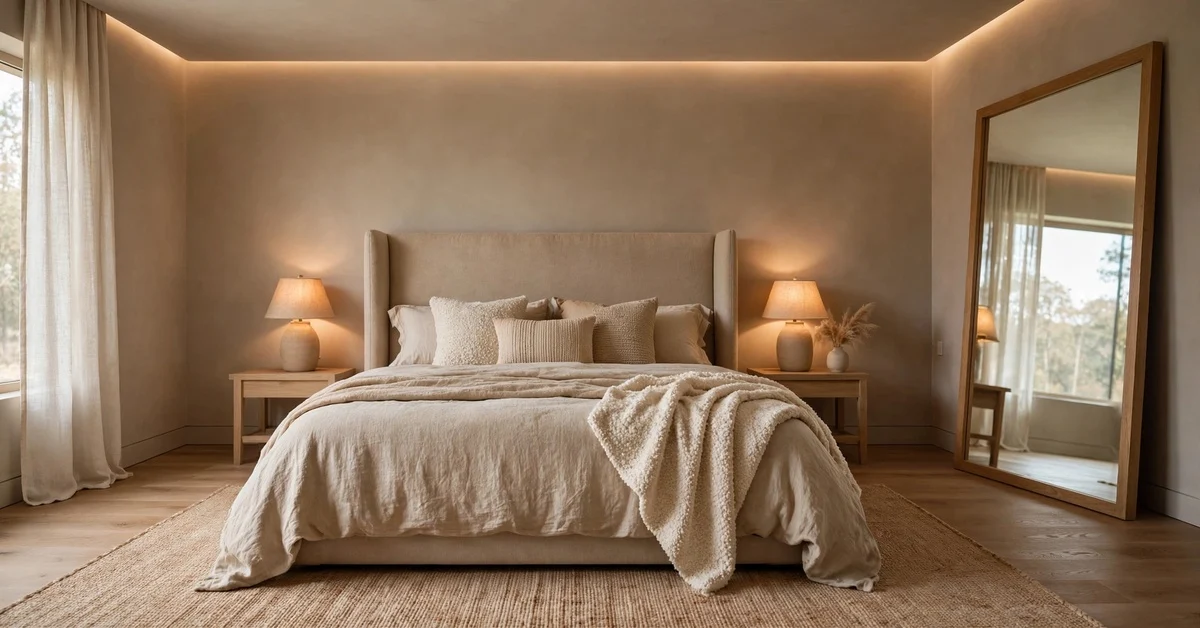
A luxury master bedroom pairs warm, layered colour with several sources of light and quality natural materials. The best rooms balance a well-proportioned bed, soft textiles, and smart storage with a few personal touches. Start with colour and layout, then add lighting layers, texture, and a walk-in closet or spa-style ensuite for the finishing touch.
Your bedroom works harder than almost any other room in the house, yet it is often the last one to get real attention. A tired paint colour, one overhead light, and a bed pushed against the wrong wall can make even a large room feel flat. So what actually separates an average bedroom from one that feels like a five-star suite?
The answer has less to do with budget than most homeowners expect. It comes down to colour, light, scale, and texture working together on purpose. In this guide, you will learn how to plan a master bedroom that looks considered rather than assembled, what to spend on first, and which mistakes quietly undercut an otherwise good design.
What Makes a Master Bedroom Feel Luxurious
Luxury in a bedroom rarely comes from a single expensive piece. It comes from proportion, restraint, and finishes that hold up to a close look. A room with one great bed frame, good lighting, and a calm palette will read as more luxurious than a room crowded with ornate furniture.
Designers now describe this approach as quiet luxury: clean lines, honest materials, and a layout that gives each piece room to breathe. Instead of loud decoration, the focus shifts to how a room feels underfoot, under your hand, and under different light at different times of day. That shift in priority is what separates a genuinely luxurious bedroom from one that simply looks expensive in photos.
Choose a Calm, Layered Colour Palette for Your Luxury Master Bedroom
Warm neutrals are leading bedroom colour choices right now, and for good reason. Soft beige, sand, taupe, and warm grey create a relaxed base that suits both large and modest-sized rooms, and they reflect light without feeling stark or cold.
Deeper, moodier tones are also gaining ground for accent walls and textiles. Rich charcoal, deep olive, and warm cocoa add a cocoon-like feeling when paired with texture such as limewash or panelled walls. The goal is a palette that relaxes you rather than energises you, so save bright, high-contrast colour for a smaller room like a study or a powder room.
If your current scheme leans eclectic or pattern-heavy, a boho bedroom approach can still feel luxurious when the patterns share a warm, muted colour family instead of competing for attention.
Build Light in Layers, Not One Source
A single ceiling fixture is the fastest way to flatten an otherwise well-designed bedroom. Luxury interiors rely on several light sources working together: ambient light for general use, task lighting for reading, and accent lighting to highlight architecture or art.
The American Lighting Association notes that layering multiple light sources improves both comfort and usability in a room, and that this approach helps prevent harsh shadows in spaces meant for rest. High-end bedrooms increasingly hide much of this lighting inside architectural details, such as cove lighting or backlit headboards, rather than exposing every fixture. Indirect light bounced off a ceiling or wall reads as softer and more flattering than a direct downlight aimed straight at the bed.
A simple way to start is with three layers: a dimmable overhead or cove light, a pair of bedside lamps or wall sconces, and one accent light on artwork or a reading chair. Dimmers matter as much as the fixtures themselves, since they let the same room shift from bright and functional in the morning to warm and quiet at night.
Pick a Bed and Furniture That Fit the Scale
The bed is the visual anchor of the room, so its scale needs to match the space around it. A king bed with a tall upholstered headboard can carry a large room, while an oversized frame in a modest room will crowd the walkways and make the whole space feel smaller.
Once the bed is set, build outward with a nightstand on each side, a bench or ottoman at the foot of the bed, and one seating piece if the layout allows it, such as a reading chair near a window. Sculptural, curved furniture is having a moment in luxury interiors because soft lines feel calmer than sharp angles in a room meant for rest. Leave enough clearance, generally at least 30 inches, around the bed and main walkways so the room still feels open once furniture is in place.
Mirrors also deserve a place in this planning stage, not just for function but for how they change the sense of scale in a room. A large mirror opposite a window bounces natural light back across the space and can make even a modest bedroom feel noticeably larger. Position it so it reflects something worth seeing, such as art or a window view, rather than a blank wall or the back of the door.
Add Texture With Fabrics and Natural Materials
Texture is doing more work than colour in current luxury bedroom design. Bouclé, linen, raw timber, and natural stone all add depth that a flat, single-material room cannot match, and they give the eye somewhere to rest.
A layered bed is one of the simplest ways to bring this in. Consider combining:
- A textured duvet or coverlet in a natural fibre like linen or cotton
- A wool or bouclé throw folded at the foot of the bed
- Two to three pillow sizes with mixed but complementary textures
- A natural fibre area rug that extends past the edges of the bed
Wood tones, whether in a headboard, nightstands, or flooring, ground the room and pair well with both warm neutral and deep jewel-toned accent colours. Mixing at least three distinct textures, without adding more than two or three colours, tends to produce a room that reads as rich rather than busy.
Plan Smart Storage and a Walk-In Closet
Clutter is the fastest way to undo an otherwise luxurious bedroom, which is why storage deserves real planning rather than an afterthought. A walk-in closet with custom shelving, dedicated hanging space, and a bench for dressing keeps daily items out of view and out of the way.
If a full walk-in is not possible, built-in wardrobes with interior lighting and soft-close doors can deliver a similar effect in less square footage. A dedicated bedroom vanity area also earns its keep here, since it gives grooming items and jewellery a defined home instead of letting them spread across a dresser top. Closet renovations are also one of the more cost-effective upgrades in this category, since they tend to recover a larger share of their cost than most other bedroom projects.
Bring In Spa-Style Bathroom Details
For homeowners with an attached ensuite, the bathroom is where a master bedroom suite earns its spa-like description. A freestanding soaking tub, a walk-in shower with a rain showerhead, and heated flooring are consistently named among the features that make a primary suite feel like a genuine retreat rather than a standard bathroom.
Natural stone counters, warm-toned tile, and layered lighting carry the bedroom’s palette into the ensuite so the two spaces feel like one continuous experience instead of two separate rooms. Even small additions, such as a heated towel rail or dimmable vanity lighting, go a long way toward that spa feeling without requiring a full renovation.
A double vanity is another feature worth prioritising if two people share the space, since it removes one of the most common sources of morning friction in a shared bathroom. Good ventilation matters just as much as finishes here. A quality extractor fan protects both the tile work and the wood tones you have carried in from the bedroom, so the room continues to look and feel new for years rather than months.
Know the Real Cost and Return on a Luxury Master Bedroom
It helps to go into a renovation with realistic numbers. According to the National Association of Realtors’ 2025 Remodelling Impact Report, a primary bedroom suite addition earned a perfect Joy Score of 10 out of 10, the report’s top rating for homeowner satisfaction after a project is finished. The same report put the national median cost of a primary suite addition at $172,500, with homeowners recovering roughly half of that cost at resale.
Jessica Lautz, NAR’s deputy chief economist and vice president of research, has pointed out that the appeal of these projects is often personal rather than purely financial. She has noted that homeowners take pride in seeing their personal tastes and design choices come to life, even when a project will not fully pay for itself at resale. That distinction matters when you are deciding what to prioritise.
A full suite addition makes the most sense if you plan to stay in the home for several more years and want to use the space yourself, since the enjoyment tends to outweigh the incomplete payback. Smaller upgrades, such as new lighting, updated textiles, refinished floors, and a closet reorganisation, cost far less than a full addition and still meaningfully change how the room feels day to day. Many homeowners get closer to a five-star feel with this staged approach than with one large renovation, simply because it lets budget go toward finishes and lighting rather than construction.
Common Mistakes to Avoid in Luxury Bedroom Design
A few recurring mistakes show up again and again in bedrooms that do not quite reach their potential, even with a reasonable budget:
- Relying on one ceiling fixture instead of layered lighting
- Choosing a bed too large or too small for the room’s proportions
- Mixing more than three accent colours, which reads as cluttered rather than rich
- Skipping window treatments, which leaves lighting and privacy unfinished
- Filling the closet before adding proper storage, so clutter migrates into the bedroom itself
Most of these are inexpensive to fix. A dimmer switch, a properly sized rug, and an edited colour palette often do more for how a room feels than any single piece of furniture.
FAQs
What is the difference between a master bedroom and a primary suite?
The terms are largely interchangeable today, though primary suite has become the more common term in real estate listings. Both refer to the largest bedroom in a home, usually with an attached bathroom and often a walk-in closet.
How much does a luxury master bedroom renovation typically cost?
Costs vary widely by scope. A full primary suite addition carries a national median cost of around $172,500, while a refresh limited to paint, lighting, textiles, and furniture can often be completed for a small fraction of that figure.
What colours work best in a luxury master bedroom?
Warm neutrals such as beige, sand, and taupe remain the most reliable base, with deeper tones like charcoal, olive, or navy used for accent walls or textiles. Choosing colours that relax rather than energise tends to suit a bedroom’s purpose better than bold, high-contrast schemes.
Is a walk-in closet necessary for a luxury master bedroom?
It is not strictly necessary, but it does solve one of the biggest obstacles to a calm bedroom, which is visible clutter. Built-in wardrobes with good interior organisation can achieve a similar result in a smaller footprint, and a guest bedroom can borrow the same storage logic even without a full walk-in closet of its own.
How many light sources should a master bedroom have?
Aim for at least three layers: an ambient source such as a ceiling or cove light, task lighting for reading, and one accent light for art or architectural detail. Dimmers on each layer let the room adjust from bright and functional to soft and restful.