

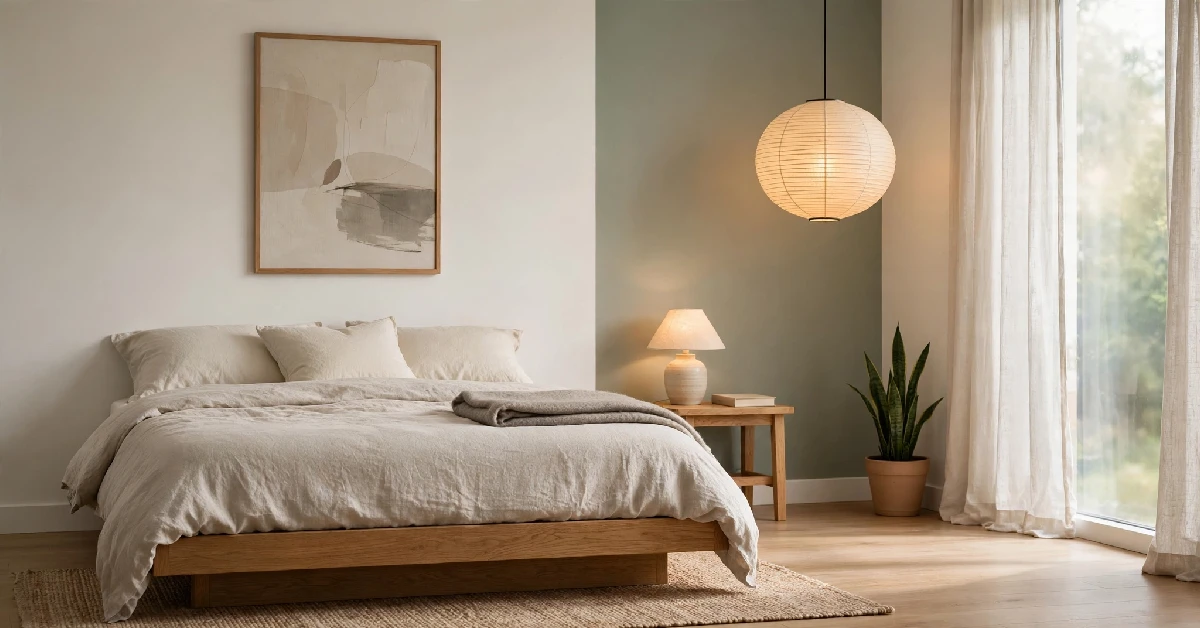
A Japandi bedroom combines Japanese simplicity with Scandinavian warmth. It uses a low wooden bed, natural fabrics like linen and cotton, soft neutral colours, and warm lighting. Surfaces stay clear, and every item has a purpose. The result is a calm room that supports better sleep and looks good without much decoration.
Most bedrooms hold more than they need. Extra cushions, crowded nightstands, and bright ceiling lights all keep your mind active when you want it to slow down. A Japandi bedroom takes the opposite approach. It keeps only what you use, adds natural texture, and lets the room feel quiet.
Japandi is set to be a key interiors trend for 2026, and the bedroom is the easiest place to start. You need fewer items than a typical scheme, and many changes cost little. This guide shows you how to choose colours, furniture, fabrics, and lighting for a Japandi bedroom that looks good and helps you rest.
What Makes a Japandi Bedroom Different
Japandi joins two design traditions. Japanese design values simple forms and the beauty of imperfect, handmade objects. Scandinavian design adds soft textiles and a focus on comfort. Frederik Werner, a partner at Norm Architects in Copenhagen, says both traditions share a respect for simplicity, functionality, refinement, and attention to detail.
That shared thinking explains why the two styles fit together so well in a bedroom. Shanty Wijaya of Allprace adds that the style celebrates craftsmanship and finds beauty in simple things that carry small flaws. A slightly uneven ceramic lamp base or a rumpled linen cover belongs here. A perfectly matched furniture set does not.
You can spot a Japandi bedroom by five features:
- A low bed made from natural wood
- A calm palette of warm neutrals and muted earth tones
- Textiles in linen, cotton, or wool
- Soft, warm lighting
- Very few objects, each with a clear purpose
Choose a Calm Colour Palette
Colour sets the mood before any furniture does. Japandi sits between two tastes. Ideal Home notes that Japanese decor favours darker, saturated tones and Scandinavian decor favours brighter naturals, so Japandi sits in between with earthy neutrals, muted pastels, and a few darker accents.
Start with walls in warm white, soft beige, or pale stone. Add one or two muted tones such as sage green, clay, or grey-blue. Homes and Gardens points to warm neutrals and the blues and greens of nature as fitting backdrops for layered textures. Limit the main colours to three so the room stays calm.
Dark shades work too. Charcoal or deep brown on the wall behind the bed adds depth without pattern. If you like that contrast, our moody bedroom ideas show how deeper colours pair with warm lighting and natural materials.
Start With a Low Wooden Bed
The bed is the largest object in the room, so it sets the tone. Ideal Home lists low-profile beds and streamlined furniture among the features that make a room feel more spacious, and it advises leaving space around each piece so light can travel through.
Choose a frame in oak, ash, or walnut with clean lines and little detail. Oak looks lighter and calmer. Walnut looks richer and suits larger rooms. Skip tall, padded headboards. A simple slatted wooden headboard, or none at all, keeps the wall visible.
Designer Iwan Halstead, speaking about a Daytrip Studio bedroom, pairs a low wooden frame with light linen bedding, a woven throw, and a soft cushion for a cosy look. That mix works as a template for your own room. Keep to two or three pillows per person and one throw at the foot of the bed.
Bedside tables should stay small. A single shelf or drawer is enough for a book, a glass of water, and a lamp. You can vary the height or material on each side, such as a wooden table on one side and a ceramic stool on the other.
Plan Your Layout Around Open Floor Space
Japandi rooms rely on empty floor space, so layout matters as much as furniture. Leave about 60 cm on each side of the bed so you can walk around it without touching other pieces. Keep the window area free so daylight reaches the whole room. Put wardrobes and drawers on one wall only, and keep the opposite wall almost bare.
In a small room, choose a bed with drawers underneath and a wall-mounted shelf instead of a second cabinet. Low furniture keeps sight lines open, so the ceiling looks higher and the room feels larger. Measure before you buy, because a single oversized piece can undo the calm you are building.
Layer Natural Textiles for Warmth
When colour and pattern stay low, texture provides the warmth. Ideal Home suggests plain bedding in muted neutrals, soft greens, and pale blues, made from organic cotton or natural linen, with tactile throws and cushions.
Use a simple rule: three textures in one tonal family. For example, pick a linen duvet cover in oatmeal, cotton pillowcases in warm white, and a wool throw in stone. The tones sit close together, so the bed looks calm but still has depth.
Add a woven rug under the lower half of the bed. Jute, wool, and cotton in a plain weave all suit the style. Hang linen or cotton curtains in a neutral shade. Homes and Gardens lists wood, rattan, grasscloth, and linen as textures that layer well in this look.
Linen softens with every wash, so the bed looks better with age. That fits the Japandi habit of accepting small signs of wear. Avoid glossy fabrics, busy prints, and synthetic satin. They add glare and patterns that work against the calm look.
Use Warm Lighting for Better Sleep
Lighting changes how the room looks and how you sleep. The Sleep Foundation states that a dark bedroom is best for sleep, and that warm-coloured light is preferable when you need light in the evening. Red, orange, and yellow light have less effect on your body clock than cooler light, and blue light can suppress melatonin and increase alertness.
That advice matches Japandi taste. Choose warm white bulbs, around 2700K, in paper or linen shades. Hang a pendant with a rice paper or woven shade, place one lamp on each bedside table, and add a dimmer if you can. Avoid bright overhead spotlights in the sleeping area.
Daylight matters too. Yvonne Keal at Hillarys advises maximising the light that comes through your windows to keep the space airy. Use sheer curtains for the day. Add blackout blinds or heavier curtains behind them for night, as Ideal Home suggests, so the room stays dark when you sleep.
Temperature belongs in this plan as well. Many experts agree the ideal bedroom temperature for sleeping is 65°F (18.3°C).
The Sleep Foundation also gives a wider comfort range of 15.6°C to 22°C, and most experts suggest erring towards a cooler bedroom. Layered natural bedding helps here, because you can add or remove a throw during the night.
Keep Storage and Surfaces Clear
A Japandi bedroom works because the room looks uncluttered. Ideal Home recommends fitted wardrobes to hide clutter. The Sleep Foundation adds that reducing clutter and choosing calming colours can make a bedroom more relaxing.
Use one rule for every surface: one to three items only. On a nightstand, that means a lamp, one book, and a glass. On a dresser, keep one tray and one ceramic piece.
Closed storage keeps the room tidy. Choose flat-front wardrobes and low drawers without decorative handles. Keep open shelving to one wall, and limit it to items you use or love, such as a stack of books or a handmade bowl. Laila Rietbergen, quoted by Homes and Gardens, says most decor in this style is functional, such as books, teapots, and ceramics.
Move visible cables, chargers, and screens out of sight. A television or desk in the bedroom changes the room’s purpose. If you must keep a desk, place it inside a closed cabinet.
Add Wall Decor and Greenery
Walls need less than you think. One large piece of art works better than a gallery of small frames. Choose a print in muted tones, a textile panel, or a wooden slat feature behind the bed. Hang art at eye level when you sit up in bed, and leave empty wall space around it.
If you want help with sizes, spacing, and placement, browse our bedroom wall decor ideas for more options that suit a quiet scheme.
Plants soften straight lines. Place one floor plant in a corner, such as a rubber plant or snake plant in a stone or clay pot. A single branch in a tall vase also works. Ideal Home describes simple, stylised arrangements, like a sculptural branch or a floor-standing plant. Keep to one or two plants so the room does not feel busy.
Set Up Your Japandi Bedroom Step by Step
Follow this order so you spend money only after you have cleared the room.
- Remove everything from surfaces and the floor, then put back only what you use daily.
- Choose a base colour of warm white, beige, or soft stone.
- Swap to a low wooden bed and small bedside tables.
- Layer bedding in linen, cotton, and wool in one tonal family.
- Replace cool white bulbs with warm white bulbs and add a dimmer.
- Hang one large piece of art and add one plant.
- Set the room to a cool temperature, near 18°C, before sleep.
You can use the same order for a shared room or a child’s room. Add closed storage low enough for children to reach. Our kids bedroom guide covers layouts that suit younger ages.
Three Japandi Mistakes to Avoid
Three errors show up often. First, a room with no texture feels cold. If every surface is smooth and pale, add linen, wool, or woven fibre. Second, too many matching pieces look staged. Mix two wood tones and one other material, such as stone or ceramic.
Third, copying a photo item by item leaves no space for your own belongings. Keep books, a favourite mug, and family photos in a closed drawer or on one shelf. A lived-in room still counts as Japandi when the surfaces stay clear.
FAQs
What colours suit a Japandi bedroom?
Warm white, beige, stone, sage green, clay, and soft charcoal all work. Limit the main colours to three, and use darker shades as small accents.
Can I create a Japandi bedroom in a small room?
Yes. Ideal Home says low-profile beds and streamlined furniture make a room feel more spacious. Choose a low bed, wall-mounted lamps, and closed storage, and keep the floor clear.
How is Japandi different from Scandinavian style?
Scandinavian rooms lean towards lighter woods and brighter naturals. Japandi adds earthier tones, handmade objects, and a stronger focus on simple, imperfect forms.
What lighting works best?
Use warm, dimmable light in the evening. The Sleep Foundation says red, orange, and yellow light affect circadian rhythms less than cooler-coloured light.
Do I need to buy new furniture?
No. Start with bedding, bulbs, and decluttering. Replace the bed or bedside tables later, once the room feels calm.