

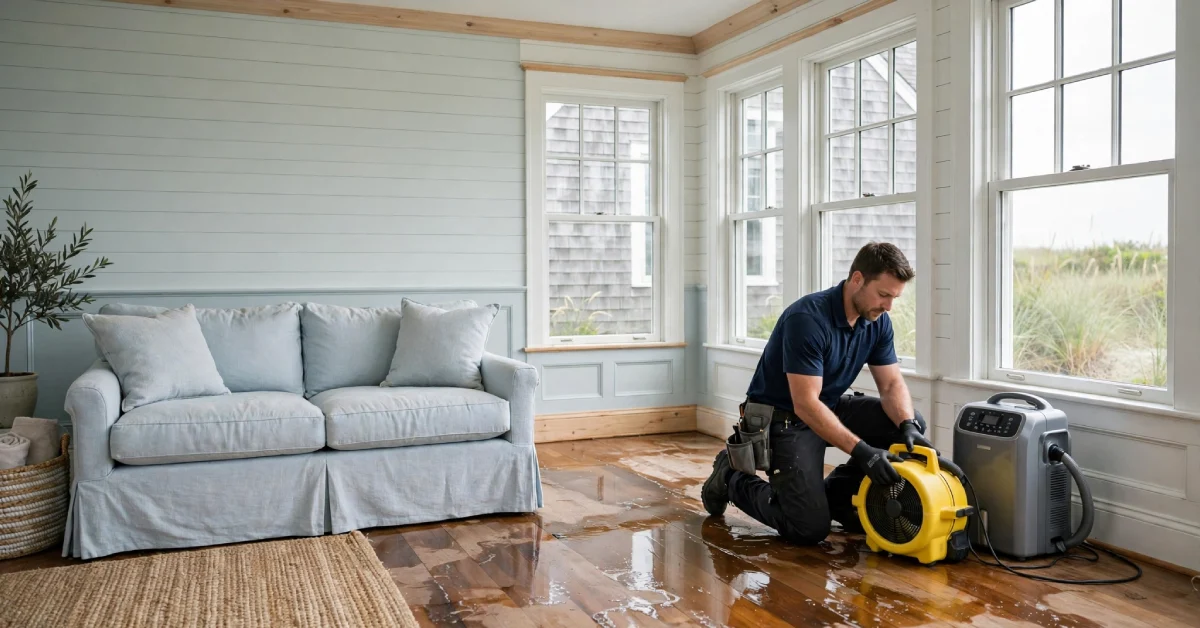
Quick answer: Water damage in Cape Cod homes spreads fast because of humid summers, salt air, older construction, and winter storm seepage. Expert restoration combines rapid water extraction, controlled drying, mould prevention, and detailed documentation for insurance. Acting within the first 24 to 48 hours usually limits both structural damage and mould growth. Choose a company that is IICRC certified, licensed, insured, and available around the clock.
A small leak under a kitchen sink can turn into a rotted subfloor within a single weekend. On Cape Cod, where many homes are decades old and sudden nor’easters bring heavy rain and wind, water problems often start quietly and grow fast. Knowing what professional restoration involves helps you act with confidence when it happens. This guide covers the warning signs, the steps trained crews follow, and how to choose a qualified team.
Expert Water Damage Restoration Services in Cape Cod
Restoration is different from ordinary cleanup. A cleanup company may pump out a basement, but restoration aims to return the home to its pre-loss condition. That means removing moisture from every affected material, including the places you cannot see, such as wall cavities, under flooring, and inside insulation. Without this step, hidden moisture can feed mould and wood rot for months.
Cape Cod’s climate adds extra pressure. Summer humidity often sits above 70per centt, which slows natural drying. Coastal air carries salt, which can corrode metal fasteners, wiring, and HVAC components over time. A water event in this environment calls for equipment, moisture readings, and drying schedules that match local conditions.
What Happens to Your Home in the First 48 Hours
The first two days matter most. The EPA advises drying water-damaged materials within 24 to 48 hours to reduce the risk of mould growth. Mould can begin to form on wet drywall, carpet, and wood surfaces in that window, and it can spread quickly once it takes hold.
During this period, the most useful steps are simple. Shut off the water source if you can do so safely. Shut off power to affected areas if water has reached outlets or electrical panels, and avoid standing water near live electrical equipment. Move valuables and furniture onto dry surfaces. Take photos and video of the damage before anything is removed, because insurers will ask for documentation.
Keep in mind that the water itself may not be clean. The IICRC S500 standard, a widely used reference for water damage restoration, sorts water into three categories. Category 1 comes from clean sources such as a supply line. Category 2 contains contaminants that can cause illness or discomfort, such as water from a washing machine overflow. Category 3, often called black water, comes from sewage or flooding and poses serious health risks. The category determines how the crew handles materials and which protective equipment they use.
Signs You Need Professional Water Damage Restoration
Some water problems are obvious, such as a burst pipe that soaks a living room floor. Others are harder to spot. Watch for these warning signs:
• Musty odours that do not go away after cleaning
• Warped or buckled flooring, especially hardwood or laminate
• Bubbling, soft, discoloured paint and wallpaper
• Stains on ceilings or around light fixtures
• Water that returns after you dry an area
• Damp concrete, a white crust on basement walls, or a sump pump that runs constantly
If you notice any of these signs and cannot find the source, call a professional. Moisture meters and thermal imaging cameras can locate water behind walls and under floors without tearing out more material than necessary. Many restoration companies also install and monitor water leak sensors to catch future problems earlier, which can save significant repair costs.
Steps a Professional Restoration Team Follows
Although each job differs, most reputable crews follow a similar sequence. First, they inspect the property and classify the water. Next, they stop the water source if it is still active and set up containment to keep moisture away from unaffected rooms. Then they extract standing water with pumps and wet vacuums.
After extraction, technicians remove materials that cannot be dried effectively. Saturated carpet pad, insulation, and some drywall often fall into this category. Structural materials such as framing and subfloors are usually dried in place using air movers and dehumidifiers. The crew takes daily moisture readings and records them until materials reach normal levels. Only then does the team begin repairs.
Finally, a professional restoration company provides a detailed report. This report should include moisture logs, photos, equipment records, and a scope of work. Insurance adjusters rely on these documents, and so do future buyers who ask about the home’s history.
Basements and finished spaces need extra attention. Carpet, padding, and drywall in a finished basement hold water long after the surface feels dry. A basement home theatre room, for example, often has sound-dampening panels, carpet, and electronics that all need careful handling. Our guide on how to design a home theatre room explains which materials hold up best in below-grade spaces and which ones deserve extra care after a flood.
What Restoration Typically Costs on Cape Cod
Restoration costs vary widely. The size of the affected area, the water category, the materials involved, and the speed of response all affect the final bill. A small clean-water leak in one room costs far less to fix than a basement flood with contaminated water and damaged finishes.
Ask every company for a written estimate that lists the scope of work, the equipment, the expected drying time, and any materials they plan to remove. Compare estimates based on what each one includes, not only the total. A low bid that skips moisture monitoring or leaves out antimicrobial treatment may cost more later. Also ask whether the company works directly with insurance carriers. Many do, and this can reduce paperwork for you.
Basement gyms and other heavy-use rooms carry their own risks because rubber flooring, equipment, and panelling can trap moisture. If you have converted part of your lower level into a workout area, our article on how to make a home gym covers flooring and ventilation choices that help you avoid repeat damage.
How to Choose the Right Restoration Company
Credentials are the first thing to check. Look for IICRC certification, which indicates that technicians have been trained in water damage restoration standards. Confirm that the company holds a valid Massachusetts contractor license where required, and ask for proof of general liability insurance and workers’ compensation coverage. A company that cannot provide these documents should not enter your home.
Next, consider response time. Water damage rarely waits for business hours, so choose a team that offers emergency service around the clock. Ask how quickly a technician can arrive on a typical weekday and on a holiday weekend, since Cape Cod’s seasonal population can strain local services in summer.
Finally, read recent reviews and ask for local references. Pay attention to comments about communication, documentation, and follow-through after the drying phase ends. Good restoration companies explain each step, answer questions without pressure, and give you a clear timeline.
Protecting Your Home Through Cape Cod Winters and Storms
Prevention costs less than restoration. Clean gutters and downspouts each fall so that water drains away from your foundation. Check that your sump pump works by pouring water into the pit, and consider installing a battery backup in case power goes out during a storm. Inspect supply lines, water heaters, and washing machine hoses every year, and replace any that show cracks or bulging.
Seal gaps around windows and doors, and make sure grading slopes away from the house. Coastal properties may also benefit from a professional inspection after heavy storms, because wind-driven rain can enter through roof edges and siding in ways that are easy to miss from the ground.
FAQs
How quickly should I call a restoration company?
Call as soon as you discover water and can do so safely. Quick action reduces the chance of mould and structural damage, and it often lowers the total cost of repairs.
Will my homeowner’s insurance cover water damage?
Coverage depends on the cause of the damage and the policy terms. Sudden events such as a burst pipe are commonly covered, while gradual leaks and flood damage often require separate coverage. Review your policy and speak with your insurer before work begins.
Can restoration fully remove mould?
Professional teams can remove mould and treat affected areas, but they cannot always eliminate every spore. Their goal is to dry the materials quickly, remove contaminated materials when needed, and keep moisture levels low so the mould does not return.
Do I need to stay out of the house during restoration?
Not always. Many people remain in their homes during drying, especially for clean-water losses. For Category 3 water, or when containment and air quality are a concern, the crew may recommend temporary relocation.