

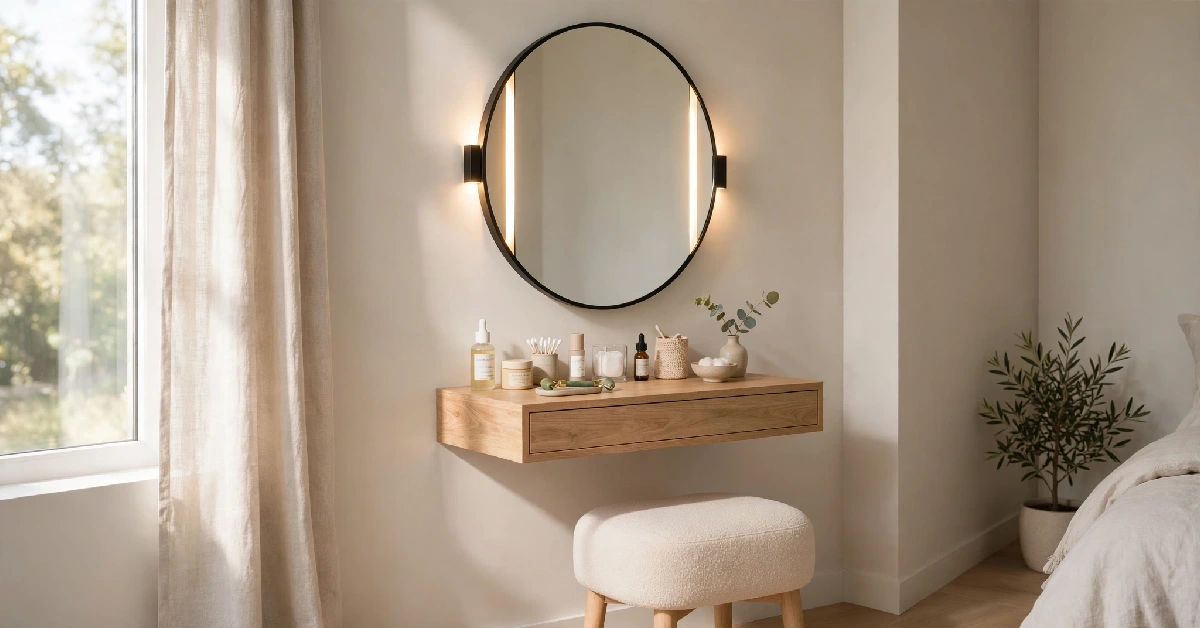
Where do you put your makeup, jewellery, and hair tools when your bedroom has no bathroom counter to spare? That question sends most homeowners searching for Bedroom Vanity Ideas, and the answers range from a floating shelf in a five-foot alcove to a full closet build-out.
A vanity area changes how a bedroom functions every morning. It gives skincare, hair, and dressing routines one dedicated spot instead of scattering supplies across a dresser or nightstand.
This guide covers vanity styles for small and large rooms, lighting and mirror placement that work, storage that keeps clutter off the surface, and sizing guidelines based on current kitchen and bath planning standards. Use it to pick a setup that fits your room and your daily routine instead of a photo you saved once and forgot.
What a Good Bedroom Vanity Actually Needs
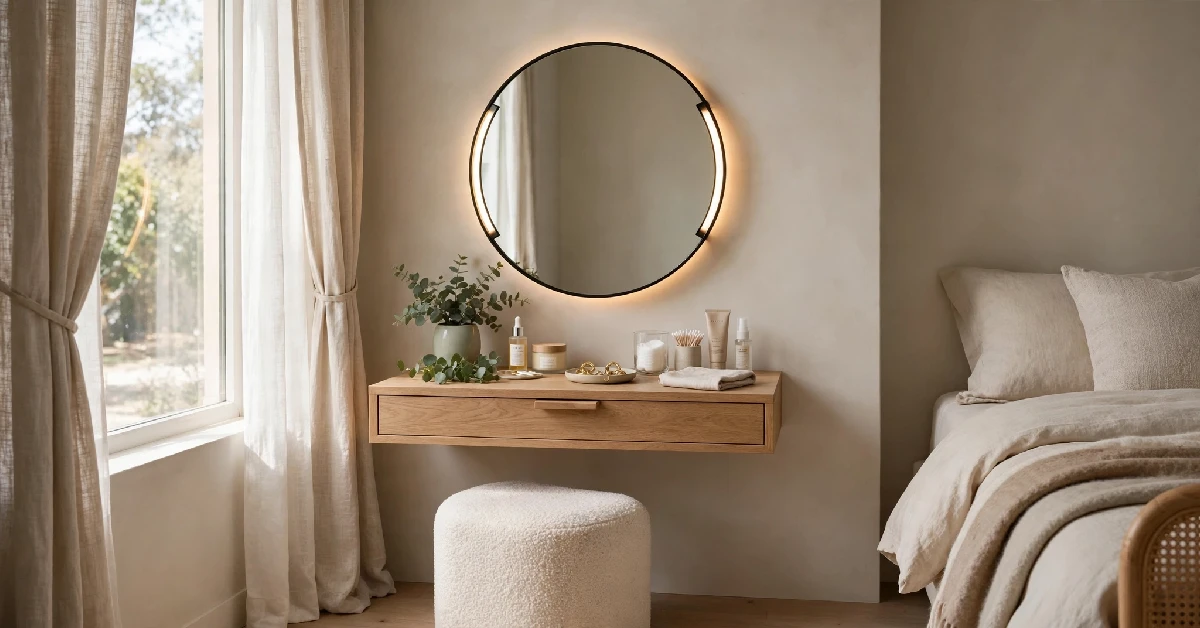
A bedroom vanity has three jobs. It needs a flat surface for daily routines, storage that keeps small items organised, and a mirror with light that shows true colour, not a shadowed guess.
Most homeowners start with style and work backwards, choosing a desk first and hoping the lighting and storage fall into place. Reversing that order saves money and frustration. Decide how much you actually store, whether that is a full cosmetics collection or a hairbrush and a few skincare bottles, before you shop for a desk.
Paul Deckland, product director at furniture brand Cotswold Company, treats the purchase as a long-term investment rather than a quick fix. He recommends choosing a neutral finish so the piece works with other furniture and survives a future room refresh without looking out of place.
That advice matters more in a bedroom than almost anywhere else in the house, since a vanity often stays put for a decade while everything around it changes twice.
Best Vanity Ideas for Small Bedrooms
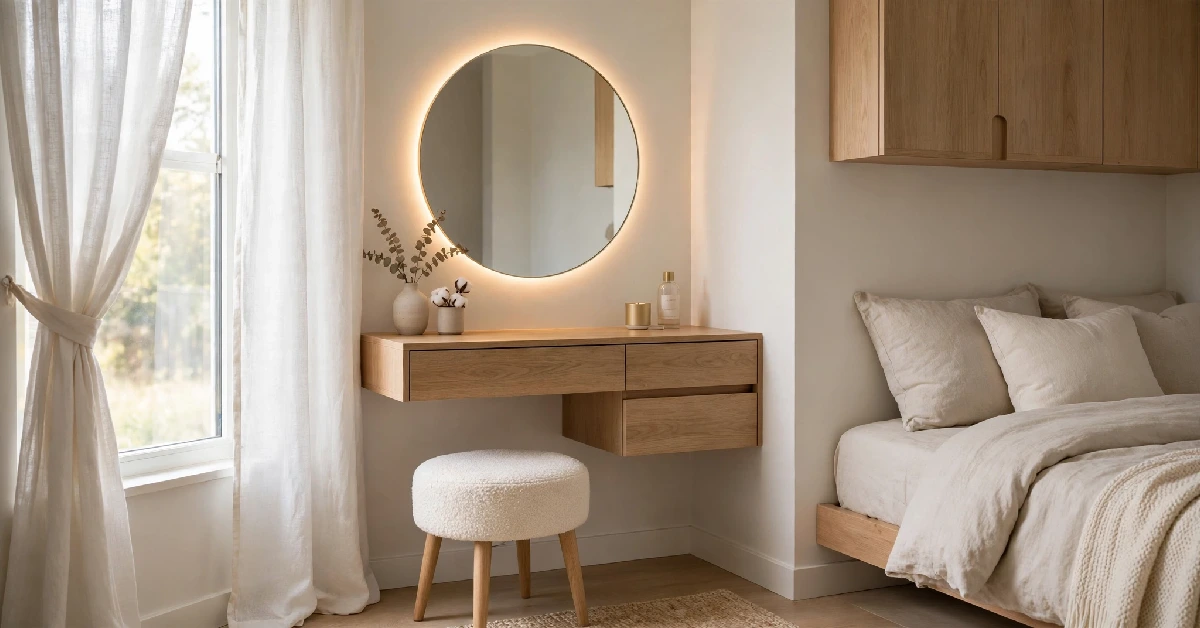
Small bedrooms benefit most from a vanity that does not compete for floor space. A wall-mounted floating desk keeps the floor visible underneath, which makes even a cramped room read as larger.
Corner setups work well in awkward layouts. A narrow desk angled into a corner uses a section of the room that usually sits empty, and a round mirror hung above it avoids the bulk of a full-length frame.
A closet or dressing alcove is often the strongest option in a small bedroom, since it borrows space already set aside for getting dressed instead of claiming new floor area. Built-in shelving on either side keeps brushes and bottles out of sight until they are needed.
If your room leans toward a softer, layered look rather than a strictly minimal one, our guide to cosy bedroom ideas walks through fabric and lighting choices that pair well with a compact vanity corner.
Fold-down desks suit rooms too small for a permanent piece. Mounted flush to the wall, they open for morning routines and close flat the rest of the day, freeing the wall for other use.
Vanity Styles That Match Your Room
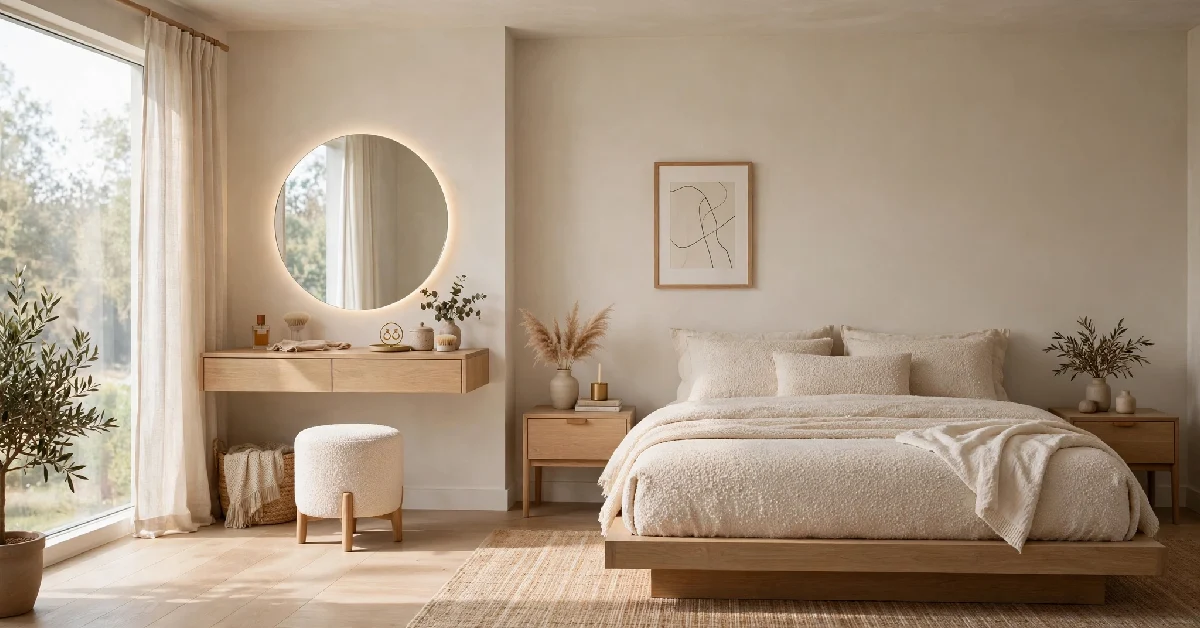
A vanity should echo the finishes already in the room rather than standing apart from them. Matching the wood tone or metal hardware to your existing dresser or bed frame keeps the space from feeling like two rooms pushed together.
Floating vanities suit modern and minimalist bedrooms. The wall-mounted base removes visual weight and gives the room a clean, continuous floor line, a trick borrowed from hotel bathroom design that works just as well in a bedroom corner.
Wrapped or upholstered bases fit warmer, softer schemes. A base covered in suede or a similar soft material absorbs sound and adds texture that a plain wood or laminate desk cannot match.
For a room built around a specific mood, our guide to bedroom aesthetic styles breaks down how palette and furniture shape work together, which helps when choosing a vanity finish that actually belongs in the room instead of standing out from it.
Traditional dressing tables with turned legs and a skirted stool suit classic and vintage bedrooms. A plain round mirror paired with wood or metal keeps the look from feeling dated, even in an otherwise old-fashioned room.
Lighting and Mirror Placement That Works
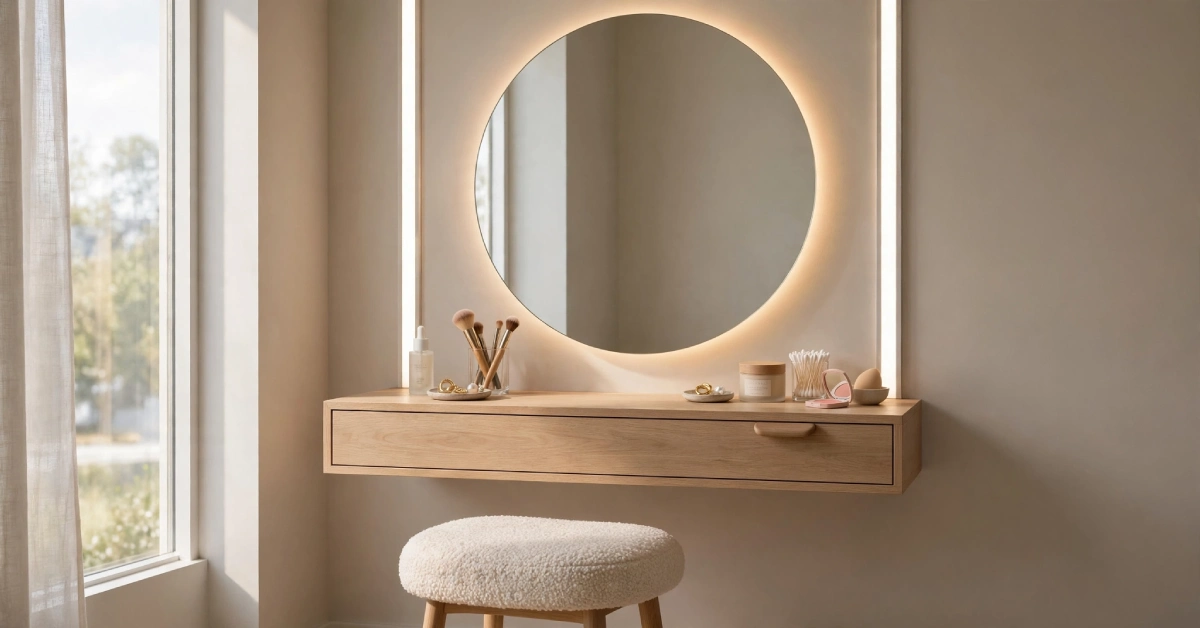
Lighting decides whether a vanity actually gets used or becomes a shelf for clutter. Light needs to hit your face from the sides or from a ring around the mirror, not from a ceiling fixture behind you, which throws shadows exactly where you need to see clearly.
Noor Charchafchi, founder of Celine Interior Design, places vanities near windows whenever the layout allows it, since natural daylight from the side gives the most accurate read on skin tone and makeup application.
When a window is not available, aim for warm bulbs close to 2700 Kelvin mounted at face height on either side of the mirror. Avoid a single bulb directly above, since it creates the same harsh shadow a ceiling fixture does.
Mirror size matters as much as light quality. A mirror that only shows your face from the chin up forces you to lean forward constantly. A taller mirror that shows your shoulders gives a more accurate view of how an outfit or hairstyle actually looks.
Smart Storage for a Clutter-Free Vanity
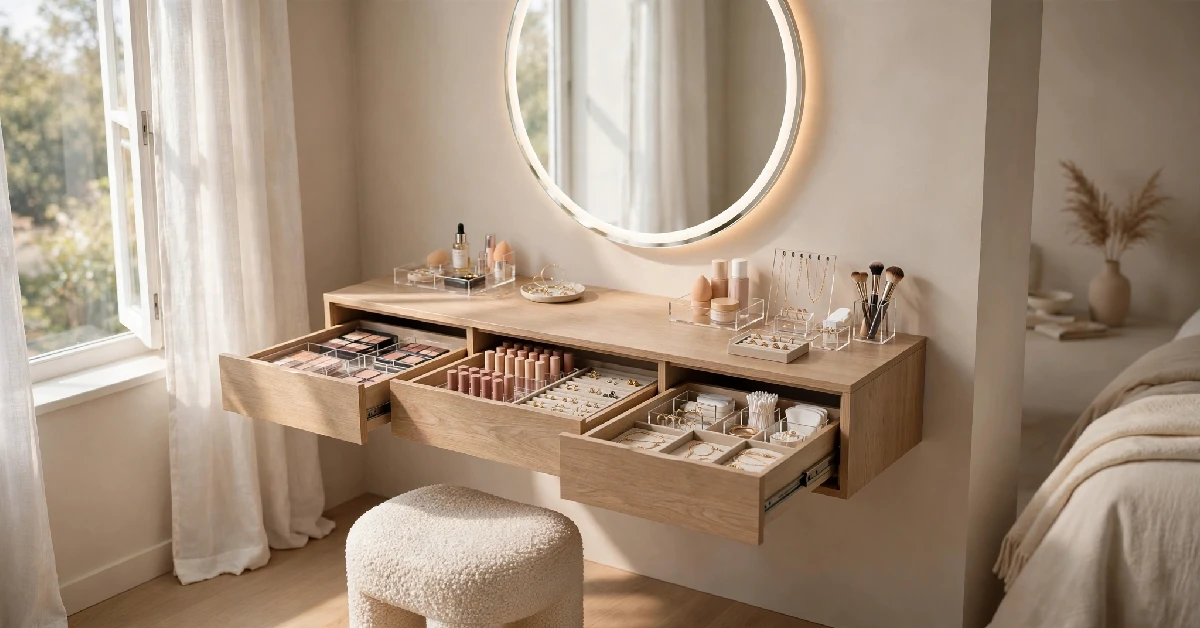
Open surfaces look appealing in photos and turn messy within a week in real use. Drawers, closed cabinets, and small dividers keep a vanity functional long after the first few days.
Shallow drawers work better than deep ones for this purpose. Cosmetics, brushes, and jewellery are small items, and a deep drawer quickly becomes a pile you dig through every morning instead of a system you can see at a glance.
A few storage choices consistently solve the most common vanity clutter problems:
- Drawer dividers or trays for brushes, palettes, and small tools
- A lidded jar or tray for jewellery that stays out but stays contained
- A slim rolling cart tucked beside the desk for overflow items
- Wall-mounted hooks for hair tools that need to hang and cool safely
- A small stool with hidden storage underneath the seat
Houzz reports that organised, space-maximising storage has become a leading priority among the design community it tracks, with award-winning submissions each year favouring built-in solutions over open shelving. That shift shows up in vanity design too, where closed storage now outranks open display in most new builds.
Repurposed and Budget-Friendly Vanity Ideas
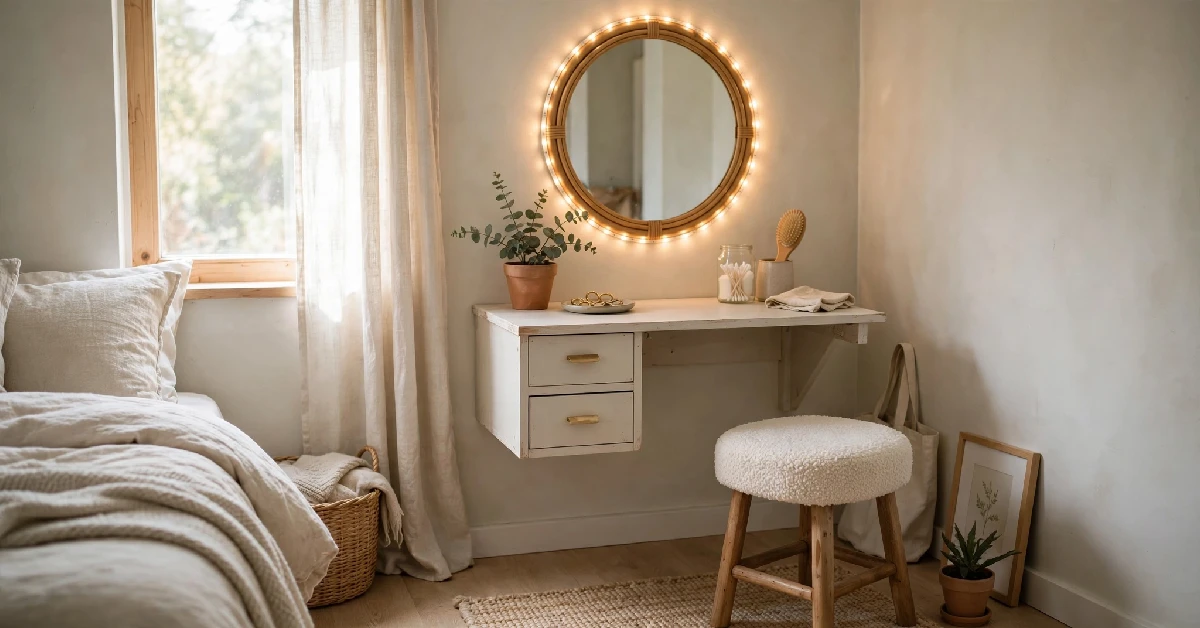
A dedicated vanity desk is not required to get a working setup. An old dresser with a mirror and a small organiser on top functions as a full vanity for a fraction of the cost of a new piece.
Thrifted writing desks refinish well for this purpose. A fresh coat of paint, new hardware, and a mounted or leaning mirror turn a plain secondhand desk into a piece that looks intentional rather than borrowed.
Vintage sewing tables and small console pieces often already have the proportions a vanity needs, including built-in drawers sized for small items. Look for pieces with at least one shallow drawer before committing to a full refinish.
If your budget plan includes the rest of the bedroom as well, our guide to modern luxury bedroom ideas covers where to spend and where to save so the vanity fits a room that feels considered rather than mismatched.
A simple wall shelf and a leaning mirror cost the least of any option here and still deliver a working vanity corner in a rental or a room you expect to update again soon.
Vanity Placement and Sizing Guidelines
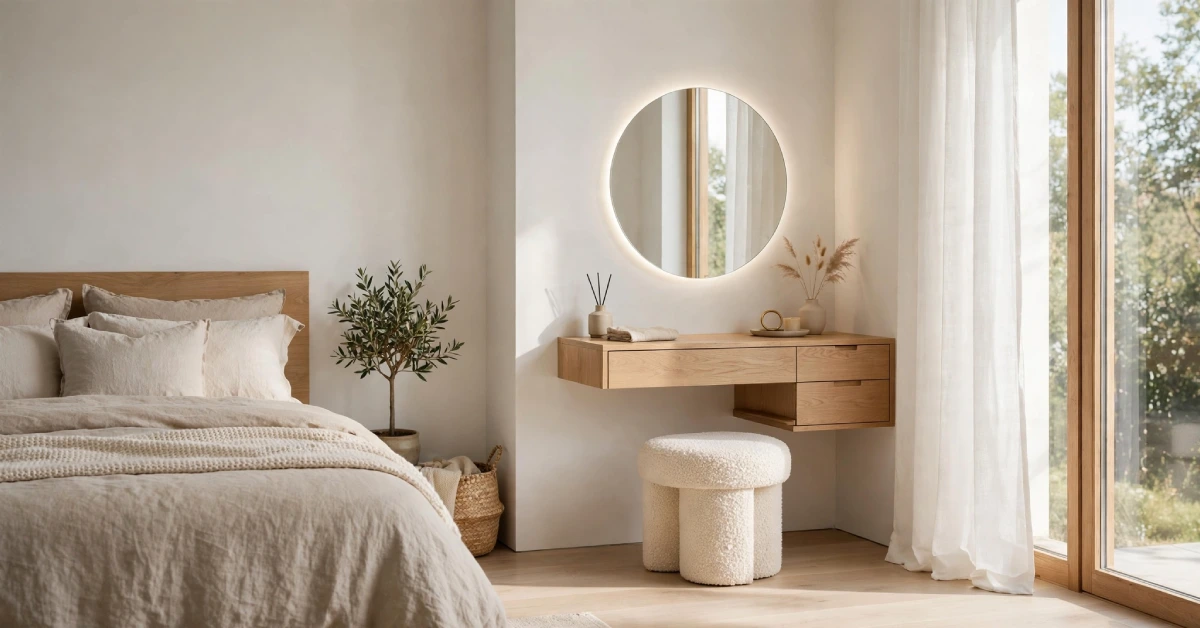
Height, depth, and clearance determine whether a vanity gets used daily or turns into a catch-all surface within a month. Get these numbers right before finish and colour enter the decision.
The National Kitchen and Bath Association puts the workable height range for a vanity or dressing surface between 32 and 43 inches, though most new installations now sit closer to 34 to 36 inches to match standard counter height and suit adult users comfortably.
Leave at least 30 inches of clearance in front of the seat so a chair can slide in and out without hitting the bed or a dresser behind it. In a tight room, a stool that tucks fully underneath the desk saves several inches over a chair with arms.
Depth matters more than most buyers expect. A desk deeper than 20 inches often pushes too far into the room, while anything under 14 inches struggles to hold a mirror, a lamp, and daily items without feeling crowded.
Final Thoughts
The best bedroom vanity is the one built around your actual routine, not the one that photographs best on a shopping site. A five-minute morning calls for a simple shelf and a mirror. A longer routine with a full skincare and makeup collection needs real storage and better light.
Start with the constraints your room already has, including window placement, closet space, and existing furniture finishes. Then choose a style, whether that is a floating desk, a repurposed dresser, or a closet build-out, that fits inside those constraints instead of fighting them.
A vanity done well earns its place in the room every single morning, which is more than most furniture in a bedroom can claim.
FAQs
What is the standard height for a bedroom vanity?
Most new vanities sit between 34 and 36 inches tall, matching standard counter height. The National Kitchen and Bath Association allows a wider workable range of 32 to 43 inches depending on who uses the space.
How much space do I need for a bedroom vanity?
A compact floating desk can work in as little as 24 inches of wall width. Leave roughly 30 inches of clearance in front of the seat so a chair or stool has room to slide in and out.
Can I turn a dresser into a vanity?
Yes. An existing dresser with a mirror added on top or the wall behind it functions as a full vanity, and it costs far less than buying a dedicated desk.
What is the best lighting for a bedroom vanity?
Light placed at face height on either side of the mirror gives the most even, shadow-free result. Warm bulbs close to 2700 Kelvin work best for accurate makeup and skincare application.
Does a bedroom vanity need its own outlet?
It helps if you use hair tools or lighted mirrors regularly. A nearby outlet or a short extension run keeps cords from crossing the walking path around the desk.