

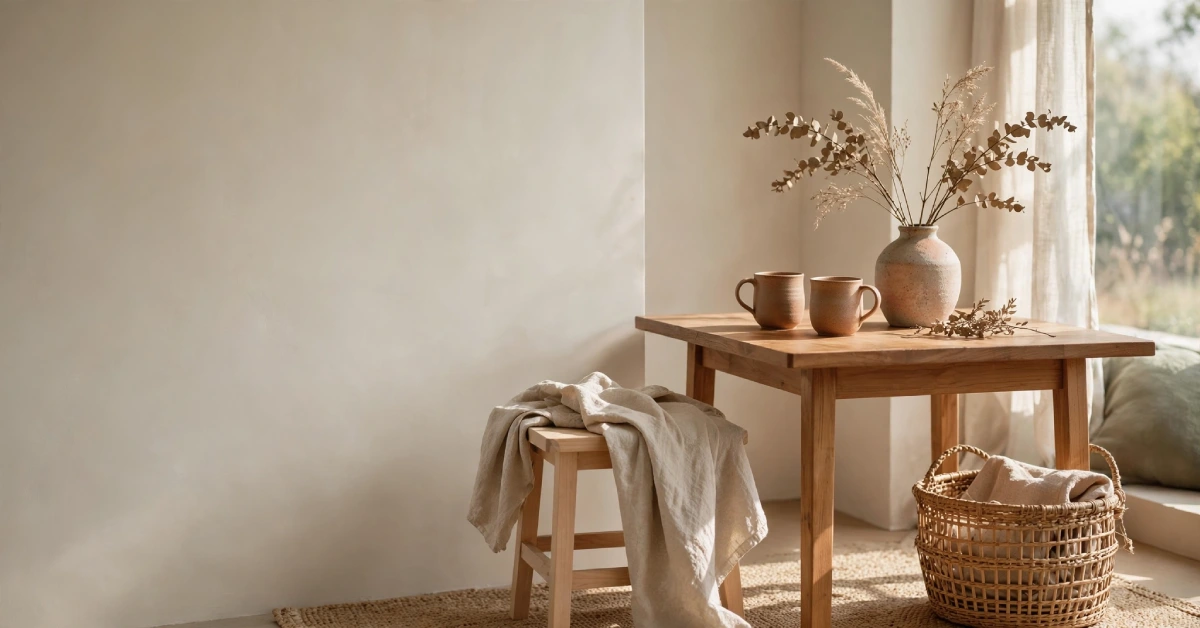
Decobry is an online concept store that curates sustainable, hand-picked home decor and lifestyle products. The brand focuses on natural materials, artisan craftsmanship, and slow living principles, offering items such as Japanese-inspired living room decor, wellness accessories, and eco-conscious daily essentials. It ships to the Benelux, France, and Germany, and positions itself as a destination for design enthusiasts who value intentional, plastic-free home choices.
The global home decor market reached an estimated USD 665.33 billion in 2025 and continues to expand as more consumers treat their living spaces as personal sanctuaries rather than simple backdrops. Within that broader market, a clear shift is underway. Shoppers are moving away from mass-produced items and toward products that carry a story, a material advantage, and a lower environmental cost.
Decobry sits at the centre of this shift. The brand does not operate like a typical big-box retailer. It curates. Every item is selected by a team rather than an algorithm, and each product is vetted for sustainability before it reaches the digital shelf. That approach matters to a growing audience. Research shows that 72% of consumers are willing to pay more for environmentally friendly home products, and 43% of homeowners use social media to discover decor inspiration.
If you are exploring Decobry for the first time, you likely want to know three things. First, what the brand actually offers beyond a generic product list. Second, whether the quality and sustainability claims hold up against practical scrutiny. Third, how to shop the collection without overspending on items that do not fit your space. This guide covers all three, with concrete examples, recent market data, and practical buying advice you can apply today.
What Decobry Actually Sells
Decobry describes itself as a “distinctive online concept store” with an extensive selection of natural and eco-friendly home essentials. The product range covers several interconnected categories.
- Living room decor with Japanese-inspired design elements, including low-profile furniture accents and textured textiles
- Wellness and daily living items such as yoga accessories and mindfulness tools
- Home textiles and soft furnishings made from natural fibres
- Decorative accessories including candles, small ceramics, and sculptural objects
- Lifestyle products designed for slow, intentional daily routines
The store operates on a curation model. Instead of listing thousands of SKUs from dozens of suppliers, Decobry collaborates directly with designers and artisans to bring in products that are often unavailable through mainstream channels. This matters because the home decor market is highly fragmented. Global Market Insights reported that the top five players held only a 3.7% market share in 2025, which means independent curators can compete effectively by offering differentiated assortments that large retailers overlook.
A practical example illustrates the difference. If you search for “sustainable living room decor” on a major marketplace, you will likely see the same set of mass-produced items across multiple listings. On Decobry, the same search surfaces products with traceable material origins, smaller production runs, and design narratives tied to specific artisan partnerships. That distinction is not cosmetic. It reflects a deliberate sourcing strategy that prioritises longevity over volume.
Why Sustainable Decor Is Growing
The environmental angle is not a marketing layer for Decobry. It is the operational foundation. The store uses plastic-free packaging, partners with conscious brands, and vets every item for sustainability before listing. This aligns with a measurable consumer trend.
The global sustainable eco-friendly decor market was valued at USD 410.05 billion in 2025 and is projected to reach USD 596.49 billion by 2032, growing at a CAGR of 5.5%. The online home decor segment is growing even faster. One analysis projected a 12.24% CAGR for online home decor between 2024 and 2030, driven in part by rising demand for eco-friendly options.
But awareness does not always translate into action. A 2025 survey found that only 3% of consumers cited furniture when asked which industries they associate with sustainability, compared to 13% for skincare. That gap between intent and recognition creates an opportunity for brands that make sustainability visible and tangible rather than abstract.
Decobry addresses this gap through concrete signals. The store emphasises natural fibres such as cotton, avoids synthetic materials where possible, and packages orders without plastic. These choices are verifiable at the point of purchase, which builds trust more effectively than vague claims about being “green.”
Craftsmanship and Slow Living
The brand narrative behind Decobry centres on slow living and mindful consumption. Caroline, the founder, built the store after a personal search for balance and a discovery of wellness practices that emphasised relaxation over acceleration. That philosophy shapes the product mix. The focus is on items that support rituals, whether that means a hand-thrown ceramic mug for a morning coffee or a linen throw that invites you to sit still rather than scroll.
This approach resonates with a specific consumer segment. Decobry’s own description notes that it serves “design enthusiasts seeking the extraordinary” and those who appreciate “minimalism with a touch of nature.” These are shoppers who are not looking for the cheapest option. They are looking for the right option.
The wall decor market reflects this preference shift. Research and Markets projected that the global wall art market would grow from USD 59.51 billion in 2025 to USD 63.67 billion in 2026, with a 7% CAGR, and identified “increasing demand for personalised decor” and “sustainable art materials” as primary growth drivers. Homes & Gardens also reported that 2026 design trends favour character-driven wall displays over impersonal gallery walls, with storytelling becoming a central design value.
Decobry’s product selection fits this moment. The emphasis on handmade and artisanal items means each piece carries a degree of variation that mass production cannot replicate. That variation is the point. It signals that a human hand was involved in the making, and it gives you a reason to keep the object rather than replace it when trends shift.
How to Shop the Collection
Shopping Decobry effectively requires a slightly different approach than browsing a conventional home goods site. The curation model rewards intentional browsing over impulse clicking. Here is a practical sequence you can follow.
Start with one room, not the whole house. The store organises products across living, wellness, and daily living categories. Pick the room you actually spend the most time in, and build from there. A living room refresh might begin with a single textured throw or a low-profile wooden stool rather than a full furniture set.
Check material descriptions before adding to cart. Decobry’s sustainability claims rest on material choices. Look for natural fibre content, avoid synthetic blends where durability matters, and pay attention to whether the product description mentions artisan partnerships or production methods.
Use the curation as a filter, not a catalogue. Because every item is hand-picked, the selection is narrower than what you would find on a marketplace. This is an advantage. Fewer options mean less decision fatigue and a higher likelihood that what you choose will actually fit your space and your values.
Plan for slow delivery where applicable. Small-batch and artisan-made products sometimes ship on longer timelines than mass-produced equivalents. If you are working toward a specific deadline, check shipping windows before ordering.
Combine Decobry pieces with existing items. The store’s aesthetic leans toward natural tones, textured surfaces, and quiet forms. These pieces integrate well with both minimal and layered interiors. You do not need to replace everything. One or two well-chosen additions can shift the tone of a room without a full overhaul.
For seasonal refreshes, a similar logic applies. If you are updating a space for winter, a focused approach to holiday decor works better than scattering purchases across multiple categories. Planning a cohesive seasonal look around a single material theme, such as wool, linen, or ceramic, keeps the result intentional rather than cluttered.
Quality and Value Considerations
Decobry’s pricing sits above fast-furniture alternatives and below luxury design houses. That middle position comes with specific trade-offs. You pay more than you would for a mass-produced equivalent, but you receive a product with a documented sourcing story and a design that is less likely to appear in every third home on your street.
The value case rests on three factors.
Durability. Natural fibre products, when cared for properly, tend to last longer than synthetic alternatives. A cotton throw or a wool cushion cover can survive years of use and washing if the fibre quality is decent.
Design longevity. Curation favours timeless forms over trend-driven shapes. A low wooden stool or a textured ceramic vase does not look dated after a single season because it was not designed around a seasonal trend in the first place.
Environmental cost. Plastic-free packaging and natural materials reduce the waste footprint of each purchase. For shoppers who factor environmental impact into their buying decisions, this matters more than a marginal price difference.
Global Market Insights noted that lighting and decorative accessories are projected to grow at 4.6% and 4.4% annually through 2035, outpacing furniture growth. The analysis attributed this to shorter replacement cycles and design-led differentiation. Decobry’s strongest value proposition likely lies in these accessory categories, where curation adds the most visible benefit and where price premiums are easiest to justify.
Final Thoughts
Decobry occupies a specific and increasingly relevant position in the home decor market. It is not trying to be everything to everyone. It is a curated store for shoppers who care about materials, production methods, and the way an object feels in a room. The brand’s focus on sustainable sourcing, artisan partnerships, and slow living principles gives it a clear identity in a crowded space.
The practical takeaway is straightforward. If you value durability, traceable materials, and design that does not chase trends, Decobry’s collection is worth exploring room by room. Start with a single category, check the material details, and let the curation guide your choices rather than overwhelming you with options.
FAQs
What makes Decobry different from other online home decor stores?
Decobry operates on a curation model rather than a marketplace model. Every item is selected by a team and vetted for sustainability. The store partners directly with designers and artisans to source products that are often unavailable through mainstream retailers.
Does Decobry ship internationally?
Decobry currently delivers to the Benelux region, France, and Germany. Shipping details and timelines vary by destination and product type.
Are Decobry products actually sustainable?
The store vets items for sustainability, uses plastic-free packaging, and prioritises natural fibres in its product selection. Material descriptions on individual product pages provide the most reliable way to verify specific claims.
What is the price range at Decobry?
Pricing sits above fast-furniture retailers and below luxury design brands. Accessory items and small decor pieces tend to be more affordable than larger furnishings, making them a practical entry point for first-time buyers.
How often does Decobry add new products?
New items are added through ongoing artisan partnerships and seasonal curation. Because the store prioritises hand-picked selection over volume, the assortment changes gradually rather than through constant mass uploads.