

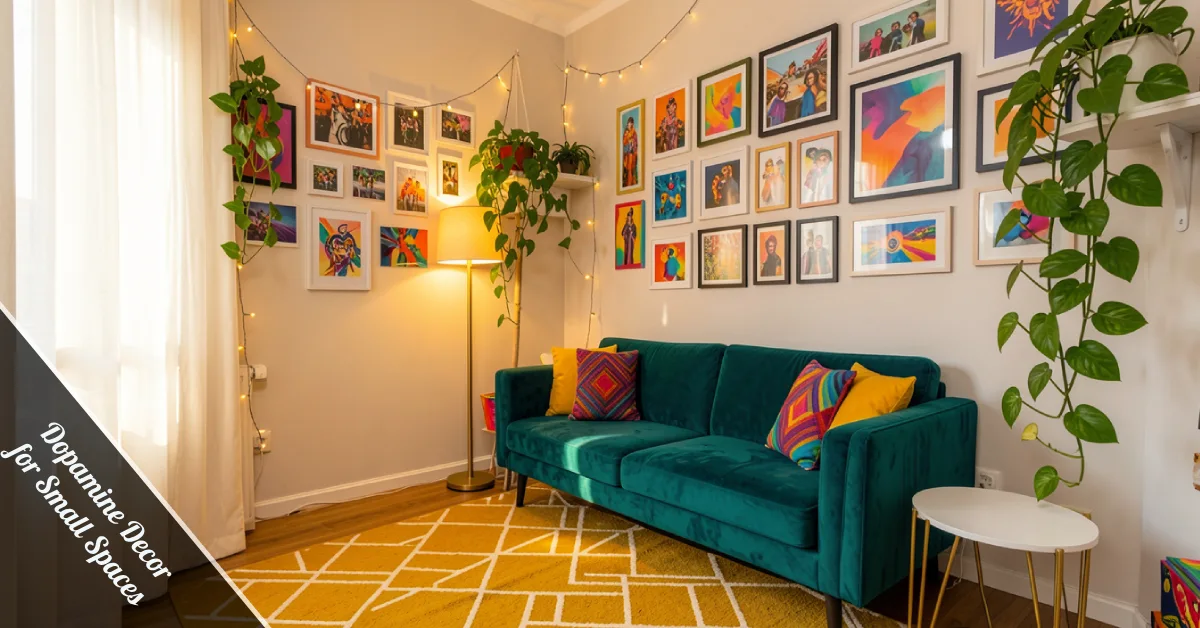
Your tiny room doesn’t need to stay beige and forgettable. Bold color and real joy belong right in there.
Most people think small rooms need to play it safe. Neutral walls, minimal furniture, nothing too loud. But that thinking is exactly why so many apartments feel like waiting rooms. Dopamine decor for small spaces flips that whole idea on its head — and it works even better in compact rooms than in big ones.
Think of your space like a very carefully curated personal playlist. Every piece you add either kills the whole vibe or completely cranks the energy right up.
What Dopamine Decor Actually Is
Dopamine decor is named after the feel-good neurotransmitter that fires when something genuinely makes you happy. Bright colors, bold patterns, and richly layered textures can trigger that same pleasurable chemical response inside your brain.
The science fully backs this up. Color stimulates your senses directly, and a thoughtfully designed space can genuinely shift your entire mood.
This isn’t just a TikTok trend. Research from Aesthetics of Joy shows that layering joyful, visually stimulating items together creates an environment that actively supports your mental health — not just your Instagram feed. When your brain encounters colors and textures it finds pleasing, it releases dopamine. That’s not interior design theory — that’s basic neuroscience working in your favor.
The best part about this design approach is that it gives you full permission to ignore every generic trend and just go with what actually makes you happy. No rules, no color matching pressure, no minimalist guilt.
Why Small Spaces Are Perfect for This Look
Small apartments and studio rooms are perfect for this trend. You don’t need more square footage — you need intention. Pick one wall, one corner, or one shelf and go bold there. The impact will always feel bigger than the space.
You don’t need to repaint a single wall right now. One bold accessory changes everything.
Compact rooms actually give you an advantage. Every item you put in a small space gets noticed. That means one great rug, one colorful chair, or one gallery wall does more visual work than ten pieces in a large room ever could. You’re not decorating a ballroom — you’re curating a capsule collection.
The biggest mistake small-space decorators make is trying to disappear into the walls. Light neutrals everywhere, furniture pushed flat against the edges, nothing that dares to stand out. That approach doesn’t make a room feel bigger — it makes it feel empty and forgettable. Bold choices, placed with intention, actually make a room feel more complete and more spacious at the same time.
How to Choose Colors That Don’t Overwhelm
Jewel tones work especially well in tight rooms. Deep teal, warm mustard yellow, and rich burgundy each add real visual depth without ever making your small space feel heavier or completely closed in.
Dopamine decor for small spaces doesn’t mean painting every wall bright orange. It means choosing one or two tones that genuinely excite you and building around those. White or light-colored walls are actually your best background — they let the bold pieces breathe and pop without competing with each other.
If you’re nervous about committing to a color, start with something removable. A brightly colored throw blanket, a patterned cushion cover, or a bold print in a thrift-store frame costs almost nothing and changes the energy of a room immediately.
Mixing patterns is also fair game. Florals with stripes, geometric rugs under a vintage poster, solid-colored furniture against a wallpaper accent strip — the trick is to keep tones within the same general warmth range so they feel intentional rather than chaotic. Pinterest is genuinely useful here for building a quick mood board before you commit to anything.
The Right Furniture Makes the Room Work
| Furniture Type | Why It Works in Small Spaces |
|---|---|
| Velvet loveseat or armchair | Adds luxury texture and a bold color statement without bulk |
| Multi-purpose ottoman | Doubles as a table, footrest, and hidden storage |
| Open shelving | Keeps the room feeling airy while giving you display space |
| Mirrored surfaces | Reflect light and create the illusion of more room |
| Gate-leg or fold-out table | Gives you surface space only when you actually need it |
Start your whole transformation with a really bold rug. A geometric or wavy pattern sets the entire room’s tone instantly and costs far less than repainting even one wall.
Layer a few velvet pillows on top. Soft textures make a room feel genuinely expensive.
Choose furniture that serves more than one purpose. An ottoman with storage inside is a cheat code for small rooms — it keeps clutter off the floor while adding a visual anchor to your space. Open shelves keep walls from feeling heavy while giving you room to display the things you actually love. Mirrors placed opposite a window double the natural light in the room and visually push the walls back.
Think about scale, too. One statement piece — a bold velvet chair, a colorful loveseat, a striking side table — does far more for a small room than five small, forgettable pieces scattered around. Go bigger on fewer items, and the room immediately feels more considered and intentional.
Lighting Changes Everything
Most renters ignore lighting and then wonder why their space feels flat. Dopamine decor for small spaces relies heavily on how light hits your colors and textures — natural light during the day, intentional artificial light at night.
During the day, keep your windows as clear as possible. Sheer curtains let light pour in without blocking it. At night, swap harsh overhead bulbs for warm, layered sources — a floor lamp in one corner, a small table lamp on a shelf, and a string of warm LEDs along a bookshelf creates depth and warmth that a single ceiling light never can.
A funky neon lamp or a uniquely shaped bulb isn’t just functional. It’s also a statement piece that adds character and playful energy to a tight room without taking up floor space. A light therapy lamp is worth adding to — studies on light therapy show that bright morning light actively increases dopamine production in the brain, which means your décor is literally working for your mental health.
Accessories and Personal Touches That Make It Yours
This is where this design idea really separates itself from generic advice. It’s not about buying the trendiest items — it’s about filling your space with things that are personally meaningful to you.
Hang postcards from a trip you loved. Frame a print from an artist whose work genuinely excites you. Display a collection of objects that tell a story about who you are. Your space should feel like a gallery of your life, not a staged showroom.
A gallery wall built from your own photos, ticket stubs, small prints, and postcards costs almost nothing but makes your room look intentional and full of personality. Mix frame sizes and styles for a relaxed, collected look rather than a rigid, matched grid. Race medals, travel souvenirs, handmade ceramics — if it makes you smile when you walk past it, it belongs on that wall.
Don’t overlook scent and sound either. A candle in a bold-colored jar or a small speaker in an unexpected color adds sensory layers that make a room feel fully designed. Plants also deserve a spot in every small room, doing dopamine decor for small spaces right. A trailing pothos on a high shelf, a small cactus on a windowsill, or a spider plant on a nightstand adds life, color, and texture for almost no cost. They grow, they change, and they give the room an organic energy that no bought accessory ever fully replicates.
Budget-Friendly Ways to Start Today
Getting into dopamine decor for small spaces doesn’t require a renovation budget. Most of the best pieces in a dopamine-inspired room come from clearance sections, thrift shops, local buy-nothing groups, and end-of-season furniture sales. The goal is to spend money only on things that genuinely excite you — not on safe, forgettable pieces that fill space without adding anything.
- Swap your current throw pillows for velvet ones in a jewel tone
- Pick up a bold, patterned rug from a clearance or discount section
- Add a trailing plant — a pothos or spider plant costs very little and adds real life to a room
- Use a light therapy lamp on your desk or side table during darker months
- Rearrange what you already own before buying anything new — sometimes the pieces are already there
Buying secondhand is also one of the smartest moves in this style. A velvet armchair from a thrift store for twenty dollars does the same visual work as a new one for five hundred. Clean it, style it with a new cushion, and nobody knows the difference. Your room, your drip, your rules.
The One Rule Worth Keeping
Don’t decorate for other people. Don’t pick colors because they photograph well or because they’re trending. Dopamine decor for small spaces works because it’s deeply personal — and your small space will feel alive only when it genuinely reflects you, not a curated version of someone else’s taste.
Start with one corner. Pick one color. Add one thing you genuinely love. Then watch how the room starts to shift. That’s the whole playbook.