

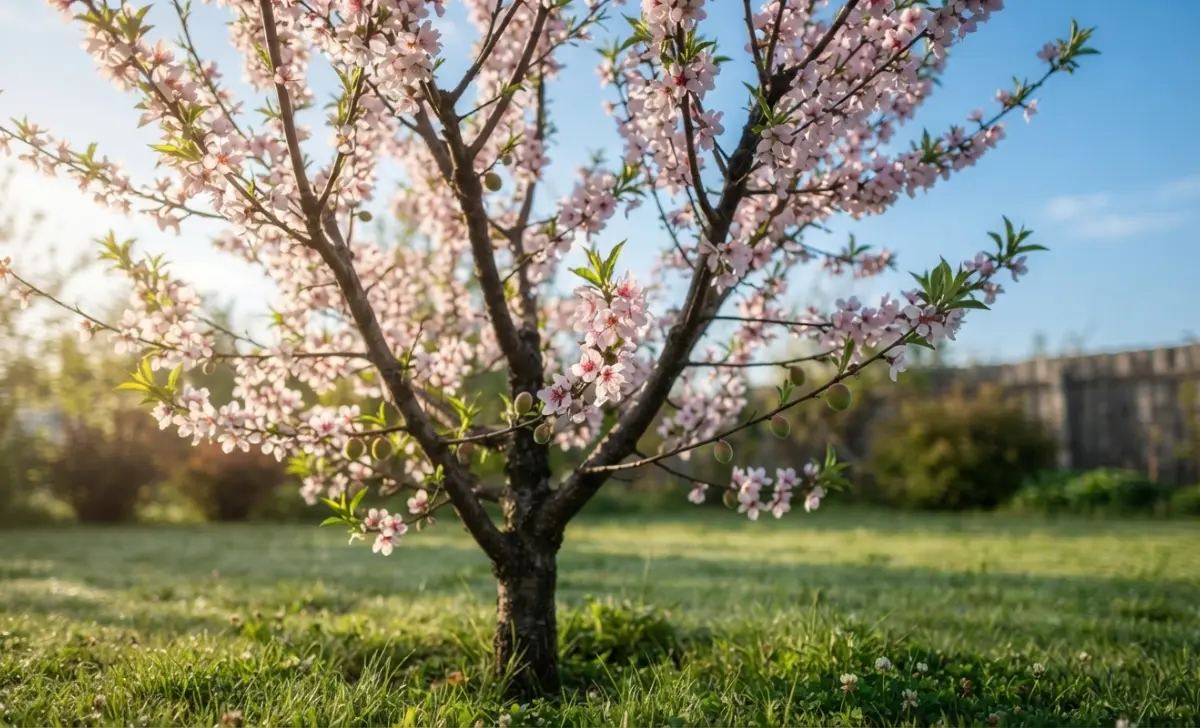
There’s something special about planting a peach tree. You’re not just sticking a sapling in the ground—you’re putting in years of work for future harvests, pretty spring blossoms, and the simple joy of watching something grow.
If you’re wondering how fast peach trees grow, I get it. When you plant a tree, you want to know when you’ll actually get to taste those first sweet peaches. It’s a fair question, and the answer might surprise you.
In my experience, peach trees are actually some of the faster-growing fruit trees out there. Under the right conditions, they can put on quite a show in terms of height and branch spread. But there’s a big difference between a tree that’s growing quickly and one that’s actually producing fruit.
Let’s break this down step by step so you know exactly what to expect at each stage of your peach tree’s life.
How Fast Do Peach Trees Grow?
So let’s cut to the chase. How fast do peach trees grow each year?
Most peach trees grow between 12 and 24 inches per year during their early years. Some vigorous varieties can even push out 24 to 36 inches of new growth in a single season if conditions line up just right.
But here’s the thing—growth isn’t constant. It goes up and down depending on the stage of the tree’s life.
In the first couple of years after planting, your peach tree is mostly focused on building roots and a strong framework. You might see some top growth during this time, but don’t expect miracles. The real jump happens between years two and five, when the tree hits its stride and starts putting on real height and width.
By year five or six, a well-cared-for peach tree can reach 15 to 20 feet tall, with a similar spread. After that, growth slows down quite a bit. The tree shifts its energy from getting bigger to producing fruit and keeping up what it’s already built. On average, a peach tree stays productive for about 7 to 15 years, so it’s worth keeping in mind that this isn’t a lifetime investment like an oak or maple—at some point down the road, you may be planning for a replacement.
I’ll be honest, though—those numbers are best-case numbers. Your actual peach tree growth rate per year depends heavily on your specific conditions. Some people are lucky enough to see their trees take off fast, while others struggle to get more than a few inches a year. Don’t take it personally if your tree grows slower than the “ideal” figures—that’s normal, especially if your conditions aren’t perfect.
Factors That Affect Peach Tree Growth Rate
If you’re trying to get the most out of how fast your peach tree grows, it helps to understand what’s actually driving that growth—not just the numbers themselves.
Variety Matters
Not all peach trees are the same. Some dwarf varieties grow slower and stay smaller, while standard cultivars like ‘Elberta’ or ‘Redhaven’ can really take off if given the chance. Dwarf vs standard peach tree growth is one of the first things to think through, since it affects both how big your tree gets and how soon it fruits.
Before you plant, do a little homework on which varieties do well in your region. The right choice can save you years of frustration.
Soil Quality
Peach trees like well-draining soil with a pH between 6.0 and 7.0. They’re not too picky, but they hate wet feet. Waterlogged roots are basically a death sentence for these trees, and growth stalls almost immediately if drainage is poor.
If you’re planting in heavy clay, think about amending the soil or building a raised bed. That extra effort up front really does pay off later. If you’re already reworking your yard’s layout around the planting area, it might also be a good time to look into synthetic grass installation nearby, since it can help manage drainage and cut down on soggy patches close to the tree bed.
Climate and Chill Hours
Here’s something a lot of first-time peach growers miss—chill hours. Peach trees need a certain number of winter hours below 45°F to properly break dormancy and push out new growth in spring. Most peaches need somewhere around 500–1000 chill hours, and this matters for more than just fruiting—it affects overall growth too.
If you plant a variety with high chill-hour needs in a warm climate, the tree might grow slowly or barely at all. In my experience, matching the variety to your region’s chill hours is one of the smartest decisions you can make early on.
Sunlight Exposure
Peach trees love the sun. They need at least six to eight hours of full, direct sunlight every day to grow well and produce fruit.
Skimp on sunlight, and you’ll likely end up with a leggy, weak tree that grows at a snail’s pace and doesn’t give you much in return.
Water and Nutrients
Young peach trees need steady moisture to build their root systems. During dry spells, they’ll need about an inch of water a week. But watch out—overwatering can hurt just as much as underwatering.
Fertiliser plays a role too. A balanced application in early spring gives the tree a boost right when it needs it most. Just don’t go overboard with nitrogen-heavy fertilisers, which push leafy growth at the expense of fruit.
Pruning and Care
Pruning isn’t just about shaping your tree—it directly affects growth rate. Proper pruning encourages a strong branch structure and stops the tree from wasting energy on growth it doesn’t need.
I’ve learned that a well-pruned peach tree not only grows better but also gives you higher-quality fruit. It’s worth learning the basics, and if you’re setting up a watering routine around pruning season, a retractable hose reel can make it a lot easier to keep things tidy while you move around the tree.
Peach Tree Growth Stages
Understanding the life cycle of your peach tree helps you know what to expect at each phase.
Stage 1: Dormant Stage (Winter)
The peach tree’s growth cycle starts in winter, when the tree is dormant. There’s no visible growth during this time, but plenty is happening underground.
The roots are still active, slowly pulling moisture and nutrients from the soil. Above ground, the tree is storing up energy for spring.
I don’t worry too much about my trees during dormancy. They know what they’re doing. My job is just to protect them from severe cold and make sure the soil doesn’t completely dry out.
Stage 2: Bud Swell and Flowering (Spring)
Once the weather warms up and the chill hours are met, things start moving fast.
First, the buds swell. Then they break open, showing either flowers or leaves. This is one of the prettiest times in the peach tree’s cycle. Blossoms come out in shades of pink and white, covering the branches.
This is also a fragile time. A sudden late frost can wipe out an entire crop, and it can slow the tree’s growth as it recovers from the damage.
Stage 3: Fruit Development (Late Spring to Early Summer)
After pollination, the fertilised flowers turn into tiny green fruits. These grow fast over the next several weeks as the tree puts its energy toward the fruit.
At this stage, the tree’s growth in height and branches may slow down. That’s completely normal—the tree is prioritising fruit over size.
Stage 4: Ripening and Harvest (Summer)
This is the payoff. The fruits swell to full size, get their colour, and become fragrant. Once they’re ripe, they’re ready to pick.
During harvest season, the tree keeps photosynthesising and storing energy for next year. I always make sure my trees get plenty of water during this stretch, especially in hot weather.
Stage 5: Post-Harvest and Preparation for Dormancy (Late Summer to Fall)
After the fruits are harvested, the tree starts getting ready for winter. Growth slows, leaves start changing colour, and the tree gradually goes dormant again.
This is a good time to think about pruning if it’s needed. Fall pruning can help shape the tree and set it up for the next growing season.
Stage 6: Maturity and Full Production (Years 3–5)
By year three, your peach tree is usually starting to give you a decent crop. By years four or five, it’s in full production and will keep going strong for years.
At this point, annual growth slows down, but the tree is at its most productive. You’ll be harvesting bushels of fruit, dealing with the occasional pest or disease, and getting better at reading what your tree needs.
How Can You Tell If Your Peach Tree Is Growing Well?
Healthy growth doesn’t always mean the tree is shooting up fast. Here’s what good growth actually looks like, so you can catch problems early:
New shoots should be at least 12 to 18 inches long by the end of the growing season. Less than that could point to stress from poor soil, water issues, or pests.
The bark should look smooth with a reddish-brown colour on younger branches. If it’s wrinkled or cracked, something’s probably off.
Leaves should be a rich green and full, without spots or curling. Yellowing leaves often mean a nutrient deficiency or water problem.
Buds should be plump and evenly spaced along the branches. This tells you the tree is storing energy properly and getting ready for next season.
If you notice a mix of these warning signs, don’t panic—just start ruling things out one at a time, starting with water and soil drainage before moving on to pests or nutrients.
My Final Thoughts
So, how fast do peach trees grow? The short answer is 12 to 24 inches per year in good conditions. But the real answer is more nuanced—it depends on your climate, your soil, your care routine, and the individual tree itself.
In my experience, the best approach is to focus on giving consistent, reliable care rather than obsessing over the growth numbers. Give your tree what it needs, and it’ll grow at its own pace. Rushing things rarely works with plants.
If you’re planting a peach tree this season, I hope this guide helps you know what to expect. It’s a journey, but watching that first tiny peach ripen on a tree you planted yourself? That’s worth every bit of the wait.
FAQs
How fast do peach trees grow in different climates?
Peach trees generally grow fastest in temperate climates with mild winters and warm, sunny summers. In very hot or very cold regions, growth slows down. I’ve seen trees in good conditions outperform ones in harsh climates by a wide margin. If you’re in a borderline zone, choosing the right variety really matters here.
How long until a peach tree produces fruit?
Most peach trees start producing fruit in their third year, with a solid crop by year four or five. Dwarf varieties sometimes fruit a bit earlier, around year two or three.
Patience matters here—I’ve learned that rushing the tree doesn’t work. The more you interfere, the more likely you are to slow it down instead of speeding it up.
Does soil affect peach tree growth?
Absolutely. Good soil is essential for strong growth. Peach trees need well-draining soil with decent fertility. If your soil is too dense or nutrient-poor, growth will be stunted no matter what else you do right.
I always recommend getting a soil test before planting. Knowing your starting point helps you fix issues before they turn into bigger problems.
Can you speed up how fast a peach tree grows?
You can definitely give your tree the best possible conditions to grow well. Good soil, proper watering, enough sunlight, and regular pruning all help. But I’d be careful about using too much fertiliser or trying to push the tree past its natural pace. Forcing rapid growth can backfire more often than it helps.
What’s the best time to plant a peach tree?
Fall or early spring, while the tree is dormant, is usually best. Planting then gives the tree time to settle its roots before the growing season kicks in.
In warmer climates, fall planting often works better because the tree gets a longer stretch to adjust to its new spot before summer heat hits.
Have you planted a peach tree before? How fast did it grow in your area? I’d love to hear about your experience.