

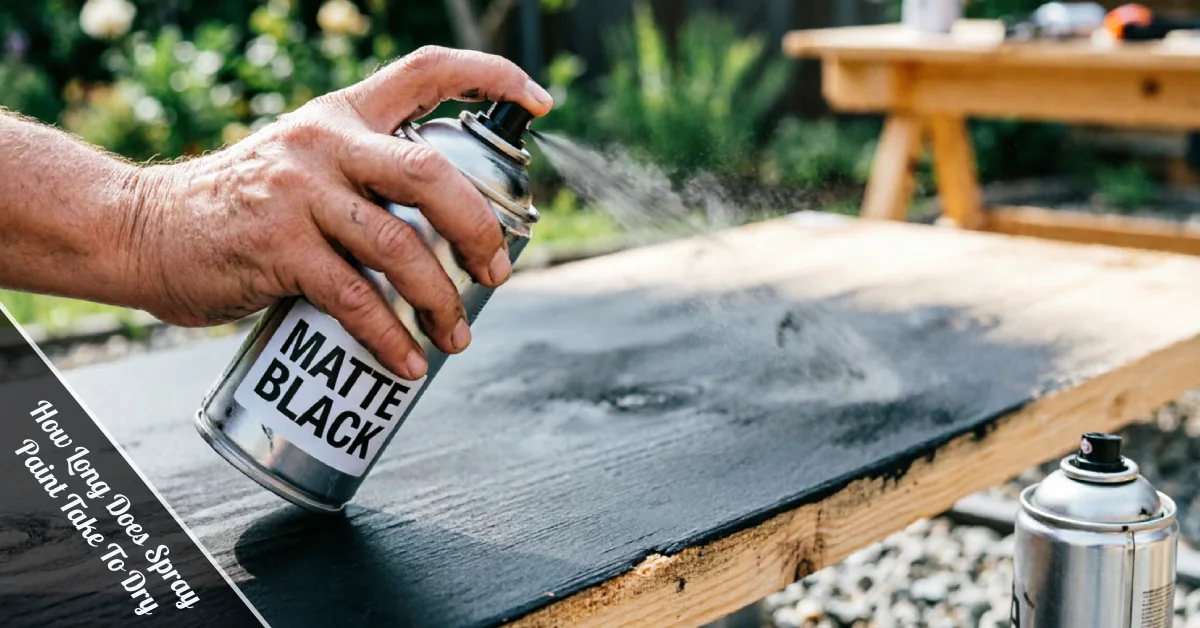
So you just finished spraying that project, and now you’re staring at it as it owes you money. How long does spray paint take to dry? That’s the question every DIYer asks right before they touch the paint too soon. Whether you’re working on furniture, a fence, or painting a brick wall for the first time, timing is everything, and rushing it almost always ends badly.
Spray paint feels deceptively simple. You shake the can, press the nozzle, and boom, color everywhere. But the drying process underneath that shiny new coat is way more complicated than people expect. Solvents need to escape, pigments need to settle, and the whole thing needs air to actually harden properly.
If you’ve ever searched for how long spray paint takes to dry before starting a weekend project, you already know the answer changes depending on what you’re painting and where.
Quick Answer: The Drying Stages
Most spray paint hits touch-dry in 10 to 30 minutes. It’s handle-dry within one to two hours. Full cure, though, takes 24 to 72 hours depending on the product and conditions around it.
Here’s a simple breakdown:
| Stage | Time Frame | What It Means |
|---|---|---|
| Touch Dry | 10-30 min | Surface feels dry; don’t press hard |
| Handle Dry | 1-2 hours | Safe to move gently |
| Recoat Time | 2-4 hours | Ready for another layer |
| Full Cure | 24-72 hours | Fully hardened, tough finish |
So how long does spray paint take to dry completely? Give it a full day minimum before you treat it roughly. Some heavier enamel formulas take closer to three days to fully cure.
Think of drying and curing as two totally different milestones. Drying is surface-level. Curing is the paint locking into its final, durable form underneath.
Factors That Change The Game
Temperature plays a huge role here. Warm, dry air speeds things up while cold or damp air slows everything down significantly, sometimes doubling your wait time without warning.
Paint type matters too. Enamel spray paints cure slower than basic acrylics, but they last longer once fully set. Thicker coats always take longer; no shortcuts, no matter how much you wish otherwise.
Surface material affects absorption rate. Porous wood soaks paint in fast, while metal and plastic sit on the surface longer, extending the total dry time noticeably.
Even the color of your paint can play a small role. Darker pigments sometimes absorb more heat in direct sunlight, which can speed up surface drying just slightly.
Airflow around your workspace matters more than most people realize. Stagnant air traps solvent vapors near the surface, which slows the whole evaporation process to a crawl.
The number of coats you apply changes the timeline too. A single light coat dries fast, but three or four layers stacked close together will always need extra hours to fully set. Rushing a multi-coat project is one of the fastest ways to end up with a gummy, uneven surface that never quite hardens right.
Understanding how long spray paint takes to dry under these different conditions helps you plan your project around real timelines instead of guessing and hoping for the best.
Indoor vs Outdoor Drying
Indoor spaces give you more control over airflow and temperature, which usually means faster, more even drying results. A stuffy garage, though, can trap moisture and slow the whole process down.
Outdoor drying depends heavily on weather. Direct sun feels like a cheat code for speed, but too much heat can cause bubbling or an uneven finish. Wind kicks dust onto wet paint, ruining that smooth look you worked hard for.
If you’re painting indoors, crack a window or run a fan nearby. Fresh air moving through the room genuinely speeds things up without costing you anything extra.
Outdoors, timing your project around mild, dry weather beats fighting humidity or wind every single time. Early morning or late afternoon usually works best.
How To Make Spray Paint Dry Faster
Thin coats are your best friend. Two light layers beat one heavy coat every single time for even drying and a cleaner finish. Nobody wants drips ruining the whole look.
A fan helps circulate air without disturbing the surface. Point it nearby, not directly at the piece, so dust doesn’t stick. Low-humidity rooms also work wonders here for faster results.
Some people ask how long spray paint takes to dry faster with heat lamps. They can help, but keep a safe distance to avoid warping thin materials or plastic surfaces.
A dehumidifier in the room can shave real time off your wait, especially during humid summer months when moisture just hangs in the air.
Spacing out your coats properly, rather than rushing them together, actually saves time overall because you avoid redoing a botched finish later.
Common Mistakes That Ruin Your Finish
Rushing the second coat is the number one mistake. Applying paint over a tacky surface traps solvents underneath, causing wrinkling, bubbling, or a finish that never fully hardens right.
Skipping proper ventilation slows drying and leaves that sticky spray paint feeling for way longer than it should. Always work in open air or near a window when possible.
Touching too soon leaves fingerprints. Everyone’s done it once, and everyone regrets it every single time they get impatient.
Spraying too close to the surface causes pooling, which dries unevenly and takes forever to fully cure compared to a light, even coat.
Ignoring the weather forecast is another classic slip-up. Painting right before rain or a cold snap can wreck hours of careful work in minutes.
When Is It Safe For A Second Coat?
Check the label first. Most spray paints recommend waiting two to four hours between coats for the best adhesion and finish quality overall.
If you’re unsure, do the touch test. Press lightly with a clean finger; if it feels dry before touching without leaving marks, you’re likely good to go for another coat.
For projects like a fresh bathroom paint job where humidity runs high, add extra drying time between coats to avoid trapping moisture underneath the surface.
Patience between coats pays off. A few extra minutes now saves you from peeling, bubbling, or a patchy finish down the road.
When Can You Actually Use The Painted Item?
Full cure is what matters here, not just surface dryness. Wait the full 24 to 72 hours before using furniture, tools, or outdoor decor daily.
Rushing this step is how good projects get ruined fast, especially on items that get handled or stacked often.
Outdoor furniture and high-touch items deserve the longer end of that window, closer to three days, before regular use begins.
A good rule of thumb: if you’re on the fence about whether something’s ready, wait longer. Nothing ruins a fresh finish faster than stacking, sitting, or storing it before the paint has actually finished hardening all the way through.
FAQs
Does spray paint dry faster in the sun?
Yes, but watch for bubbling if it’s too hot outside during application.
Can I speed up curing indoors?
Fans and low humidity help, but full cure still takes time regardless of your setup.
Why is my spray paint still sticky after a day?
Thick coats, high humidity, or cold temps are usually the reason behind it lingering.
Is there a difference between dry and fully cured?
Yes. Dry means touchable; cured means chemically hardened and durable for the long term.
Can weather ruin a drying project overnight?
Absolutely, sudden rain or a temperature drop can undo hours of careful, patient work.
Wrapping It Up
So, how long does spray paint take to dry for good? Plan on a full day for handling and up to three days for true cure. Rushing costs you a smooth finish every time.
If your project ends up uneven anyway, you can always fix uneven paint with some light sanding and a fresh light coat applied carefully.
Patience is the real secret sauce in painting. Give it time, and your project will thank you with a finish that actually holds up for years.