

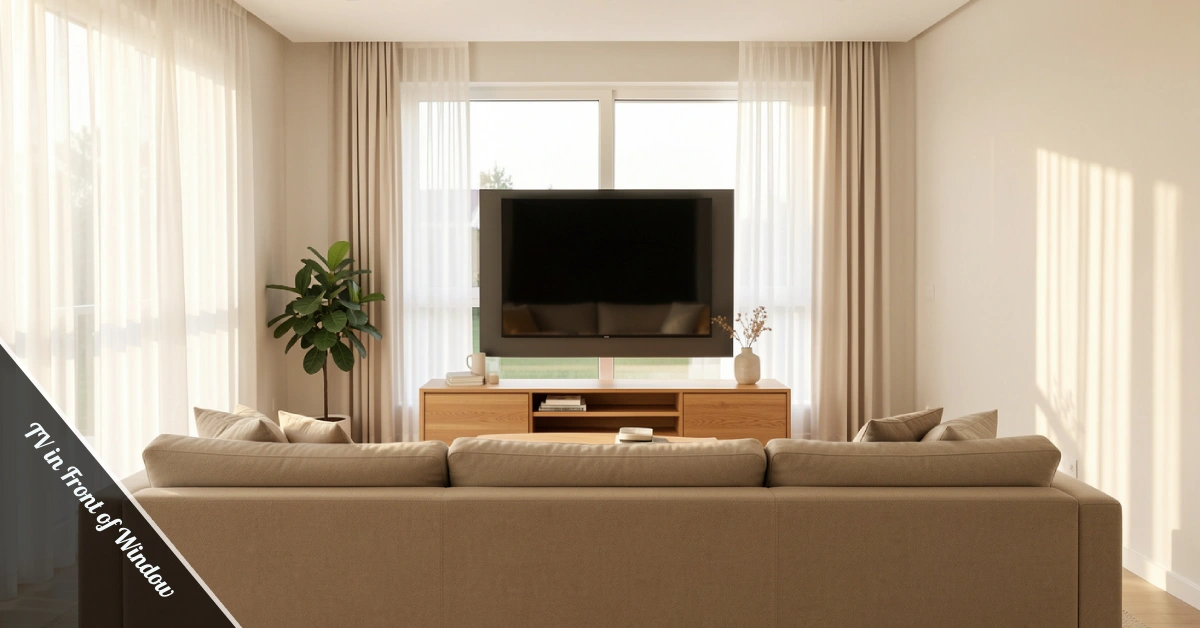
Placing a TV in front of a window works when you control the light properly. Use blackout curtains, solar shades, or anti-glare film to eliminate screen reflections. A low-profile media console, a swivel mount, or a matte-screen TV keeps the setup functional and polished. The right approach depends on your window’s direction and how much direct sun your room receives throughout the day.
Most people treat a TV in front of a window as a last resort. The assumption is that it creates unavoidable glare and forces you to squint every evening. The reality? Interior designers do it all the time, especially in apartments and open-plan spaces where every other wall holds a door, a radiator, or a fireplace. The setup works. You just need to know which problems to solve first.
This guide covers window direction, glare control, correct mounting height, furniture choices, and the most common mistakes that turn this layout into a headache.
Does Window Direction Determine Everything?
Before you move a single piece of furniture, figure out which direction your window faces. This one detail shapes every other decision.
North-facing windows receive diffused, consistent light throughout the day with almost no direct sun. They are the easiest to work with. You can often manage glare with a simple sheer curtain alone. South and west-facing windows create a harder problem. West windows produce intense late-afternoon light that hits during peak viewing hours, typically 5 to 9 PM. East-facing windows mostly affect early morning viewing and rarely cause evening issues.
If your only option is a south or west window, that is completely workable. You simply need a stronger light-control layer, like a blackout blind mounted directly behind the TV. Knowing this upfront saves you from buying the wrong curtains twice.
How to Stop TV Glare in Front of Windows
Glare comes from two sources: direct sunlight hitting your screen and ambient light bouncing off the panel. Fixing both at the same time gives you clear viewing at any hour.
Window treatments ranked by effectiveness:
- Blackout curtains block all incoming light, best for afternoon or evening rooms
- Solar shades cut glare by 80 to 90 percent while keeping the room bright
- Layered blinds, sheer plus blackout, let you adjust light levels throughout the day
- Motorized roller shades can close automatically when the TV powers on
- Vertical blinds angle sunlight away from the screen without sealing out natural light
Screen-side solutions that work alongside window treatments:
- Anti-glare film applied to the TV surface diffuses reflections without dulling the picture
- Matte-screen TVs reflect far less ambient light than glossy panels
- Raising screen brightness to 60 to 70 percent during daylight hours counteracts ambient light naturally
- A full-motion swivel mount lets you rotate the screen away from the window’s brightest angle
Samsung’s 2025 lineup introduced matte-display options across its QLED and Frame TV ranges, targeting living rooms with high ambient light as a specific use case. Interior designer Cate Hollowell, speaking to Apartment Therapy in 2024, noted that matte-finish panels removed the biggest objection she heard from clients about window-adjacent TV placement. According to the Vision Council’s 2024 report on digital eye strain, poor screen contrast caused by ambient light is one of the top three contributors to viewer discomfort, affecting 83 percent of adults who watch TV daily.
Getting TV Height Right in Front of a Window
Height errors make this setup uncomfortable, regardless of how well you solve the glare.
The center of your screen should sit at eye level from your seated position, typically 42 to 48 inches from the floor. If your window sits low, use a short console under 18 inches tall so the TV does not block the entire pane when the set is off. If your window is tall and runs close to the ceiling, mount the TV at the lower third of the window space and use a tilting mount to angle the screen slightly downward toward your seating.
Never rest the TV directly on the windowsill. Sunlight accelerates heat buildup on the back panel, and vibration from the frame can cause mounting instability over time. Keep at least 3 to 6 inches of clearance between the TV’s back and the wall or glass for ventilation. Smart TV processors throttle when they overheat, which means the setup that looks clean in summer may slow down by August.
TV Stand Ideas for a Window Wall
The furniture you choose determines how much natural light the setup blocks and how intentional the arrangement looks.
A low-profile console under 18 inches tall preserves the window view above the screen. Natural light enters above the TV, keeping the room bright even with the set on. This works particularly well in living rooms where the window starts higher on the wall.
An open-shelf console creates less visual weight than a solid media cabinet. Light filters around the unit, making the room feel more open. Add a few books or a small trailing plant on the lower shelves to soften the overall look without adding clutter.
A mobile TV stand with casters gives you the option to roll the setup into a corner when you want the window view back. This suits studio apartments and dual-purpose rooms where the function shifts throughout the day.
A wooden tripod or easel stand works in rooms where you want the TV to feel less dominant. The slim footprint blocks minimal window space and pairs well with mid-century and minimalist styles.
For the cleanest result, a motorized TV lift cabinet hides the screen completely when it’s off. The window reads as the room’s focal point, and the TV appears only when you choose to use it.
Common Mistakes That Wreck This Layout
A well-chosen placement fails when these specific errors get overlooked.
Blocking ventilation behind the TV is the most common problem. Pushing the screen too close to the wall or window frame traps heat. For OLED TVs, sustained high temperatures accelerate pixel wear. Maintain at least 4 inches of clearance at the back.
Dangling cables in front of the window undermine everything you’ve done stylistically. Run cables through a wall channel, or use a floor-standing cord sleeve for non-mounted setups. This costs under $20 and makes the arrangement look deliberate.
Ignoring UV exposure causes long-term screen damage. Direct afternoon sun on an OLED panel degrades pixels faster than normal use. Draw your shades during peak sun hours even when the TV is off.
Hanging curtain rods too narrow creates a different problem. If your drapes overlap the TV when open, you lose easy access to ports and the console surface. Mount the rod 6 to 8 inches wider than the window frame on each side so the fabric clears the screen entirely when pulled back.
Placing your sofa too far back is a final overlooked mistake. When a TV sits in front of a window, the background light creates a silhouette effect at a distance. Bringing your seating closer by 18 to 24 inches than you normally would reduces that contrast effect noticeably.
Final Thoughts
A TV in front of a window is not a compromise. It is a layout decision that rewards careful planning. Start with the window direction. That tells you how aggressively to treat your light control. Then choose your window treatment and screen type accordingly. Once those two pieces are right, the furniture, mounting height, and styling decisions become straightforward.
The homes that pull this off well are not necessarily larger or more expensively furnished. They are the ones where the owner spent thirty minutes figuring out where the sun falls before deciding where to put the sofa.
FAQs
Does sunlight damage a TV placed in front of a window?
Direct, prolonged sunlight degrades OLED panels faster than standard use by accelerating pixel wear through UV exposure and heat. LCD and QLED screens are more heat-tolerant but still benefit from shading during peak sun hours. Closing your blinds when the TV is off costs nothing and adds months to the screen’s life.
What screen type works best near a bright window?
Matte-finish screens outperform glossy panels in high-light rooms because they diffuse rather than reflect ambient light. Samsung’s Frame TV and matte QLED models are purpose-built for this use case. If you own a glossy-screen TV, anti-glare film is a lower-cost fix.
Should I choose blackout curtains or solar shades?
Solar shades suit daytime viewing. They cut glare while keeping the room bright and livable. Blackout curtains suit evening viewing or rooms with aggressive afternoon sun. Layering both behind a single rod gives you the widest range without replacing anything later.
How close should seating be to a window-facing TV?
Standard viewing distance applies: 1.5 to 2.5 times the diagonal screen size. For a 65-inch TV, that is 8 to 13 feet. Sitting closer than usual, within the lower end of that range, reduces the contrast effect created by window backlighting behind the screen.
Can I mount the TV directly inside the window frame?
Tension-mounted floor-to-ceiling poles can hold a TV within the window space, but this requires a mount rated for the TV’s weight and proper structural support. Standard full-motion wall mounts attached above or beside the window frame are more reliable and easier to install for most homes.