

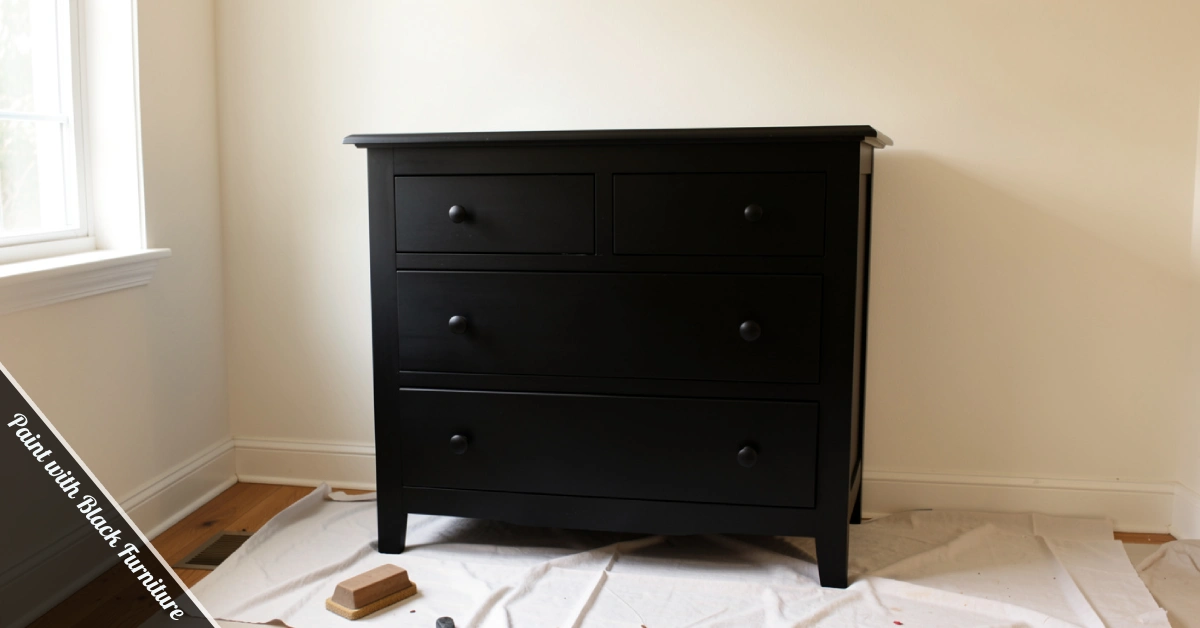
Painting furniture black gives old pieces a clean, modern look that holds up in almost any room. To get a smooth, durable finish, you need to clean the piece thoroughly, sand it lightly, apply a gray or dark primer, and use at least two thin coats of paint. Choose a satin or matte finish based on how much traffic the piece gets, and always seal with a clear topcoat for protection.
Why Black Paint Works on Almost Any Furniture
Black is one of those colors that manages to feel both bold and neutral at the same time. It anchors a room, grounds a color scheme, and makes almost any style look more intentional, whether the piece is a thrift store dresser or a solid wood side table.
It also hides a lot. Old stains, water marks, and worn veneer disappear under a well-applied coat of black paint. That makes it a smart choice for older pieces with surface damage that would show through lighter colors.
Black furniture pairs easily with warm woods, soft whites, deep greens, and earthy terracotta tones. It rarely clashes and tends to make surrounding colors look more vivid by contrast.
Not All Black Paints Are the Same
Before you buy a can, it helps to understand that black paint has undertones. Some blacks lean warm, pulling toward brown or red. Others lean cool, with blue or green hints. True blacks sit in the middle with no obvious tint in either direction.
The undertone you choose changes how the piece looks in different lighting. A warm black in a bright, sunny room may look brown during the day. A cool black in a dimly lit space might read as charcoal or even navy.
Test a small patch on the actual piece before committing to a full coat. Paint swatches on paper can mislead you because the backing color affects how the black reads.
Choosing the Right Finish for the Job
Finish matters as much as color. Here is how each sheen performs on furniture:
- Matte or flat: Soft, modern look. Hides surface imperfections well. Prone to fingerprints and scuffs, so always seal it with a clear matte topcoat.
- Satin: A good middle ground. Easy to wipe down, holds up well to daily use, and still looks refined. Most furniture painters reach for this one first.
- Semi-gloss or gloss: Shows every imperfection, brush stroke, and dust particle. Only use this if your prep work and surface are nearly perfect.
For high-traffic pieces like dressers, dining chairs, or nightstands, satin is the most forgiving and practical choice.
Best Black Paint Colors for Furniture
Several brands and shades consistently come up among furniture painters with real-world testing behind them.
- Benjamin Moore Advance in Jet Black: An acrylic alkyd formula that levels beautifully, meaning brush strokes almost disappear as it dries. It cures to a hard, durable finish without needing a separate topcoat on low-traffic pieces.
- General Finishes Lamp Black: Popular with furniture painters who spray their pieces. One experienced refinisher notes it is “super durable and sprays nice with great coverage,” and that it is also self-leveling when applied by brush.
- Sherwin-Williams Tricorn Black (Flat): A true, deep black with no obvious undertone. Works in almost any room regardless of lighting.
- Behr Marquee Black (Flat): Reliable coverage and consistent results across different lighting conditions.
- Annie Sloan Chalk Paint in Athenian Black: A good option if you want a vintage or distressed look. Requires wax or a topcoat to protect the finish.
After testing paints from nearly every category, one furniture refinisher found that Benjamin Moore Advance consistently performed best for black furniture, citing its durable finish, strong coverage, and smooth result with no visible brush strokes or roller marks.
How to Prep Furniture Before Painting Black
Good prep is what separates a professional-looking result from a patchy, peeling mess. Do not skip this part.
Step 1: Clean the piece thoroughly. Use a degreaser or TSP substitute. Dust and grease prevent paint from adhering. On ornate pieces, a second pass is often needed since dust collects in crevices.
Step 2: Remove hardware. Painting around handles and knobs never looks as clean as painting without them. Pull everything off and set it aside.
Step 3: Sand the surface. You do not need to strip the piece. A light sand with 150-grit to remove shine is enough for most painted or finished pieces. Follow with 220-grit for a smoother surface.
Step 4: Apply a dark primer. This is critical when painting black. A white primer will show through if you distress the piece later, and it requires more coats to cover. Use a gray or dark primer to cut down on the number of coats needed and to get a truer black result.
Step 5: Let the primer dry fully before picking up a brush.
Painting Furniture Black Step by Step
Once your piece is prepped and primed, you are ready to paint.
Coat one: Apply a thin, even coat in the direction of the grain. Thin coats dry faster and level better than thick ones. Avoid overworking the brush once paint starts to set, as this creates streaks.
Sand between coats: Once coat one is fully dry, sand lightly with a 220-grit sanding block. This extra step gives you a smoother, more professional-looking finish. Wipe off dust before moving to the next coat.
Coat two (and sometimes three): Apply a second thin coat. Most pieces only need two coats when you use a dark primer underneath. If any spots look uneven or thin after the second coat dries, add a targeted third coat only where needed.
A few practical tips to keep in mind:
- Do not paint in high heat or humidity. These conditions shorten dry time and make brush marks more obvious.
- If you see streaking, add a drying extender like Floetrol to slow the dry time and give the paint more time to level.
- Use a high-quality synthetic brush with an angled tip, or use a small foam roller for flat surfaces to reduce brush marks.
Sealing Black Painted Furniture the Right Way
Black paint is especially unforgiving when it comes to topcoats. A milky or streaky sealer finish can ruin the entire paint job, and this is a common issue when using the wrong topcoat over dark paint.
To avoid this, choose a water-based polycrylic in a clear matte or satin finish. Avoid oil-based topcoats over water-based paint; they can yellow over time and turn a crisp black muddy. Also, avoid shaking the can before applying since this introduces bubbles into the finish.
Apply sealer in thin coats and let each one dry fully before adding another. Two coats protect most furniture pieces well. Three coats are worth it for tabletops or anything that sees heavy daily use.
Temperature matters too. Most sealers perform best between 50°F and 90°F (10°C to 32°C). Applying outside that range can cause the product to separate or cure unevenly.
Wall Colors That Work Well with Black Furniture
Black furniture gives you a lot of freedom with wall color. A few combinations that work particularly well:
- Warm white or cream: Creates a classic, high-contrast look without feeling stark. The warmth keeps the space from feeling cold.
- Sage green or olive: Earthy greens ground out well against black and bring a calm, organic feel to a bedroom or living room.
- Deep navy or forest green: For a moody, rich look, pairing black furniture with a dark wall creates a layered, considered space rather than a stark one.
- Terracotta or warm rust: Warm tones pop against black in a way that feels collected and intentional rather than trendy.
- Light gray: A safe, neutral choice that lets the furniture be the focal point without competing with the walls.
Avoid pairing black furniture with very cool, bright whites. The contrast can feel clinical rather than inviting. A hint of warmth in the wall color almost always improves the result.
FAQs
Do I need to sand furniture before painting it black?
In most cases, yes. A light sanding removes shine from the existing finish and gives the paint something to grip. You do not need to strip the piece entirely, but skipping sanding often leads to peeling paint within a few months.
How many coats of black paint does furniture need?
Usually two, provided you use a dark primer first. Without primer, you may need three or four coats to get even coverage, which adds both time and cost.
Is chalk paint a good choice for black furniture?
Chalk paint works well if you want a matte, slightly textured look or plan to distress the piece. It requires little prep but must be sealed with wax or a clear topcoat to protect the finish. For a harder, more durable result, an alkyd or all-in-one acrylic paint is a better option.
Can I paint laminate furniture black?
Yes, but the prep work is more important. Laminate has a slick surface that paint does not stick to easily. Use a bonding primer and lightly scuff the surface with fine sandpaper before painting. Choose a paint formulated for hard-to-stick surfaces.
What topcoat works best over black-painted furniture?
A water-based polycrylic in matte or satin delivers a clear, streak-free finish over black paint. Avoid topcoats that are white or milky in the can since these often dry with a hazy finish over dark colors. Apply in thin coats and do not shake the can before use.