

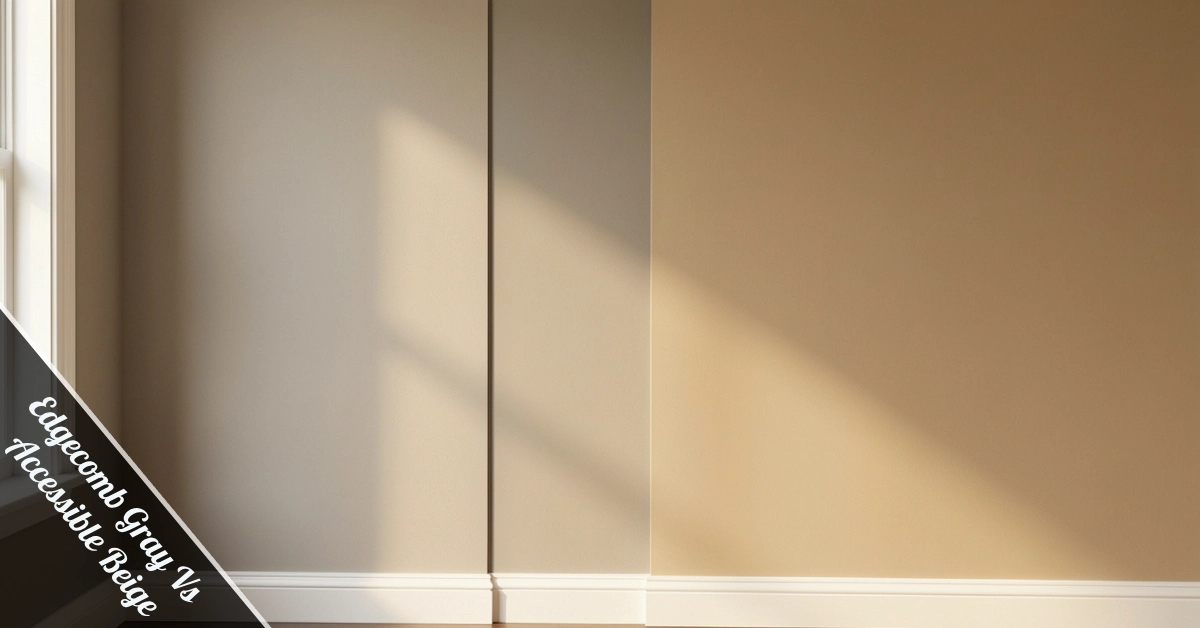
You’re standing in the paint aisle, swatch in each hand, completely lost. Both colors look almost identical — until they hit your walls.
That’s the trap. Edgecomb Gray and Accessible Beige are cousins, not twins. Context is everything.
This guide breaks down exactly what separates them — undertones, lighting behavior, room-by-room performance, and the honest answer to which one you should actually paint with.
What Is Edgecomb Gray?
Benjamin Moore’s Edgecomb Gray HC-173 is warm greige — more beige than gray, but never stuffy.
With an LRV of 63, it reflects solid light into a room, making spaces feel open, clean, and quietly sophisticated without any effort.
It’s part of the Historical Collection — which basically means it’s been around the block and earned its stripes. It’s the kind of color that pairs with warm wood floors, creamy white trim, and everything from modern to traditional styling without breaking a sweat.
Edgecomb Gray has soft beige and taupe undertones. In certain lighting, it shows a faint green cast, but it stays clean and neutral.
It’s the go-to for open-concept homes and anyone who wants a light, spa-like atmosphere.
What Is Accessible Beige?
Sherwin-Williams’ Accessible Beige SW 7036 is the warm, grounded, lived-in version of the greige family.
It sits at an LRV of 58, which gives it more depth and richness than Edgecomb Gray. That five-point difference sounds small, but it’s the difference between airy and cozy once it’s on your walls.
The undertones are warm beige with a secondary gray. It reads warmer than Edgecomb Gray, especially in rooms with less natural light coming through the windows.
It’s been one of Sherwin-Williams’ best-sellers for years because it’s forgiving, versatile, and makes a house feel genuinely comfortable. It works with honey wood tones and warm tile beautifully.
Edgecomb Gray Vs Accessible Beige: The Key Differences
When you lay Edgecomb Gray Vs Accessible Beige side by side on a real wall, the separation becomes clear — one leans soft and clean, the other leans warm and grounded.
| Feature | Edgecomb Gray HC-173 | Accessible Beige SW 7036 |
| Brand | Benjamin Moore | Sherwin Williams |
| LRV | 63 (lighter) | 58 (deeper) |
| Primary Lean | Gray with beige undertones | Beige with gray undertones |
| Warmth Level | Soft, subtle warmth | Rich, pronounced warmth |
| North-Facing Rooms | Holds up well | Can go flat and gray |
| Small Spaces | Makes rooms feel larger | Can feel heavy |
| Exterior Use | Not ideal | Works great |
| Best Style | Transitional, modern | Traditional, casual, cozy |
| Trim Pairing | White Dove, Simply White | Alabaster, Pure White |
The LRV gap is where most people make the wrong call. Edgecomb Gray’s higher LRV keeps small bedrooms and darker hallways from feeling cramped. Accessible Beige’s lower LRV gives large open rooms the depth they need to not look washed out or flat.
Undertones matter just as much as depth. Neither color goes pink or purple — that alone makes both of them reliable, trustworthy neutrals.
How Lighting Changes Everything
Lighting is the cheat code everyone ignores when picking paint. It changes the entire reading of a color.
Edgecomb Gray in a north-facing room keeps its softness without turning cold or muddy. South-facing rooms make it look gorgeous — bright, warm, and perfectly balanced all day long.
Accessible Beige in north-facing light can flatten out and start looking grayer than expected. You lose the cozy warmth you picked it for. South-facing rooms bring out the best beige richness.
With artificial lighting, warm bulbs push Accessible Beige toward its creamiest, coziest self. Edgecomb Gray stays neutrally balanced with both warm and cool artificial bulbs throughout the day.
Bottom line: if your room doesn’t get great natural light, Edgecomb Gray is the safer, more reliable pick.
Room-by-Room: Which Color Wins Where?
Living Room
Edgecomb Gray keeps a living room feeling open and light — ideal for open-concept floor plans where you need one consistent, clean backdrop across connected spaces.
Accessible Beige makes a living room feel finished and inviting. Think warm wood floors, a fireplace, and comfortable furniture.
Bedroom
Edgecomb Gray creates a serene, spa-like bedroom feel. It pairs effortlessly with white bedding and light wood furniture for that calm morning vibe.
Accessible Beige wraps a bedroom in warmth. Layer in cream bedding and warm metallics for a proper hotel-suite energy.
Bathroom
Edgecomb Gray with white fixtures, marble countertops, and decent natural light feels clean and fresh without being harsh. In a windowless powder room, though, it can fall flat and look a little lifeless — something to keep in mind before committing.
Accessible Beige in a bathroom with warm wood vanities, bronze fixtures, and beige tile creates a traditional, pulled-together look. In small bathrooms with warm lighting, it can lean yellow.
Kitchen
Edgecomb Gray is a strong kitchen pick when you’ve got white or light-colored cabinets, quartz countertops, and stainless steel appliances. It ties everything together without competing with any finishes.
Accessible Beige shines with cream or off-white cabinets and warm granite. It adds depth without pushing your warm elements toward orange or yellow.
Exterior
Accessible Beige is the clear winner outdoors. The deeper LRV gives it enough presence on a large surface, and it pairs naturally with white trim and dark shutters for serious curb appeal.
Edgecomb Gray on exteriors can look washed out in bright sunlight. Use strong dark accents if you go for it.
Coordinating Colors That Actually Work
For Edgecomb Gray
Pair it with Benjamin Moore White Dove or Simply White on trim — both share warm undertones that complement without clashing. For bold accents, Hale Navy is a stunning contrast against this soft greige.
Want a darker sibling color? Revere Pewter HC-172 sits right below it on the same paint strip and pairs perfectly.
For Accessible Beige
Stick with Sherwin-Williams Alabaster or Pure White for trim — avoid cool, bright whites at all costs, they’ll make your walls look muddy. Urbane Bronze as an accent creates a rich, sophisticated depth.
Kilim Beige works well as a slightly warmer variation in adjacent spaces. For bold color accents, warm rust, terracotta, and deep navy with warm undertones are all excellent.
How to Test Before You Commit
The single biggest mistake people make in the Edgecomb Gray Vs Accessible Beige debate is choosing based on a tiny paint chip under fluorescent store lighting. Your phone screen and paint chips lie. Always test on your actual walls.
Use Samplize peel-and-stick paint samples — move them around, check in morning light, afternoon light, and under your lamps at night.
Paint a large board, at least 12×12 inches. Place it next to your floors, your trim, and your furniture. Live with it for a full day before making any final decisions.
Colors shift dramatically throughout the day. What looks perfect at noon can feel completely different by evening.
FAQs
Which is better for resale?
Edgecomb Gray tends to appeal to more buyers — it’s lighter, fresher, and more universally neutral.
Which works better with warm wood floors?
Both handle warm woods well, but Accessible Beige embraces them more deeply. Edgecomb Gray keeps things a little more refined and balanced.
Can I use either in a small room?
Absolutely. Edgecomb Gray will make the space feel larger and more open. Accessible Beige will make it feel cozy. The right choice depends on the mood you’re going for.
Is Edgecomb Gray too gray?
No. It’s greige — warm-leaning. But if you want something clearly beige with no gray at all, Accessible Beige is your color.
Which is better for north-facing rooms?
Edgecomb Gray handles low, cool light better. Accessible Beige can flatten out and lose its warmth in north-facing rooms, which is the opposite of what you picked it for. Go with Edgecomb Gray there.
Final Verdict
The Edgecomb Gray Vs Accessible Beige debate doesn’t have a single right answer — it has the right answer for your specific space, your light, your style.
Pick Edgecomb Gray if you want light, airy, and versatile. It flows through open-concept homes effortlessly and stays fresh in spaces that need brightness without going cold or clinical.
Pick Accessible Beige if you want warm, cozy, and grounded. It’s the color that makes rooms feel genuinely finished — not just painted. Perfect for living spaces built around comfort.
Get the samples. Test them on your walls. The right color makes itself obvious once it’s actually in your home.