

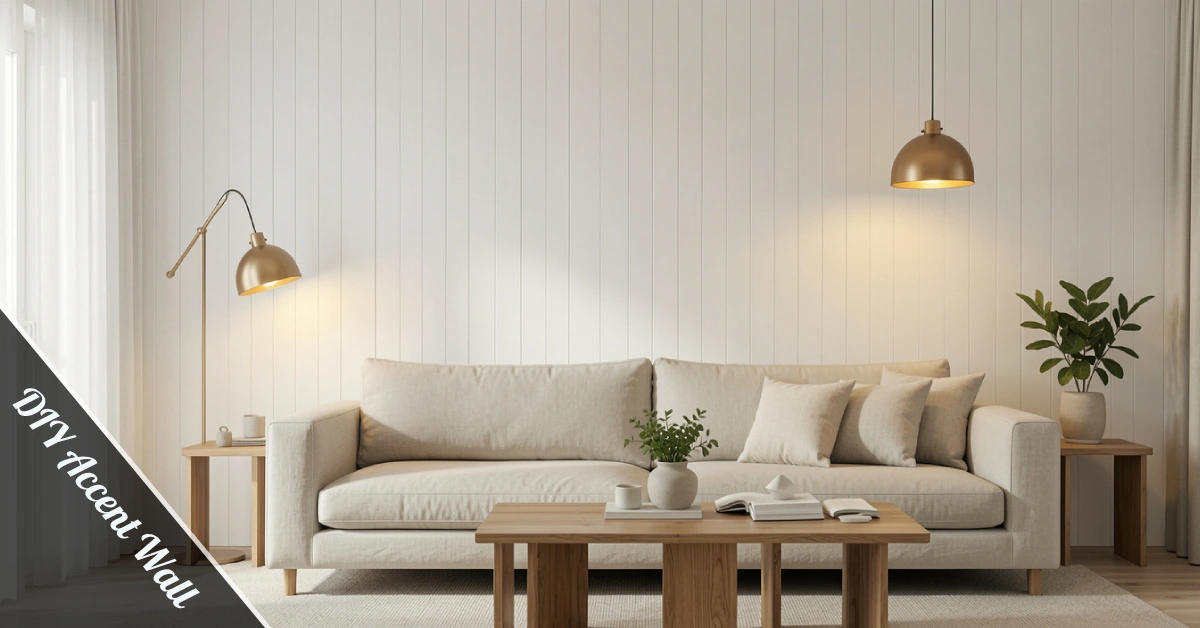
You know that one wall in your room that… sits there? Beige, blank, doing absolutely nothing for the vibe. That’s exactly the wall a DIY accent wall was made for.
Whether you’re a homeowner going all in on a weekend project or a renter who needs something removable, there’s an accent wall idea here for you. No contractor. No five-figure bill. Just smart moves that make your space look like you hired someone.
We’re covering beginner wins, mid-level flexes, and a few bold choices for those who want a real statement. Let’s get into it.
What Even Is a DIY Accent Wall?
An accent wall — also called a feature wall — is one wall in a room that’s intentionally designed to stand out. It’s the focal point. The thing your eyes go to first when you walk in.
The beauty of a DIY accent wall is that it transforms the whole energy of a room without touching the other three walls. Commitment-phobes, rejoice.
It can be paint, wood paneling, wallpaper, stone, fabric — honestly, anything that adds depth and personality to that one wall.
The payoff-to-effort ratio? Wildly good. Most of these projects take a weekend and cost less than a night out.
Choosing the Right Wall (This Part Matters)
Before you grab a brush or a nail gun, pick the right wall. The wrong choice and the whole room feel off.
Go for the wall your eye naturally lands on first — usually the one opposite the entry door, or the wall behind your bed or sofa.
Per solid interior design guidance, the focal wall should already have some architectural weight — a fireplace, a window grouping, or even just the longest stretch of uninterrupted drywall.
Check the wall’s condition first. Patch holes, sand rough spots, and clean the surface. A fresh canvas makes every technique look 10x better.
The Best DIY Accent Wall Ideas, Ranked by Difficulty
1. Bold Paint or Color Blocking (Beginner)
This is the fastest glow-up in home decor. Pick a color that pops against your existing palette, tape it off, and roll it on.
Color blocking adds instant energy. Sherwin-Williams shades like Urbane Bronze or Repose Gray are popular for good reason — they’re bold without being loud.
Estimate about one gallon of paint per 400 square feet. Darker tones need two coats — plan for that before you start.
2. Geometric Paint with Painter’s Tape (Beginner–Intermediate)
Painter’s tape is lowkey a design cheat code. Use it to map out diamonds, chevrons, hexagons, or color blocks.
You can also use small wood slats to create a geometric wall design that’s monochromatic — same paint on both slats and wall — for texture without visual chaos.
The secret? Let the paint dry fully before peeling the tape. Pull it at a 45-degree angle for clean edges.
3. Peel-and-Stick Wallpaper (Beginner — Renter’s Best Friend)
If you’re renting, peel-and-stick wallpaper is your move. It comes in every pattern imaginable — damask, woodgrain, abstract, botanical — and it comes off clean when you leave.
One weekend, one wall, zero damage to your deposit. It even works on ceilings and inside closets for a surprise pop.
Smooth the panels from the center outward to avoid bubbles. A credit card works better than your hand for this.
4. Board and Batten (Intermediate)
Board and batten is the wood paneling technique that makes any room look like it came out of a design magazine. You’re attaching vertical or horizontal strips of wood to the wall, then painting the whole thing one color.
It’s a weekend project with a nail gun, a miter saw, and patience. The result is architectural detail that builders would have charged thousands for.
Match the batten width and spacing to your room size. Bigger rooms can handle wider gaps. Tighter spacing feels more traditional and cozy.
5. Shiplap (Intermediate)
Shiplap’s popularity hasn’t peaked yet. Those horizontal boards with the subtle groove between them add warmth to any room instantly.
It works in bedrooms, living rooms, bathrooms — really anywhere. Painted white, it’s coastal. Stained wood is rustic. See more shiplap inspiration to find the finish that fits your vibe.
Time needed: one weekend. Skill level: intermediate. Satisfaction level: unreasonably high.
6. Faux Brick or Stone Panels (Advanced)
Want an industrial or rustic look without actual masonry? Faux brick panels and lightweight stone veneer give you that texture without the structural work.
These panels are heavier than wallpaper but lighter than real stone. They go up with construction adhesive and finishing nails.
For natural stone, Surface Shop’s stone panels offer a premium finish that’s been tested for residential DIY use for nearly two decades.
Quick Comparison: Which Wall Type Is Right for You?
Use this table to match your skill level, budget, and timeline to the right approach:
| Wall Type | Skill Level | Cost | Time Needed |
| Board & Batten | Intermediate | $50–$150 | 1 Weekend |
| Shiplap | Intermediate | $80–$200 | 1 Weekend |
| Peel-and-Stick Wallpaper | Beginner | $30–$80 | 1 Day |
| Geometric Paint | Beginner | $20–$60 | 1 Weekend |
| Faux Brick Panels | Advanced | $100–$250 | 1–2 Weekends |
| Natural Stone Veneer | Intermediate | $150–$400 | 1–2 Weekends |
Pro tip: if it’s your first DIY accent wall, start with paint or peel-and-stick. Build confidence before you reach for power tools.
Tools You’ll Actually Need
Don’t overbuy. Most projects need just a few solid tools to get started right.
For any painted wall: a good angled brush, a roller, painter’s tape, a paint tray, canvas drop cloths, and a wooden stir stick. This painting prep guide covers everything in detail.
For wood panels and battens, add a nail gun, miter saw, level, and stud finder. These pay for themselves after one project.
Always have wipes or a damp rag nearby. Mistakes happen, and wet paint is forgiving. Dry paint is not.
How to Plan Your Feature Wall Without Overcomplicating It
Start with your room’s existing color scheme. Your accent wall should either complement it or contrast it — not clash with it.
Warmer tones like amber, terracotta, and rust add energy. Cooler shades like slate, navy, and sage bring calm. Pick based on how you want the room to feel.
Natural light changes everything. Check your wall color in different light conditions before committing. What looks warm in the morning might look gray by evening.
If you’re stuck, test a sample patch first. Paint a 12-inch square and live with it for two days. Trust the process.
Renter-Friendly DIY Accent Wall Ideas
Renters, you’re not locked out of this. Peel-and-stick options have expanded massively — you can find removable wallpaper in wood grain, stone, geometric, and botanical prints that look like the real thing.
Command strips and removable adhesive hooks handle gallery walls without touching the drywall. Arrange frames on the floor first, then transfer them to the wall.
Fabric panels stretched over frames are another zero-damage option. Hang them like art. Remove them when you move. Your deposit stays intact.
Your Blank Wall Is Waiting
That bare wall isn’t just space — it’s a design opportunity you haven’t taken yet. A DIY accent wall is the kind of upgrade that changes how a room feels every single day.
Whether you go bold with a dark paint color, textured with shiplap, or removable with peel-and-stick wallpaper, the key is just starting. Pick the technique that fits your skill and budget, grab your tools, and go.
For more inspiration and step-by-step tutorials, check out HGTV’s accent wall collection or head to YouTube — there’s a tutorial for literally every style.