

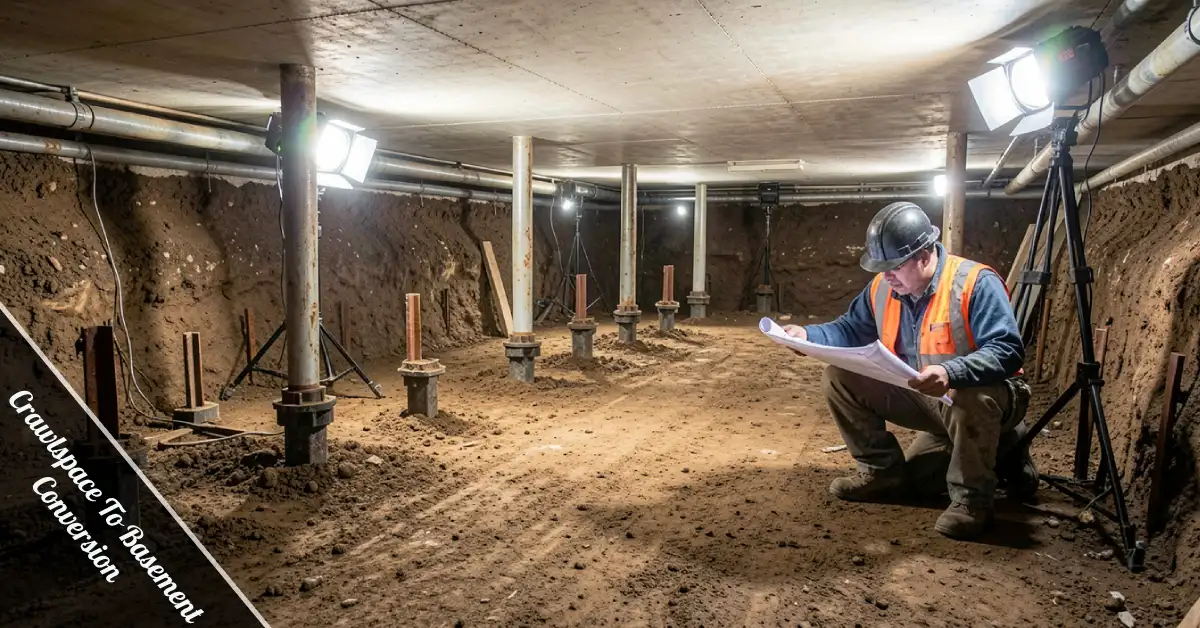
So you’ve got a crawlspace sitting under your home, doing absolutely nothing. Just dark, damp, and wasted. Here’s the thing — that ignored space could become a full-height basement that actually works for you. A crawlspace to basement conversion isn’t a weekend project. It’s a serious structural upgrade. But done right? It’s one of the smartest moves a homeowner can make for space and property value.
This guide walks you through the whole thing — process, costs, risks, timelines, and what to watch out for.
What Is a Crawlspace To Basement Conversion?
It’s exactly what it sounds like — you dig out the shallow space under your home and turn it into a full basement. The industry calls it a “dig-out.” Your crawlspace is usually 1 to 3 feet high. A finished basement? That’s 8 to 10 feet of usable headroom.
This isn’t just cosmetic. It changes your home’s structure from the ground up — literally. The house stays in place while contractors work beneath it, extending the foundation downward and creating real, livable square footage.
| Feature | Crawlspace | Basement |
|---|---|---|
| Height | 1–3 feet | 7–10 feet |
| Daily Use | Not possible | Fully usable |
| Home Value Impact | Low | Significant boost |
| Moisture Control | Often poor | Improved with systems |
| Accessibility | Difficult | Easy |
How the Conversion Process Actually Works
Step 1 — Structural Inspection and Planning
Before anyone picks up a shovel, a structural engineer evaluates your foundation and soil conditions. This step determines whether the project is safe and even possible for your specific home.
Skipping this isn’t an option. Your contractor needs a solid plan before they touch anything beneath your house.
Step 2 — Temporary Supports Go In
Contractors install steel beams and temporary supports to hold your home steady. Your house literally needs to stay put while the ground beneath it gets removed section by section.
This is precision work. Rushing it is how things go wrong fast.
Step 3 — Excavation
Soil gets removed carefully — often in small batches using compact machinery or even manual tools. The tight space doesn’t leave much room to work, so this stage takes time.
Workers go section by section to avoid disturbing the existing foundation. No shortcuts here.
Step 4 — Underpinning the Foundation
This is the technical core of the whole job. New concrete footings get poured beneath the existing ones — one section at a time. Each section cures before the next begins.
This staged approach keeps everything stable while the foundation extends deeper. It’s slow, but it’s what makes the space permanent and safe.
Step 5 — Waterproofing
A basement that leaks is worse than a crawlspace. Drainage systems, sump pumps, and vapor barriers all go in right after excavation. Good waterproofing is what separates a livable basement from a mold problem.
Step 6 — Finishing the Space
A concrete floor gets poured. Electrical, plumbing, and HVAC get installed. From here, the space is yours to design — home office, family room, rental unit, or storage.
Crawlspace To Basement Conversion Cost Breakdown
Let’s talk money — because this project isn’t cheap. Most homeowners spend between $60,000 and $150,000. Complex jobs with tricky soil or tight access can push past $200,000.
Here’s where that budget typically goes:
| Cost Category | Estimated Range |
|---|---|
| Excavation & debris removal | $15,000 – $40,000 |
| Foundation work & underpinning | $10,000 – $35,000 |
| Waterproofing systems | $3,000 – $9,000 |
| Basement finishing (walls, floors, utilities) | $10,000 – $40,000 |
| Permits, engineering, inspections | $4,000 – $10,000 |
The final number depends on your home’s size, local labor rates, soil type, and how accessible the space is. Urban homes and those with difficult soil conditions usually cost more.
Watch for hidden costs, too. Outdated electrical panels, poor ventilation, or structural surprises found during excavation can quietly add thousands. Some homeowners also need temporary housing during construction — factor that in.
Before and After: What Actually Changes
Before the conversion, that crawlspace is cramped, dark, and borderline useless. After? It’s a clean, full-height room with proper flooring, lighting, and walls — a natural extension of your living space.
In practical terms, you gain easier access to plumbing, electrical, and HVAC systems. You gain flexible space that you can adapt over time. And your home becomes more attractive to buyers if you ever sell.
The before-and-after difference isn’t just visual. It’s structural, functional, and financial.
Smart Ways to Use Your New Basement
Once the conversion is done, the real fun starts. Here’s what most homeowners do with the space:
Family room or home office — Extra living space without building an addition. Great if you’re working from home or need room for a growing family.
Guest bedroom — A proper basement with egress windows can become a comfortable guest suite or even a legal rental unit, depending on local codes.
Rental income — Converting the basement into a self-contained unit can generate monthly income and make the entire project pay for itself over time.
Utility and storage hub — Placing mechanical systems in a well-organized basement makes maintenance easier and frees up space above ground.
Is DIY Realistic for This Project?
Short answer — no. A crawlspace to basement conversion involves structural work that requires licensed professionals, specialized equipment, and permits.
The biggest risk of going DIY is foundation failure. Remove soil the wrong way and your house can shift or worse. That’s not a renovation gone wrong — that’s a catastrophe.
Minor finishing work after the main conversion? Sure, you can handle some of that. But the excavation, underpinning, and waterproofing phases are strictly professional territory. Hiring experienced contractors isn’t just smart — it’s the only safe option.
How to Find the Right Contractor
Look for specialists in foundation work and structural renovations — not general contractors who “think they can figure it out.” You want someone who has done this specific project type before.
When you search for a crawlspace to basement conversion contractor near you, check reviews, ask for photos of past projects, and verify certifications. A good contractor will be upfront about timelines, risks, and total costs before work begins.
Ask these questions before signing anything:
- How many crawlspace-to-basement projects have you completed?
- How do you handle unexpected structural issues mid-project?
- What waterproofing system do you recommend and why?
- Are permits and engineering fees included in the quote?
Risks You Should Know Before Starting
Structural damage — If excavation isn’t done correctly, the foundation can shift. This is rare with experienced contractors, but it’s the biggest risk on the table.
Water and moisture — Without quality waterproofing, you trade a dry crawlspace for a wet basement. Sump pumps and drainage systems aren’t optional extras.
Permits and compliance — Local building codes must be followed. Unpermitted work can create legal issues when you sell and may void homeowner’s insurance.
Temporary displacement — Many homeowners move out during construction. Noise, dust, and safety concerns make the home difficult to live in during active excavation phases.
Alternatives If a Full Conversion Isn’t Right for You
Not every home is a candidate. Not every budget stretches that far. Here are the realistic alternatives:
Convert to storage only — Clean up the crawlspace, improve access, add lighting and moisture control. Low cost, immediate payoff.
Home addition — Build outward instead of downward. Works if you have land and local zoning allows it.
Partial upgrades — Better insulation, a vapor barrier, and a dehumidifier can make a crawlspace significantly more useful without a full dig-out.
The right choice depends on your home’s structure, your goals, and your budget.
Is Crawlspace To Basement Conversion Worth It?
For homeowners who need more usable space and want a meaningful boost in property value — yes, it’s worth it. A finished basement can make a home dramatically more attractive to buyers and add real, livable square footage that a coat of paint never could.
But the investment is real. The risks exist. And the planning requirement is non-negotiable. Treat this like the major structural project it is, hire experienced professionals, and budget carefully, including a contingency for surprises.
A crawlspace to basement conversion done right is a long-term asset. Done wrong, it’s a very expensive lesson.
Frequently Asked Questions
How long does a crawlspace-to-basement conversion take?
Most projects take 4 to 12 weeks, depending on home size, soil conditions, and project complexity.
Can I live in my home during the conversion?
Sometimes yes, but many homeowners choose to move out temporarily because of noise, dust, and safety concerns during active construction.
Does converting a crawl space increase home value?
Yes — adding usable square footage and a finished basement consistently improves resale value and buyer appeal.
What is the biggest risk in this project?
Structural damage caused by improper excavation. This is why hiring licensed, experienced foundation contractors is non-negotiable.