

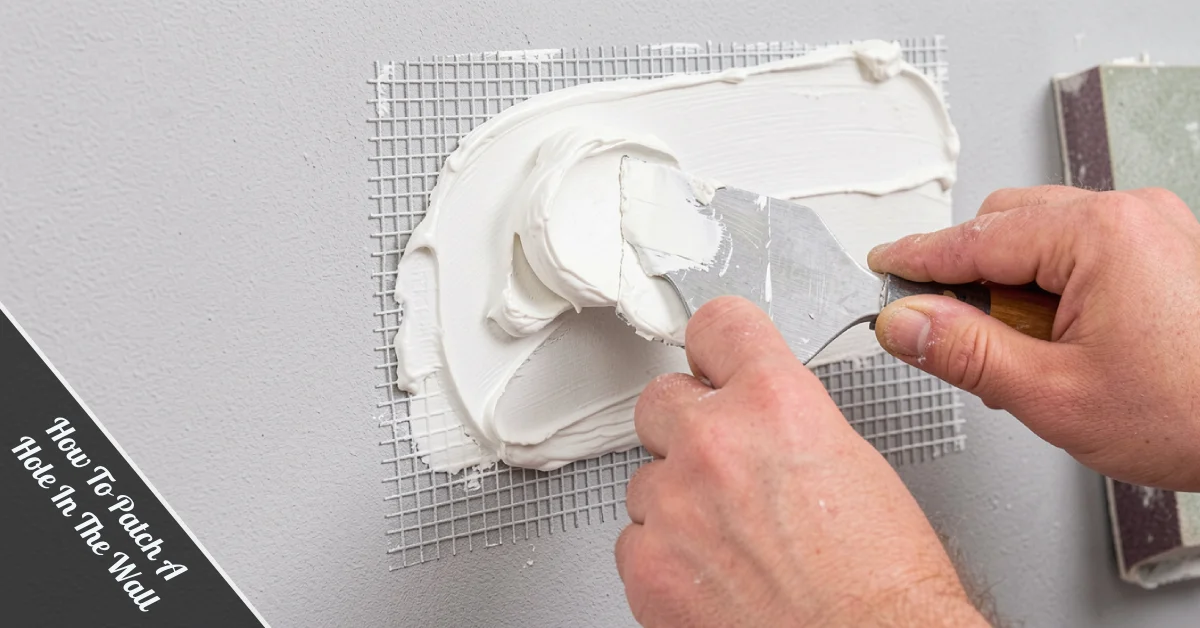
Wall damage happens. A door swings too hard, furniture gets too close, or a shelf comes down and takes a chunk of drywall with it. You’re staring at an ugly hole and wondering how bad this is going to get. Relax. It’s not that deep. Whether you’re dealing with a tiny nail hole or a fist-sized disaster, knowing how to patch a hole in the wall is one of those DIY skills that pays off every single time. No contractor needed. No drama. Just the right steps, the right tools, and about an hour of your Saturday.
Know Your Hole Before You Fix It
Not all wall damage is the same. Small, medium, and large holes each need a different approach.
Small nail holes are easy wins. You’re talking tiny punctures left behind by picture hooks or screws. The drywall around them is completely solid. A little spackle and a putty knife, and you’re done in fifteen minutes.
Medium holes, usually an inch to four inches wide, are a different story. Door handles, minor impacts, and accidental pressure often cause these. The edges tend to crack, and the drywall paper around them weakens fast. You’ll need fiberglass mesh for reinforcement before applying joint compound.
Large holes are serious. We’re talking about openings wider than four inches where the wall structure itself is compromised. These need backing strips, a replacement drywall piece, and multiple coats of joint compound to get it right. Rushing this one will show.
| Hole Size | Best Method | Main Materials | Difficulty |
|---|---|---|---|
| Small (nail/screw holes) | Spackle only | Putty knife, spackle, sandpaper | Easy |
| Medium (1–4 inches) | Mesh patch | Fiberglass mesh, joint compound | Moderate |
| Large (4+ inches) | Drywall replacement | Backing strips, drywall, and screws | Hard |
| Cracked drywall | Tape and compound | Mesh tape, sanding block | Moderate |
Tools and Materials You Actually Need
Forget buying everything at once. Match your tools to your hole size, and you’re good.
For small repairs, grab a putty knife, fine-grit sandpaper, a sanding block, and lightweight spackle. That’s your entire toolkit for nail holes and minor dents. Lightweight spackle dries fast and sands smoothly without fighting you.
For medium holes, add a self-adhesive fiberglass mesh patch and a container of joint compound. Joint compound spreads wider and bonds better over mesh. It takes longer to dry than spackle, but the result is far more durable.
Large repairs need more gear: a drywall saw, wooden backing strips, drywall screws, a drill, mesh tape, and joint compound. Also, grab a drywall primer for the finishing stage. Skipping primer before paint is one of the most common mistakes that makes patches visible.
Safety matters too. Drywall dust is no joke. Wear safety glasses and a dust mask while sanding. Keep a drop cloth under your work area, and cleanup becomes way less painful.
How To Patch A Hole In The Wall: Small Holes
Small holes are the easiest repair in home maintenance. Here’s exactly how to nail it.
Clean the hole first. Use your putty knife to scrape out any loose drywall, dust, or chipped paint around the opening. Dirty surfaces prevent filler from bonding properly, which causes the patch to crack or fall out later.
Scoop a small amount of spackle onto your putty knife and press it firmly into the hole. Slightly overfill it because spackle shrinks a little as it dries. One smooth pass across the surface is usually enough for nail holes.
Let it dry completely. Most lightweight spackle dries in one to two hours, but check the label. Once dry, sand the area gently with fine-grit sandpaper using light circular motions until the surface feels flush with the surrounding wall.
Don’t apply too much filler in one go. Thick layers crack. Thin layers hold. Prime the spot before painting, or the patched area will absorb paint differently and look visibly dull compared to the rest of your wall.
Fixing a Medium Hole With a Mesh Patch
Medium holes need a little backup. Filler alone will collapse into the wall cavity without support underneath.
Start by cleaning up the edges of the hole. Sand away any loose drywall paper around the opening because those torn paper edges will create bumps under your compound and show through the final paint job.
Peel and stick a self-adhesive fiberglass mesh patch directly over the hole. Center it carefully so the mesh fully covers the damaged area. Press it flat against the wall so no edges are lifting before you apply the compound.
Spread your first coat of joint compound over the mesh using a wide putty knife. Push the compound through the mesh openings so it bonds to the wall behind. This first coat is about structure, not smoothness.
Let that coat dry fully, then apply a second coat, feathering the edges outward about two to three inches beyond the patch. This blending step is what makes the repair invisible once painted. A third thin coat is optional but gives a cleaner finish.
Sand lightly between coats with fine-grit sandpaper. Thin, patient layers dry more evenly and are far less likely to crack or leave visible repair marks after painting.
How To Fix a Large Hole in the Wall
Big holes need real structure. Covering them with filler leads to weak results that crack and sink within weeks.
Cut out the damaged drywall until you have a clean square or rectangle. A drywall saw makes this straightforward. Clean edges give you better control over the repair and make the replacement piece easier to fit precisely.
Slide wooden backing strips into the wall cavity behind each side of the opening. These strips anchor the new drywall piece from behind. Screw them securely into place through the existing drywall using drywall screws so they sit tight and don’t flex.
Cut a replacement drywall piece to match the opening exactly. Attach it to the backing strips with drywall screws, spacing them about six inches apart. The surface of the new piece should sit perfectly flush with the surrounding wall before you move on.
No stud nearby? No problem. The backing strip method works specifically for this situation. You create your own support anchors inside the wall cavity without needing a stud behind the repair area.
Apply mesh tape over all four seams where the new piece meets the existing wall. Spread joint compound in thin layers over the tape, feathering each coat outward. Three coats with full drying time between them is the standard approach for large repairs.
Sanding, Priming, and Painting the Repair
This is where most people rush and regret it. The finishing stage determines whether your patch disappears or sticks out like a sore thumb.
Sand the fully dried compound with fine-grit sandpaper using light, circular motions. Work gradually from the center of the patch outward. Check your work under a lamp held at an angle to catch uneven ridges before you prime.
Primer is non-negotiable. Fresh joint compound absorbs paint at a different rate than your finished wall. Without primer, the patch area looks dull and visibly different even after two coats of paint. A drywall-specific primer seals the surface and fixes that problem completely.
Textured walls need one more step. A smooth-wall patch on a textured wall will stand out immediately. Use spray texture or a sponge technique to match the existing texture before priming. Hold the spray texture about twelve inches from the wall and test on cardboard first.
When you paint, feather the color outward well beyond the repair area. This gradual blending is what makes the transition between old and new paint surfaces invisible to the eye.
Common Mistakes That Make Patches Visible
Even solid repairs get ruined by avoidable errors. Here’s what to watch for during every stage.
Applying compound too thick is mistake number one. Thick coats shrink unevenly while drying and crack down the middle. Multiple thin coats always outperform one heavy application in both strength and final appearance.
Not feathering the edges is mistake number two. If your compound has hard edges, the outline of the patch will show through the paint clearly. Sand carefully around the perimeter and blend each coat outward to avoid this.
Skipping primer before painting ruins more wall repairs than any other mistake. The patched area soaks up paint differently, leaving a dull circle that’s obvious even after multiple coats. Prime every repair, no matter how small.
Sanding too aggressively is another one. Too much pressure thins the compound near the center of the patch and can expose the mesh beneath. Use light pressure and let the sandpaper do the work instead of forcing it.
Choosing the Right Hole-in-the-Wall Repair Kit
If you want to skip the guesswork, a repair kit is your cheat code. But not all kits are the same.
Basic kits designed for small holes usually include spackle, a mini putty knife, and sandpaper. These are perfect for nail holes and pin marks. They’re cheap, they work, and they’re gone in one use because you only need a tiny amount.
Mid-range kits for medium holes include a self-adhesive mesh patch, joint compound, and sanding tools. These cover most common wall damage situations and are a solid investment for renters and first-time homeowners.
Heavy-duty kits built for larger repairs include drywall compound, mesh tape, and sometimes a repair plate that acts as backing support. These are worth it if you want a professional-looking finish without buying individual materials separately.
Keep a basic putty knife, sanding block, and small container of spackle at home permanently. Wall damage doesn’t announce itself. Having those three things on hand means you can handle most minor repairs the same day they happen.
Wrap-Up
How to patch a hole in the wall is one of those skills that sounds harder than it actually is. Once you match your method to your hole size, the rest is just patience and thin coats. Small holes need spackle and a putty knife. Medium holes need mesh and compound. Large holes need backing support, a replacement drywall piece, and time. Sand smooth, prime every repair, and feather your paint outward. Do those things, and the patch disappears. That’s the whole game.
FAQs
Can I patch a hole in the wall without a repair kit?
Yes. Small holes only need spackle and a putty knife. Larger damage needs mesh or backing support, but no kit is required if you buy materials individually.
How long does joint compound take to dry?
Lightweight spackle dries in one to two hours. Standard joint compound needs at least eight to twelve hours between coats, sometimes overnight.
Why does my wall patch show through the paint?
You most likely skipped the primer or didn’t feather the compound edges. Both cause the patch to absorb paint differently from the surrounding wall.
Do I need primer after patching drywall?
Yes, every time. Primer seals fresh compound and prevents uneven paint absorption, which is the main reason patches stay visible.
How do I fix a large hole without a nearby stud?
Use wooden backing strips inserted into the wall cavity behind the opening. Screw them to the existing drywall edges to create a solid anchor point for the replacement drywall piece.