

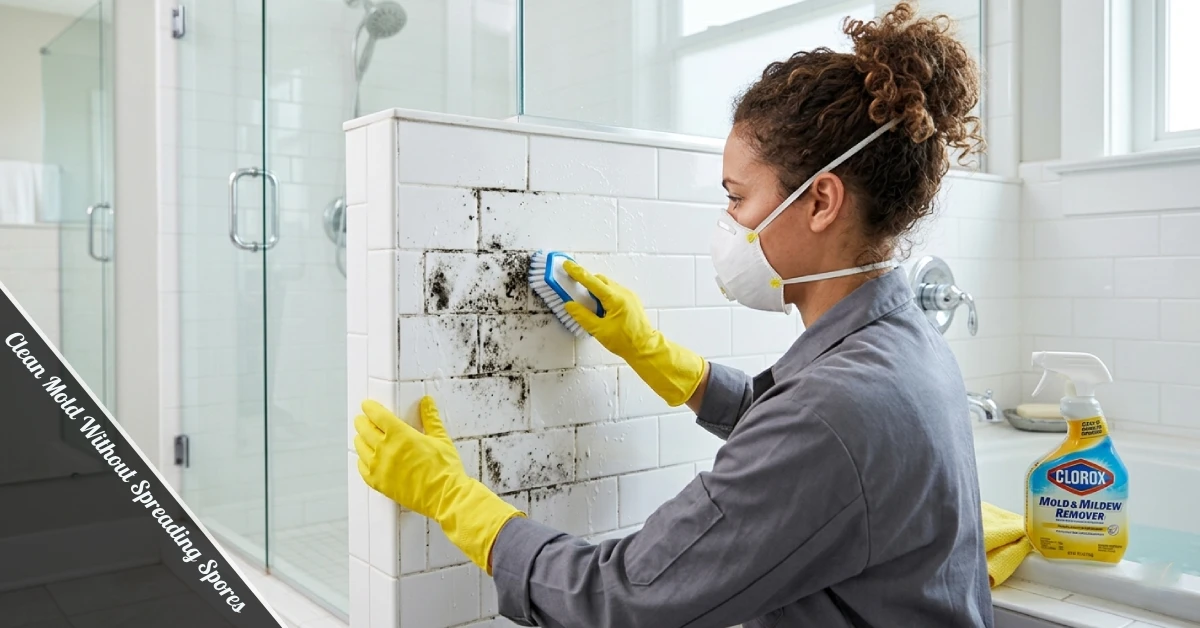
To clean mould without spreading spores, wet the affected surface before scrubbing, seal off the work area with plastic sheeting, wear an N-95 respirator and rubber gloves, and use a mould-killing solution such as diluted bleach or undiluted white vinegar. Bag all waste in heavy-duty plastic bags before disposal. Fix the moisture source afterwards, or mould will return.
Why Mould Spreads During Cleaning
Most people make mould worse the moment they start cleaning it. Dry scrubbing, running fans, or simply opening a window in the wrong direction can send thousands of spores airborne in seconds. Mould reproduces by releasing spores into the air. Those spores are microscopic and travel easily on air currents. Once disturbed, a small patch on a bathroom wall can spread to adjoining rooms within minutes if you take no containment steps.
According to a CDC-cited report from the National Institute for Occupational Safety and Health (NIOSH), nearly 47% of U.S. homes have some mould or dampness. That means the risk is not rare. And given that mould can start growing within 24 to 48 hours of water exposure, knowing how to handle it correctly is a practical skill every homeowner needs.
Gear Up Before You Touch Anything
Protective equipment is not optional. Mould spores cause allergic reactions, respiratory irritation, and in high-exposure situations, more serious health problems. The EPA recommends a minimum of three items before any cleanup begins.
What you need:
- N-95 respirator (or higher-rated mask): Filters mould spores you cannot see.
- Rubber gloves that extend to at least mid-forearm: Prevent skin contact with mould and cleaning chemicals.
- Goggles without ventilation holes: Spores and bleach splashes can irritate your eyes quickly.
- Disposable coveralls or old clothing: Change and bag your clothes immediately after cleaning.
Wear all of this before entering the work area. Do not start cleaning and then put on gear afterwards.
Seal Off the Work Area First
Containment is the step most guides skip, and it is the most important one for preventing spread.
Before you open a bottle of cleaner, close all doors between the mouldy room and the rest of your home. If the mould covers a large section of wall or ceiling, tape heavy plastic sheeting over the doorway. Missouri’s Department of Health and Senior Services specifically recommends this: isolating the area with plastic sheeting over the door keeps airborne spores from circulating through the rest of the house.
Turn off central air and heating systems while you clean. Running your HVAC during mould removal pulls spores directly into the ductwork and distributes them to every room. If your furnace uses filters, switch to HEPA-rated filters before turning the system back on, since they capture airborne spores that became dislodged during the cleanup process.
While you are checking your home systems before cleanup, it is also worth addressing any other safety alerts you have been putting off. If your hardwired smoke alarm has been beeping, that is a fault worth resolving before you start any remediation work that involves chemical cleaners or reduced ventilation.
How to Clean Mould Without Spreading Spores: Step-by-Step
Follow these steps in order. Do not skip containment to get to scrubbing faster.
Step 1. Fix the moisture source first. The EPA is clear on this: if you clean mould but leave the leak or humidity problem in place, mould will come back. Identify and repair the source (a pipe, a roof leak, condensation from poor ventilation) before or immediately after cleanup.
Step 2. Wet the surface before scrubbing. mould mold is dangmoulds mold. Spray the affected area thoroughly with your cleaning solution before touching it. Oregon State University Extension advises wetting the surface first specifically because it keeps spores from becoming airborne during the scrub.
Step 3. Choose the right cleaning solution. For hard, non-porous surfaces such as tile, glass, or painted concrete:
- A diluted bleach solution works well: one cup of bleach per gallon of water.
- Undiluted white vinegar is effective on hard bathroom and kitchen surfaces and leaves no toxic residue.
- A 50/50 ammonia-and-water spray works too, but never mix ammonia with bleach. That combination produces toxic fumes.
For porous materials such as drywall, carpet, or ceiling tiles, cleaning is often not enough. The EPA and UConn Extension both recommend discarding these materials entirely if they have been wet for more than 24 hours or show mould growth below the surface.
Step 4. Scrub, do not wipe. Use a stiff brush on hard surfaces. Wiping spremouldthe mold laterally. Scrubbing breaks it down in place. After scrubbing, wipe away the residue with a damp cloth and place that cloth directly into a sealed plastic bag.
Step 5. Bag everything as you go. Any sponge, cloth, brush, or debris goes into a heavy-duty plastic bag immediately after use. Seal the bag before carrying it out of the room. Do not set used materials on unaffected surfaces.
Step 6. Dry the area completely. Mould cannot grow without moisture. After cleaning, dry the surface fully using towels, then allow air circulation with a fan directed outward (toward an exterior window or door, not into the rest of the house). A dehumidifier helps in enclosed bathrooms or basements. Keep indoor humidity below 60%, and ideally between 30 and 50 per cent.
Step 7. Clean yourself up. Remove and bag your clothing before leaving the work area. Shower and wash your hair, since spores cling to hair easily.
Cleaning Mould by Surface Type
Not all surfaces respond the same way to mould cleaners. Using the wrong approach can damage materials or leave mould behind.
Bathroom tile and grout. Apply undiluted white vinegar directly. Let it sit for 10 to 15 minutes before scrubbing. For black grout mould, a bleach solution penetrates better. Rinse with water and dry thoroughly.
Walls (painted drywall). If the mould is surface-level and the drywall is not soft or water-damaged, scrub with a bleach solution. Do not paint over mould without cleaning first. The EPA warns that paint applied over mouldy surfaces will peel. If the drywall is soft, crumbling, or has visible mould on the back side, cut it out and replace it.
Wood surfaces (framing, furniture, decking). A diluted bleach solution works on finished wood. For unfinished structural wood, scrub with a stiff brush, let dry fully, and applymould-resistantant sealant afterwards. Sanding is not recommended because it launches spores into the air at high concentration.
Carpet and upholstered furniture. These almost always need to be discarded if mould has penetrated below the surface. Steam cleaning alone does not kill mould at depth, and it adds moisture. If the item is valuable, consult a professional restoration specialist.
Concrete basement floors and walls. Use a stiff brush with a bleach solution. Concrete is porous, so apply generously and let it sit for 10 minutes before scrubbing. Improve ventilation and use a dehumidifier to prevent recurrence.
Common Mistakes That Spread Mould Further
These are the errors that turn a small bathroom problem into a whole-house situation.
- Running a regular vacuum. Standard vacuums do not filter mould spores. They collect them and then blow them out the exhaust. Use only vacuums fitted with HEPA filters.
- Using fans before containment. A fan blowing on visible mould or the area is sealed will spread spores to adjacent rooms immediately.
- Painting or caulking mould: This traps moisturemouldts mold continue growing underneath, and causes the paint to fail faster.
- Ignoring the smell. A musty odour without visible mould usually means hidden growth inside walls, under flooring, or in ceiling spaces. Treat the smell as evidence of a problem, not just a nuisance.
- Mixing bleach and ammonia. This is a serious safety hazard. The combination creates chloramine gas, which can cause respiratory damage.
When to Call a Professional
DIY mould removal is appropriate in many situations, but not all. The EPA’s guideline is straightforward: if the mouldy area is larger than roughly 10 square feet (about a 3-by-3-foot patch), professional remediation is the safer choice.
You should also call a certified mould remediation specialist if:
- Mould is inside your HVAC system or ductwork.
- You suspect mould is growing inside walls (indicated by a persistent musty smell and no visible cause).
- Anyone in your household has asthma, a weakened immune system, or unexplained respiratory symptoms.
- The mould returned within weeks of a previous DIY cleanup (this almost always means the moisture source was not fully addressed).
Professional remediators use industrial-grade air scrubbers, negative-pressure containment systems, and EPA-registered antifungal treatments. Their process is significantly more thorough than what a household cleanup achieves.
Knowing when a problem needs a specialist applies to other areas of your home too. If you have noticed flickering lights that need an electrician, for example, that is not a job to delay; just as advanced mould growth is not. Mould should be removed regardless of type. No matter what kind of mould is present, you need to remove it.” — U.S. Centres for Disease Control and Prevention (CDC), 2024
Prevent Mould from Coming Back
Clearing mould is only half the job. Without reducing moisture, you are likely to face the same problem within weeks.
Practical steps to prevent mould from returning:
- Keep indoor humidity between 30 and 50 per cent. Use a hygrometer (available at any hardware store) to monitor levels.
- Run bathroom exhaust fans during showers and for 15 minutes afterwards.
- Fix plumbing leaks and roof drips as soon as they appear. Water damage left untreated for more than 24 to 48 hours creates ideal mould conditions.
- Improve ventilation in basements and crawl spaces with vents or a dehumidifier.
- Check washing machine door seals, refrigerator drip pans, and under-sink cabinets regularly. These are common hidden mould sites.
- In humid climates, consider mould-resistant drywall and paint in bathrooms and basements during any renovation work.
Mould prevention is really part of a broader habit of staying on top of small home repairs before they grow into bigger problems. A door handle that has snapped, for instance, can affect how well a room seals, which matters in bathrooms and utility rooms where you are trying to control moisture and ventilation.
FAQs
Can I use bleach on all types of mould?
Bleach works well on hard, non-porous surfaces like tile and sealed concrete. It does not penetrate porous materials like drywall or wood effectively, so it may kill surface mould while leaving roots behind. For those surfaces, physical removal or disposal is more reliable.
Does vinegar actually mould mold?
Yes. White vinegar has a pH that disrupts mould growth and kills most common household mould species. It works best on hard surfaces. Apply it undiluted, let it sit for at least 10 minutes, then scrub. It does not produce harmful fumes and is safe to use without mixing concerns.
How long after cleaning can I repaint the area?
The surface must be completely dry and mould-free before painting. This typically means waiting at least 24 to 48 hours after cleaning, depending on humidity. Use a mould-resistant primer first, especially in bathrooms or basements.
Should I wear a mask if the mould patch is small?
Yes. Even a small patch can release a significant number of spores when disturbed. An N-95 respirator costs very little and protects you from inhaling what your eyes cannot see. The risk is not proportional to what is visible.
Is black mould more dangerous than other types?
Some species of black-coloured mould (such as Stachybotrys chartarum) produce mycotoxins that can be harmful with heavy or prolonged exposure. However, the CDC notes that regardless of colour or species, all visible mould should be removed using the same safety precautions. Do not wait to identify the type before acting.