

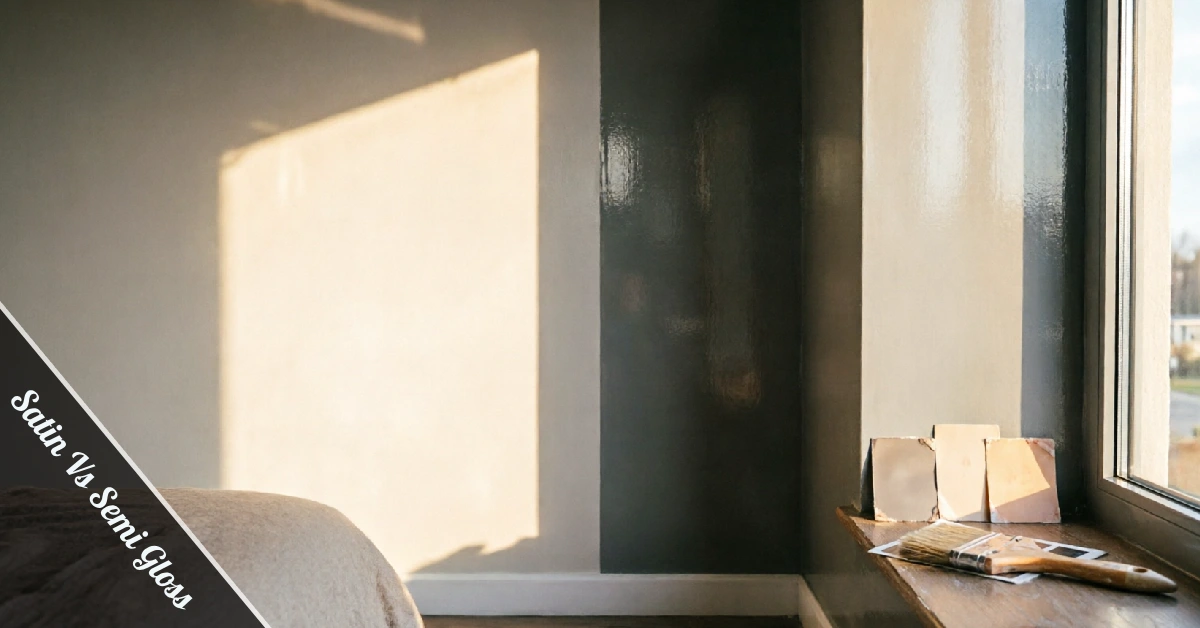
Picking a paint finish feels small until the wall goes wrong. Satin vs semi gloss is the fight most homeowners face first, right after the color itself gets picked. Uneven paint finish problems trace back to the wrong sheen.
Satin has a soft, velvety glow that barely reflects light. Semi gloss reflects hard and clean, almost like glass.
That gloss level changes how a whole room feels day to day, from morning through night, in every season.
| Factor | Satin | Semi Gloss |
|---|---|---|
| Shine | Soft glow | Strong reflective shine |
| Durability | Good | Excellent |
| Cleaning | Easy, gentle wipe | Very easy, scrub-friendly |
| Best rooms | Bedrooms, living rooms | Kitchens, bathrooms, trim |
| Hides flaws | Better | Worse |
Quick Selection Tips
The satin vs semi gloss choice really comes down to two things: traffic level and moisture exposure in that specific room.
Pick semi gloss for kitchens, bathrooms, trim, doors, and anywhere hands touch things constantly through the day.
Pick satin for bedrooms, living rooms, hallways, and ceilings where a softer glow feels calmer and less clinical.
When unsure, test both on a small board first, then view it under your room’s actual lighting before buying full cans.
The Main Difference in Sheen
Satin sits in the middle of the sheen scale, sitting between flat and semi-gloss on most paint charts.
It gives walls a gentle shimmer without looking shiny, plastic, or overly reflective under normal daylight at any time.
Semi gloss goes further, throwing back noticeably more light from nearly any angle you happen to view it.
Rooms with big windows often look brighter once semi gloss trim catches that extra afternoon sunlight along the wall.
Too much semi gloss across large wall areas can feel cold, sterile, and a little too showroom-like for comfort.
How Lighting Changes the Look
Good lighting shapes the outcome more than most people expect when picking between these two finishes today.
Swapping to warm white bulbs can soften a semi-gloss room almost instantly, taking the sharp edge off that reflective shine without touching a single wall or repainting anything.
Cool white bulbs make semi gloss walls look almost sterile by comparison, especially in tiled bathrooms and kitchens.
Warm bulbs also make satin walls feel richer, cozier, and noticeably more inviting once the sun goes down.
Durability, Cleaning, and Maintenance
Semi gloss wins on raw toughness, resisting scuffs, moisture, and grease better than almost any interior sheen.
That’s why kitchens, bathrooms, and hallways lean semi gloss so often in busy households with kids or pets around.
Satin holds up fine too, just not quite as hard, built more for moderate traffic than constant abuse.
Semi gloss wipes clean with almost zero effort, and even crayon marks come off fast with a damp cloth.
Satin cleans well too, just be gentler, since hard scrubbing can leave faint marks or a slight sheen change.
For kids’ rooms, bathrooms, or busy kitchens, semi gloss saves real time during weekly cleaning routines all year.
Surface Imperfections and Preparation
Semi-gloss shows every dent, patch, and rough spot since light bounces straight off the surface.
Satin hides small drywall flaws far better, making it the safer pick for older walls with texture or repair marks.
Skipping primer before either finish is a common mistake, especially over dark colors or freshly patched drywall.
Rushing dry time between coats leaves visible streaks, and that flaw shows up worse under semi-gloss lighting.
Satin vs. Semi-Gloss for Bathroom Walls and Trim
Bathrooms almost always call for semi gloss because of steady moisture, steam, and constant splashing near sinks.
Using satin in a shower-adjacent bathroom without solid ventilation can invite peeling or bubbling paint fairly soon.
Semi gloss trim in a bathroom also wipes clean in seconds flat, which matters a lot with kids around.
Choosing Between Satin and Semi-Gloss for Walls
Bedrooms, living rooms, dining rooms, and hallways usually look best with satin, since that softer glow feels calmer.
Home offices split the difference depending on how much natural light pours through nearby windows each day.
Open concept homes sometimes mix both, satin on main walls and semi gloss on accent trim for contrast.
Semi-Gloss and Satin on Doors, Cabinets, and Trim
Cabinets take a beating from hands, grease, and steam, so semi-gloss is the safer, longer-lasting choice.
Trim and baseboards get semi gloss too, since that hard shell resists scuffs from vacuums and dragging furniture.
Doors handle constant touching near handles, and semi gloss shrugs off fingerprints far better than a softer satin coat.
Some pros still choose satin on cabinets for a quieter, less flashy look in modern kitchen designs.
Satin vs. Semi-Gloss Wood Finish
On wood trim, baseboards, and furniture, semi gloss builds a tougher, more washable layer over time.
Satin wood finishes look more natural and less plastic, which many homeowners prefer on furniture and open shelving today.
Brands like Minwax offer both sheens across their polyurethane lines, so testing a small sample board still helps.
Cost and Application Tips
Price differences between satin and semi-gloss paint stay small, often just a dollar or two.
Application matters more than cost, since semi gloss shows brush strokes and roller marks far more than forgiving satin.
Use a quality brush and thin, even coats for semi gloss, and sand lightly between coats on trim.
Sherwin-Williams and similar brands often recommend two thin coats over one thick coat for either sheen on trim.
Whichever way the satin vs semi gloss decision goes, always check the paint formula label first, since some newer satin lines now claim semi gloss level scrub resistance.
Testing Samples Before You Commit
Paint chips under store lighting rarely match how a color looks once it dries on your own wall at home.
Buy a small sample can of each finish and paint two-foot squares on the actual wall you plan to redo.
Check both squares in morning light, afternoon light, and again under lamps at night before deciding anything.
Sheen shifts more than color does between lighting types, so this step matters most for the satin vs semi gloss decision specifically.
Final Selection Factors
There’s no single winner in the satin vs semi gloss debate, just the right fit for each room.
High-traffic, high-moisture spaces lean semi gloss nearly every single time, no matter the room’s style.
Calmer, low-traffic rooms usually look and feel better finished in satin, especially under warm evening lighting.
If you’re refreshing floors during the same project, matching finishes matters too, and browsing options like this spruce-toned LVP plank can help tie the whole room together visually before you commit to gallons of either sheen.
Frequently Asked Questions
Is satin or semi-gloss better?
Neither wins outright; it depends entirely on the room and how much traffic it sees daily.
Which finish lasts longer?
Semi gloss generally holds up longer against scuffs, grease, and repeated cleaning over the years.
Should cabinets be satin or semi gloss?
Most kitchens do best with semi gloss cabinets for easier daily cleanup.
Which sheen hides imperfections best?
Satin hides bumps, patches, and rough drywall far better than any semi-gloss finish.
Is satin easier to clean than semi gloss?
Semi-gloss cleans a bit faster, but satin still wipes clean with gentle care.