

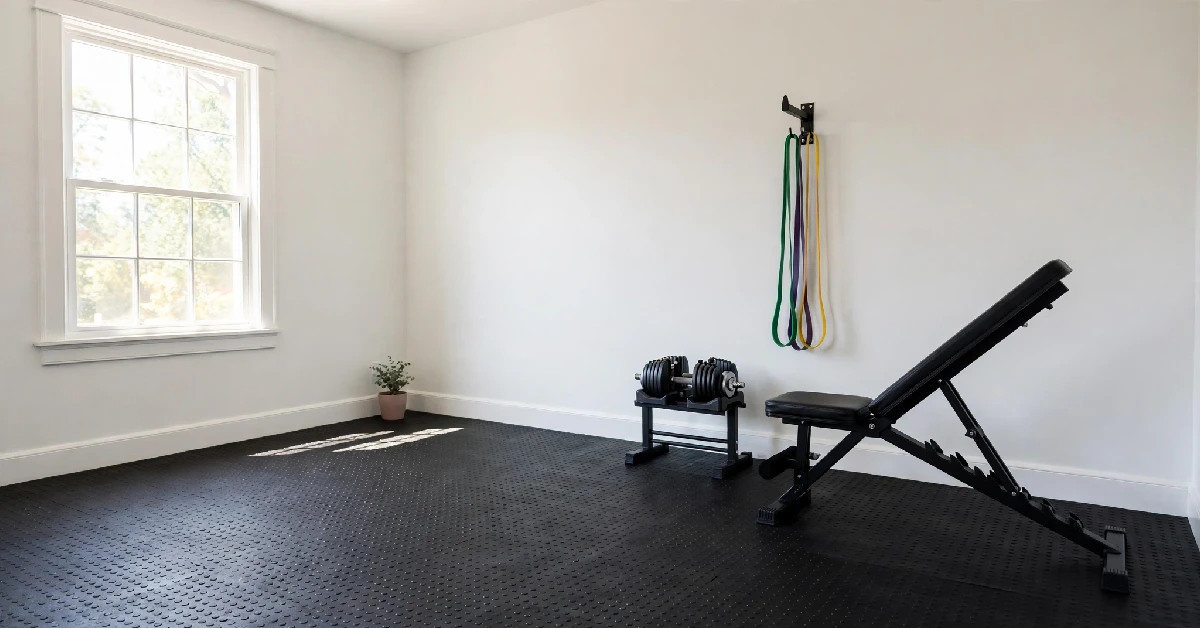
Match your space, budget, and training goals before buying anything. Pick a room with a firm floor, good airflow, and enough clearance for your lifts. Start with a bench, adjustable dumbbells, and resistance bands. Add a rack or machines once your routine grows and your space allows it.
Gym prices keep climbing, and many people now ask whether training at home makes more sense. A YouGov survey, reported by Stacker, found that cost was the top reason Americans cancelled gym memberships, named by 41% of those who left. A home gym can reduce that expense, but only when you plan it well. The steps below cover how to choose a room, set your goals, buy the right equipment, and avoid the mistakes that waste money.
Pick the Right Room for Your Gym
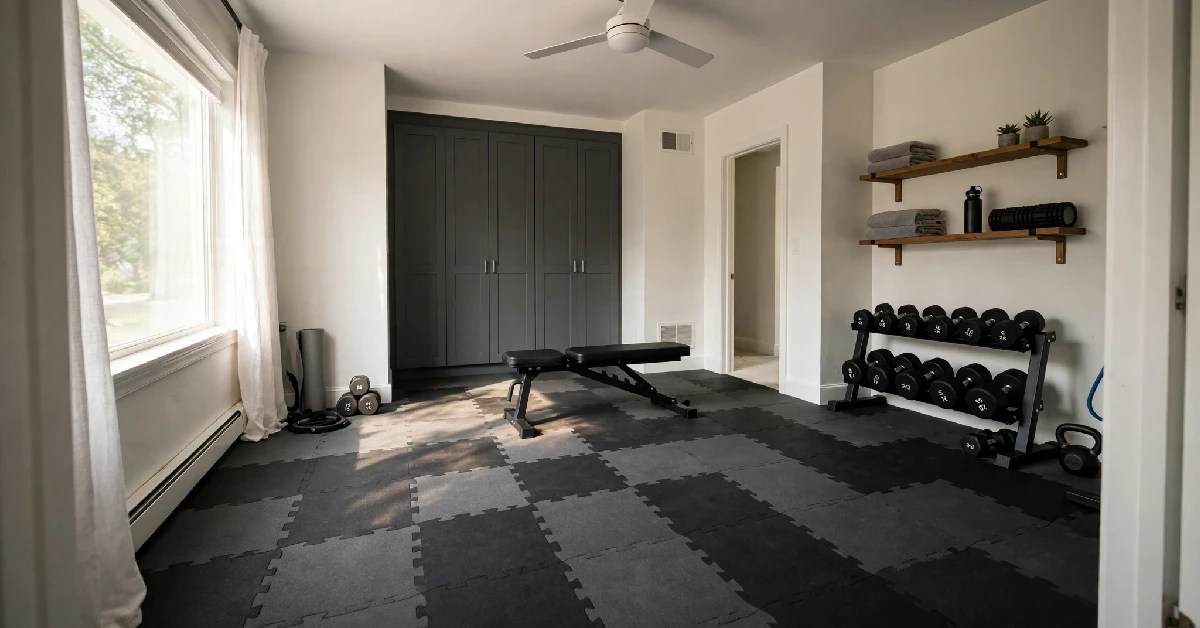
Start with the space you already have. A spare bedroom, garage, basement, or converted shed can all work. Each option brings different trade-offs in temperature, noise, and moisture, so compare them before you commit.
Measure before you shop. Allow at least 2 metres of clearance around a bench and about 2.5 metres of ceiling height for overhead presses and pull-ups. If you plan to use a squat rack, add extra width so you can step around it safely.
Garages often stay cold in winter and hot in summer. Basements can hold damp air, which rusts steel equipment within months if you do not control humidity. A spare bedroom stays comfortable year-round, but it may limit how loud you can train. Choose the room that keeps a steady temperature and suits your floor plan.
Check the floor as well. Bare concrete is hard on joints when you drop weights, and it transmits noise to the rooms below. Rubber tiles or a thick mat reduce both problems and protect the floor underneath.
Decide Your Training Goals First
Your goals determine what you need. Someone who wants to build strength needs a sturdy bench, a barbell, and a rack. Someone who wants general fitness can get far with dumbbells, bands, and a pull-up bar. Someone who prefers cardio may choose a rowing machine or an exercise bike instead.
Write down three things before you spend money. List the exercises you already enjoy, the number of days each week you can train, and the amount of space you can give the gym. This short exercise keeps you from buying equipment you never use.
Be honest about your habits. If you rarely stick to a routine at a gym, a home setup will not change that automatically. Start with fewer items and build a consistent schedule first.
Essential Equipment for a Starter Home Gym
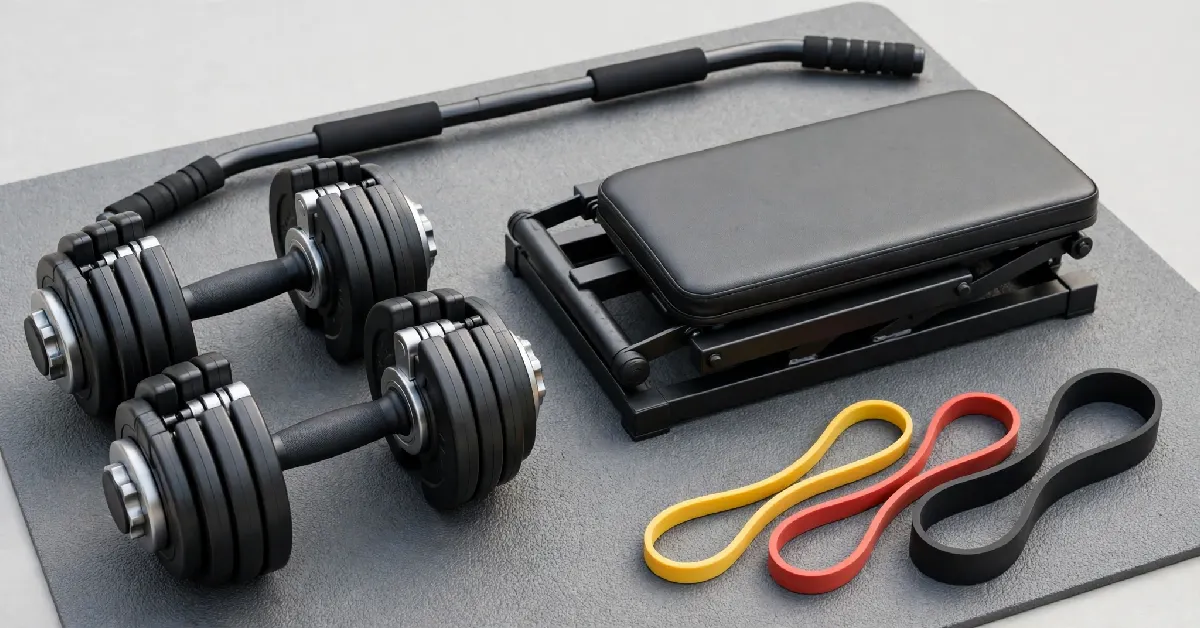
Most beginners do well with a short, focused list of equipment:
- An adjustable bench that folds flat, so you can train on it and store it easily.
- A pair of adjustable dumbbells, or a set of fixed weights if you prefer simplicity.
- A pull-up bar that mounts in a doorway or to a ceiling joist with secure brackets.
- Resistance bands in light, medium, and heavy tension for warm-ups and extra work.
- A sturdy mat for floor exercises, stretching, and core work.
Once you start heavier lifts, add a power rack or squat stand. Choose equipment with a steel frame and check the stated weight limit before you buy. A rack with safety pins or straps lets you train alone without risking injury.
Keep the starter list short. You can add cable machines, kettlebells, or a rowing machine later, once you know which exercises you use most.
Budget Ranges and Where to Spend
Spend your money on items you will use in every session. A solid bench and good dumbbells usually matter more than a flashy display screen or a fancy accessory. Buy used equipment from reputable local sellers when the condition looks good. Check welds, padding, and rust before you pay.
Smart equipment adds convenience, but it costs more. CivicScience data, reported in 2026, found that 22% of U.S. households own at least one piece of smart home gym equipment. Connected machines can track your sessions, yet a basic setup builds strength just as well. If you plan to add connected devices to your home, our guide to smart home security covers the basics.
Treat the purchase in stages. Buy the core items first, train for several weeks, then decide what to add. This approach spreads costs over time and shows you where your real gaps are.
Set Up Flooring, Lighting, and Ventilation
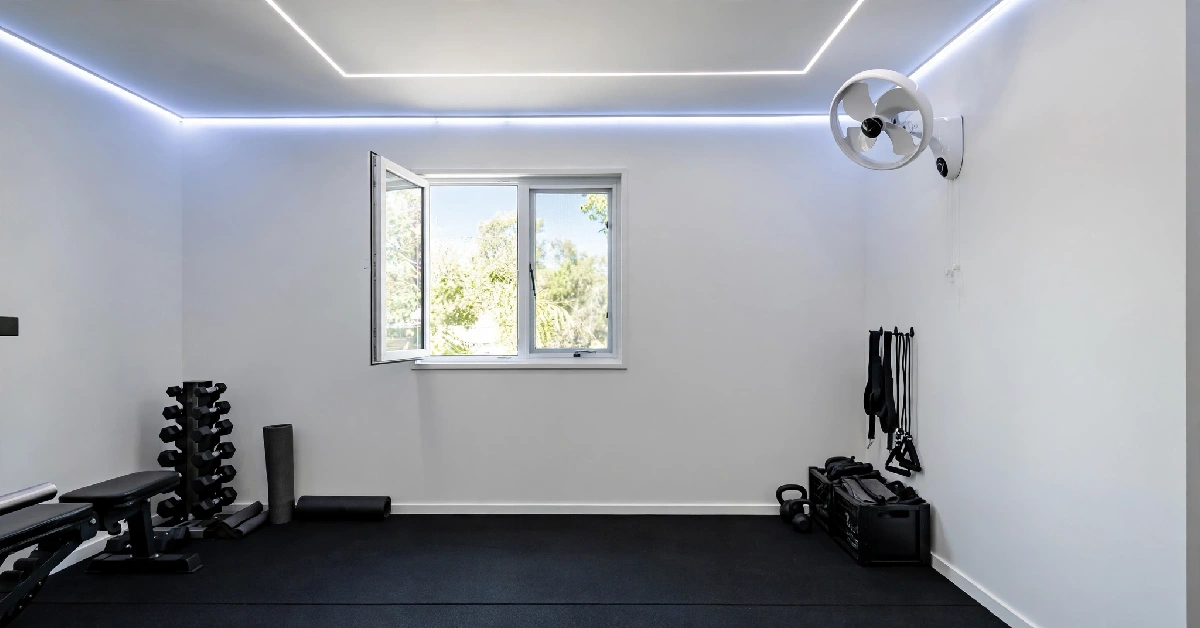
Good flooring protects both your equipment and your joints. Interlocking rubber tiles are inexpensive and easy to replace. Thick mats suit areas where you lift heavy weights. Lay the flooring on a level base and check for gaps that could catch a dumbbell or trip you during a session.
Lighting affects how you feel during a workout. Natural light from a window helps, but add ceiling fixtures or LED strips so the room stays bright after dark. Position a mirror where you can check your form without glare or reflections from the window.
Ventilation matters more than most people expect. Train in a room with a window that opens, or add a fan that moves air. Heating or cooling a garage or spare room can increase your running costs, so think about how your heating system serves that space. Our boiler benefits and drawbacks guide explains what to weigh when you decide how to heat a room you use every day.
Common Mistakes to Avoid When Building
Buying too much at once is the most common error. A full set of equipment looks appealing, but many people never use half of it. Start with a core set, follow your routine for a few weeks, and then add items based on what you actually need.
Ignoring weight limits creates real risks. Check the maximum load for benches, racks, and wall-mounted bars before you use them. Overloaded equipment can fail under stress and cause injuries that keep you away from training for weeks.
Skipping safety space is another problem. Keep a clear zone behind the bench and around the bar so you can exit a lift safely. Store weights where they will not roll into walking paths or onto your feet.
Forgetting about upkeep leads to rust and worn parts. Wipe sweat from steel frames after each session, check bolts every few months, and keep humidity low in the room. A small amount of maintenance extends the life of your equipment and protects your investment.
FAQs About Home Gyms
How much does a home gym cost?
Costs vary widely. A basic setup with a bench, dumbbells, bands, and a pull-up bar can cost a few hundred pounds. A full power rack with machines costs considerably more. Set a budget first, then buy in stages so your spending matches your training goals.
How much space do I need for a home gym?
A functional space for dumbbell and bodyweight training can fit in about 2 by 2.5 metres. Strength training with a rack and barbell needs more room, usually around 3 by 3 metres or larger. Measure your planned equipment and leave clearance for movement before you buy anything.
Do I still need a gym membership?
Not always. Many people use a home gym for most sessions and visit a gym only for equipment they cannot fit at home. Some keep a low-cost membership for occasional access to heavy machines or group classes.
Is a home gym worth the investment?
A home gym pays off when you train regularly and want to avoid recurring fees. Compare your monthly membership costs with the total price of equipment and the space you give up. If you expect to use the setup consistently for at least a year, the numbers often favour building one at home.