

You just moved into a new place, and the flower beds look bare, weedy, and tired. If you haven’t tackled the weeds yet, our guide to killing lawn weeds organically is worth a quick read before you spread anything on them.
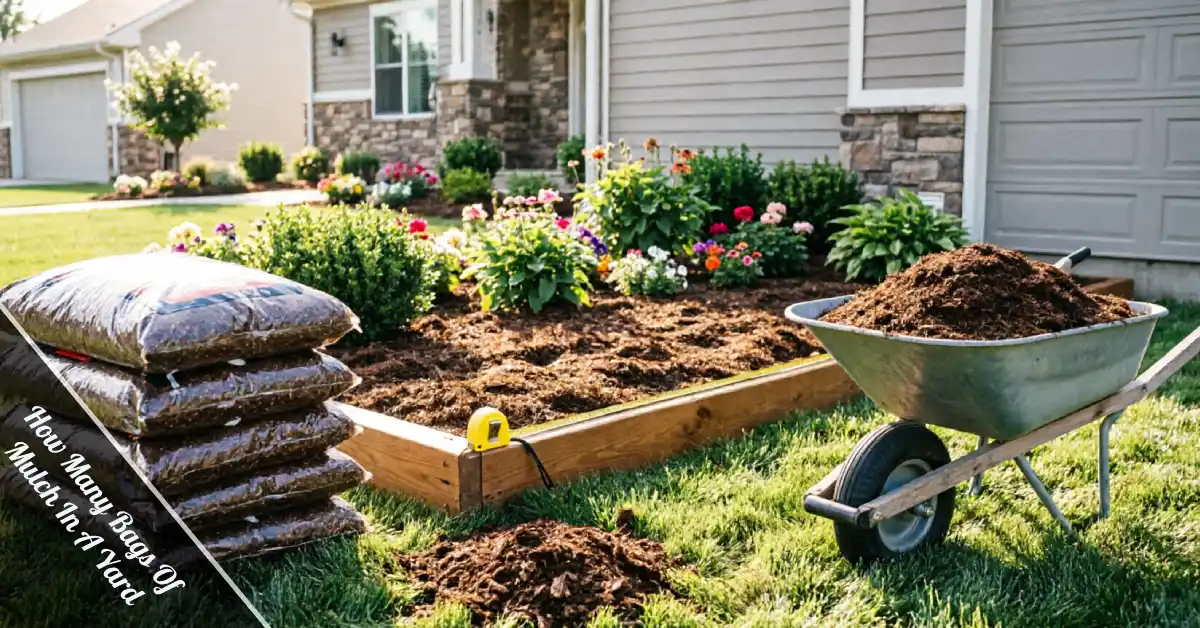
Now you’re standing in the mulch aisle wondering how many bags of mulch in a yard you actually need for the whole property.
This guide gives you the real math, plus bag sizes, depth tips, and a few tricks that save you cash and a wasted afternoon at the store.
How Many Bags Of Mulch In A Yard
One cubic yard equals 27 cubic feet. Every mulch calculation, whether for bulk or bagged mulch, starts right there.
If you’re grabbing standard 2-cubic-foot bags, you need 14 of them to fill one full cubic yard. Switch to 3-cubic-foot bags, and that number drops to just 9 bags, which saves you multiple trips.
Smaller 1.5-cubic-foot bags push the count up to 18 bags per yard, so always check the label before you start doing math in your head at the store.
Bag size changes your total more than most shoppers realize.
Bag Size Comparison
Here’s a quick breakdown so you know exactly what you’re grabbing off the shelf.
| Bag Size | Bags Per Cubic Yard |
|---|---|
| 1.5 cu ft | 18 bags |
| 2 cu ft | 14 bags |
| 3 cu ft | 9 bags |
The Formula: Length x Width x Depth
The formula is simple: length times width times depth in feet, then divide by 27 to get cubic yards.
Multiply your cubic yard total by 13.5 if you’re buying 2-cubic-foot bags, or by 9 if you’re going with 3-cubic-foot bags instead.
Say you’ve got a 20-by-10-foot bed and you’re spreading mulch 3 inches deep. That’s 200 square feet times 0.25 feet, which comes out to 50 cubic feet, or roughly 1.85 cubic yards once you convert it. Round that number up, since spreading mulch evenly always eats a little extra along the edges, corners, and around plant stems.
Round numbers up rather than down every single time you calculate.
How Deep Should Your Mulch Actually Be
Depth matters more than most people think when they’re calculating how many bags of mulch in a yard they need for the season.
Two inches works fine for annual flower beds. Shrubs and trees do better with 3 to 4 inches of coverage on top.
Anything thicker than 4 inches can actually suffocate roots. Too much mulch traps moisture, and that invites rot instead of blocking weeds as you intended.
A quick gut check works well here. Pour a handful onto your palm. If it looks like a light dusting, you’re under 2 inches.
If it buries your fingers, you’ve gone past 4 inches and should pull some back before it hurts your plants.
Bulk vs Bagged Mulch: Which One Wins
Bulk mulch is almost always cheaper per cubic yard, especially once your project passes the 3-yard mark.
Delivery fees can eat into those savings on smaller jobs, so run the numbers before you commit to a bulk order.
For a small backyard bed, bagged mulch still wins on convenience. No dump truck pile blocking your driveway for a week, and cleanup takes minutes instead of an entire weekend spent shoveling and raking gravel off the lawn.
Ask your local supplier about mixed loads if you need more than one type of mulch for different beds.
Bed Shape Changes The Math
Bed shape trips up more people than bag size ever does when they’re figuring out how many bags of mulch in a yard to buy.
For circular beds, multiply the radius by itself, then by pi, roughly 3.14, to get square footage before applying your depth calculation.
Triangular beds along a fence line work best when you multiply base by height, then divide by two, before running the same depth math as everything else.
Odd, curvy borders are easiest to handle with a garden hose. Lay the hose along the edge, then measure its total length once you’re happy with the shape.
What Mulch Actually Costs
Cost is usually the real question behind how many bags of mulch in a yard people actually buy, since nobody wants to overpay for landscaping.
Bagged mulch typically runs a few dollars per bag at most home improvement stores, with premium dyed varieties costing more than plain wood chips.
Bulk mulch by the cubic yard is usually priced lower overall, but delivery minimums and fuel surcharges can shrink that gap depending on your zip code and the supplier you choose.
Buying in bulk only pays off once you’re covering multiple beds or a large yard, so smaller projects often do better with bags instead.
Tricks To Stretch Your Mulch Budget
A few tricks stretch your mulch further without sacrificing coverage or curb appeal.
Lay cardboard or newspaper under the mulch layer first. It blocks weeds on its own, letting you use a thinner top layer of mulch overall.
Buy mulch at the end of the season when garden centers discount leftover bags, then store the extras in a dry shed for next spring’s beds.
Measure twice before you load the cart. Overbuying is the single most common way people waste money on a simple mulching project.
Ask neighbors if they want to split a bulk delivery. Splitting a load cuts delivery fees in half and often gets you a better bulk rate on the total cubic yardage ordered.
Pro tip: keep a running note on your phone with your bed measurements. Next season, you’ll already know how many bags of mulch in a yard your whole property needs, no remeasuring required.
Common Mistakes To Skip
The biggest mistake people make is guessing instead of measuring their beds first.
A tape measure takes two minutes and saves you an entire wasted afternoon, plus extra cash you never needed to spend on bags piling up in the garage.
Second mistake: forgetting irregular shapes. Circular beds and curved borders need their own formula, not the straight length-times-width shortcut everyone defaults to. Break the space into smaller rectangles and triangles if the shape gets weird, then add every section together for your real final number before you shop.
Frequently Asked Questions
How many bags of mulch in a yard do I need for 100 square feet?
At 3 inches deep, one cubic yard covers about 100 square feet, so you’d need roughly 14 bags of 2-cubic-foot mulch. Still picking a shade? Our mulch color guide breaks down which tones suit which style of yard.
How much area does one yard cover?
Coverage shrinks fast as depth increases, so a 2-inch layer covers more ground than a 4-inch layer.
Is bulk mulch actually cheaper?
Yes, for larger projects, though delivery minimums sometimes make bags the smarter call for smaller beds.
Does mulch color affect how many bags I need?
No, color only affects appearance and price, not the actual coverage math you’re running.
Should I remove old mulch before adding new?
A thin layer of old mulch is fine to leave, but anything moldy or matted should get raked out first.
How often should I replace mulch?
Most beds need a fresh layer once a year, though organic mulch breaks down faster in humid climates.
Can I mix mulch types in the same yard?
Yes, plenty of homeowners use bark mulch near trees and a finer blend in flower beds without any issue.
Final Take
Nailing how many bags of mulch in a yard you need isn’t complicated once the formula clicks. Measure your beds, pick your depth, and choose the bag size that fits your budget and your back.
Planning a bigger yard overhaul this season? Check out our breakdown on synthetic grass installation prices if artificial turf is on your radar alongside fresh mulch beds.
Grab your tape measure, run the quick math, and head to the store with a real number instead of a guess.