

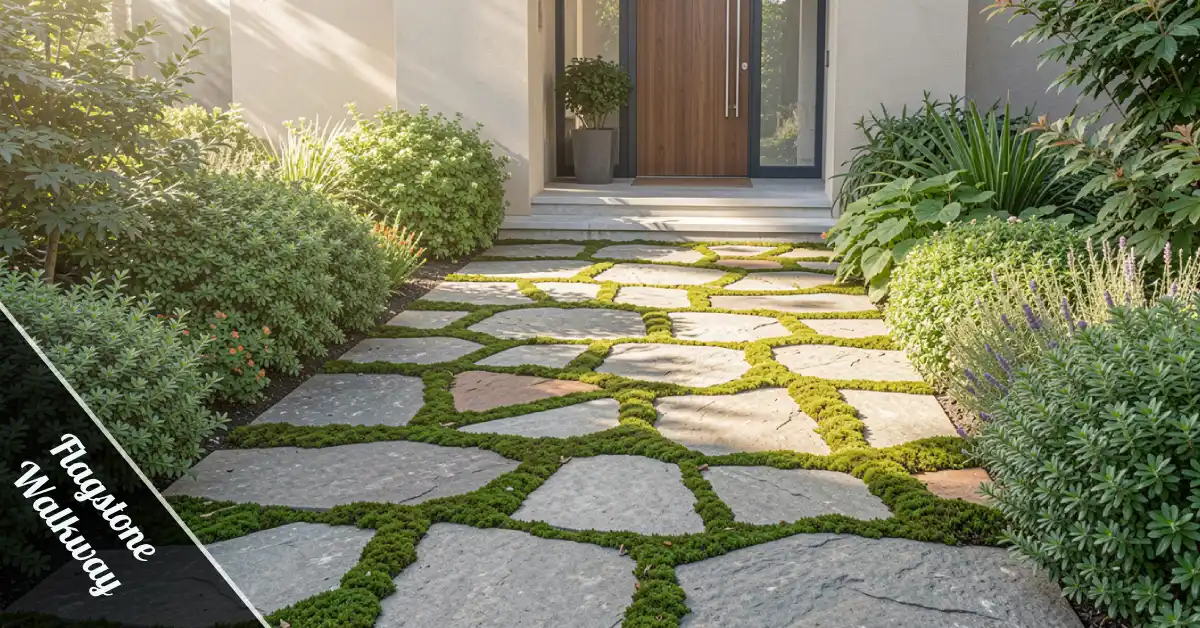
A flagstone walkway does more than get you from the driveway to your front door. It sets the tone for your whole yard. Whether you’re going for a modern look or a rustic garden feel, this guide covers the ideas, materials, and steps you need. For extra curb appeal after dark, pairing your path with cozy outdoor lighting makes it pop.
Quick Guide: Flagstone Options at a Glance
Here’s a fast comparison before you dive into the details.
| Style | Best For | Price Range | Look |
|---|---|---|---|
| Dry-laid flagstone | DIY projects, budget builds | $8–$15 per sq ft | Natural, rustic |
| Wet-laid flagstone | High-traffic areas | $20–$30 per sq ft | Stable, formal |
| Flagstone with gravel joints | Cottage gardens | $10–$18 per sq ft | Soft, relaxed |
| Flagstone with polymeric sand | Modern landscapes | $15–$25 per sq ft | Clean, sharp lines |
Before Building a Flagstone Walkway
Planning saves you headaches later. Walk your yard first and picture where people naturally move between spaces.
Measure the distance and decide on the width. Most home walkways are 3 to 4 feet wide, enough room for two people to walk side by side.
Think about drainage before you dig. Water needs somewhere to go, or the stones will shift and crack over time.
Check your local codes if the path connects to a public sidewalk. Some areas require permits for permanent hardscaping.
Benefits of a Flagstone Walkway
A stone path adds real value to your property. It’s durable, low maintenance, and works with almost any home style.
Unlike poured concrete, flagstone lets you fix one broken piece instead of replacing the whole section. That saves money down the road.
The natural texture also gives better grip in wet weather compared to smooth pavers, which matters if your yard sees a lot of rain.
Best Flagstone Ideas for Different Home Styles
Your home’s style should guide the design. A few directions work well depending on what you’ve got.
For a modern home, choose large, evenly cut flagstone pavers with tight, straight joints. Skip the gravel infill here.
For a cottage or farmhouse look, go irregular. Mix stone sizes and let creeping thyme or moss fill the gaps between them.
For a Mediterranean-style yard, warm-toned flagstone in tan or terracotta pairs well with gravel and drought-tolerant plants along the edges.
Flagstone Walkway to Front Door Design Tips
The path to your front door gets the most foot traffic and the most attention from guests. Make it count.
Keep the width generous, at least 4 feet, so two people can walk comfortably without stepping into the flower beds.
Add a slight curve if your yard allows it. A straight path feels formal; a curved one feels more welcoming.
Line the edges with low landscape lighting or border plants to guide the eye and add safety after dark.
Setting Flagstone in Grass for a Natural Look
Setting flagstone directly into your lawn creates a soft, natural feel that blends the path into the yard instead of standing apart from it.
Space the stones with a gap wide enough for a natural stride, usually 18 to 24 inches center to center.
Keep the stone surface level with the grass so a mower can pass right over without hitting an edge.
This style works best in low-traffic areas like a side yard path or a walk to a garden shed.
Dry-Laid vs. Wet-Laid Flagstone Walkway Installation
Choosing between dry-laid and wet-laid comes down to budget, traffic, and how long you want the path to last.
A dry-laid setup sits on a compacted gravel and sand base. It’s the more affordable option and reasonably straightforward for a DIY weekend project.
A wet-laid setup uses a concrete base with mortar joints. It costs more and takes longer, but it holds up better under heavy foot traffic and won’t shift as easily.
If the path also connects to an entryway near durable flooring choices inside the home, matching material tones with something like these long plank flooring options can tie the transition together nicely.
Flagstone Walkway Cost Factors to Consider
Cost depends on stone type, thickness, base preparation, and whether you hire it out or do it yourself.
Thicker stone costs more but holds up longer under heavy foot traffic. Thinner stone is cheaper but needs a solid, well-compacted base underneath.
Labor typically makes up close to half the total project cost, so DIY installation cuts your budget significantly if you have the time.
Expect to pay more for wet-laid installation since it requires concrete, mortar, and more prep work overall.
Maintenance and Long-Term Care
A stone path needs less upkeep than most surfaces, but a little care keeps it looking sharp for years.
Sweep debris regularly and pull weeds from the joints before they take hold and spread across the whole path.
Reapply polymeric sand every couple of years if joints start to look thin or loose stones start to wobble underfoot.
Seal the stone every few years if you want to protect against staining, especially near planting beds or high-moisture areas.
Hiring a Pro vs. Doing It Yourself
A dry-laid path is a solid DIY project if you’re comfortable with basic tools and a weekend of labor.
A wet-laid installation, or any project involving major grading and drainage work, is usually worth hiring a landscaper for.
Before starting any outdoor project involving wiring or fixtures, it’s worth double-checking things like a hardwired smoke alarm that keeps beeping, since exterior work near the house sometimes disturbs interior systems.
Final Thoughts
A flagstone walkway is one of the most reliable ways to boost curb appeal without a huge ongoing maintenance load. Pick the style that fits your home, plan your base properly, and it’ll hold up for decades.
FAQs
How long does a flagstone walkway last?
With proper base prep, it can last 25 years or more with only minor upkeep.
Can I install one myself?
Yes, a dry-laid version is beginner-friendly. Wet-laid installations usually need more experience or professional help.
What’s the cheapest way to build one?
Dry-laid flagstone with a gravel and sand base is the most budget-friendly option.
Does the path need drainage?
Yes. Poor drainage causes shifting and cracking over time, so grading the base correctly matters.