

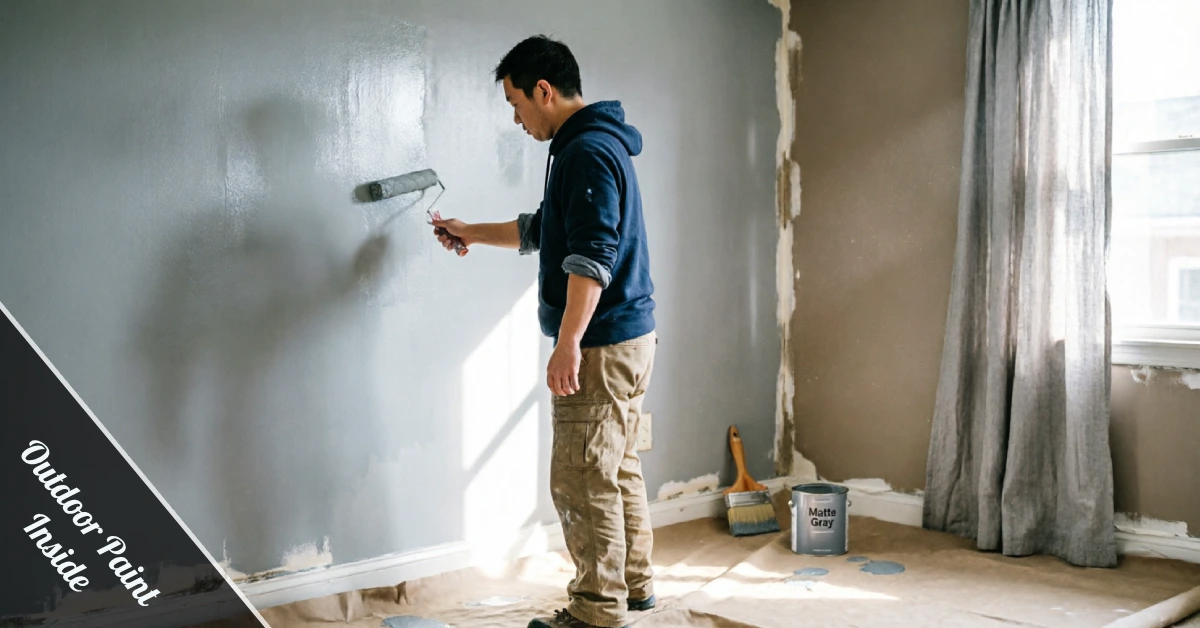
You just realized the leftover paint in your garage is exterior grade, and you already rolled it on your bedroom wall. Outdoor paint inside your home isn’t the disaster it sounds like, but it does come with real tradeoffs you need to understand before your next coat. This guide walks you through the safety concerns, drying quirks, and durability issues so you can decide fast, then pick better colors like agreeable gray for the room you’re actually redoing.
Can You Use Outdoor Paint Inside?
Technically, yes, you can use outdoor paint inside your home without your walls falling apart. The paint will dry, it will stick, and it will cover the surface just like any interior product would. But technically possible isn’t the same as smart, and that gap matters here.
Outdoor paint inside a bedroom or living room brings higher VOC levels into a space with less airflow than your backyard fence gets. That’s the real issue, not whether the color will look right on your wall.
How Exterior Paint Differs from Interior Paint
Exterior paint is built for weather, not for people breathing next to it all day. It uses flexible binders so it can expand and contract through heat, cold, rain, and sun without cracking apart.
Interior paint skips most of that engineering. Instead, it focuses on scrubbability, low odor, and a finish that looks good under lamp light instead of direct sun. Those are different jobs entirely.
Manufacturers add mildew-resistant additives and fungicides to exterior formulas to survive damp conditions outside. Indoors, those same chemicals just add fumes without giving you any real benefit.
VOCs, Fumes, and Indoor Air Quality
VOCs, or volatile organic compounds, are the biggest reason outdoor paint inside your house raises eyebrows among painters and health experts alike. Exterior paint carries more of them since outdoor spaces ventilate the fumes away naturally, so manufacturers don’t need to hold back.
Bring that same paint indoors, and the story flips fast. Your windows, doors, and walls trap those compounds, and you end up breathing them in for days after the project ends.
The EPA has linked high VOC exposure to headaches, dizziness, and long-term respiratory irritation in enclosed spaces. Poison Control also fields regular calls about accidental exposure from DIY painting mishaps gone wrong indoors.
Water-based exterior paints carry fewer VOCs than oil-based or solvent-based versions, so check your can’s label first. If you already painted with outdoor paint inside, open every window and run fans for several days straight.
How Outdoor Paint Dries and Cures Indoors
Drying and curing aren’t the same thing, and this trips up a lot of first-time painters. Dry to the touch might happen within hours, but full curing can take weeks longer than you’d expect.
Exterior paint is formulated to cure slowly using natural airflow, temperature swings, and sunlight exposure outside. Indoors, without any of that, curing drags out even further than the can’s label promises you.
That slow cure means your walls stay tacky and vulnerable to damage for longer than usual. Don’t hang art, lean furniture against it, or let kids touch fresh walls too soon after painting.
Durability and Finish Problems Indoors
Exterior formulas often look fine indoors at first, then start causing headaches within a few months. The flexible binders that help it survive weather outside make it too soft for indoor scrubbing and daily wear.
You’ll likely notice a duller, less washable finish compared to real interior paint. Fingerprints, scuffs, and everyday grime stick around and become tough to clean off without damaging the surface underneath.
Bathrooms make this worse because of constant humidity and temperature swings from hot showers. For a room that handles moisture daily, check out this bathroom paint guide built specifically for that kind of environment before you commit to anything.
Exterior vs Interior Paint at a Glance
Sometimes a quick side-by-side makes the decision easier than paragraphs of explanation. Here’s how the two products stack up on the factors that matter most for indoor projects.
| Factor | Exterior Paint | Interior Paint |
|---|---|---|
| VOC levels | Higher | Lower |
| Cure time indoors | 2-4 weeks | Days |
| Washability | Lower | Higher |
| Best indoor use | Doors, trim | Walls, ceilings |
Use this table as a gut check before you grab whichever can happens to be sitting closest to the ladder.
I Used Exterior Paint Inside By Accident: What Now?
First, don’t panic and don’t start scraping walls immediately after realizing your mistake. Outdoor paint inside a room you already finished isn’t dangerous long-term if you ventilate the space properly right away.
Open every window you have and run fans for at least three to five days straight. This clears out the bulk of the VOCs and speeds up whatever curing has already started on your walls.
Check the paint can or manufacturer website for the product data sheet and safety data sheet. These documents tell you the exact VOC levels and drying timeline you’re actually dealing with here.
Ventilating, Priming, and Repainting the Surface
Once the exterior paint has cured fully, which can take two to four weeks depending on conditions, you’re ready for the next step. Skipping ahead before full cure usually causes peeling or bubbling later.
Sand the surface lightly to help the primer grip properly. A bonding primer designed for glossy or slick surfaces works best over exterior paint since it wasn’t made to bond with typical interior products.
After priming, apply your chosen interior paint in two coats for full coverage and color accuracy. Brands like Sherwin-Williams and Dulux both publish primer compatibility charts worth checking first.
Special Cases: Front Doors and High-Traffic Spots
Interior sides of front doors are one spot where this trick actually makes some sense. That surface faces temperature swings from the door opening and closing constantly throughout the day.
Trim, cabinets, and other high-wear areas sometimes benefit from the tougher, weather-resistant coating exterior paint provides. Just keep ventilation strong during application since VOC exposure still applies indoors regardless of the surface.
Common Myths About Outdoor Paint Indoors
Reddit threads love to debate whether using it indoors is secretly fine because “paint is paint.” That’s an oversimplification that ignores the real chemical and durability differences between the two products.
Another myth claims exterior paint needs direct sunlight to cure at all. It doesn’t need sunlight specifically, but it does rely on airflow and temperature changes that indoor rooms rarely provide naturally.
Choosing the Right Interior Paint Instead
If you’re starting fresh, skip the exterior can sitting in your garage entirely. Interior paint costs about the same, dries faster, and won’t fill your home with unnecessary fumes during the project.
Look for low-VOC or zero-VOC interior formulas if air quality is a top concern for your household. Most major brands now offer these options at a similar price point to standard paint.
Already dealing with streaky walls or old touch-ups gone wrong before repainting anything new? This guide on fixing uneven paint walks you through smoothing things out before your next coat goes on.
FAQs
Does exterior paint need sunlight to cure?
No, it needs airflow and temperature changes more than direct sunlight. A well-ventilated room without sun can still cure exterior paint, just slower than an outdoor wall would.
Is exterior paint dangerous indoors long-term?
Not once it’s fully cured, and the space has been ventilated properly. The bigger risk comes during application and the first few weeks after, while VOCs are still off-gassing.
Can exterior paint be used in bathrooms?
It’s not ideal, since humidity and temperature swings make the softer finish wear out faster than a proper bathroom-rated paint would over time.
Final Verdict: When Outdoor Paint Makes Sense Indoors
Outdoor paint inside your home works in a pinch, on doors, trim, or high-wear spots, if you ventilate well. For bedrooms, living rooms, and bathrooms, stick with interior paint made for people, not weather.
Got questions about your specific project or a paint mishap you’re dealing with right now? Drop a comment below, and we’ll help you figure out the safest, smartest next step for your walls.