

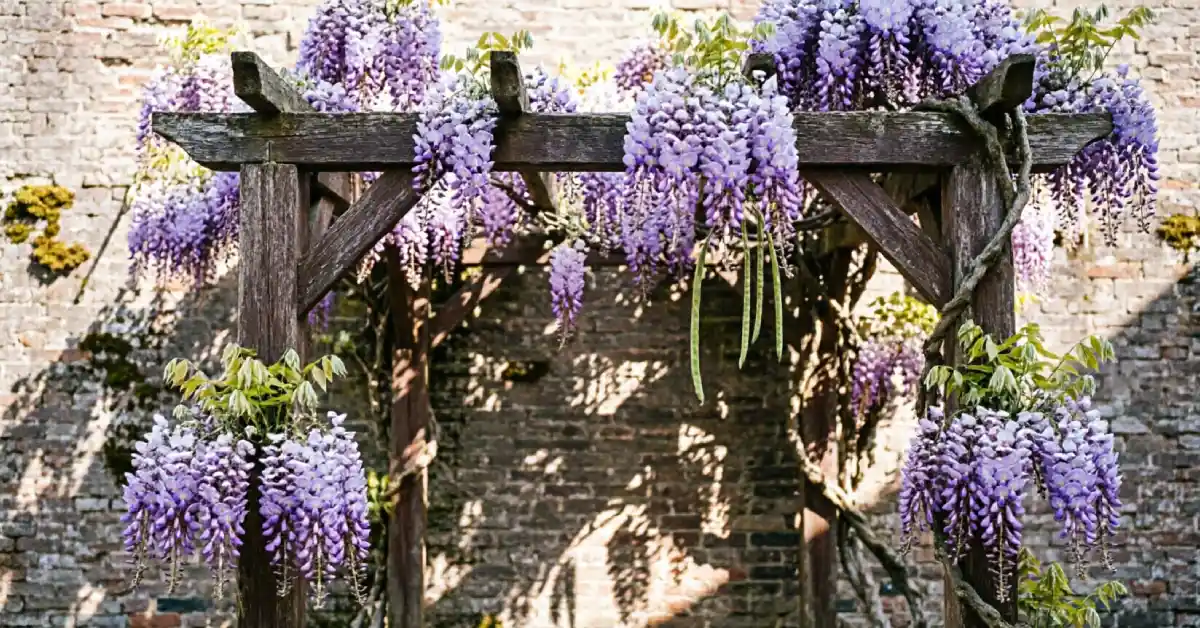
A wisteria trellis is a support structure built to hold the weight of a mature climbing vine as it grows thick, woody stems over many years. It looks simple, but it carries real weight once the plant settles in. If you love a lush look, this dry creek bed can pair beautifully near the base of your climbing setup and add texture to the space.
Most people picture a light lattice panel when they hear the word trellis, but wisteria needs something sturdier. The vine can weigh hundreds of pounds once it matures, so a flimsy frame will bend, crack, or collapse within a few seasons under that pressure.
A proper support structure is built from strong wood, steel, or a mix of both, anchored deep into the ground or bolted firmly to a wall. It gives the plant a stable path to climb and spread its blooms.
Wisteria is famous for its long, hanging clusters of purple, white, or pink flowers that drape over a structure like a curtain. That dramatic look is exactly why so many gardeners plant it near patios, gates, and entryways.
The trellis does more than hold the vine up. It shapes how the plant grows, directs its stems in a useful pattern, and keeps the whole display looking tidy instead of wild and tangled.
Choosing the right trellis early saves you years of frustration later. A weak structure means constant repairs, replanting, and stems that snap under their own growing weight.
Why Wisteria Needs a Heavy-Duty Trellis
Wisteria vines grow fast and get heavy within just a few short years. A trellis built for smaller climbing plants simply cannot handle that kind of ongoing pressure.
The stems thicken over time and start to twist tightly around whatever they’re attached to, which means the support has to flex slightly without snapping or pulling loose from its base.
Wind adds another layer of stress, especially once the foliage fills in and catches the breeze like a small sail. A weak trellis can tip, lean, or pull away from a wall during a storm.
Rain and moisture also test the structure constantly, since untreated wood rots and plain steel rusts. Choosing weather-resistant materials from the very start prevents years of costly headaches.
A sturdy support frame also protects nearby structures. If a support fails, the falling vine can damage fences, gutters, siding, or anything growing close by.
Investing in strength now means fewer repairs later, more consistent blooms, and a structure that actually gets better looking as the plant matures around it.
Think of the trellis as a long-term partner for the plant, not a quick fix. Wisteria can live for decades, so the support needs to match that lifespan.
Best Materials for a Wisteria Trellis
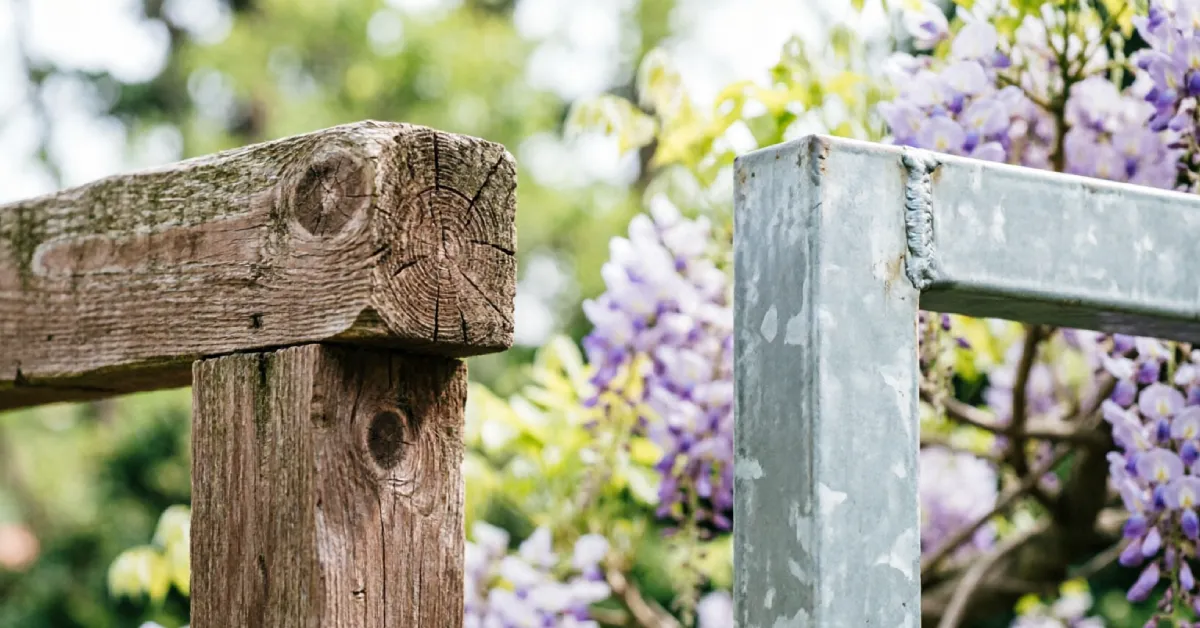
Wood remains one of the most popular choices for this kind of support, especially cedar and redwood, since both resist rot naturally and hold up well outdoors without heavy chemical treatment.
Pressure-treated lumber is another solid option if you want a wooden look without paying the premium price that cedar or redwood usually commands, though it needs sealing every few years to stay strong.
Metal trellises, particularly those made from galvanized steel or powder-coated steel, tend to outlast wood by a wide margin and handle the vine’s twisting stems without warping or splitting over time.
Stainless steel cables work well for wall-mounted systems, giving the vine a strong path to climb while keeping the overall look sleek, minimal, and easy to maintain year after year.
Whatever material you pick, make sure it’s rated for outdoor use and can handle direct sun, rain, and temperature swings without breaking down.
Mixing materials also works, like a wooden frame reinforced with steel brackets at the joints, giving you the classic look with the strength that heavy vines actually demand.
Cost matters too, but remember that a cheaper trellis often means replacing it sooner, which usually ends up costing more across the life of the plant.
Trellis Design Ideas Worth Copying
A wooden pergola creates a shaded walkway that looks stunning once wisteria fills in overhead, turning a plain path into a flowering tunnel by early summer.
Metal arches work great near garden entrances or gates, framing the space with color and giving visitors a memorable first impression as they walk through.
A wall-mounted wire system suits smaller yards perfectly, since it takes up almost no floor space while still giving the vine plenty of room to climb and spread.
Freestanding arbors work well as focal points in the middle of a garden bed, especially when paired with a bench underneath for shade on warm afternoons.
An umbrella-style trellis creates a rounded canopy of blooms, which looks especially striking in a Japanese-inspired garden design with clean lines around it.
For small gardens, a slim wall trellis or narrow arch saves space while still delivering that classic hanging-flower look everyone wants from wisteria.
Installing a Wisteria Trellis the Right Way
Start by picking a spot that gets full sun for most of the day, since wisteria blooms poorly in heavy shade no matter how strong the trellis is.
Check the soil drainage before you dig, because wisteria roots hate sitting in standing water and the site should let excess moisture flow away naturally, much like a well-designed drainage swale does across a sloped yard.
If you’re mounting the trellis against a wall, use proper masonry anchors rather than basic screws, since the finished weight of a mature vine will pull hard on every connection point.
Freestanding trellises need deep, secure foundations, often set in concrete, to keep the whole structure upright once the plant reaches full size after several growing seasons.
Leave enough spacing between the wall and the trellis for airflow, which helps prevent mold and rot on both the wood and the wall surface behind it.
Always plan for overhead clearance if you’re building an arch or pergola, since wisteria growth droops lower each year as the vine thickens and spreads.
Training and Pruning Wisteria on Your Trellis
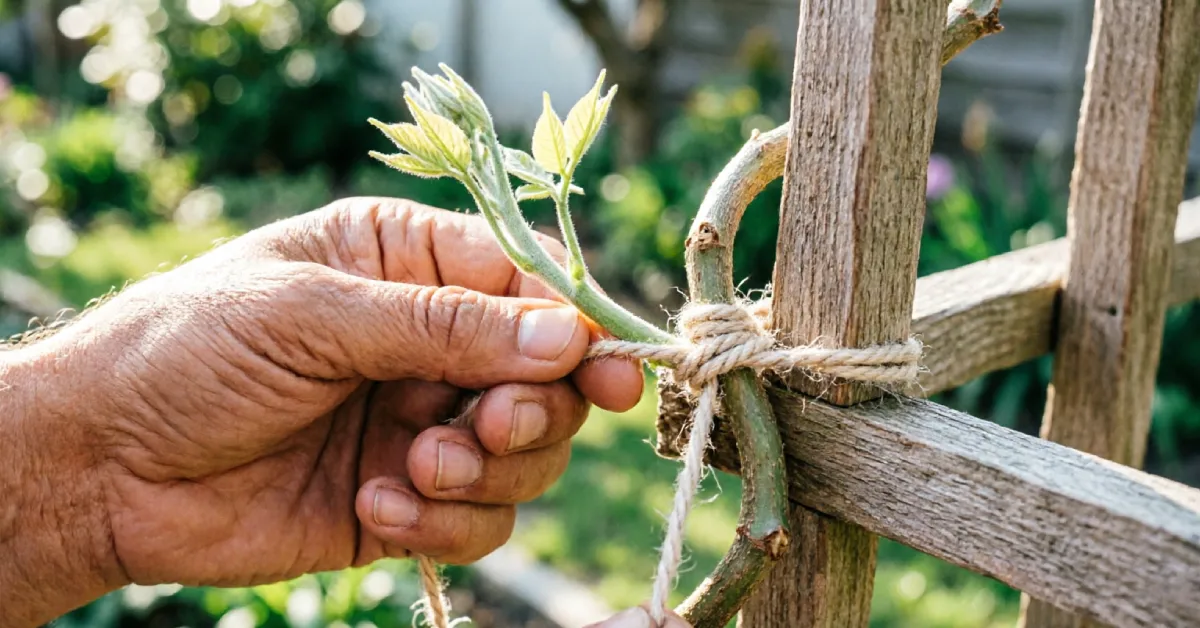
Training starts early by gently tying young stems to the trellis with soft ties, guiding growth in the direction you actually want it to follow.
Figure-eight ties work best because they hold the stem firmly without cutting into it as the wood thickens and expands over the coming seasons.
Pruning twice a year keeps the plant under control, once in late summer to trim back long shoots and again in late winter to shape flowering spurs.
Removing crossed or tangled stems improves airflow through the vine and reduces the risk of disease taking hold in the denser sections of growth.
Regular structural inspection matters just as much as pruning, since a hidden weak point in the trellis can fail suddenly once spring growth adds real weight.
Consistent training pays off with fuller blooms, since a well-guided support system channels the plant’s energy into flowers instead of wild, unruly growth.
Common Mistakes That Wreck a Trellis
Choosing a decorative but flimsy trellis is the most common mistake, since it looks fine at first but fails within a couple of growing seasons.
Skipping soil drainage checks causes root problems that weaken the whole plant, making it more likely to snap branches under normal wind and weight.
Ignoring regular pruning lets wisteria grow out of control fast, adding excess weight to the trellis that it was never actually designed to hold.
Mounting a trellis with basic screws instead of proper masonry anchors is a fast track to a structure pulling away from the wall.
Planting wisteria too close to gutters, siding, or roof edges invites damage as the vine spreads further than most people expect it to.
Forgetting yearly inspections means small issues, like loose joints or early rust, turn into expensive repairs or full replacements down the line.
FAQs About Wisteria Trellis Care
Can wisteria grow on a wooden trellis?
Yes, as long as the wood is rot-resistant and the frame is built strong enough to handle mature vine weight.
How strong should a wisteria trellis actually be?
It should support hundreds of pounds comfortably, since mature vines get far heavier than most first-time gardeners expect.
Can wisteria grow directly on a brick or stone wall?
Yes, with a wall-mounted wire or cable system anchored properly into the masonry itself.
How often should the support structure be inspected?
Check it at least once a year, ideally before spring growth adds significant new weight to the frame.
Conclusion
Picking the right wisteria trellis from day one makes every later step- planting, training, pruning, and long-term care- noticeably easier to manage well. A tidy edge nearby, like brick garden edging, can finish the whole space off nicely.
Give the structure the strength it needs, stay consistent with training and pruning, and your wisteria will reward you with years of dramatic, hanging blooms.