

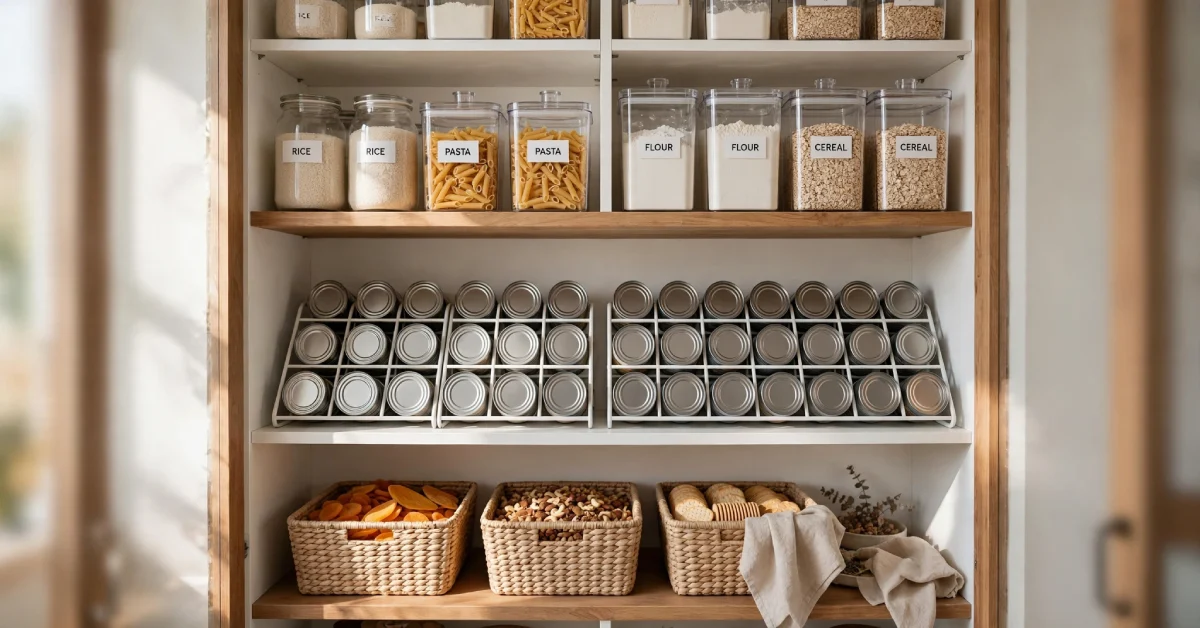
A messy pantry costs more than time. It costs money too, in duplicate purchases and food that goes bad before anyone notices it’s there. If you’ve ever bought a second jar of cumin because the first one was buried behind the cereal boxes, you already know the problem.
Most pantry trouble comes down to a handful of repeat offenders: wasted vertical space, items pushed to the back and forgotten, no clear system for where things go, and containers that don’t match how the household actually shops and cooks. None of these are hard to fix once you see them clearly.
Below are 25 practical ideas for organizing a pantry, whether you’re working with a small closet, a deep cabinet, a set of kitchen drawers, or a full walk-in room. Pick the ones that match your space and your habits, not the ones that just look good in photos.
Start With the Basics
1. Empty the pantry and clean the shelves. Take everything out and set it on a counter or table. This is the only way to see what you actually own, and it gives you a chance to wipe down shelves that have likely collected crumbs, spills, and dust for longer than you’d guess.
2. Check expiration dates before putting anything back. Go through every item while it’s out of the pantry. Toss anything expired, and set aside items that are close to their date so you use them first.
3. Remove duplicates and items you don’t actually use. Duplicate spices, half-used bags of the same grain, or a specialty ingredient bought for one recipe years ago all take up space without earning it. Donate what’s still good but unwanted, and let go of the rest.
4. Group similar foods together before deciding on placement. Sort everything into rough categories first: breakfast items, snacks, canned goods, baking supplies, and so on. This makes zone planning much easier.
5. Create dedicated zones based on how often items are used. Match each category to a spot based on frequency. Everyday items go at eye level and within easy reach. Occasional-use items can go higher or lower.
Make Everything Easy to See
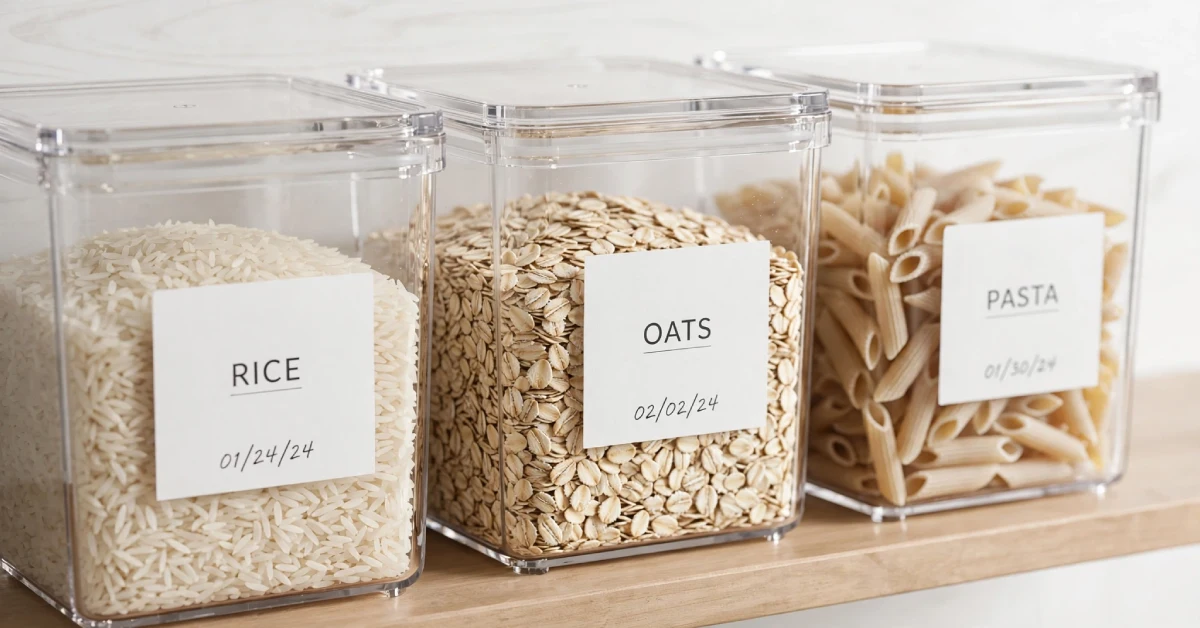
6. Use clear containers for frequently used dry foods. Flour, sugar, rice, pasta, oats, and cereal are good candidates for clear pantry containers, since they’re used often and lose freshness faster in their original bags.
7. Label every container clearly. A simple label with the food name keeps things easy to find, especially useful for anyone else in the household who’s putting groceries away.
8. Add opening or expiration dates to labels. Noting the date you opened a container, or its expiration date, helps you track freshness without guessing.
9. Repurpose containers you already own before buying new ones. You don’t need a full matching set of pantry organization containers right away. Reuse glass jars, sturdy takeout containers, or empty spice jars until you’re ready to invest in a complete system.
Maximize Shelf Space
10. Add shelf risers. Risers let you use the empty air above shorter items, effectively doubling the storage on a single shelf.
11. Use stackable bins. Stackable bins take advantage of vertical space while keeping items grouped and easy to pull out.
12. Take advantage of vertical space with extra shelving. If your pantry has tall, open sections, consider adding an extra shelf or a hanging rack rather than leaving that space unused.
13. Adjust shelf heights to fit what you’re storing. Many pantry shelves are adjustable. Move them to match your items instead of leaving large, wasted gaps.
Fix Deep and Awkward Shelves
14. Use turntables for hard-to-reach items. A turntable, or lazy Susan, lets you spin items forward instead of reaching blindly into the back of a deep shelf.
15. Add pull-out or sliding bins. Pull-out bins bring the back of the shelf to you, which is especially useful for heavier or bulkier items.
16. Keep frequently used items near the front. Reserve the front few inches of each deep shelf for what you reach for most. Save the back for backstock and rarely used items.
Organize Spices, Cans, and Snacks
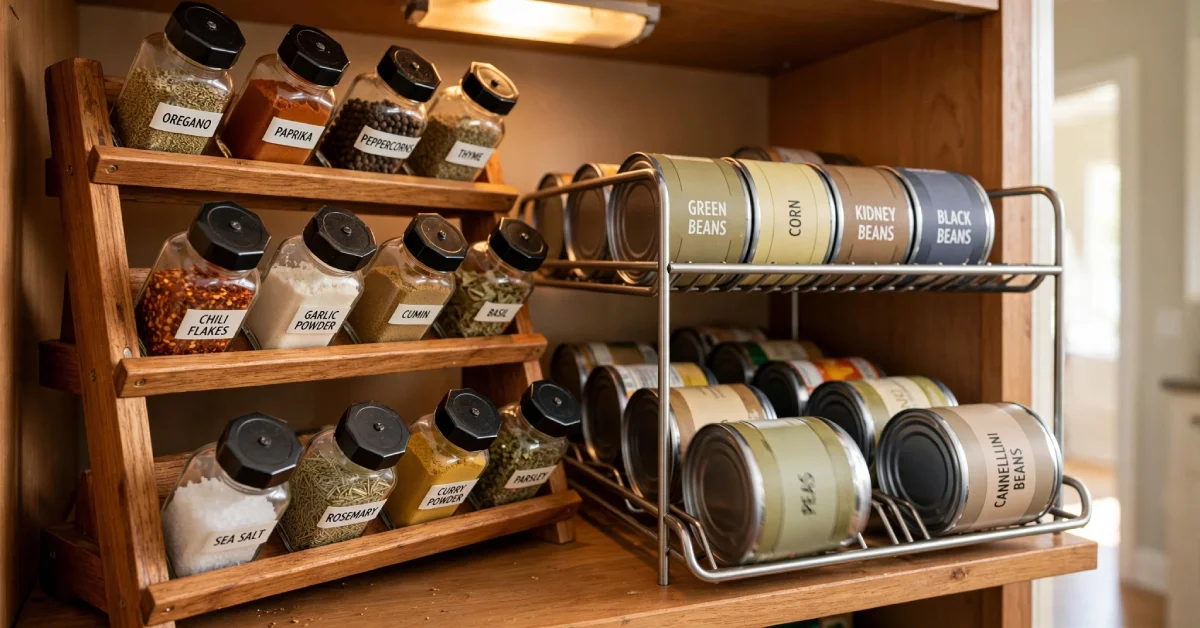
17. Use a tiered spice rack. A tiered rack angles spice jars so labels face up, making it easy to scan the whole collection at once.
18. Store frequently used spices within easy reach. Keep salt, pepper, garlic powder, and other daily spices at the front or at eye level, with less common ones stored further back.
19. Use a can organizer or rack. A can rack lets cans roll forward as you use them, so the oldest can is always at the front. This also keeps a natural first-in, first-out system running without any extra effort.
20. Use open-front bins for snacks. Open-front bins let you see and grab snacks without pulling out the whole container, which matters most in households with kids.
Use Every Inch of the Room
21. Install an over-the-door organizer. A door-mounted pocket organizer works well for small items like spice packets, snack bars, or foil and plastic wrap.
22. Add hooks and wall-mounted shelves. Hooks hold aprons, reusable bags, or lightweight tools, while a slim wall-mounted shelf can hold jars without eating into your main shelving.
23. Use every available corner in a small pantry. Corner shelves or turntables placed in awkward corners turn dead space into usable storage.
24. Use drawer dividers and shelf inserts for cabinets and drawers. If your kitchen doesn’t have a dedicated pantry room, dividers keep packets and small bags from sliding into a pile, and inserts create an extra tier inside a cabinet.
Keep It Organized Long-Term
25. Do a quick reset every few weeks. Spend five minutes straightening shelves, returning stray items to their zones, and checking for anything close to expiring. This one habit does more to keep a pantry organized than any container or bin.
Pantry Organization Checklist
☐ Empty the pantry ☐ Clean shelves ☐ Check expiration dates ☐ Remove duplicates ☐ Group similar foods ☐ Create pantry zones ☐ Choose appropriate containers ☐ Label storage ☐ Maximize vertical space ☐ Organize doors and walls ☐ Rotate older food ☐ Create a maintenance routine
Common Pantry Organization Mistakes to Avoid
Buying organizers before decluttering. Bins and containers won’t fix a pantry that’s still full of expired or duplicate items. Declutter first.
Overfilling shelves. Packing a shelf to its limit leaves no room to see or reach what’s stored there.
Hiding items behind other items. Anything placed behind something taller tends to get forgotten. Keep items visible, not stacked in front of each other.
Ignoring expiration dates. Skipping regular checks means expired food quietly piles up until a full clean-out becomes necessary.
Prioritizing appearance over accessibility. A pantry that looks perfect in photos but is hard to actually use will fall apart within weeks. Function should come first.
Final Thoughts
A pantry that works well is functional, visible, accessible, and easy to keep that way over time. It doesn’t need to look like it belongs in a magazine to do its job.
Start with decluttering and grouping your food into zones before buying any containers or organizers. Once you know what you actually have and how you use it, the right storage choices become obvious.
The best pantry system isn’t the most expensive or the most photogenic one. It’s the one that fits how your household actually shops, cooks, and eats.
FAQs
What is the best way to organize a pantry?
Start by emptying the pantry, cleaning the shelves, and removing expired or duplicate items. Then group foods into zones based on category and how often each one is used, placing everyday items within easy reach.
How do I organize a small pantry?
Use vertical storage, slim containers, and the back of the pantry door to make the most of limited space. Stackable bins and corner shelving also help small pantries hold more without feeling cramped.
How do you organize deep pantry shelves?
Turntables and pull-out bins bring items from the back of a deep shelf forward, so nothing gets lost or forgotten. Keep frequently used items near the front and avoid overpacking each shelf.
Should pantry food be stored in clear containers?
Clear pantry containers make it easy to see what you have and how much is left, which helps reduce food waste and duplicate purchases. They work especially well for dry goods like flour, rice, and pasta.
How do I organize spices in a pantry?
A tiered rack or turntable keeps spice labels visible, and storing frequently used spices within easy reach saves time while cooking. Labelling containers clearly is key if you decant spices into matching jars.
How do I keep my pantry organized?
Return items to their designated zones after each use, follow a first-in-first-out system, and do a quick reset every few weeks. Checking expiration dates regularly also prevents clutter from building back up.
Ready to start? Pick one idea from this list and organize it this week. Once you see how much easier it is to find what you need, the rest of the pantry will follow.