

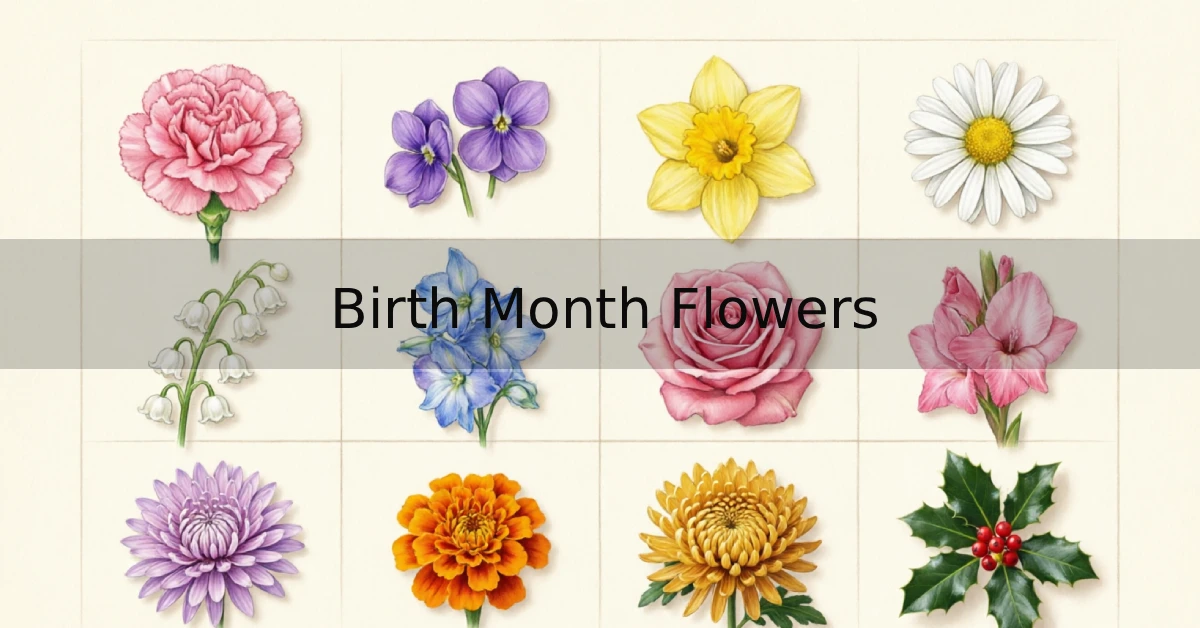
Every month grows its own flower, and each one carries a story worth knowing. If you love gardens, you probably already lean on a sturdy support like a wisteria trellis to keep climbing blooms tidy and full. Birth month flowers work the same way, giving structure and meaning to the year, one bloom at a time. This guide walks you through what each flower means, why it matters, and how to grow one yourself.
You do not need a green thumb to enjoy this. These blooms are for anyone who likes a little color, a little history, and a gift idea that feels personal. We will cover symbolism, care tips, and gifting ideas for every month on the calendar. By the end, you will know exactly which flower belongs to you.
Quick Reference For Every Month
Here is a fast look at the full birth month flowers list before we dig into the details below.
| Month | Flower | Meaning |
|---|---|---|
| January | Carnation | Love, fascination |
| February | Violet | Loyalty, modesty |
| March | Daffodil | New beginnings |
| April | Daisy | Innocence, purity |
| May | Lily of the Valley | Happiness |
| June | Rose, Honeysuckle | Love, devotion |
| July | Larkspur | Open heart |
| August | Gladiolus, Poppy | Strength, remembrance |
| September | Aster | Wisdom, patience |
| October | Marigold | Warmth, creativity |
| November | Chrysanthemum | Joy, friendship |
| December | Narcissus, Holly | Hope, protection |
Keep this table bookmarked for birthdays, anniversaries, or the next time you need a fast gift idea.
What Do Birth Month Flowers Mean
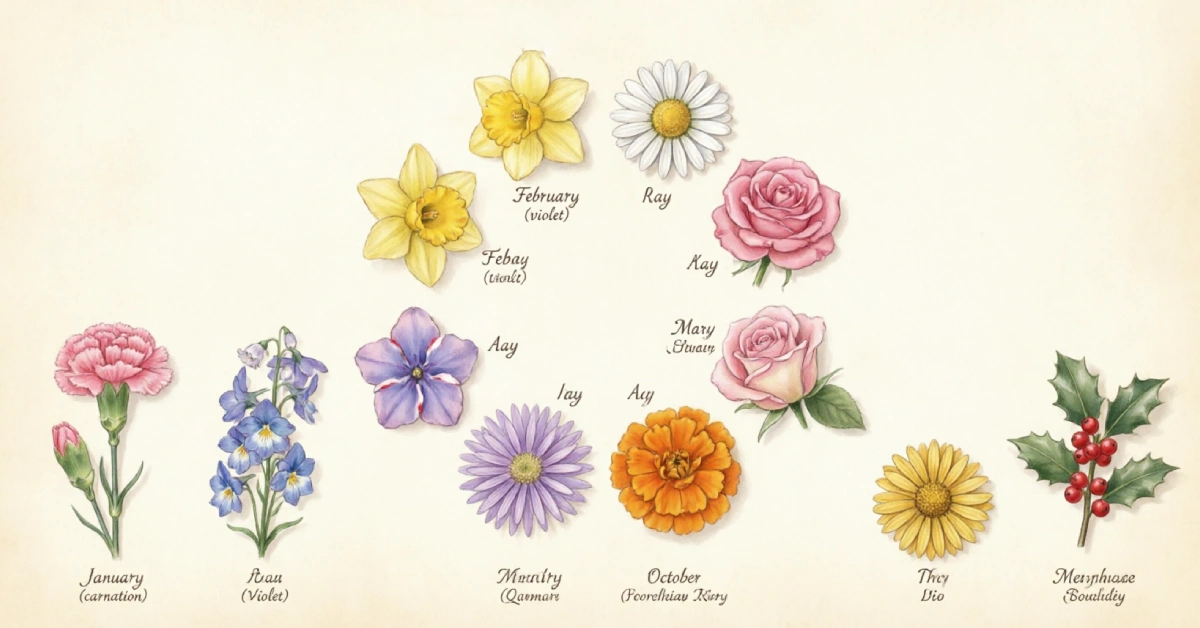
Birth month flowers are blooms assigned to each month of the year. Think of them like a birthstone, but for your garden instead of your jewelry box.
The tradition ties a flower’s look, scent, or growing season to the personality traits linked with that month. It gives people a fun, visual way to celebrate a birthday.
Some months share more than one flower, since old traditions and modern lists do not always agree. That is part of the charm.
You will find these flowers on cards, in bouquets, and even tattooed on skin. They carry meaning without needing a single word of explanation.
Once you know your flower, you start noticing it everywhere, in gardens, on packaging, and in seasonal displays at the grocery store.
A Short History Of Flower Symbolism
Flower symbolism goes back centuries, but it really took off during the Victorian era in England. People used blooms to send messages when words felt too bold or too risky to say out loud.
This practice, called floriography, turned entire bouquets into coded letters. A single rose could mean love, while a sprig of rosemary whispered remembrance, and gardeners studied these meanings the way we study emojis today, layering feeling into something small and quiet.
Ancient cultures also linked flowers to seasons and gods long before Victorian drawing rooms existed.
Museums and gardens still study this history closely today. Places like botanical archives keep detailed records of which flower meant what, and to whom.
That history is why birth month flowers still feel meaningful now, even though most of us are not writing secret garden letters anymore. The habit simply moved into birthday cards and bouquets instead.
January Through April Blooms
January’s flower is the carnation, a bloom known for its ruffled petals and long vase life. It stands for love, fascination, and distinction, making it a favorite for winter birthdays and cold weather bouquets that need to last through the season.
February claims the violet, a small but hardy flower tied to loyalty and modesty.
March brings the daffodil, a cheerful sign that spring is finally on its way after a long, gray winter.
April’s flower is the daisy, simple and bright, standing for innocence and new beginnings.
Each of these blooms grows well in cooler soil, so early spring planting works best for most home gardens.
May Through August Blooms
May’s flower is the lily of the valley, delicate bells that smell sweet and stand for happiness returning.
June splits between the rose and honeysuckle, both climbers that reward patient gardeners with fragrant, generous blooms year after year.
July belongs to the larkspur, tall and colorful, a flower that stands for an open heart and strong, lasting bonds between people who share it.
August claims the gladiolus, a bold flower linked to strength, and the poppy, which stands for rest, peace, and quiet remembrance of those we love.
These summer blooms need full sun and steady watering to reach their tallest, most colorful form. Give them room to spread, and they will reward you.
If deer roam your yard, you might already know deer eat hydrangeas without hesitation, so plan companion plantings that keep grazing away from tender summer blooms too.
Birth month flowers from this stretch of the year tend to be the showiest on the whole calendar.
September Through December Blooms
September’s flower is the aster, star-shaped and hardy, blooming right as the weather starts turning cooler across most regions.
October claims the marigold, a tough little flower that fights off garden pests while still looking cheerful the whole season.
November’s flower is the chrysanthemum, a favorite for fall displays and one of the longest-lasting cut flowers around.
December splits between narcissus and holly, one soft and fragrant, the other sharp and evergreen through the coldest months.
Cooler weather blooms tend to hold their color longer once cut, so they work well for autumn arrangements.
These late-year flowers pair nicely with pumpkins, gourds, and warm-toned home decor.
Together, these four flowers close out the calendar with texture, color, and a sense of quiet celebration.
Growing Your Birth Flowers At Home
Most birth flowers are forgiving plants that do not demand expert-level skill or a huge backyard to thrive.
Start with healthy soil, since almost every flower on this list grows best in loose, well-draining ground with a bit of compost mixed in.
Water consistently, but do not drown the roots.
Sunlight needs vary by flower, so check your specific bloom before choosing a planting spot in your yard.
Fall cleanup matters just as much as spring planting, since dead leaves left sitting on delicate stems can invite mold and rot.
Prune spent blooms regularly to keep plants healthy and encourage a second round of flowers later in the season.
Gifting Ideas For Every Birth Flower
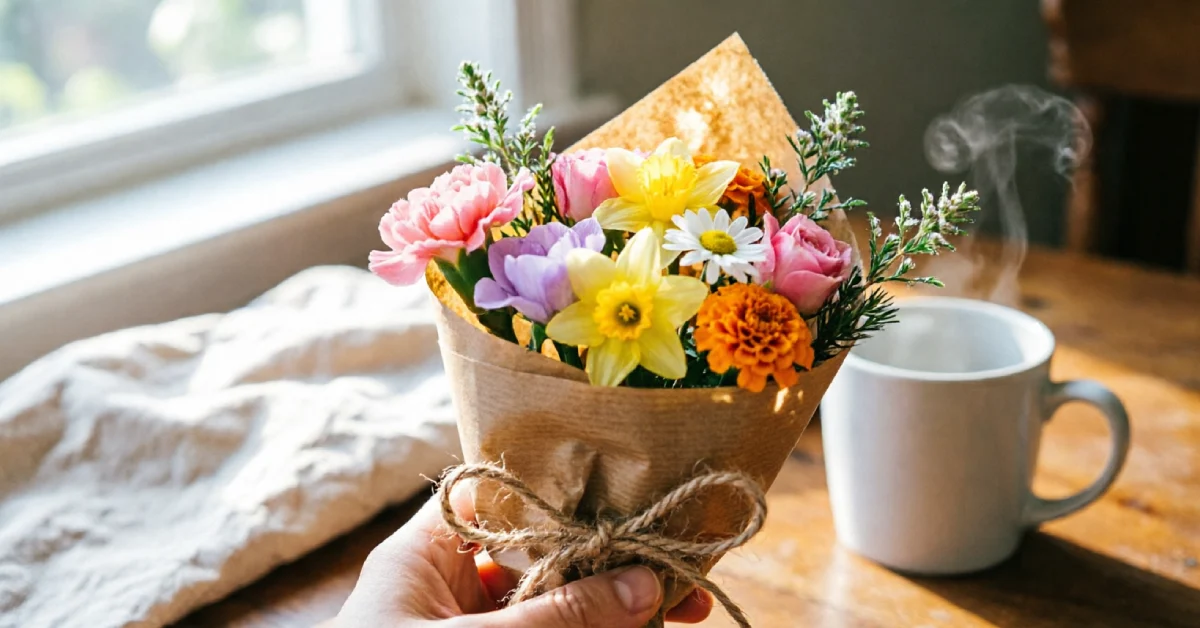
A bouquet built around someone’s birth month flower feels far more personal than a generic grocery store arrangement.
You can pair the flower with their birthstone for a gift that touches two traditions at once, doubling the sentiment behind it.
Consider a small potted version instead of cut stems, since it keeps growing long after the birthday candles are blown out.
Framed pressed flowers make a lasting keepsake for someone who already has enough vases sitting around their kitchen counter.
These blooms also work beautifully in jewelry, from pressed resin pendants to hand-painted enamel charms that last for years.
A simple card featuring the flower’s meaning adds depth to even the smallest gift.
Handwritten notes explaining the symbolism turn a bouquet into something the recipient will actually remember.
Choose Your Birth Flower Today
Now that you know the basics, take a minute to look up your own birth month flower and its meaning.
Whether you plant it, gift it, or just admire it in passing, that bloom carries a little piece of history worth appreciating.
These flowers turn an ordinary calendar date into something worth celebrating with color, scent, and real meaning behind every petal.
Share the idea with a friend or family member and watch how quickly they want to know their own flower too.
Gardens grow richer when every bloom means something.
Next time you plan a gift or a flower bed, let the calendar guide your choice, and when the season turns, a reliable best leaf blower will keep your beds clear for whatever blooms next.